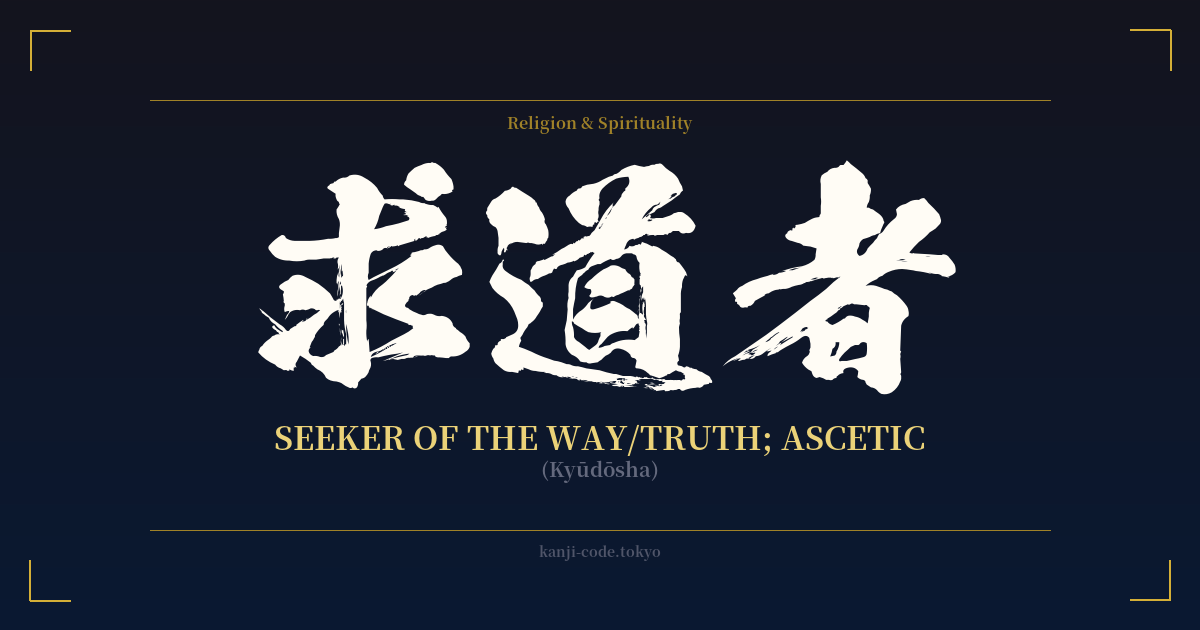
✍️ 求道者 (Kyūdōsha) — Cultural Context
求道者 (Kyūdōsha) is a Japanese term that resonates with a deep sense of purpose and lifelong dedication. It translates to a 'seeker of the Way' or 'one who seeks the truth.' This isn't about a casual search; it describes an individual wholly committed to a profound journey of discovery, mastery, and enlightenment.
The concept is deeply rooted in Eastern philosophy, particularly Buddhism and Taoism. The central character, 道 (dō), is the same 'dō' found in Taoism (the Tao) and represents a metaphysical 'Way' or 'Path.' In a Buddhist context, a Kyūdōsha is one who walks the path toward enlightenment, dedicating their life to understanding universal truths and overcoming worldly attachments. They are pilgrims on a spiritual quest.
However, the meaning of Kyūdōsha extends far beyond formal religion. It is a cornerstone concept in Japanese martial arts (武道, Budō). A true martial artist is not just someone who learns techniques; they are a Kyūdōsha who seeks the philosophical and spiritual essence of their art. For them, the dojo is a place of self-cultivation, and every movement is a step on their 'Way.'
This idea of a dedicated seeker applies to any discipline pursued with ultimate devotion. A master calligrapher who seeks to pour their soul into each brushstroke, a tea ceremony master who finds the universe in a single bowl, or a craftsman who dedicates decades to perfecting a single skill—all can be described as Kyūdōsha. They are individuals who have transcended mere profession and elevated their work into a path for self-realization.
To be called a Kyūdōsha is a sign of immense respect. It is not a title one would typically claim for oneself, as it implies a level of wisdom and commitment that is recognized by others. It separates the student (学生, gakusei) from the master, the practitioner from the philosopher. The Kyūdōsha is defined not by their destination, but by their unwavering, soul-deep commitment to the journey itself.
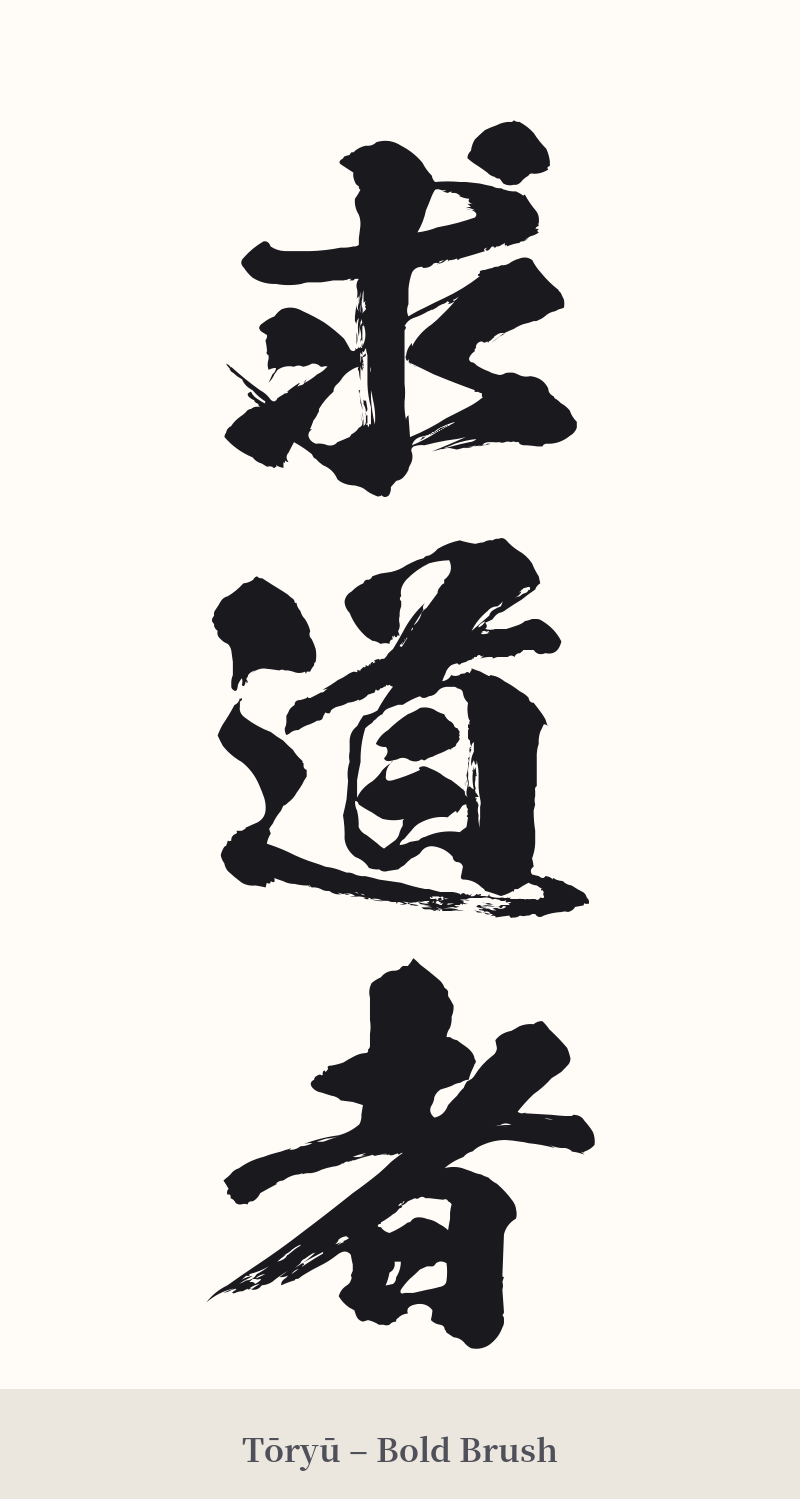
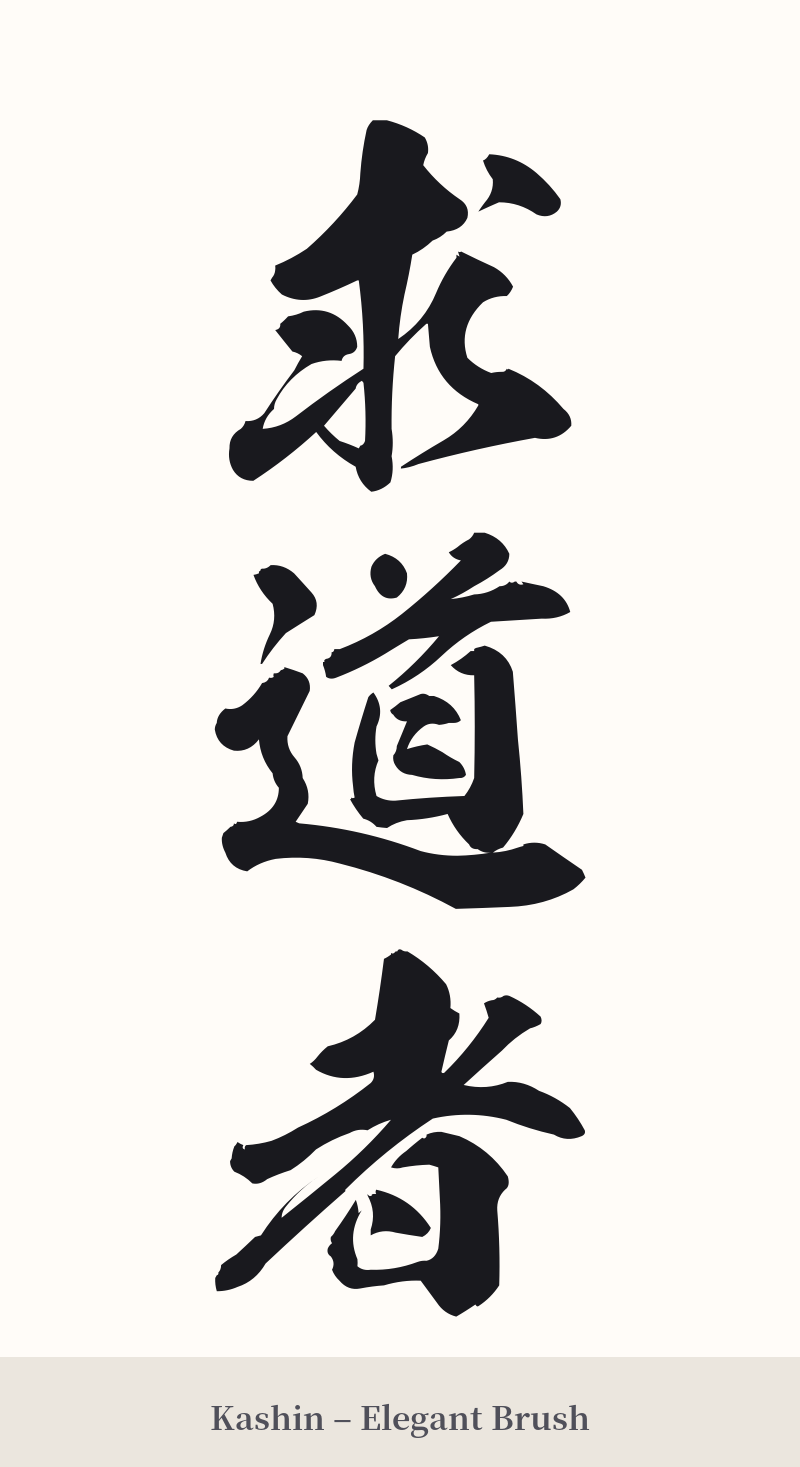
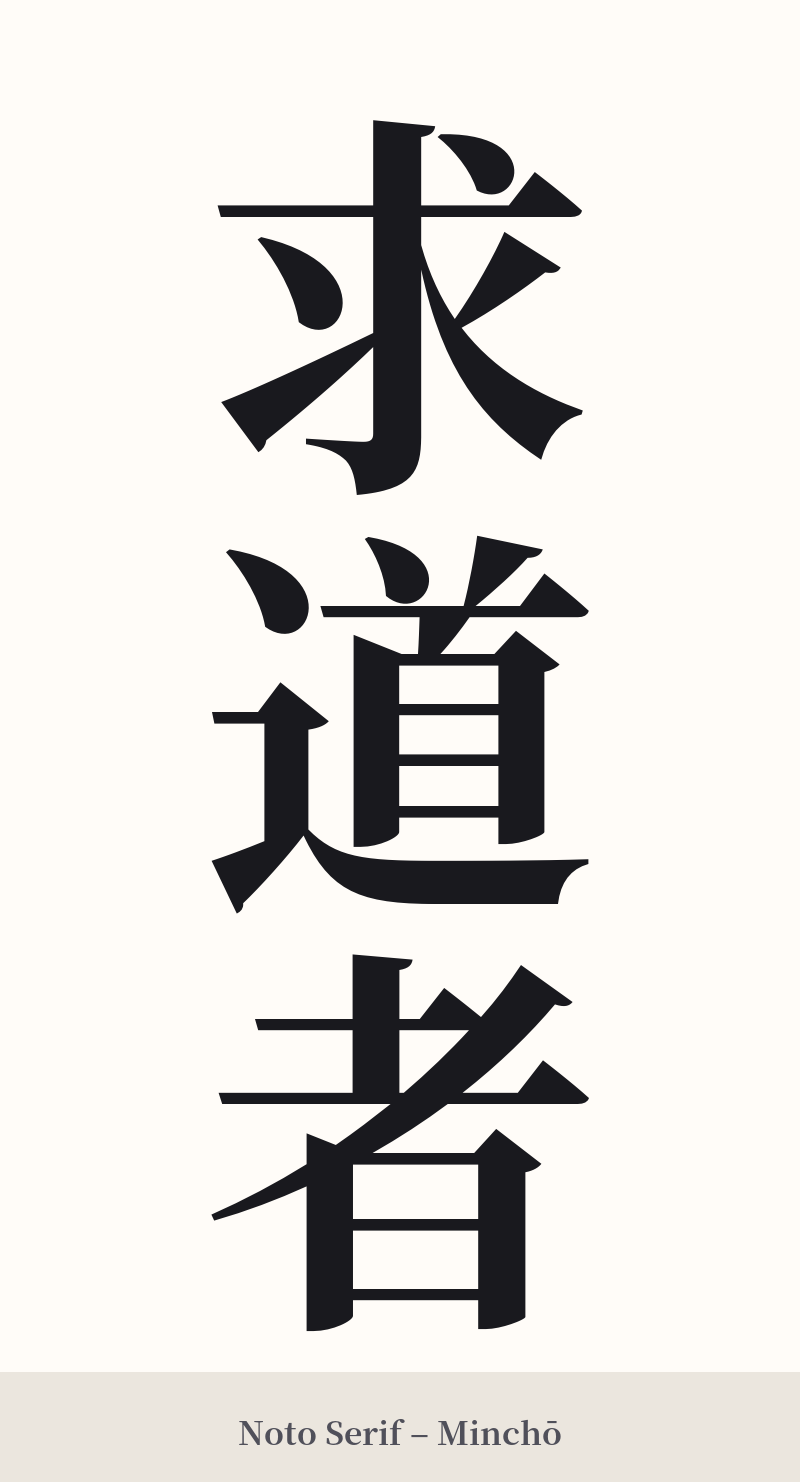
🖌️ Font Styles for 求道者
The same kanji can look dramatically different depending on the calligraphy style. Choose a font that matches the mood you want for your tattoo or design.
🎨 Tattoo Suitability
📐 Tattoo Design Guide
The three-character composition of 求道者 lends itself beautifully to a vertical tattoo design, creating an elegant and powerful flow.
– Placement: Consider areas that accommodate a vertical line, such as the forearm, the calf, along the bicep, or down the spine. A horizontal placement across the chest or upper back can also be effective.
– Font Style: The font should match the profound meaning. A crisp, clear Kaishotai (block script) emphasizes discipline and clarity. For a more fluid, dynamic feel that represents the 'journey,' a Gyōsho (semi-cursive) script is an excellent choice. Avoid overly modern or decorative fonts that might detract from the traditional gravitas of the word.
– Visual Tips: This kanji carries enough meaning to stand on its own. A minimalist approach is often best. If you wish to add a visual element, consider a simple enso circle (symbol of enlightenment and the void) placed subtly behind or near the kanji. This pairing reinforces the spiritual and philosophical themes of the 'seeker.'
Comments