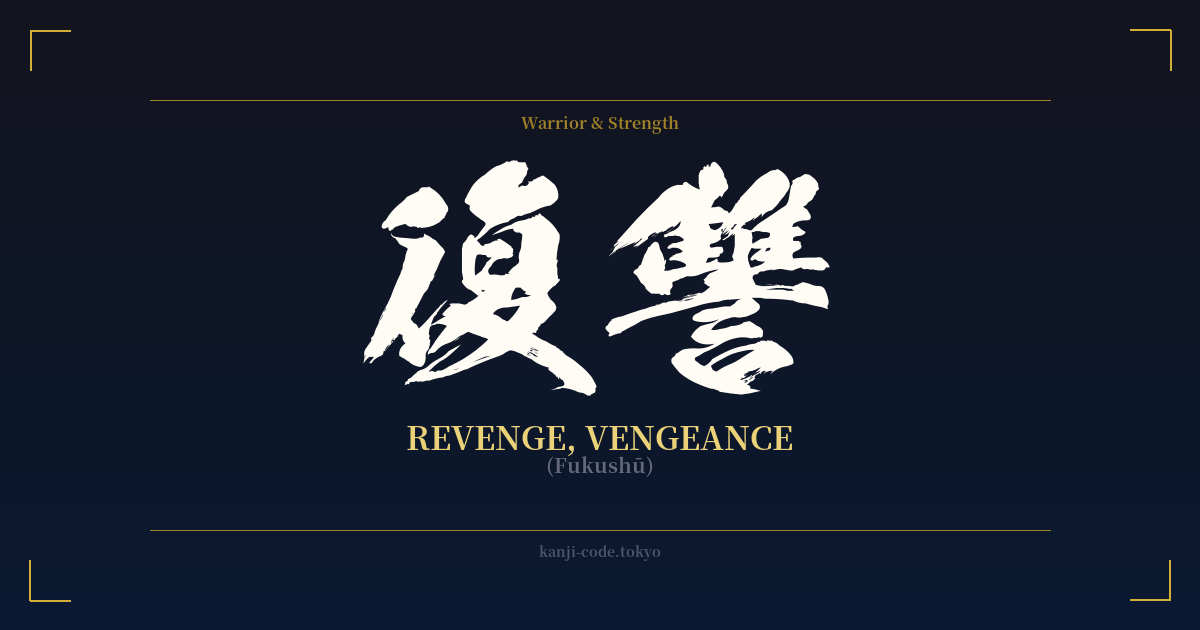
✍️ 復讐 (Fukushū) — Cultural Context
復讐 (Fukushū) is the definitive Japanese word for revenge or vengeance, a concept that cuts deep into the heart of narrative and human emotion. The word itself is a potent combination of two characters: 復 (fuku), meaning 'to return' or 'restore', and 讐 (shū), meaning 'enemy' or 'grudge'. Together, they literally mean 'to return a grudge to an enemy', painting a clear picture of a deeply personal and reciprocal act of retribution.
In Japanese history and folklore, the theme of revenge is a powerful and recurring one. The most famous example is the tale of the Forty-seven Rōnin, known as the Akō Incident (赤穂事件, Akō Jiken). This true story of samurai who avenged their master's death, knowing it would lead to their own, has been immortalized in countless plays, books, and films. This story highlights a key aspect of historical vengeance in Japan, often framed within the context of honor and loyalty, known as 仇討ち (adauchi). While Fukushū can be a purely personal and emotional act, adauchi was a more formalized, sometimes even legally recognized, vendetta to restore a family's or clan's honor.
In modern Japan, the idea of Fukushū has shed its ties to samurai honor and is viewed much as it is in the West: a dark, often self-destructive path. It's a staple of fiction, from gritty yakuza films to dark fantasy manga and anime. Series like 'Berserk' or films that inspired 'Kill Bill' ('Lady Snowblood') explore the consuming nature of vengeance, showing how it can strip away the protagonist's humanity, leaving them with nothing once their goal is achieved.
Unlike concepts such as 'courage' or 'loyalty', 復讐 is not considered a virtue. It is an expression of rage and hurt, a response to a deep wound. While it carries a certain dramatic and aesthetic power, it is fundamentally a term associated with darkness, suffering, and a cycle of violence. It represents a a powerful, visceral human emotion, but one that is ultimately tied to a negative and destructive outcome.
🖌️ Font Styles for 復讐
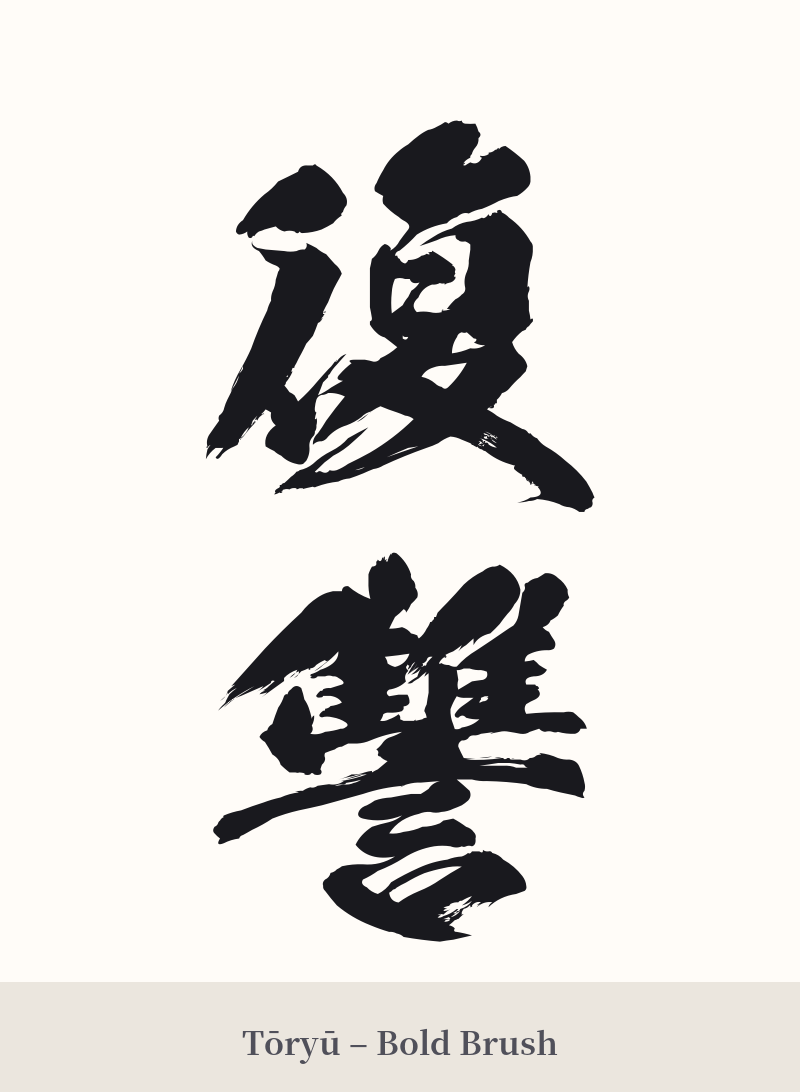
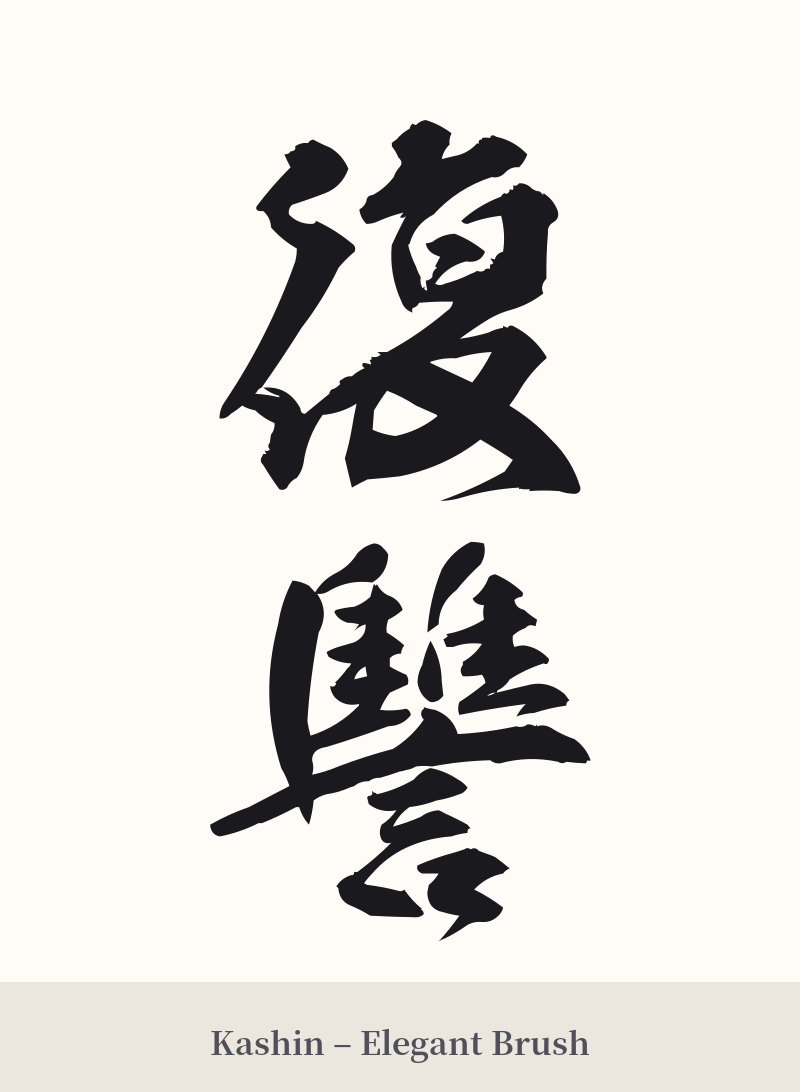
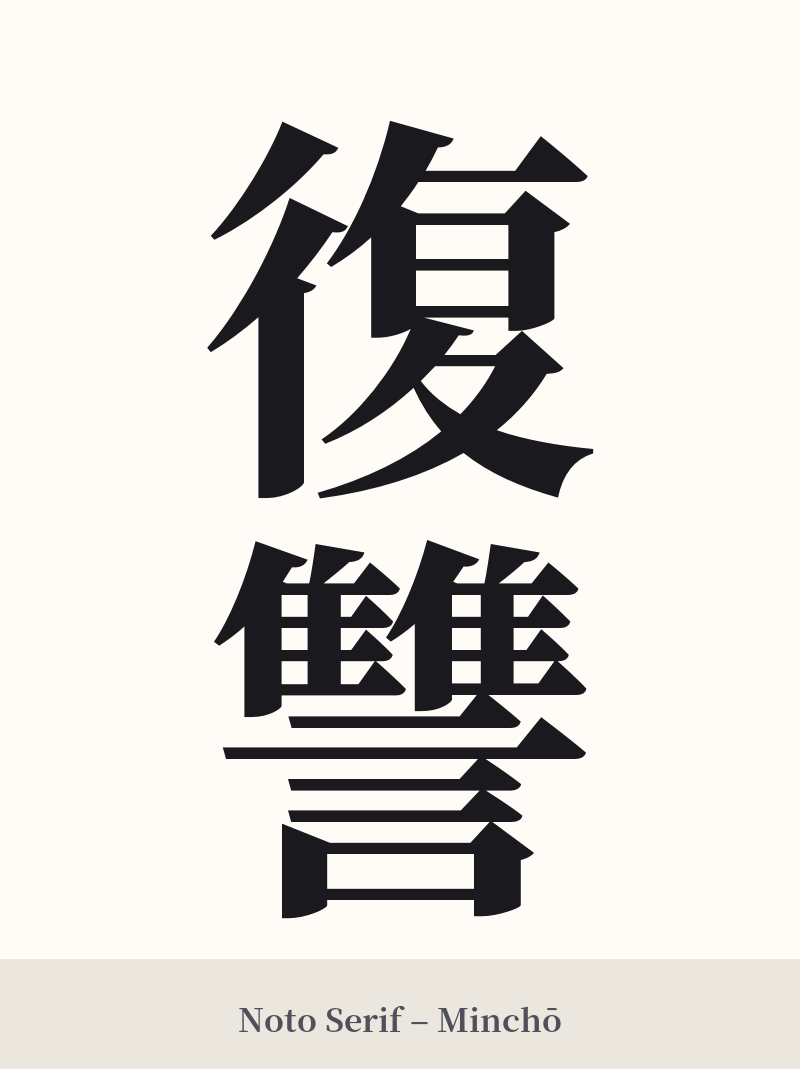
The same kanji can look dramatically different depending on the calligraphy style. Choose a font that matches the mood you want for your tattoo or design.
🎨 Tattoo Suitability
📐 Tattoo Design Guide
A tattoo of 復讐 is a bold and aggressive statement, and the design should reflect this intensity. The visual complexity, particularly of the second character, demands careful consideration.
– Placement: This design needs space. Large, flat areas like the back, chest, forearm, or calf are ideal. Avoid small or highly curved areas like the wrist or ankle, as the detail in 讐 will be lost.
– Font Style: A strong font is essential. Consider a scratchy, aggressive calligraphy (shosho) style to convey raw emotion. Alternatively, a thick, blocky Mincho or Gothic font can give the kanji an imposing, solid presence. Thin or delicate styles will fail to capture the weight of the word.
– Orientation: Vertical orientation is traditional and visually powerful, allowing the characters to flow down the limb or back. Horizontal is possible but can feel less balanced for this specific word.
– Visual Tips: Consider incorporating thematic elements. A background of red, perhaps as a splash or gradient, can symbolize blood and anger. Imagery like a broken chain, a spider lily (higanbana), or the specific weapon of a character known for their vengeance can add a layer of personal meaning.
Comments