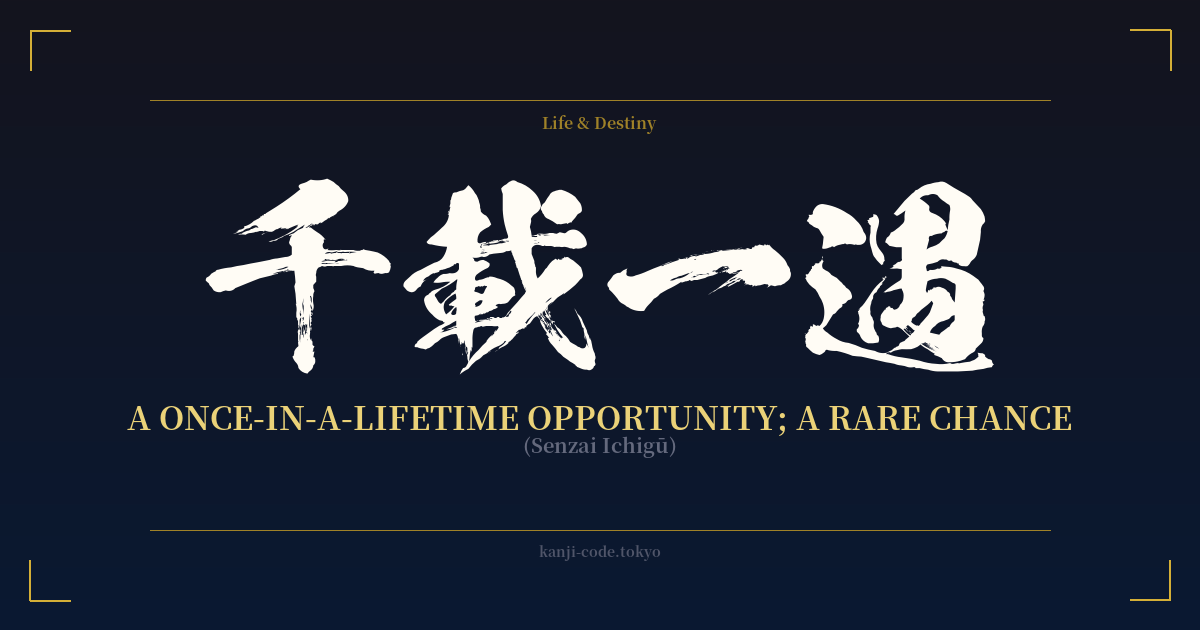
✍️ 千載一遇 (Senzai Ichigū) — Cultural Context
千載一遇 (Senzai Ichigū) is a powerful Japanese four-character idiom that translates to a "once-in-a-thousand-years meeting"—a once-in-a-lifetime opportunity. It captures the dramatic feeling of an incredibly rare and valuable chance that may never come again. To understand its weight, one must break it down: a single encounter (一遇) across a span of a thousand years (千載).
This phrase originates from classical Chinese literature, specifically the "Biographies of Yuan Hong" in the Book of the Later Han. It describes a wise man lamenting that a truly great sage and a wise ruler rarely appear in the same era. He states that such a meeting is a "once in a thousand years" event. This historical origin lends the phrase a sense of gravity and timelessness.
In modern Japan, 千載一遇 is used to describe any kind of golden opportunity that demands to be seized. It could be a career-changing job offer, a chance encounter with a person who changes your life, or a sudden moment of creative inspiration. It carries a sense of urgency and destiny, a feeling that the universe has briefly aligned to present a unique path forward.
While the English phrase "once in a lifetime" is a close equivalent, 千載一遇 feels more poetic and epic in scale. The inclusion of "a thousand years" elevates the concept beyond a single human lifespan, framing the opportunity against the vast backdrop of history itself. It suggests that the moment is not just rare for you, but rare in the grand scheme of things.
This makes it a popular concept in stories, motivational speeches, and personal philosophies. It resonates with the Japanese cultural appreciation for fleeting moments, similar to the concept of 'mono no aware' (the pathos of things), but with a proactive twist. It doesn't just ask you to appreciate the moment; it dares you to act on it, for such a chance is a miracle of timing and fortune.
🖌️ Font Styles for 千載一遇
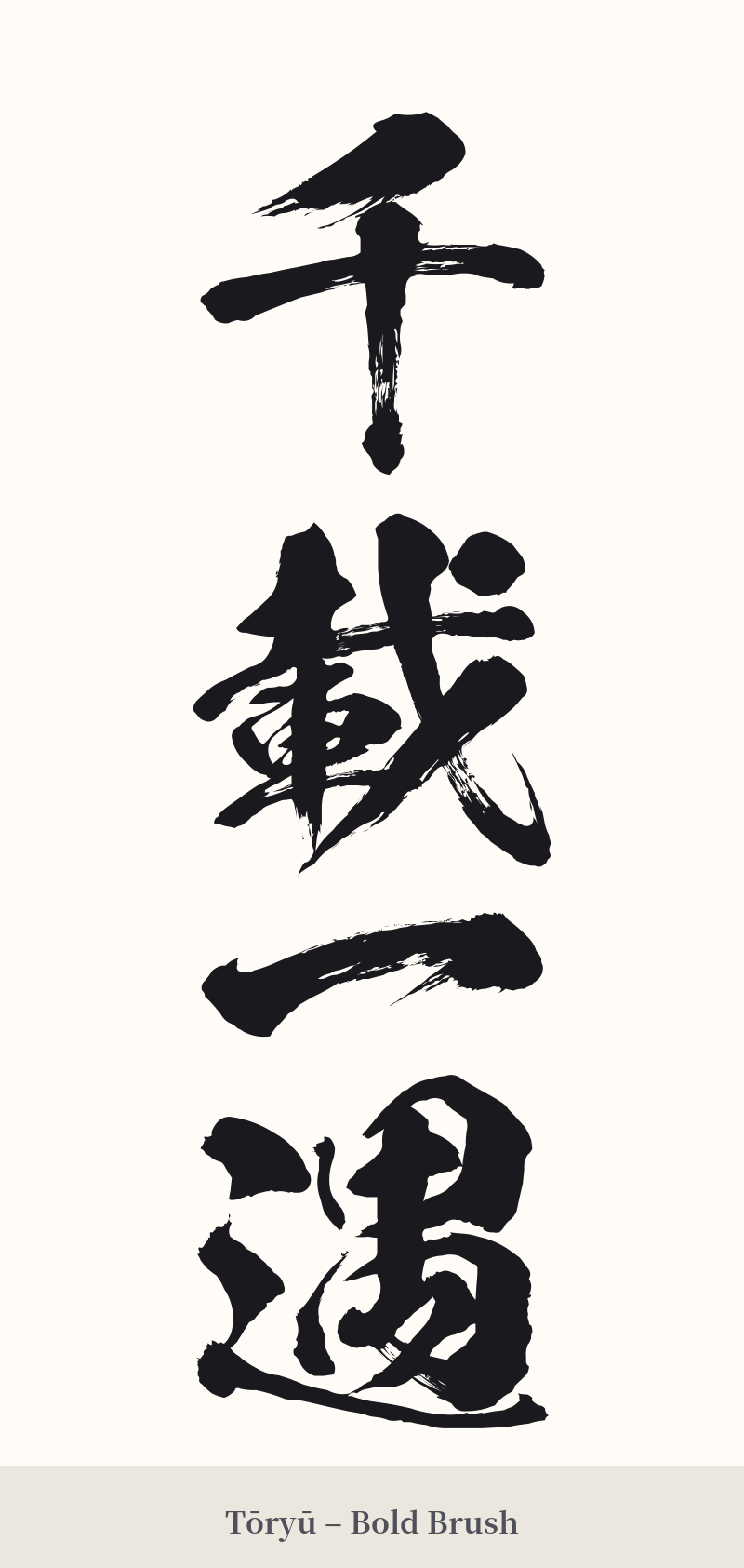
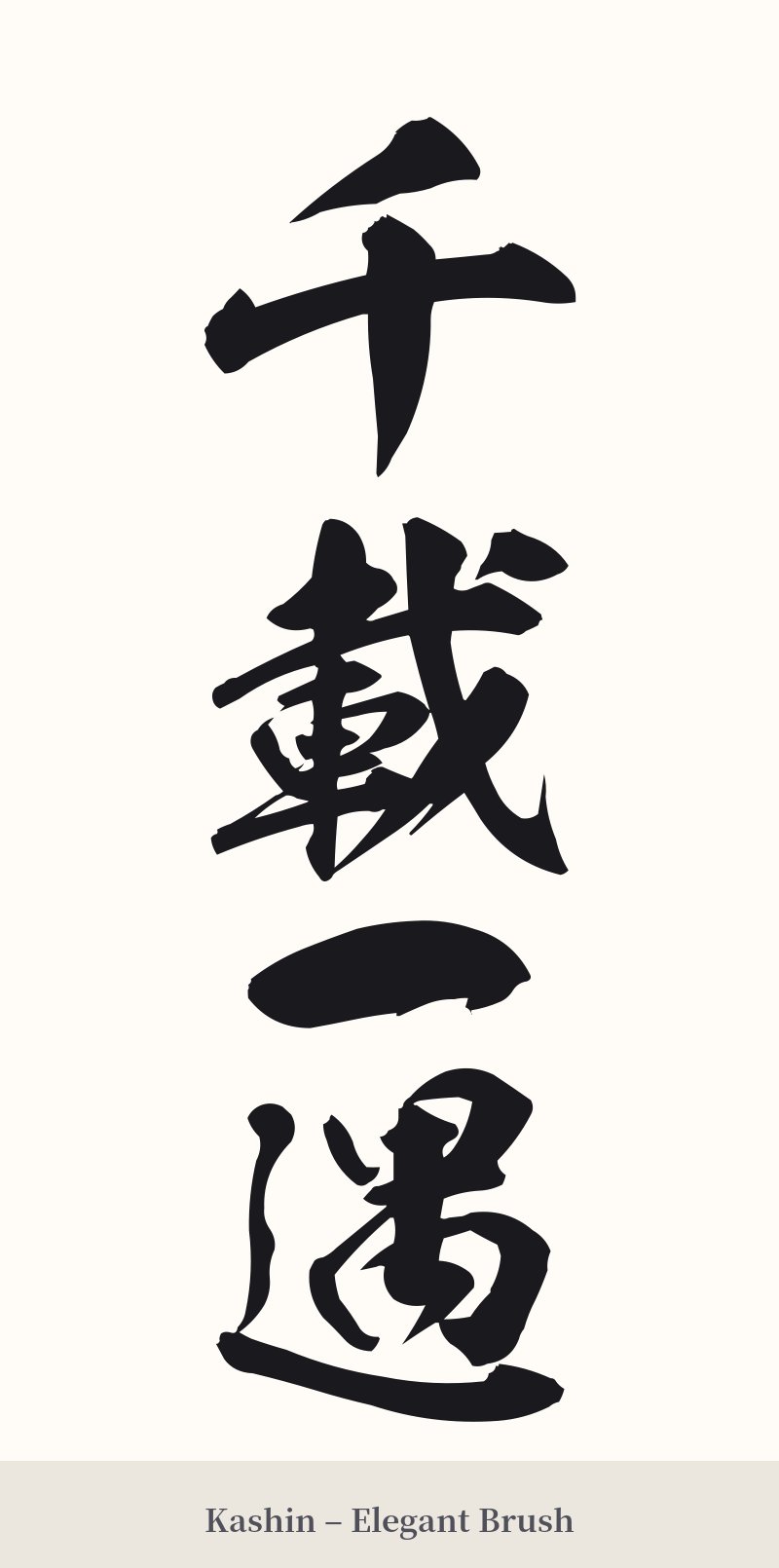
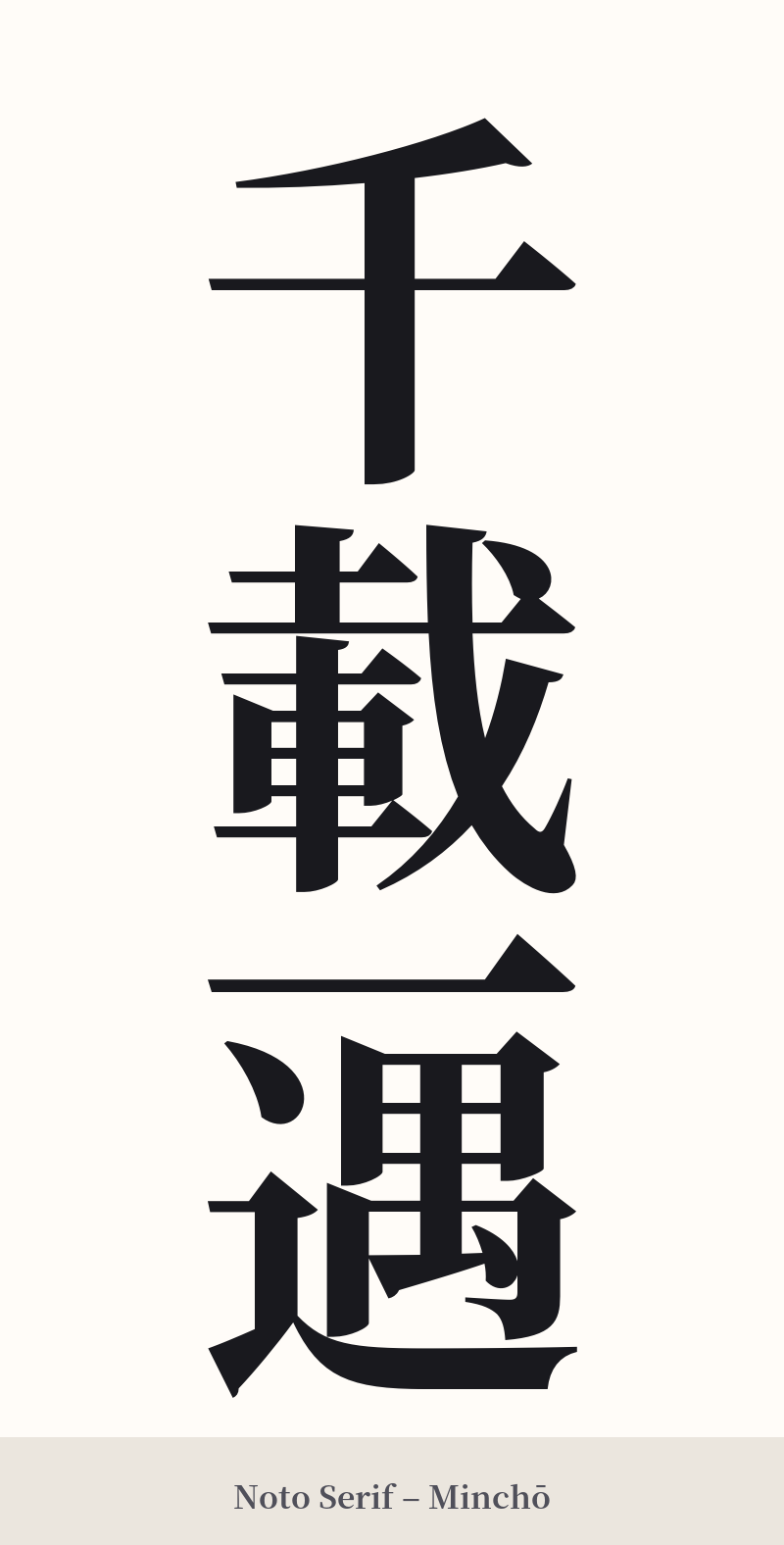
The same kanji can look dramatically different depending on the calligraphy style. Choose a font that matches the mood you want for your tattoo or design.
🎨 Tattoo Suitability
📐 Tattoo Design Guide
千載一遇 is a visually impressive phrase for a tattoo, offering a classic and powerful aesthetic. Its four-character structure is well-suited for a variety of placements and styles.
Placement Suggestions: – Vertical: This is the most traditional orientation. It looks stunning along the spine, down the forearm, or on the calf, creating a sense of flowing importance. – Horizontal: A horizontal layout works well across the chest, upper back (below the neck), or inner bicep.
Font Style Recommendations: – Kaisho (Block Script): For a bold, clear, and impactful statement. This style emphasizes the gravity and significance of the opportunity. – Gyosho (Semi-Cursive Script): A more fluid and artistic style that can capture the fleeting, dynamic nature of the "chance meeting." – Sosho (Cursive Script): A highly stylized and expressive script for a more abstract and personal design, suggesting the energy of the moment itself.
Visual Tips: – Due to the complexity of 載 and 遇, avoid making the tattoo too small. Give the artist enough space to ensure each stroke is clear and will age well. – Consider pairing the kanji with a subtle visual metaphor for opportunity, like a single falling cherry blossom petal, a shooting star, or a key. These elements can be integrated into the background or placed near the kanji to add another layer of meaning.
Comments