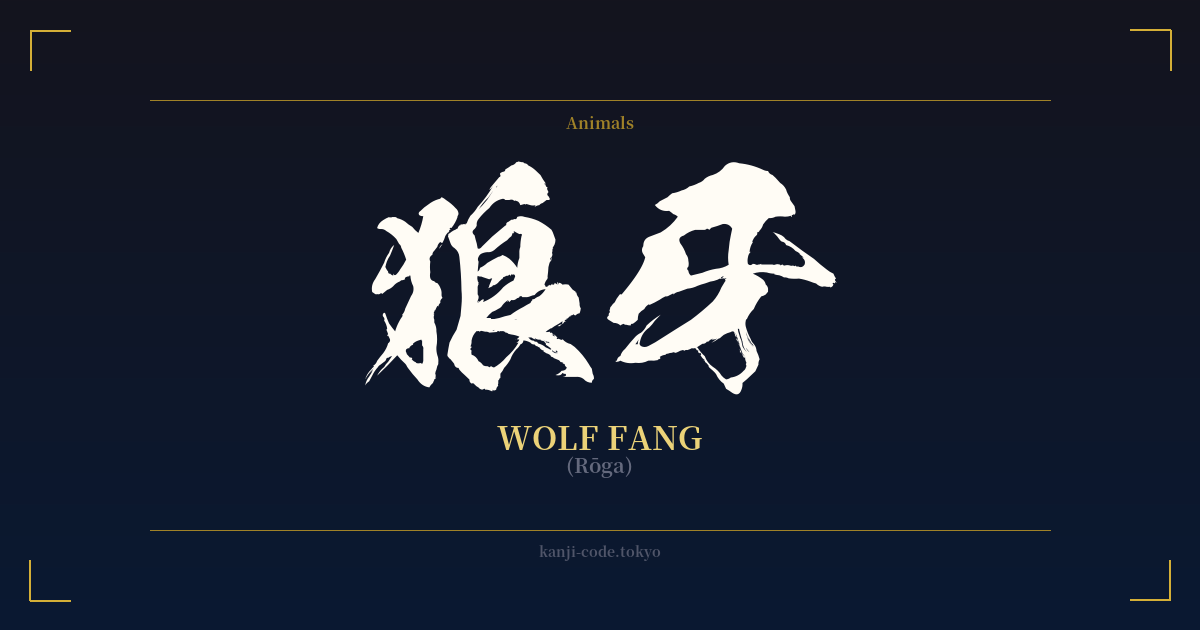
✍️ 狼牙 (Rōga) — Cultural Context
狼牙 (Rōga) translates directly to “Wolf Fang.” It’s a term that immediately conjures images of raw, untamed nature and the primal weaponry of one of the world's most respected and feared predators. This two-kanji compound doesn't just describe a physical object; it embodies the spirit of the hunt, the symbol of survival, and the beautiful lethality of the wild.
In Japanese culture, the wolf (狼, ōkami) holds a complex and dualistic position. On one hand, it was a creature of fear, a threat to livestock and lonely travelers in the mountains. This aspect is captured in the ferocity implied by 狼牙. However, the wolf was also revered as a divine messenger and a guardian spirit of the mountains, known as O-inu-sama (“honorable dog”). Farmers would leave offerings for the wolves in exchange for protection of their crops from deer and boar.
This reverence is tinged with a deep sense of loss, as both native species of Japanese wolf (the Honshū wolf and the Hokkaidō wolf) were hunted to extinction by the early 20th century. Today, the wolf exists in Japan only in folklore, myth, and memory. This history adds a layer of tragic mystique to the wolf's image, transforming it from a simple animal into a powerful symbol of a lost wilderness.
The second character, 牙 (ga, or kiba), means fang or tusk. It is a pictograph that originally depicted interlocking teeth, representing the most basic and essential tool of a predator. A fang is not just a tooth; it is an instrument of power, defense, and sustenance. It symbolizes the ability to fight back, to claim one's place, and to survive against the odds.
When combined, 狼牙 (Rōga) becomes more than the sum of its parts. It merges the spirit of the divine and fearsome wolf with the raw, functional power of the fang. In modern Japan, the term is rarely used in daily conversation. Instead, it has found a powerful home in popular culture. From the iconic “Wolf Fang Fist” (牙狼牙, Garōga) in the Naruto series to characters and attacks in countless other anime, manga, and video games, Rōga has become a shorthand for a cool, devastatingly powerful, and often dramatic special move. This association has cemented 狼牙 as a symbol of aggressive power and untamed fighting spirit for a new generation.
🖌️ Font Styles for 狼牙
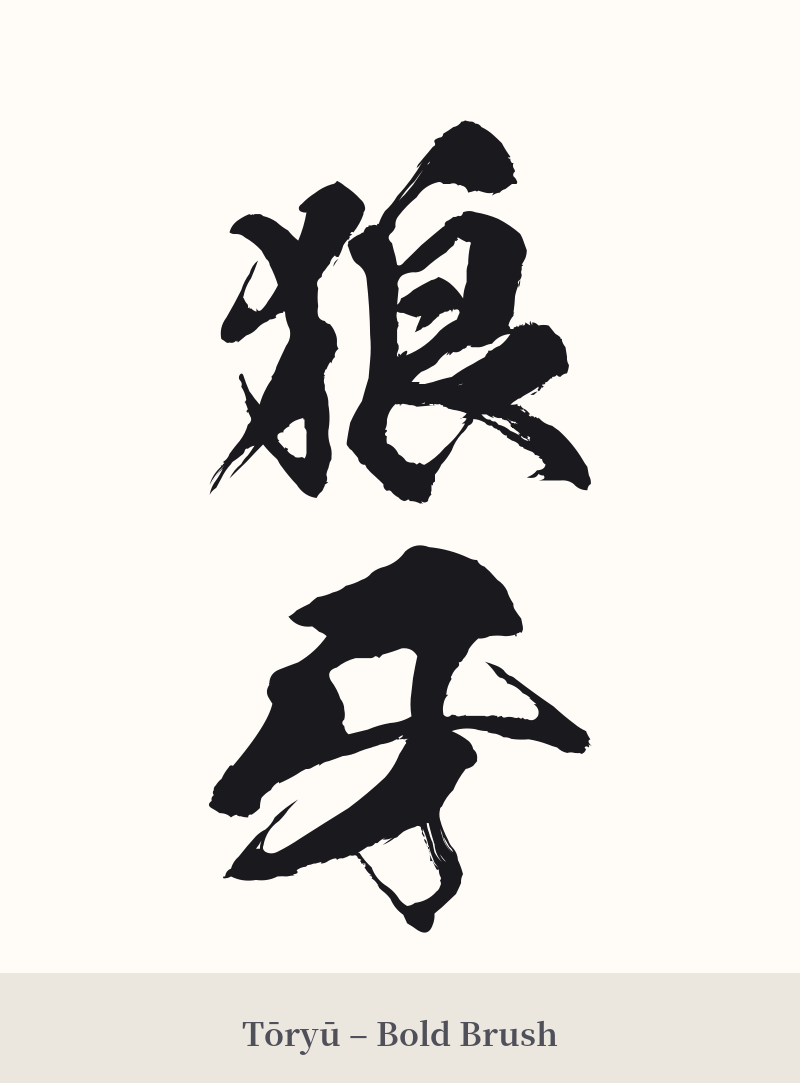
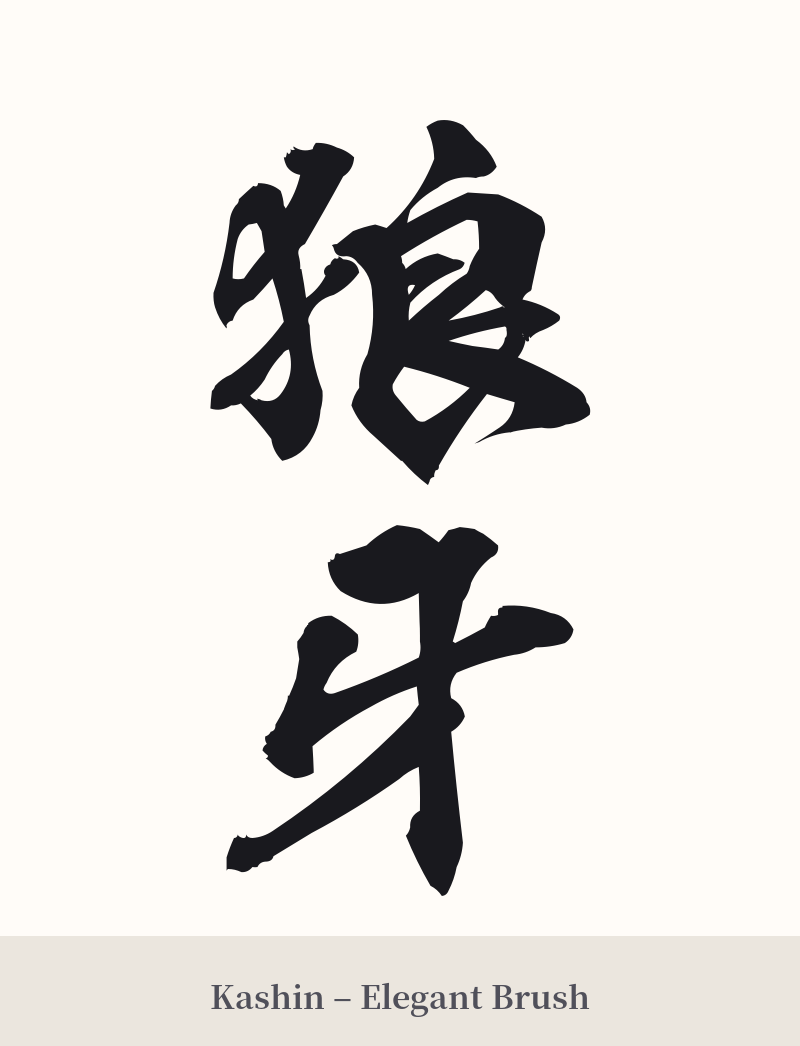
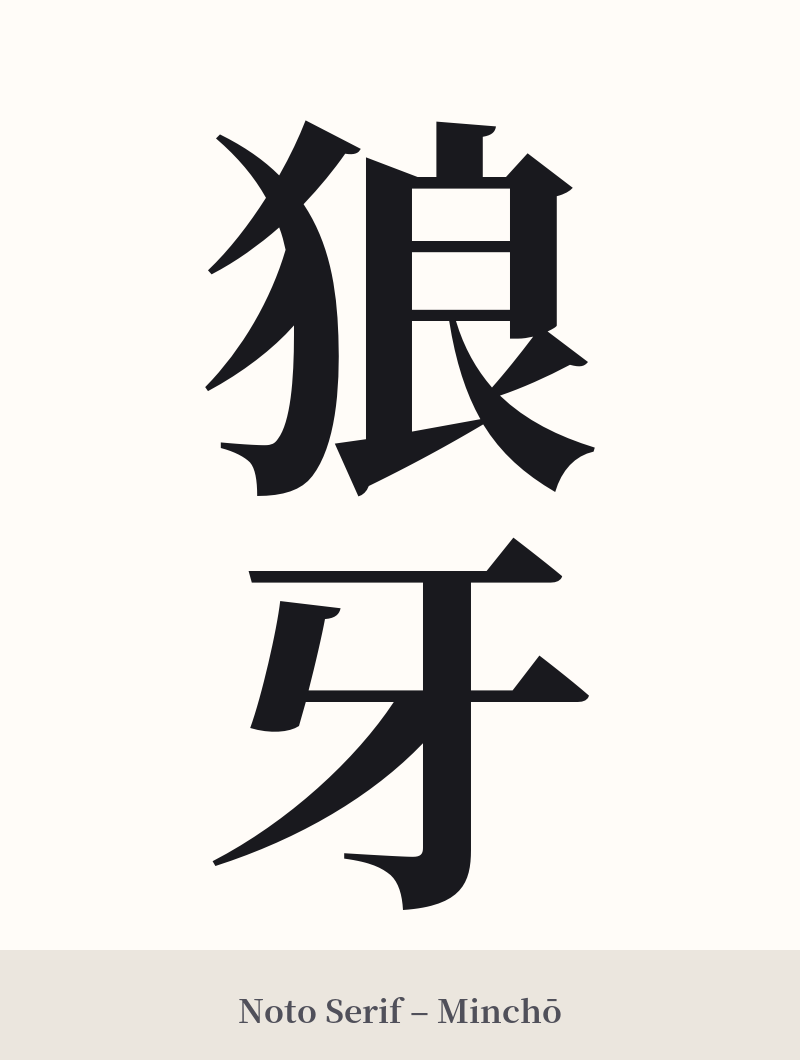
The same kanji can look dramatically different depending on the calligraphy style. Choose a font that matches the mood you want for your tattoo or design.
🎨 Tattoo Suitability
📐 Tattoo Design Guide
For a 狼牙 (Rōga) tattoo, the design should reflect the term's inherent aggression and sharpness.
– Placement: Vertical alignment is highly recommended and looks powerful on the forearm, calf, or along the spine. Horizontally, it fits well on the chest or upper back. Consider places that follow the muscle line to give a sense of movement and power.
– Font Style: A dynamic calligraphy style (shodō) is a perfect choice. Look for scripts with sharp, fast brushstrokes, strong flicks (hane), and sweeping finals (harai) to mimic the cutting motion of a fang. A bold, angular, or even slightly distressed block font (like a modern Mincho) can also work, giving it a more graphic, anime-inspired feel.
– Visual Tips: While the kanji stands strong on its own, it can be integrated with other imagery. Consider placing it over a faint image of a full moon, alongside abstract brushstroke claw marks, or even incorporated into the fur of a wolf illustration. For a minimalist approach, the two characters alone are more than enough to convey the intended meaning with force.
Comments