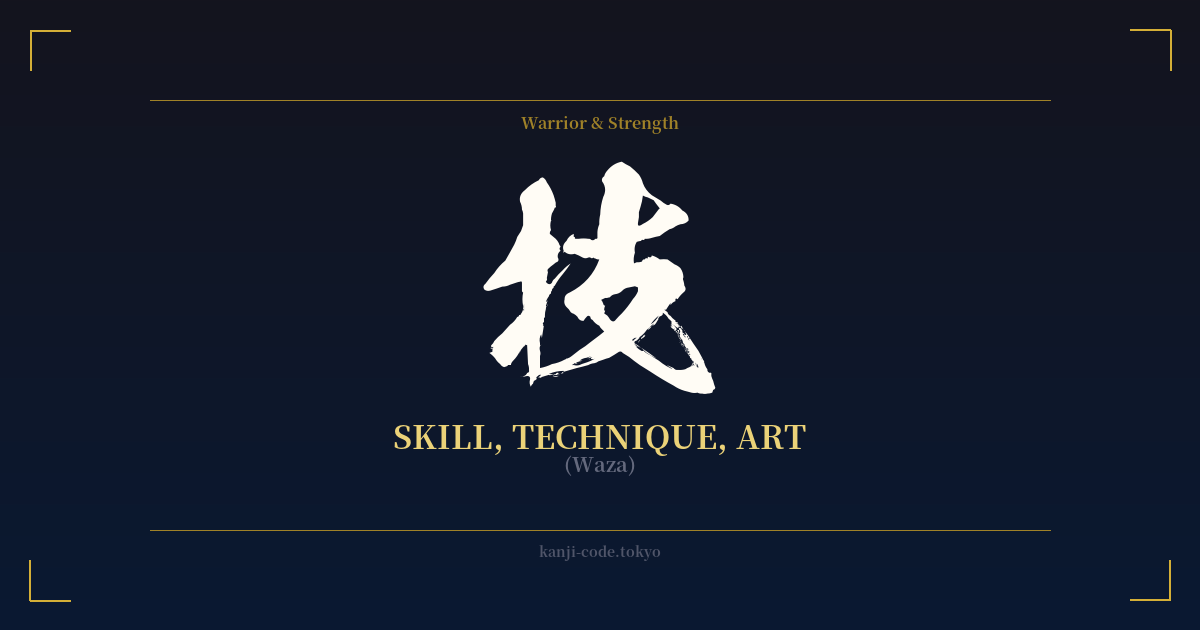
✍️ 技 (Waza) — Cultural Context
The kanji 技 (waza) is a cornerstone of Japanese philosophy, representing far more than just a simple skill. It embodies the concept of a technique honed to perfection through tireless practice, discipline, and deep understanding. Its very structure hints at this meaning: the radical on the left, 扌, is a variation of 手 (te), meaning 'hand,' while the right side, 支 (shi), means 'branch' or 'support.' Together, they create the image of a specialized 'branch' of ability, a craft executed by a skilled hand.
In the world of Japanese martial arts (budō), 'waza' is a fundamental concept. It refers to the specific techniques—throws, strikes, locks, and holds—that form the curriculum of arts like Judo, Karate, and Aikido. A martial artist doesn't just perform a 'waza'; they strive to perfect it, infusing it with timing, precision, and spirit. Terms like 'ōwaza' (major techniques) and 'newaza' (ground techniques) are part of the everyday vocabulary in a dōjō. A perfectly executed technique is a moment where physical movement and strategic intent become one.
Beyond the dōjō, 'waza' is central to the spirit of the 'shokunin,' or master artisan. Whether a sushi chef, a swordsmith, a potter, or a calligrapher, the shokunin's life is a devotion to their 'waza.' Their skill isn't just a job; it's an identity, a legacy passed down through generations. This pursuit of technical perfection is a spiritual endeavor, reflecting a cultural reverence for dedication and mastery over mere talent. The 'waza' of an artisan is their signature, visible in every flawless detail of their work.
In modern Japanese, the character appears in many compound words. 'Gijutsu' (技術) means 'technology' or 'engineering,' literally the 'skill-art.' 'Tokugi' (特技) is one's 'special skill' or unique talent. Even in performance arts like Kabuki theater or traditional dance, a particularly brilliant or difficult move is celebrated as a 'waza.' Ultimately, 技 is a tribute to human potential—the ability to take a simple action and, through focus and repetition, elevate it into an art form.
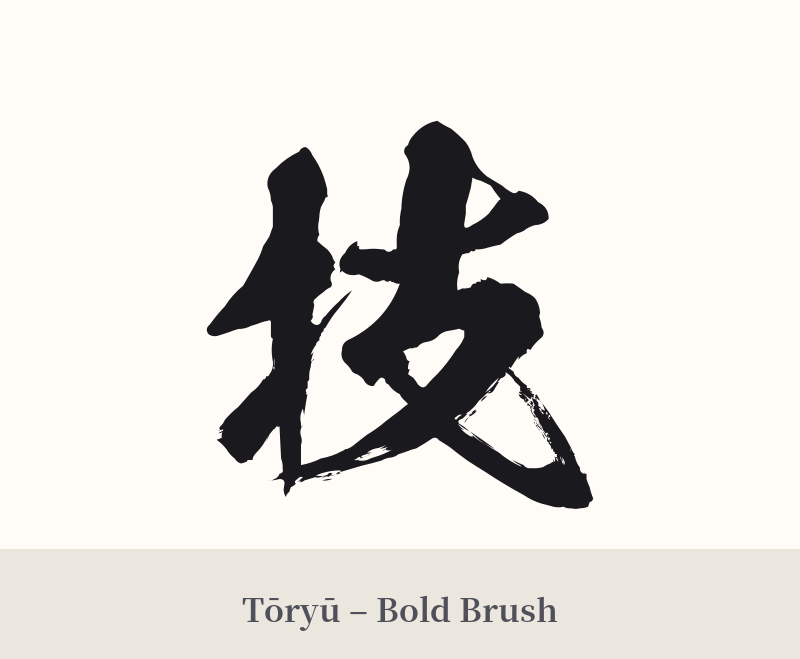
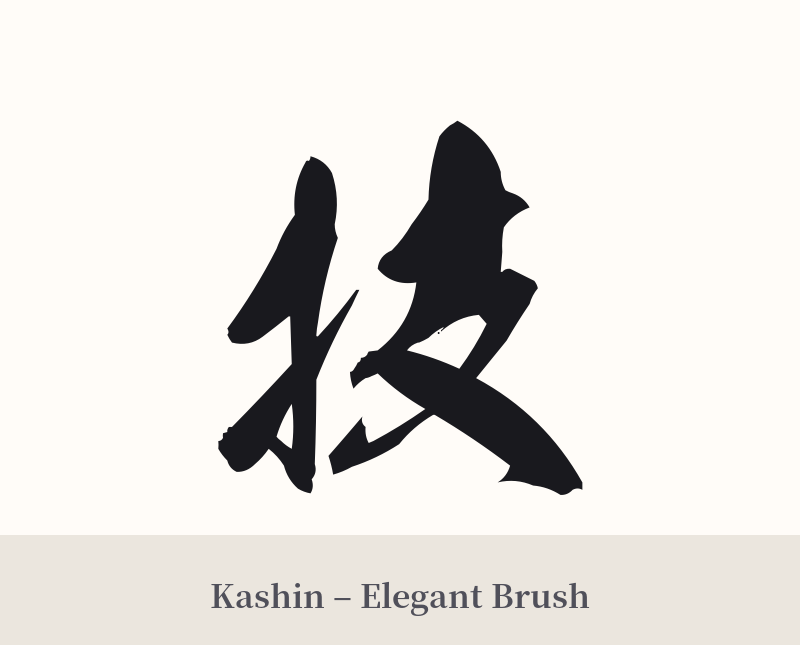
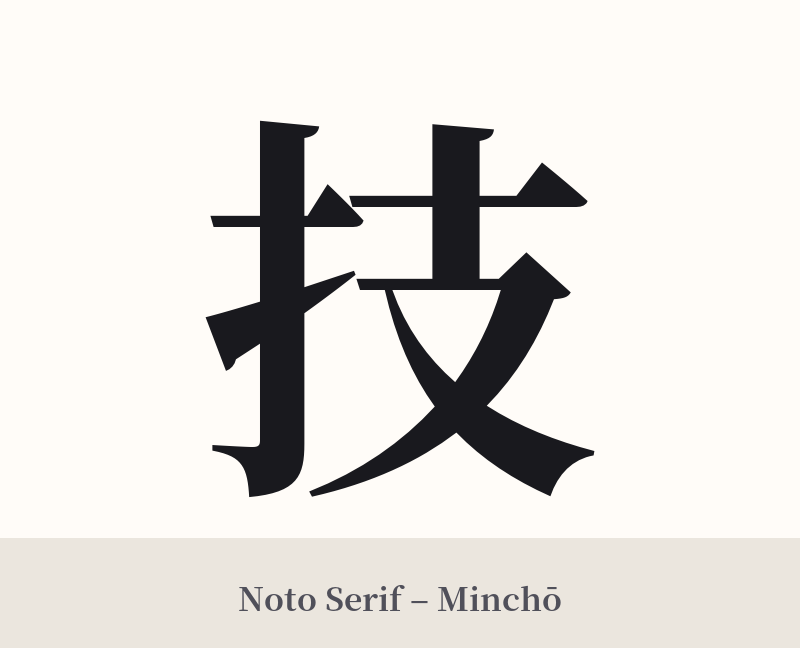
🖌️ Font Styles for 技
The same kanji can look dramatically different depending on the calligraphy style. Choose a font that matches the mood you want for your tattoo or design.
🎨 Tattoo Suitability
📐 Tattoo Design Guide
The kanji 技 is versatile and works well in various tattoo designs due to its balanced and relatively simple structure.
For placement, consider areas of the body associated with action and skill, such as the forearm, bicep, calf, or the back of the shoulder. These spots complement the meaning of a technique being put into practice.
A vertical orientation is classic and visually appealing for this single character. For design styles: – Kaisho (block script): A bold, angular Kaisho font emphasizes strength, discipline, and the foundational nature of the skill. – Gyōsho (semi-cursive script): A flowing, slightly cursive style can represent the fluidity, movement, and grace of a well-executed technique, making it ideal for martial artists or dancers. – Sosho (cursive script): For a more abstract and artistic look, a highly cursive Sosho style can capture the pure energy and spirit behind the skill.
To add more personal meaning, consider incorporating an element that represents your specific 'waza.' This could be a subtle wave for a swimmer, a brushstroke for an artist, or a gear for an engineer, integrated with or placed near the kanji.
Comments