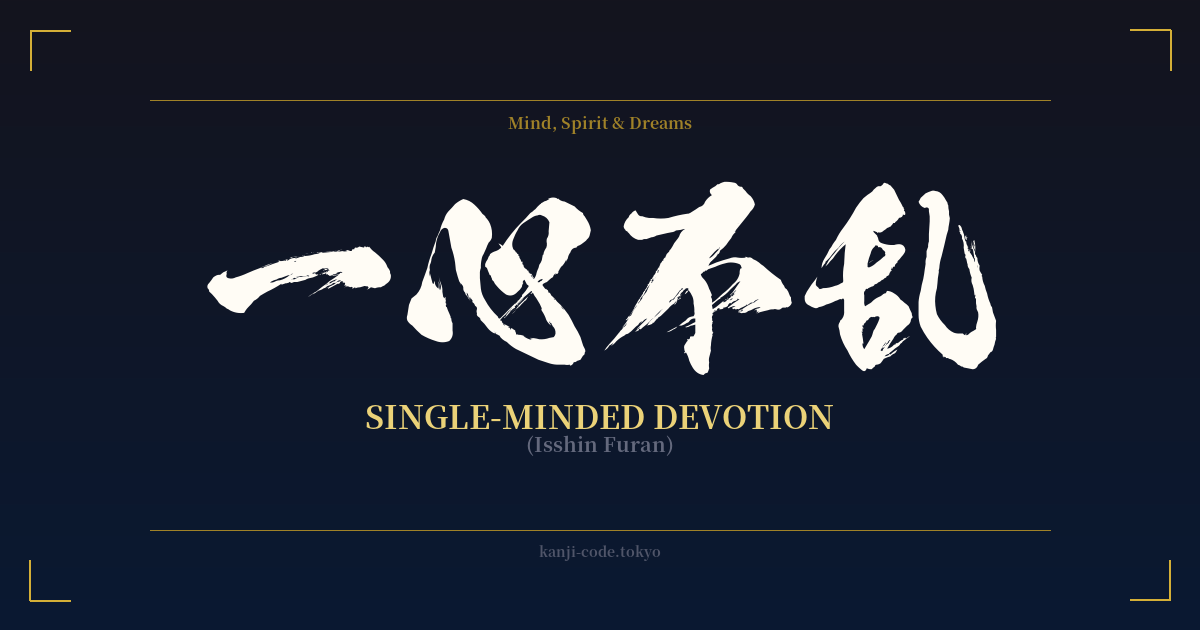
✍️ 一心不乱 (Isshin Furan) — Cultural Context
一心不乱 (Isshin Furan) is a yojijukugo, a four-character idiom that encapsulates a deep concept. It translates to a state of single-minded devotion, intense concentration, or being wholly absorbed in a task to the point where nothing else matters.
Literally broken down, the phrase means "one heart, no chaos." It paints a vivid picture of a mind that is completely unified and free from the disturbances (乱) that typically scatter our attention. This isn't just about trying hard; it's about achieving a mental state of pure, undiluted focus.
The roots of this expression are deeply intertwined with Buddhism. It describes a form of meditation or concentration (samādhi) where the practitioner stills the mind to focus on a single point, shutting out all external stimuli and internal chatter. The goal is to achieve clarity and, ultimately, enlightenment. This spiritual foundation gives 一心不乱 a weight and seriousness beyond simple concentration.
This concept extends far beyond the temple walls and into the core of Japanese aesthetics and martial arts (budō). A swordsman practicing a kata, a calligrapher poised over paper, or a potter centering clay on a wheel—all strive for a state of a mind that is one with the action. This is closely related to the concept of 無心 (mushin), or "no mind," where movement and decisions flow naturally and instinctively, free from the hesitation of conscious thought. In this state, the artist or warrior performs flawlessly, their entire being poured into the present moment.
In modern Japan, 一心不乱 is used to describe anyone who displays extraordinary focus. It could be an athlete "in the zone" before a major competition, a student cramming for university entrance exams, or a chef perfecting a signature dish. It embodies the cultural respect for dedication, perseverance, and the pursuit of mastery in any field. It celebrates the power of the human will to channel all its energy toward a single, meaningful purpose, turning a simple action into a profound practice.
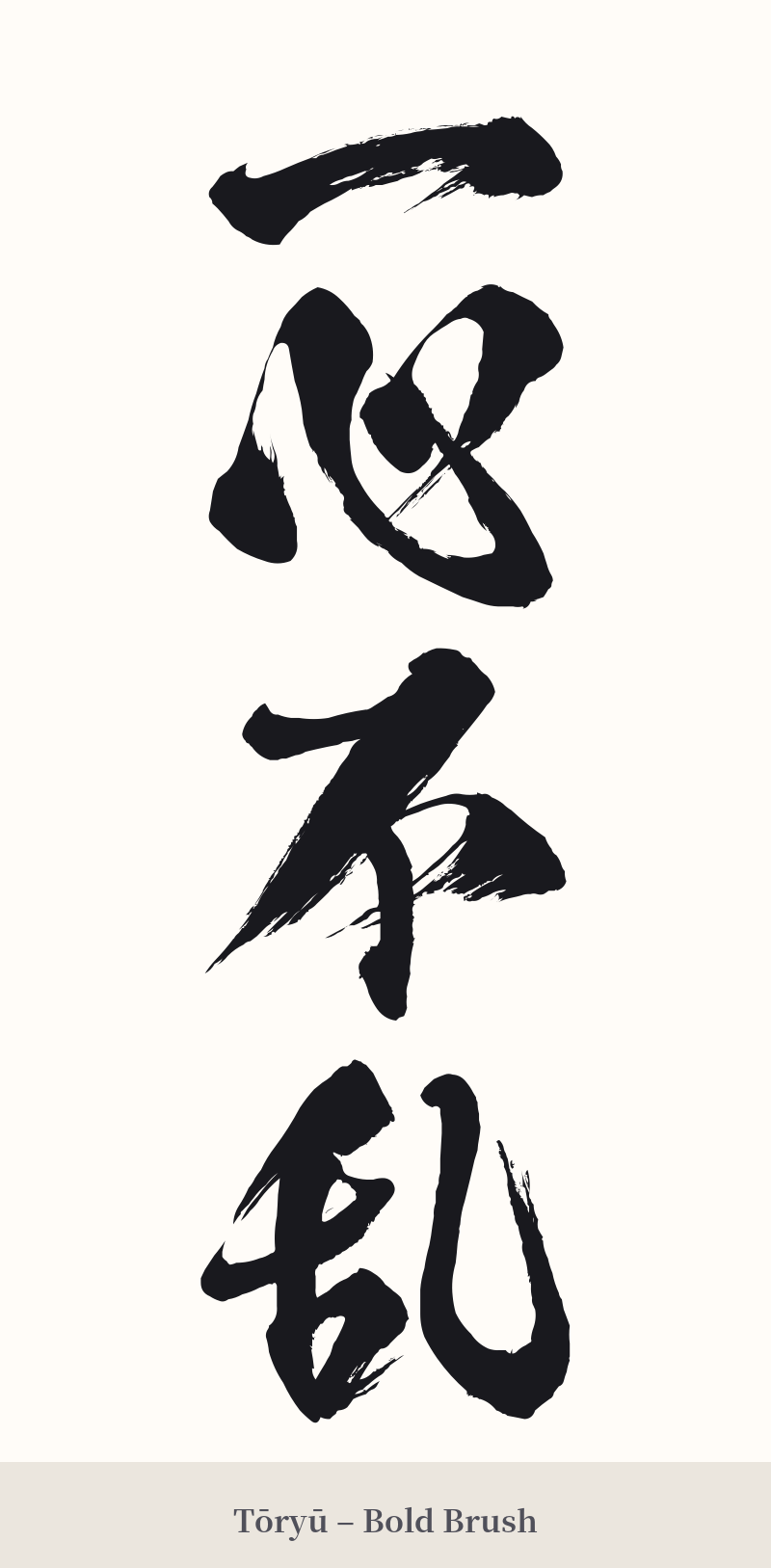
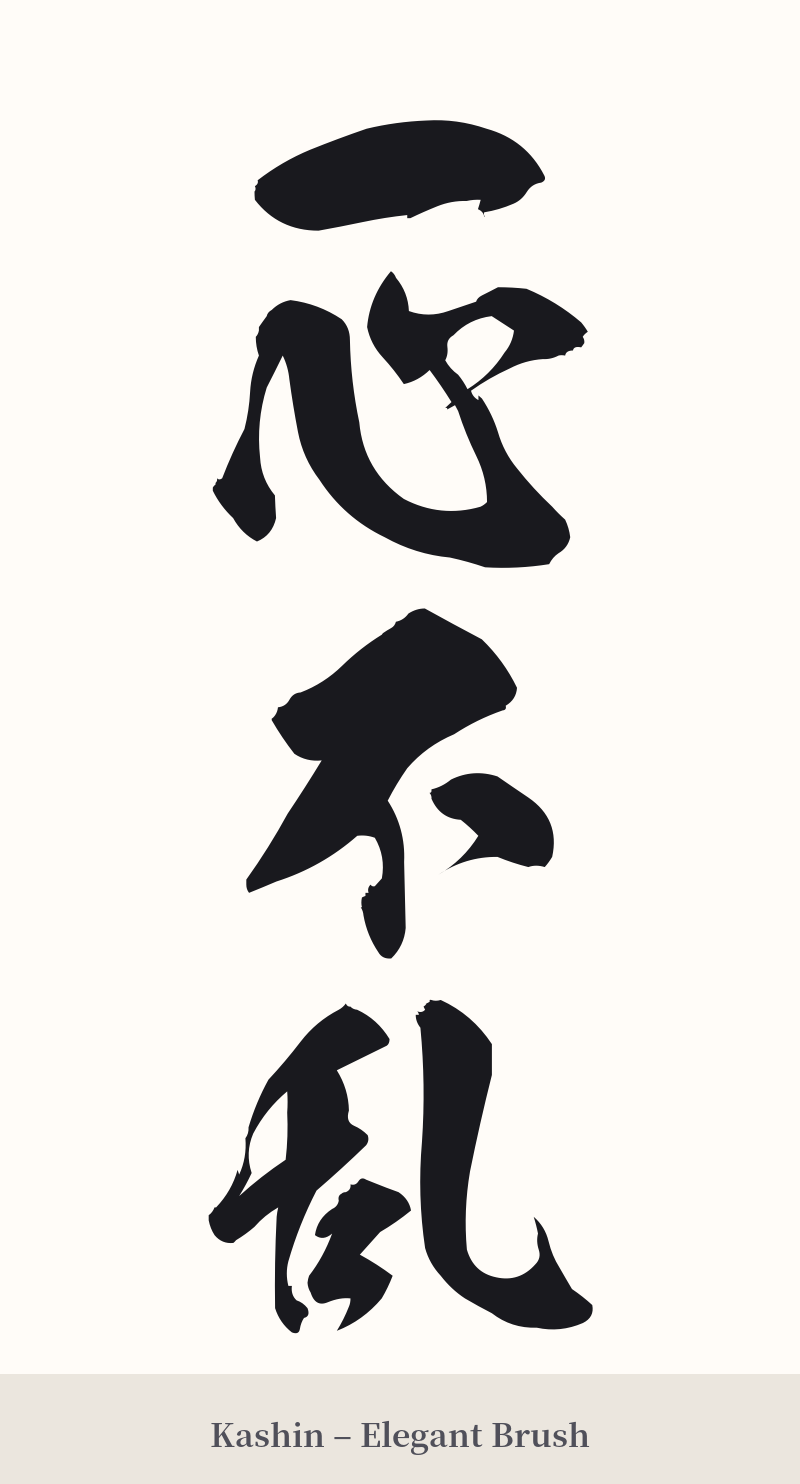
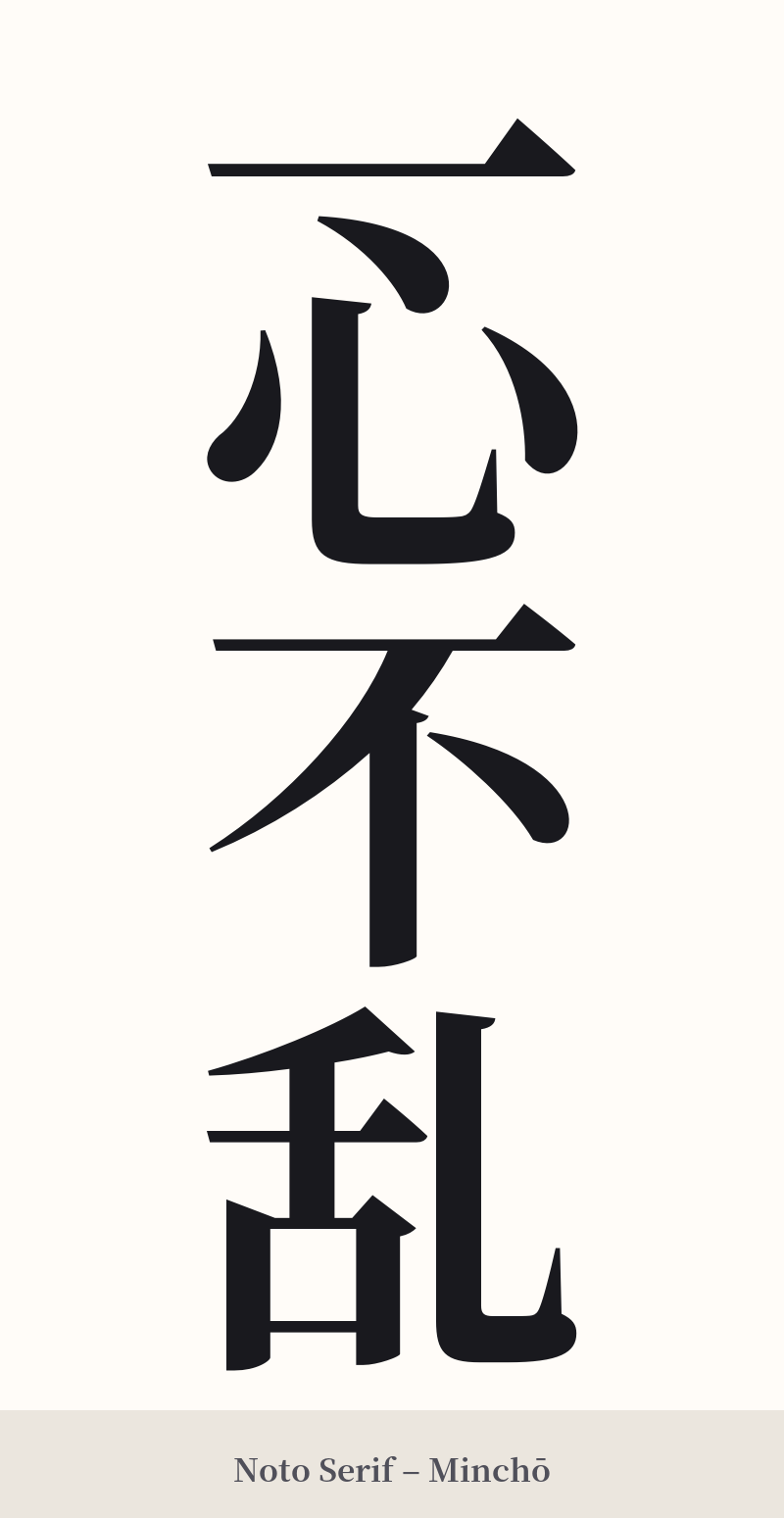
🖌️ Font Styles for 一心不乱
The same kanji can look dramatically different depending on the calligraphy style. Choose a font that matches the mood you want for your tattoo or design.
🎨 Tattoo Suitability
📐 Tattoo Design Guide
The structure of a four-character idiom like 一心不乱 lends itself beautifully to tattoo design, particularly in a vertical format. This traditional layout creates a strong, elegant line that flows well with the body's natural contours.
– Placement: A vertical column is highly recommended. Prime locations include the spine, the length of the forearm, the side of the ribs, or down the calf. This emphasizes the flow and sequence of the characters.
– Font Style: The choice of font can dramatically alter the feeling. A dynamic, flowing calligraphy script (gyōsho or sōsho) can capture the energy and passion of total absorption. For a more disciplined and stoic feel, a clean and precise block script (kaisho) is an excellent choice.
– Visual Elements: While the kanji alone are powerful, you could subtly incorporate an element that represents the object of your devotion. For example, a faint watercolor splash of a specific color, or a single cherry blossom petal. However, it's best to keep additions minimal to honor the kanji's meaning of non-distraction.
Comments