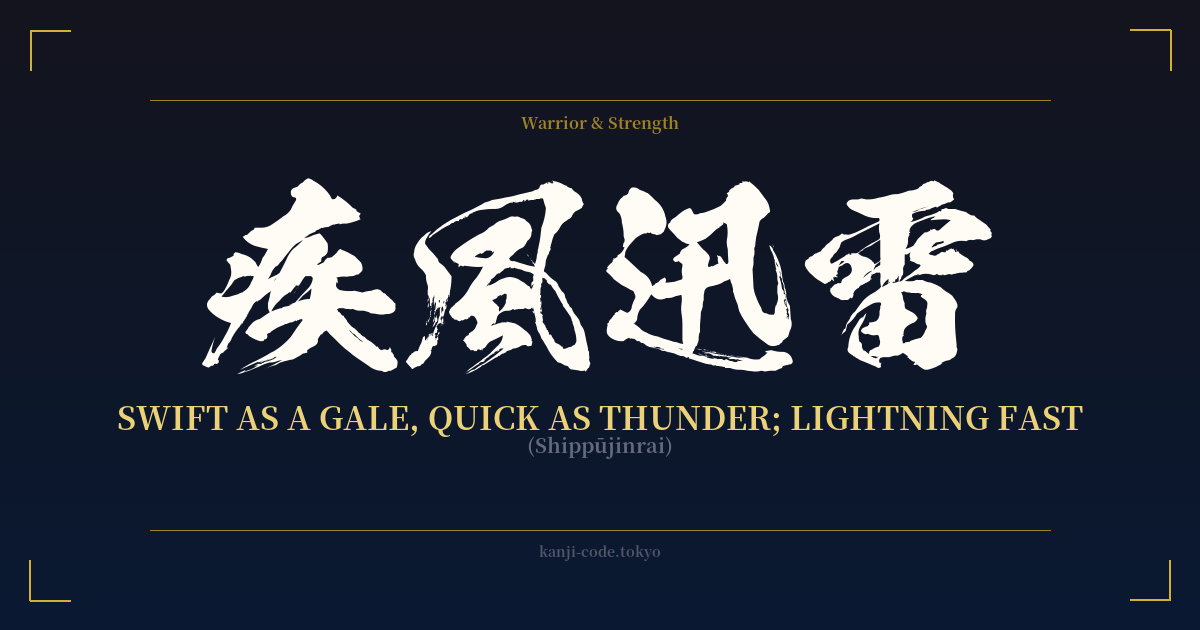
✍️ 疾風迅雷 (Shippūjinrai) — Cultural Context
疾風迅雷 (Shippūjinrai) is a quintessential Japanese four-character idiom, or 'yojijukugo,' that paints a vivid picture with just four symbols. It translates literally to 'swift wind, fast thunder,' capturing the essence of something happening with incredible speed and force.
The phrase evokes the raw, untamable power of a sudden storm. It’s not just about being fast; it’s about being so fast and powerful that you are an unstoppable force of nature. The first half, 疾風 (shippū), describes a violent gale, a wind that sweeps everything before it. The second half, 迅雷 (jinrai), refers to a sudden, sharp clap of thunder that shakes the very ground. Together, they create a metaphor for overwhelming and decisive action.
This idiom's origins can be traced back to classical Chinese literature, specifically the 'Book of the Later Han,' which influenced much of Japanese language and philosophy. In Japan, the concept resonated deeply with the warrior class, including the samurai. The idea of striking with the speed of wind and the finality of thunder was the ultimate ideal in combat. It embodies the principle of 'sen sen no sen'—attacking before your opponent has even thought to attack.
In the modern era, Shippūjinrai has lost none of its potency. You'll hear it used in sports commentary to describe a lightning-fast play or a player who blitzes past the competition. It’s a common name for special attacks in anime, manga, and video games, cementing its status as one of the 'coolest' Japanese idioms. A character in a game might shout 'Shippūjinrai!' before unleashing a rapid flurry of attacks, perfectly capturing the term's meaning.
Beyond media, the term can describe rapid changes in business, politics, or technology. A startup that disrupts an entire industry in a short time might be described as moving with the speed of Shippūjinrai. It carries connotations of brilliance, efficiency, and an almost shocking level of effectiveness. This makes it a word that commands respect, blending ancient natural imagery with a very modern appreciation for speed and power.
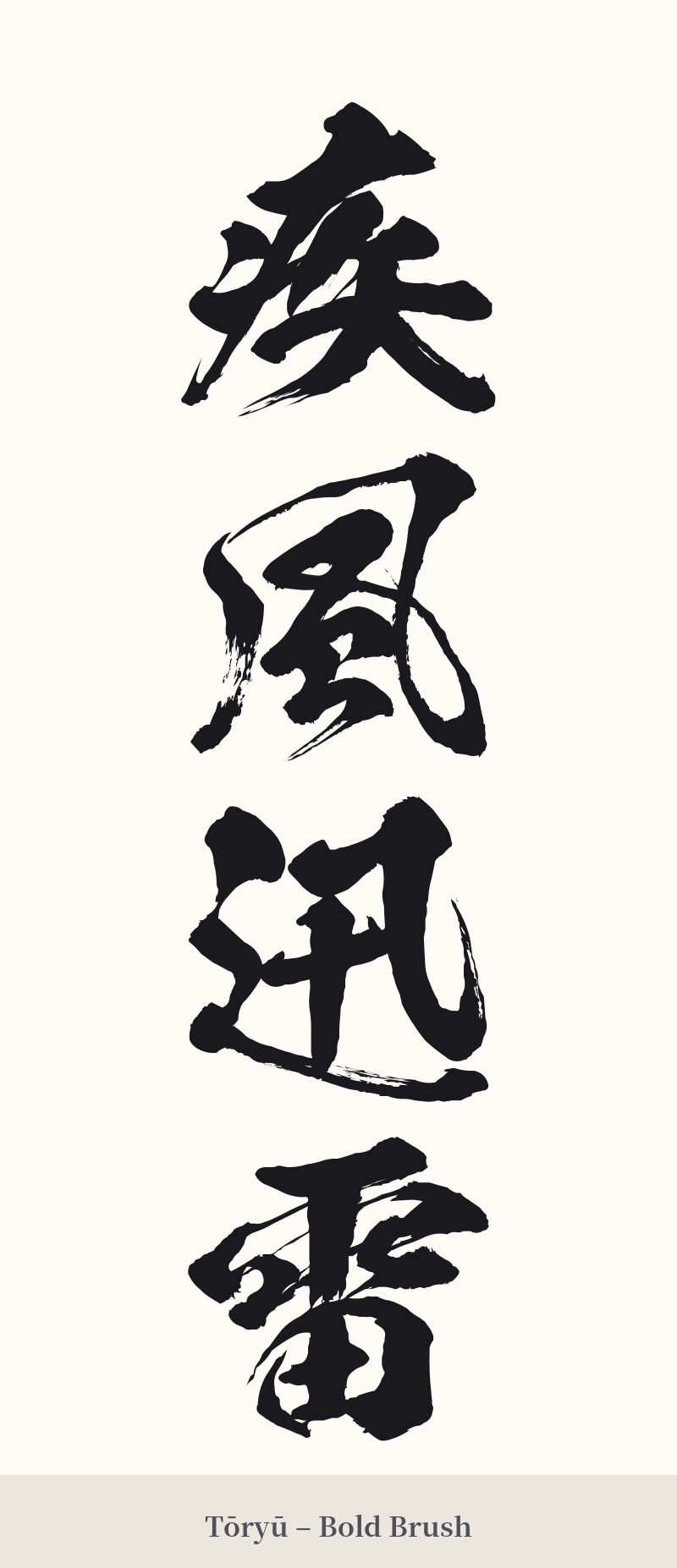
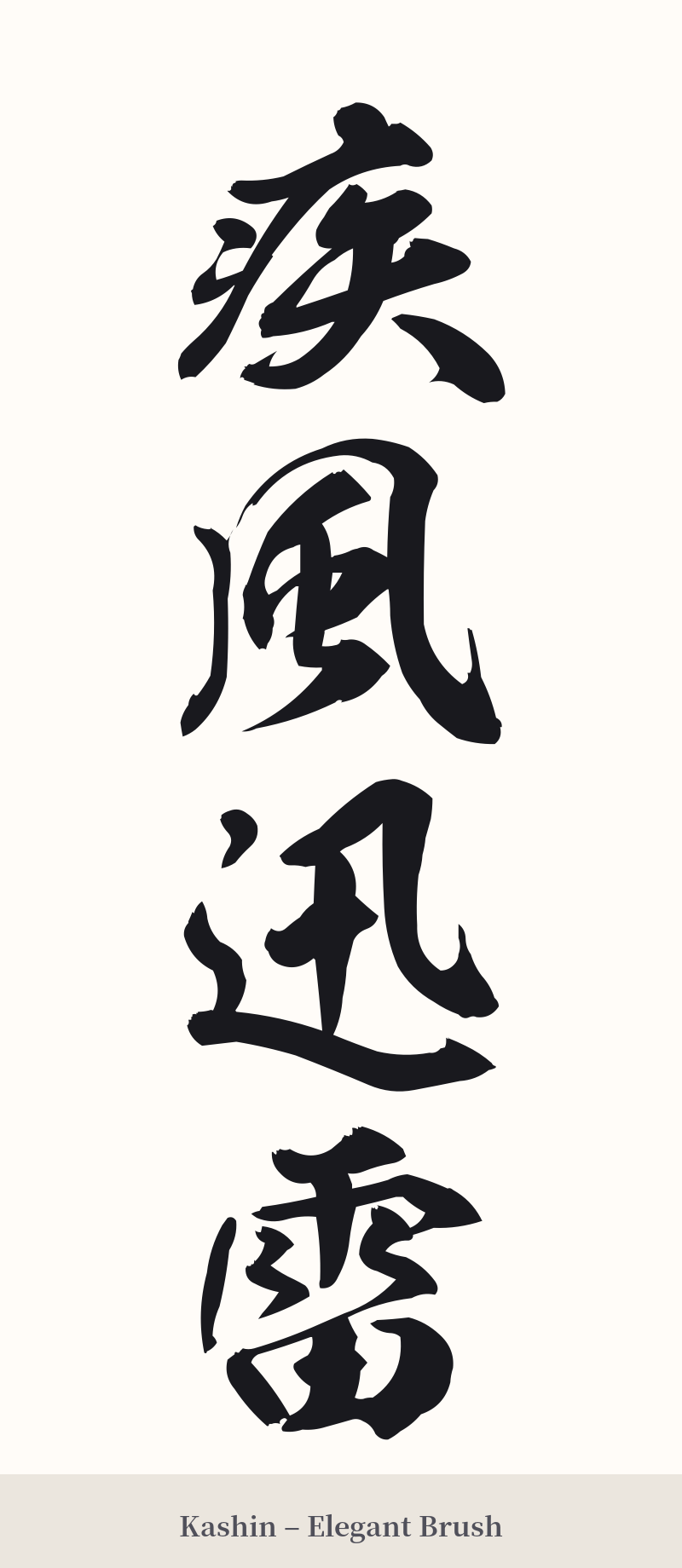
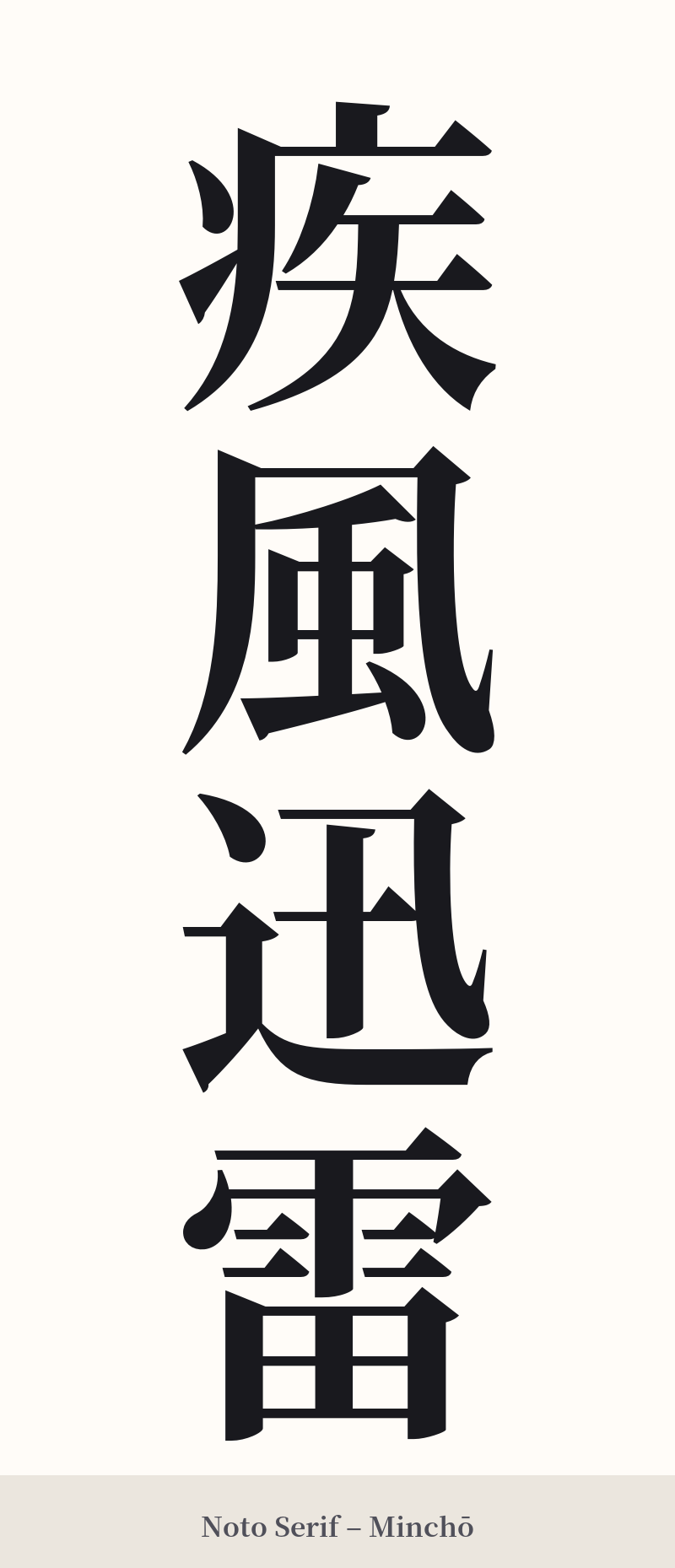
🖌️ Font Styles for 疾風迅雷
The same kanji can look dramatically different depending on the calligraphy style. Choose a font that matches the mood you want for your tattoo or design.
🎨 Tattoo Suitability
📐 Tattoo Design Guide
For a powerful compound like 疾風迅雷, the design choices are crucial for conveying its meaning.
– Placement: Vertical alignment is traditional and highly recommended for four-character idioms. This makes it perfect for the spine, forearm, or calf, where the characters can flow downwards. A horizontal placement across the chest or back can also be very impactful.
– Font Style: To match the 'swift wind' element, a semi-cursive (gyōsho) or fully cursive (sōsho) script is an excellent choice. These styles have dynamic, flowing strokes that embody speed and movement. For a more solid, impactful, and aggressive feel, a bold block script (kaisho) with sharp corners (kaku) can emphasize the 'thunder' aspect.
– Visual Elements: While the kanji is powerful on its own, it can be paired with complementary imagery. Subtle wind bars behind the characters or stylized lightning bolts weaving through them can enhance the theme. A dragon, a creature associated with storms and power in East Asian mythology, is also a classic and fitting companion for this idiom.
Comments