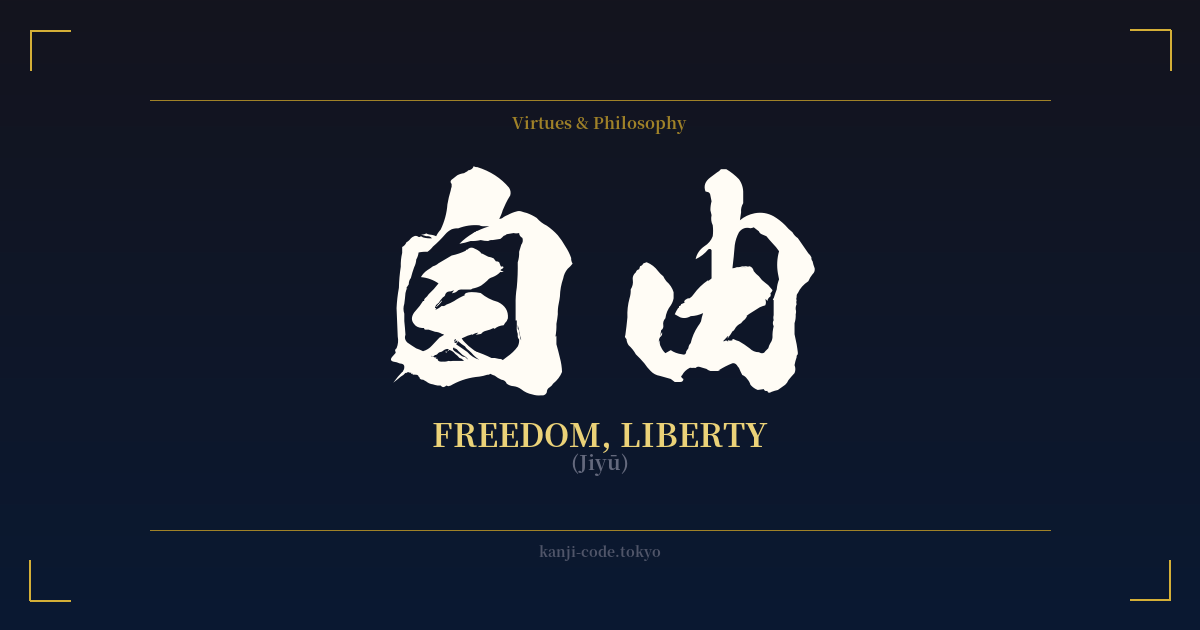
✍️ 自由 (Jiyū) — Cultural Context
The Japanese word for freedom, 自由 (Jiyū), is a potent and relatively modern concept in the nation's long history. Unlike ancient virtues rooted in feudal society, Jiyū is a term born from Japan's encounter with the West during the Meiji Restoration in the late 19th century. It was specifically created to translate the Western philosophical and political idea of 'liberty.'
The kanji themselves tell a beautiful story. 自 (ji) means 'oneself,' and 由 (yū) means 'reason' or 'origin.' Together, they literally translate to 'from oneself' or 'by one's own reason.' This composition brilliantly captures the essence of self-determination and autonomy—the idea that one's actions and path stem from their own will and cause, not from an external authority.
This was a revolutionary idea in a society traditionally structured around collective harmony (和, wa), duty (義理, giri), and strict social hierarchies. The introduction of Jiyū fueled the Freedom and People's Rights Movement (自由民権運動, Jiyū Minken Undō), a major political force that pushed for a constitution and a representative assembly. It marked a seismic shift from the feudal mindset to a modern, individual-centric consciousness.
In contemporary Japan, Jiyū is a common word. You'll hear it in phrases like 自由時間 (jiyū jikan), meaning 'free time,' or 表現の自由 (hyōgen no jiyū), 'freedom of expression.' It represents both the personal liberty to choose one's lifestyle and the political freedoms guaranteed by the constitution.
However, the cultural nuance remains. While in the West, freedom can sometimes carry a connotation of absolute individualism, in Japan, Jiyū is often implicitly balanced against the needs of the community. It's a responsible freedom, one that ideally doesn't disrupt social harmony. It’s the freedom to be yourself, but with an awareness of your place within the larger group. This makes Jiyū a deeply philosophical term, representing a constant negotiation between the self and society.
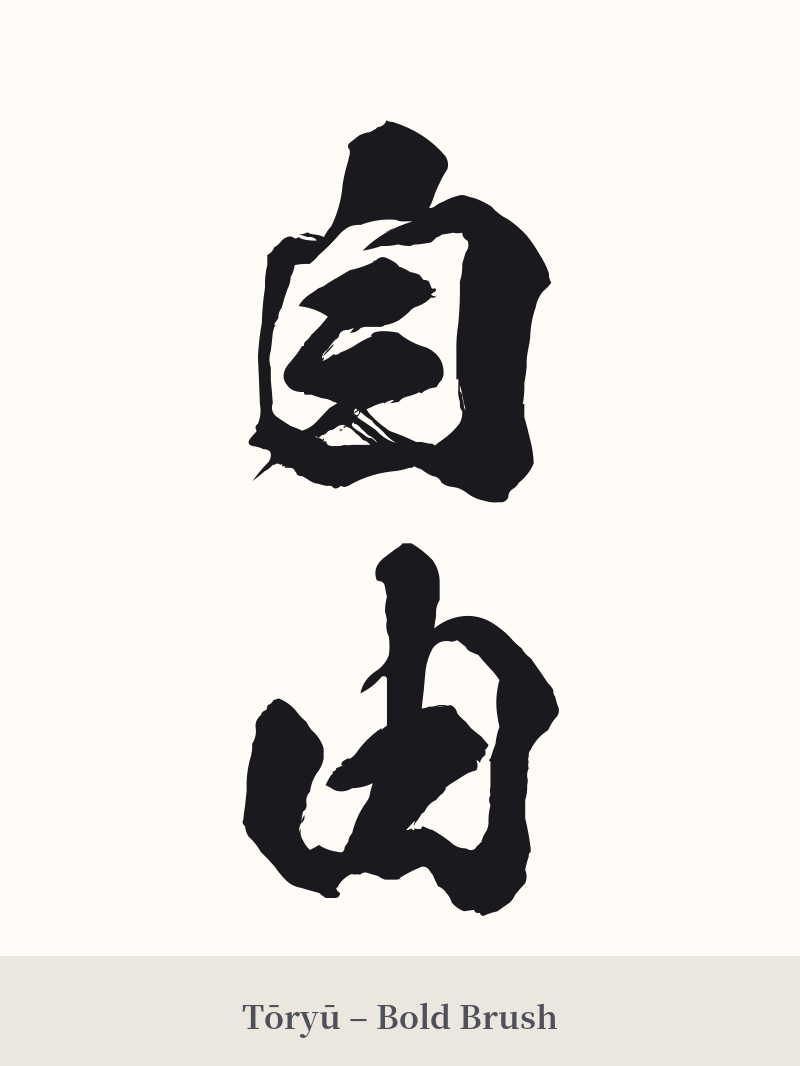
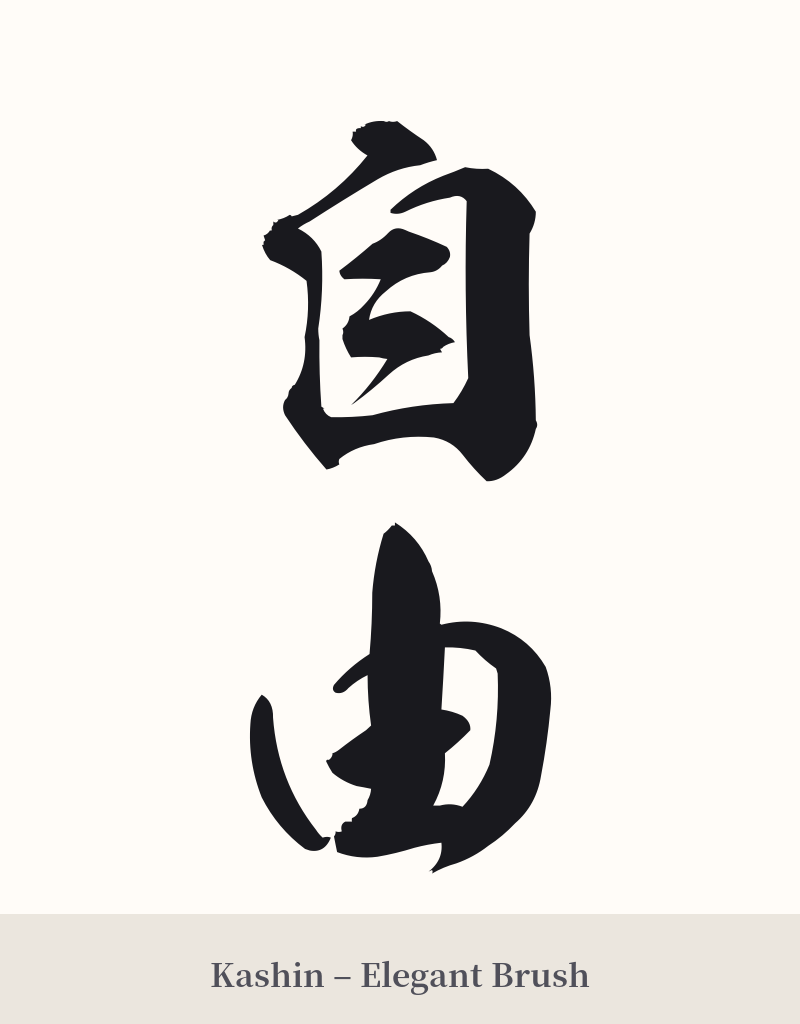
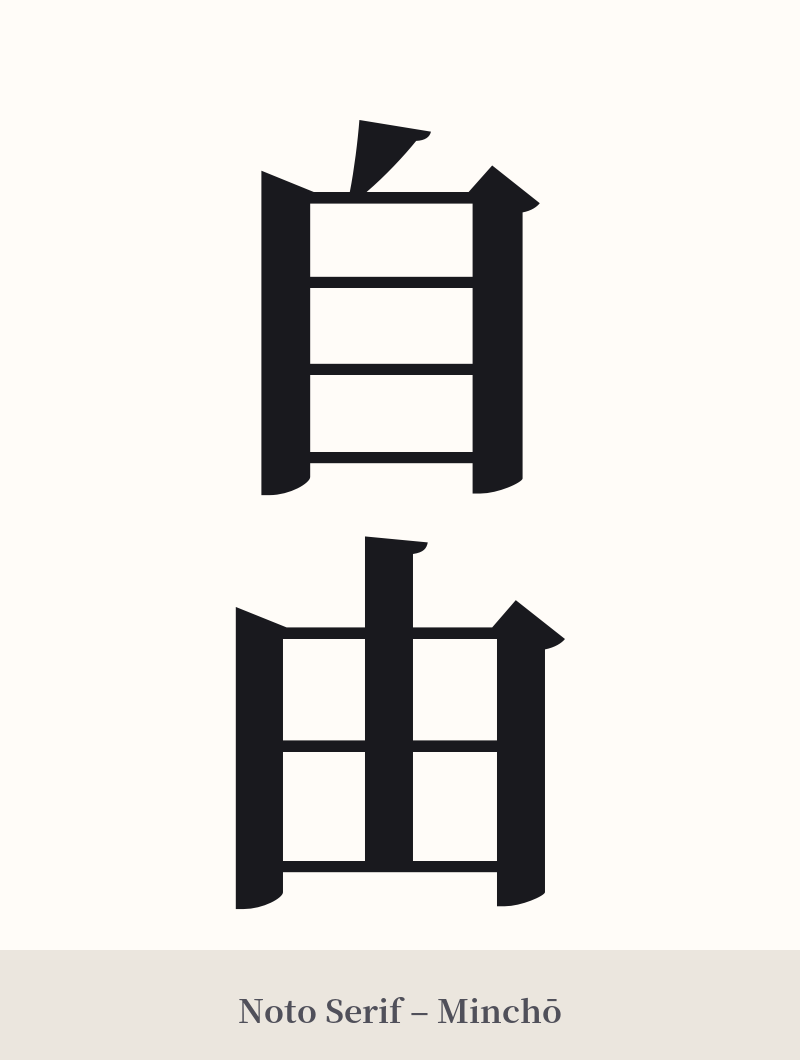
🖌️ Font Styles for 自由
The same kanji can look dramatically different depending on the calligraphy style. Choose a font that matches the mood you want for your tattoo or design.
🎨 Tattoo Suitability
📐 Tattoo Design Guide
The word 自由 offers great versatility for a tattoo design, balancing visual appeal with profound meaning.
For placement, its two-character structure works well both horizontally and vertically. A vertical orientation is particularly striking along the forearm, spine, or calf, echoing traditional Japanese script. A horizontal placement fits nicely on the chest, upper back, or inner bicep.
When it comes to font style: – A dynamic, semi-cursive calligraphy script (gyōsho) can capture the energetic, active pursuit of freedom. – A bold, traditional block script (kaisho) or a clean Mincho font can convey a more stately, philosophical sense of liberty. – For a personal touch, consider a design that looks like it was painted with a brush, complete with ink splatters, to emphasize the idea of creating one's own path.
Consider incorporating imagery that complements the theme. A bird breaking out of a cage, untangled ropes, or a vast, open sky can visually amplify the kanji's message of liberation and boundless possibility.
Comments