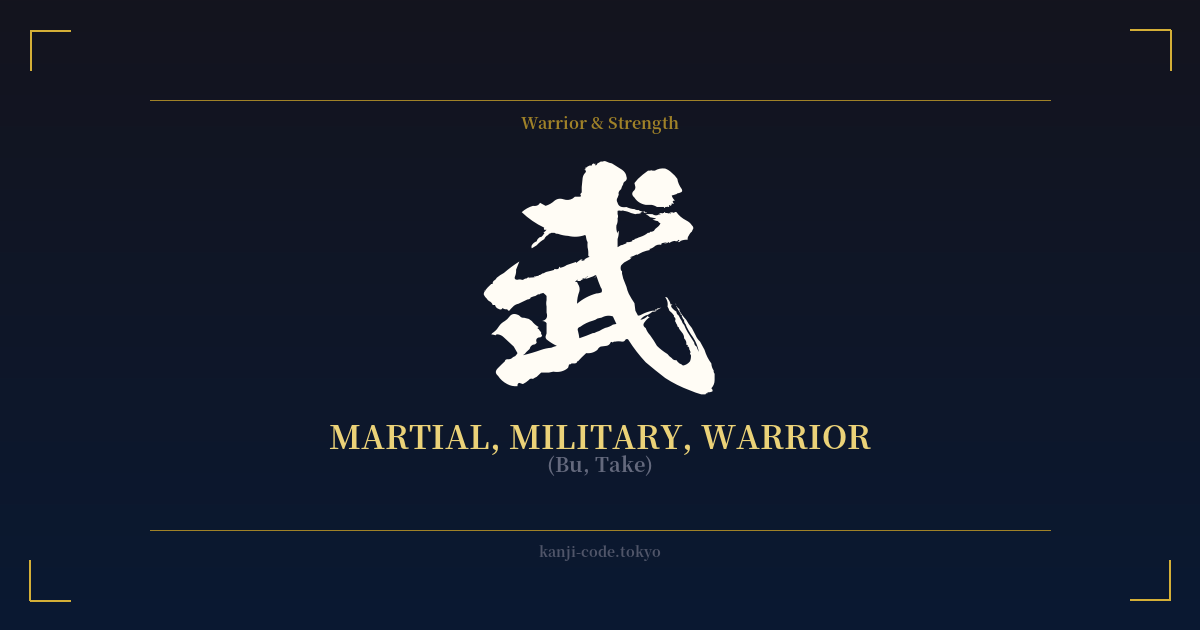
✍️ 武 (Bu, Take) — Cultural Context
Walk into any martial arts dojo in the world, and you are almost certain to find the character 武 (Bu). It is the heart of the Japanese martial tradition, a single symbol that anchors concepts like 武道 (Budō, the Martial Way) and 武士 (Bushi, the Warrior). Its presence is a constant reminder of the principles, history, and philosophy that underpin the practice of combat, both as a physical skill and a path to self-development.
The character's origin tells a fascinating story of duality. It is a pictograph composed of two radicals: 戈 (hoko), representing a spear or halberd, and 止 (shi), which depicts a foot. For centuries, this combination has sparked debate over its true original meaning. Does the foot mean 'to stop,' suggesting a force that halts violence? Or does it mean 'to advance,' depicting a soldier marching into battle with a weapon in hand?
A famous, perhaps romanticized, interpretation comes from a story about King Zhuang of Chu from the 6th century BCE. He is said to have defined 武 as the act of 'stopping the spear' (戈を止める). This interpretation posits that the ultimate purpose of martial strength is to bring about peace and prevent conflict. It’s a noble and philosophical ideal that has become central to modern Budō, emphasizing restraint, discipline, and the protective role of the warrior.
However, etymologists and historians often point to a more straightforward and grim initial meaning. In ancient China, where the character originated, 止 more commonly meant to advance or march. Therefore, 武 likely first described the literal act of war: soldiers marching with weapons. The philosophical meaning of 'stopping the spear' was likely a later development, a way for a warrior class to codify its role in society with a sense of higher purpose and moral justification.
This very duality is what gives 武 its profound power. It doesn't just mean 'war' or 'fighting.' It contains both the capacity for violence and the wisdom to restrain it. It is the spirit of the samurai who was not merely a killer, but a guardian bound by a code of honor. Today, whether in the name Takeshi or on the wall of a kendo hall, 武 represents a disciplined strength, a readiness to act, and the heavy responsibility that comes with power.
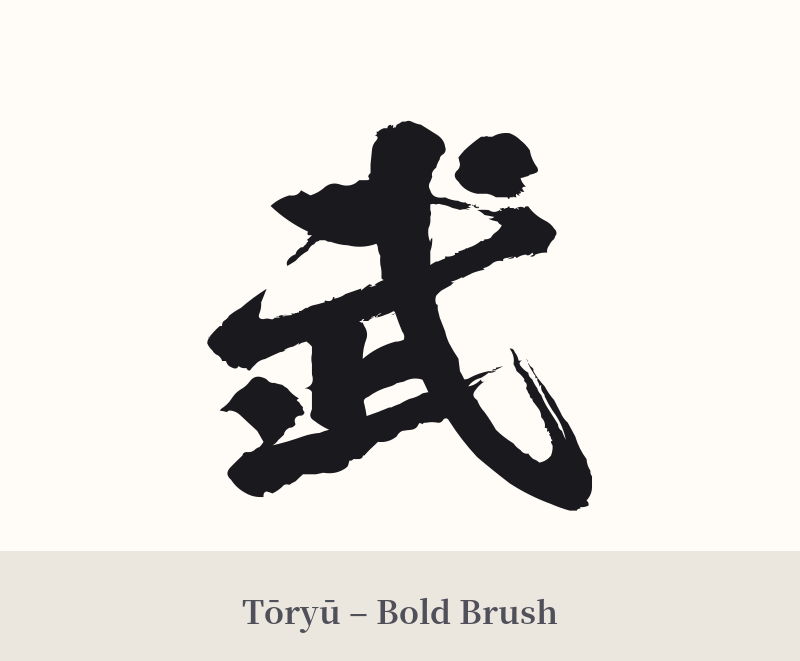
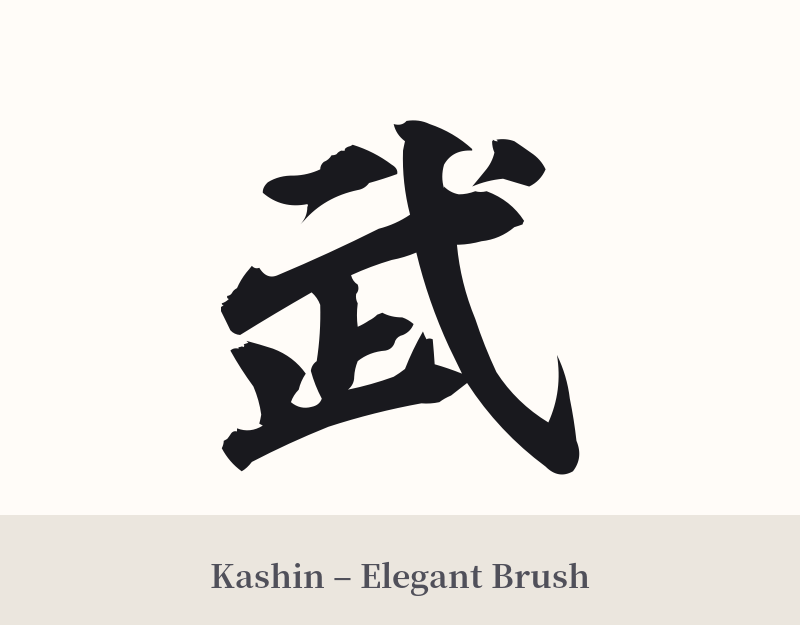
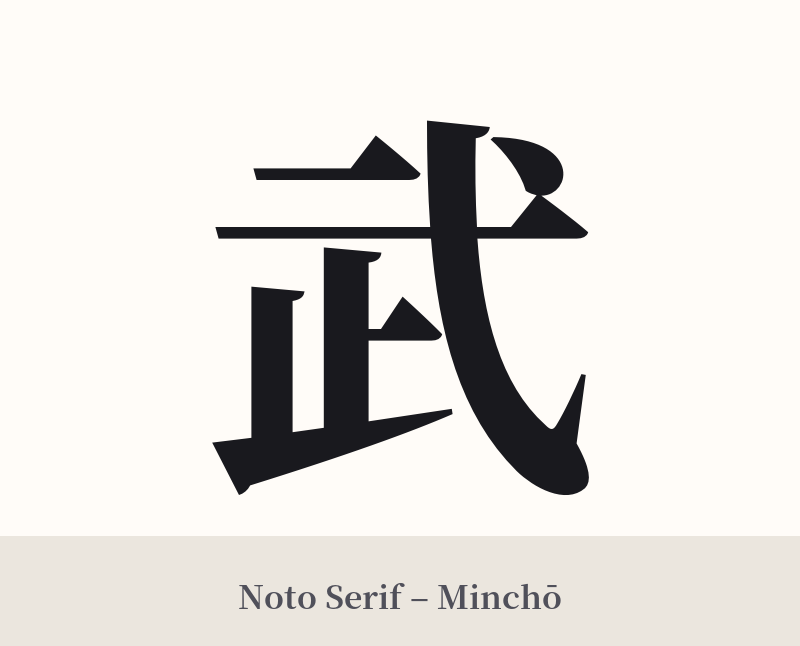
🖌️ Font Styles for 武
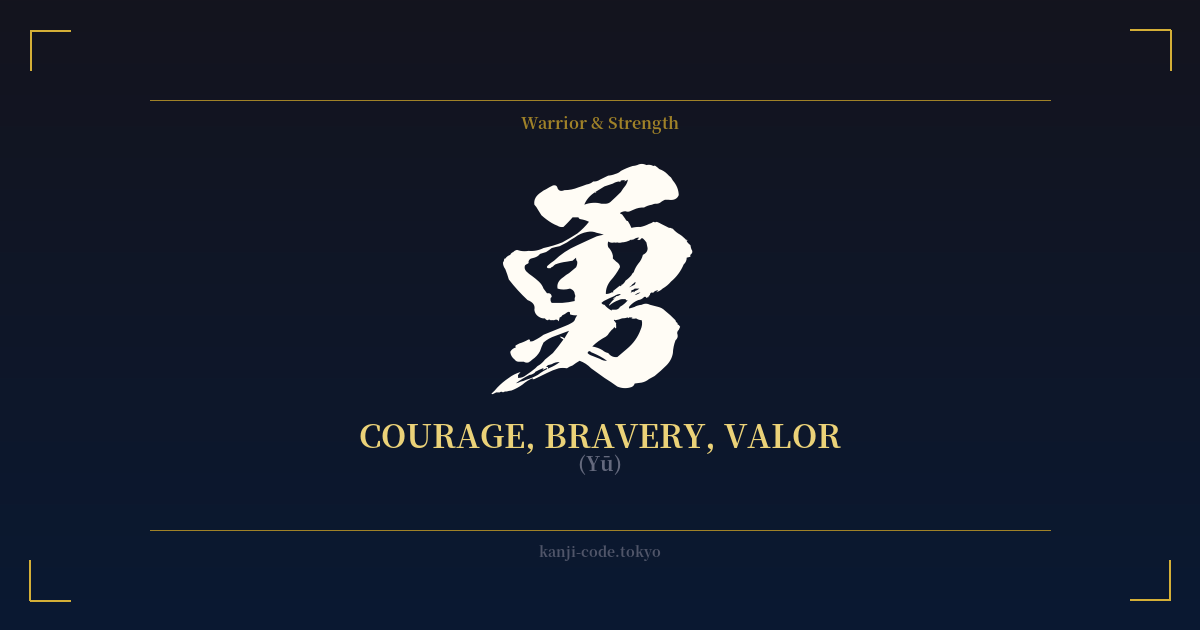
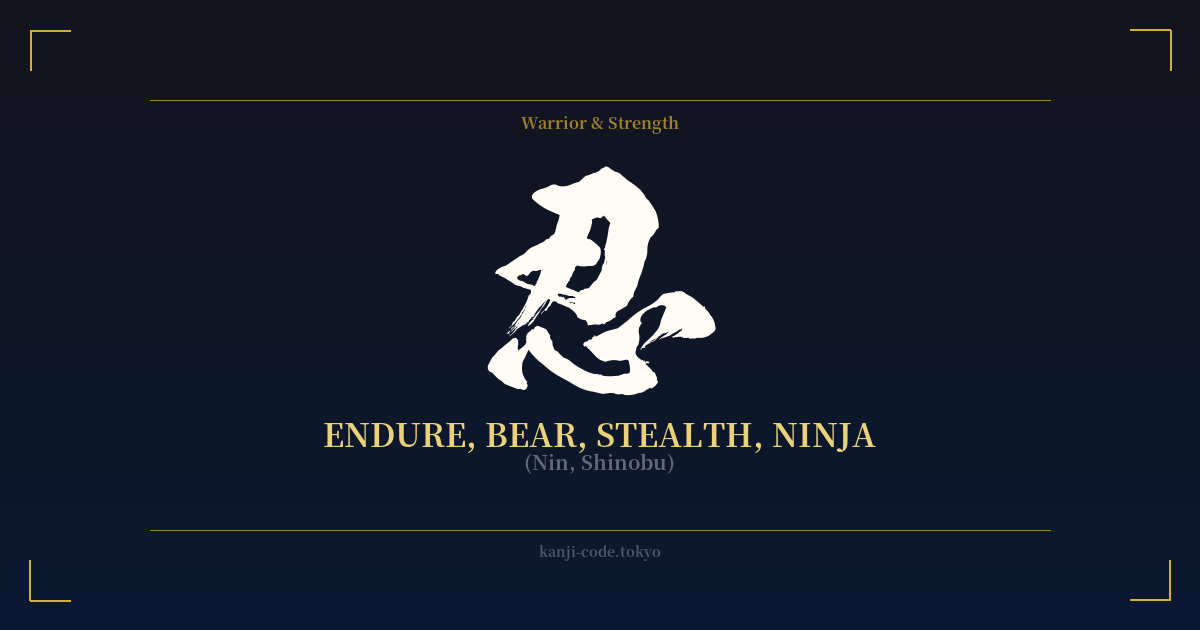
The same kanji can look dramatically different depending on the calligraphy style. Choose a font that matches the mood you want for your tattoo or design.
🎨 Tattoo Suitability
📐 Tattoo Design Guide
The kanji 武 is a powerful statement piece, well-suited for areas of the body that convey strength and stability.
– Placement: The upper arm, forearm, chest, or across the back between the shoulder blades are all excellent choices. These placements provide a flat, stable canvas and align with the character's strong, protective symbolism.
– Style: A traditional Kaisho (block script) style emphasizes discipline, order, and stability. For a more dynamic and fluid feel, a Gyosho (semi-cursive) or Sosho (cursive) calligraphic style can represent the active, flowing nature of martial arts.
– Visual Complements: Consider pairing 武 with other symbolic elements. An Enso (Zen circle) behind it can represent enlightenment and the universe within the context of martial practice. A dragon can add themes of power, wisdom, and protection. Cherry blossoms (sakura) can be used to evoke the samurai concept of 'mono no aware'—the beautiful, transient nature of life.
Comments