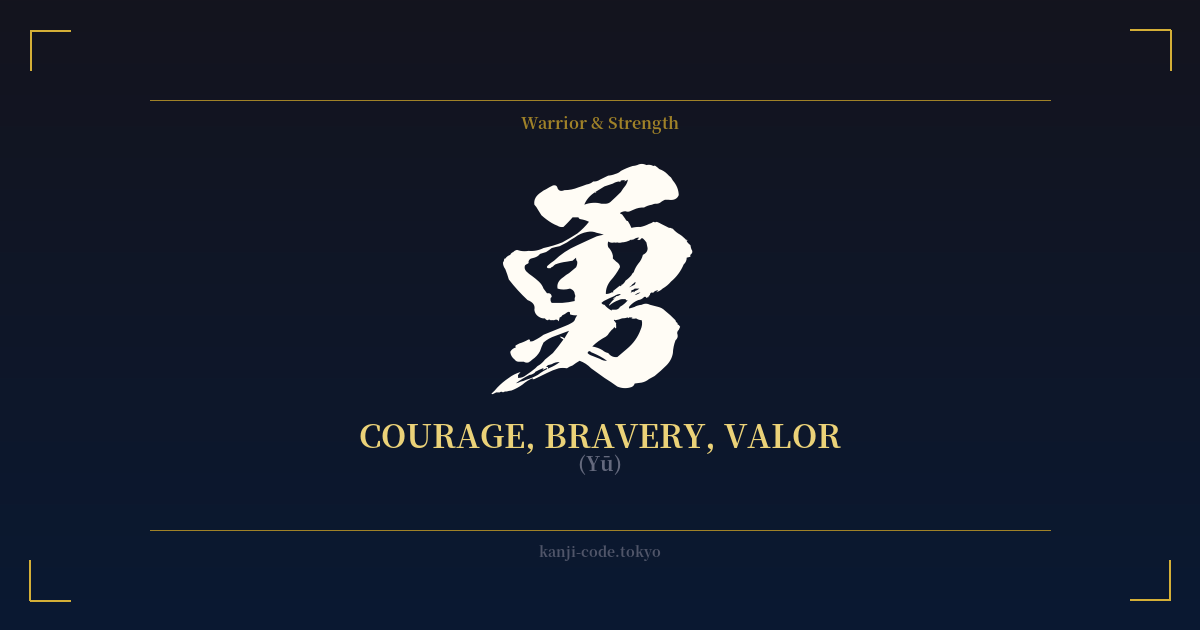
✍️ 勇 (Yū) — Cultural Context
The kanji 勇, read as 'Yū,' is one of the most powerful and evocative single characters in the Japanese language. It translates to courage, bravery, and valor, but its meaning extends far beyond simple fearlessness. It embodies a form of courage that is both active and principled, a strength that is wielded with purpose and a sense of justice.
Historically and culturally, 勇 is most famously associated with the samurai and their code of ethics, Bushidō (武士道), or 'The Way of the Warrior.' Within this code, 勇 is one of the seven essential virtues, standing alongside concepts like justice (義, Gi), benevolence (仁, Jin), and honor (名誉, Meiyo). For the samurai, 勇 was not reckless abandon or a thirst for violence. It was the courage to do what is right, to face danger in the service of a higher principle, and to endure hardship with a calm and resolute spirit. It was the bravery to enter a battle, but also the moral courage to speak truth to a lord or to admit a mistake.
The etymology of the character itself offers a glimpse into this meaning. While interpretations vary, it is often seen as a combination of elements representing a 'man' (男) or 'strength' (力) being directed or channeled. This suggests that courage isn't just a raw emotion but a focused application of one's inner power. It’s the ability to harness one's strength and will, even in the face of fear, to accomplish a worthy goal.
In modern Japan, 勇 remains a deeply respected concept. It forms the basis of many common words. For example, 勇気 (yūki) is the most common word for 'courage' or 'bravery' in everyday conversation. A 勇者 (yūsha) is a 'hero' or 'brave person,' a term frequently used in folklore, manga, and video games to describe the protagonist who sets out on a quest. The word 勇敢 (yūkan) means 'brave' or 'valiant.'
This enduring presence in both classical philosophy and modern pop culture makes 勇 a timeless symbol. It represents not just the warrior's physical prowess but the universal human capacity for inner strength, resilience, and the will to act honorably in the face of adversity. It is a testament to the idea that true courage is a matter of the heart and spirit.
🖌️ Font Styles for 勇
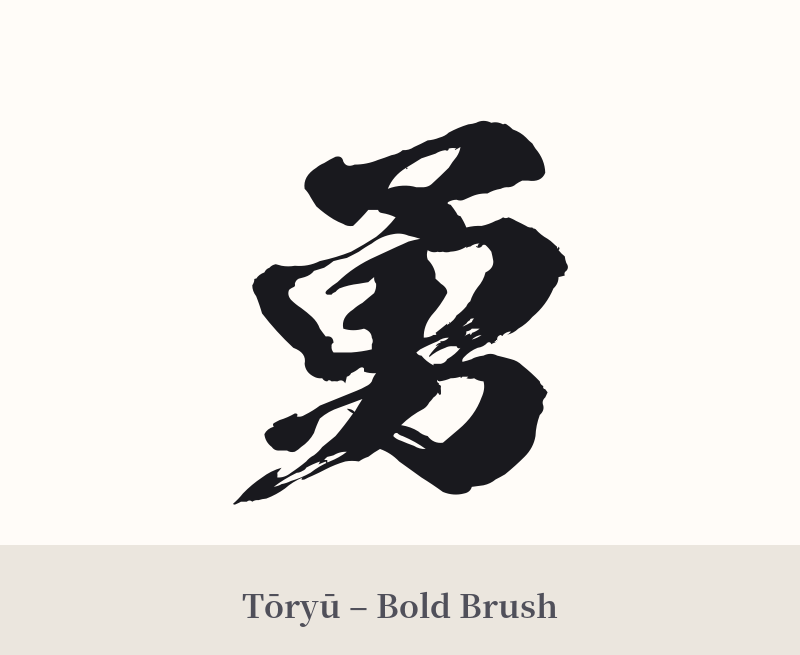
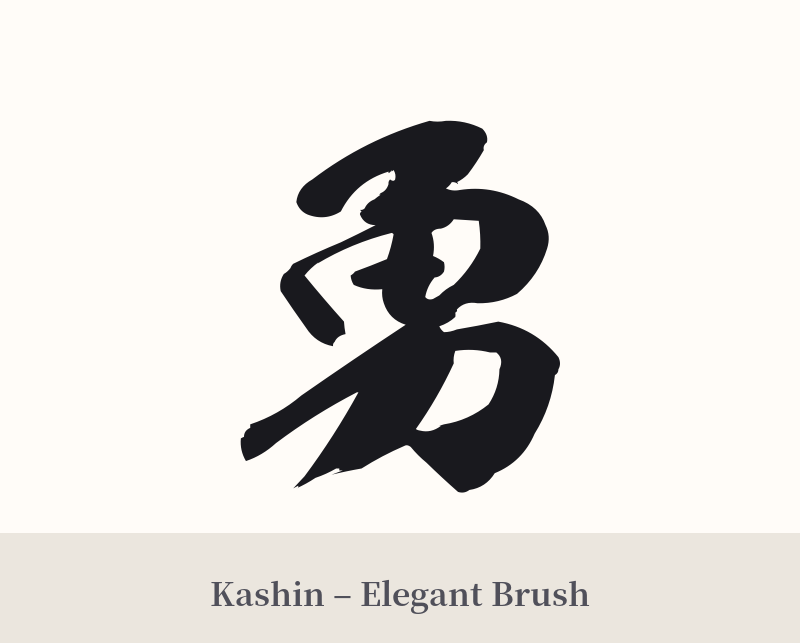
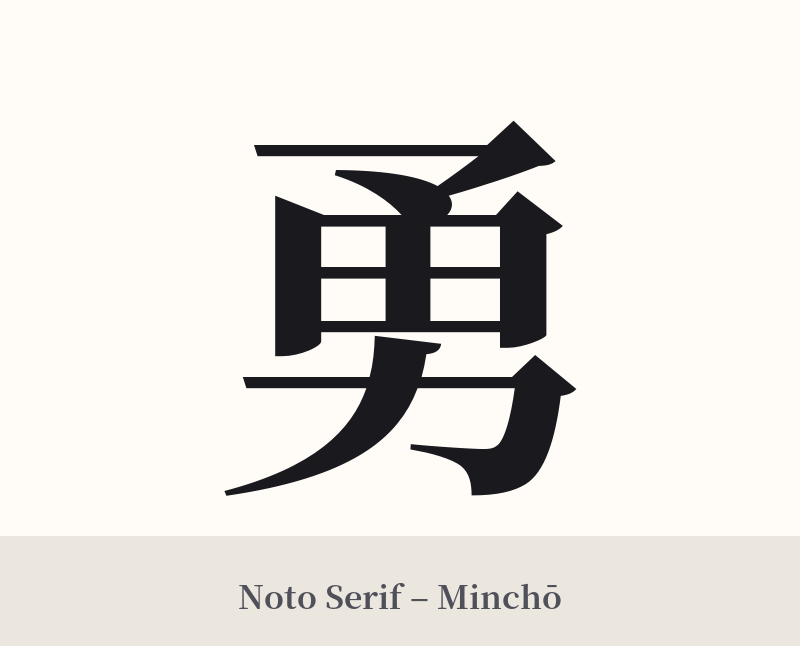
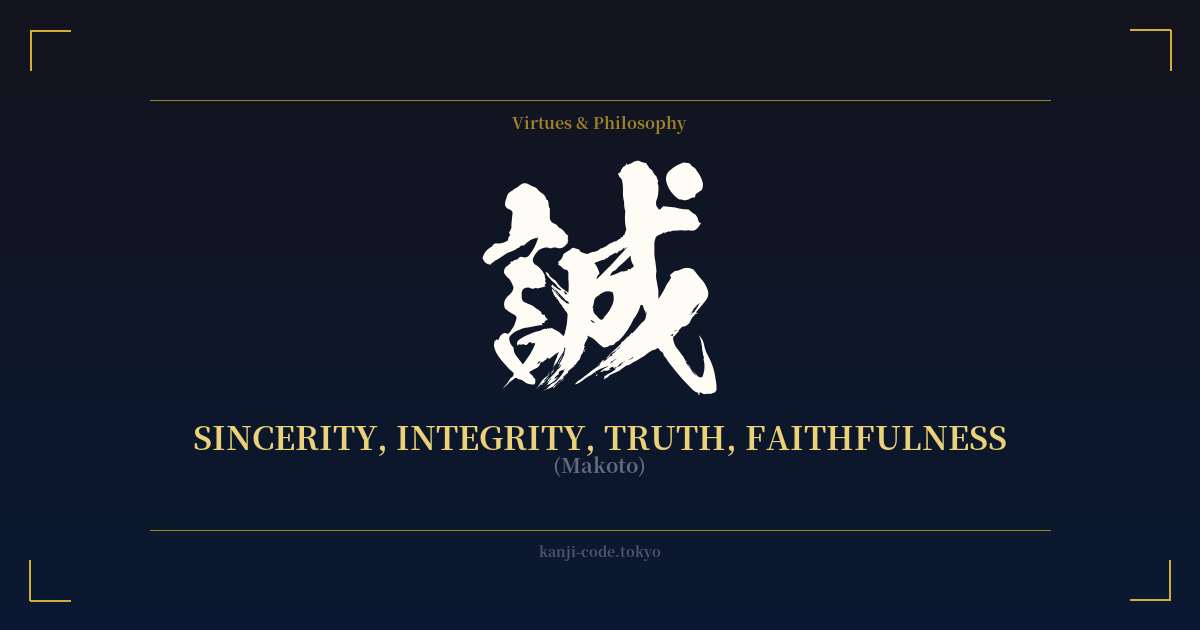
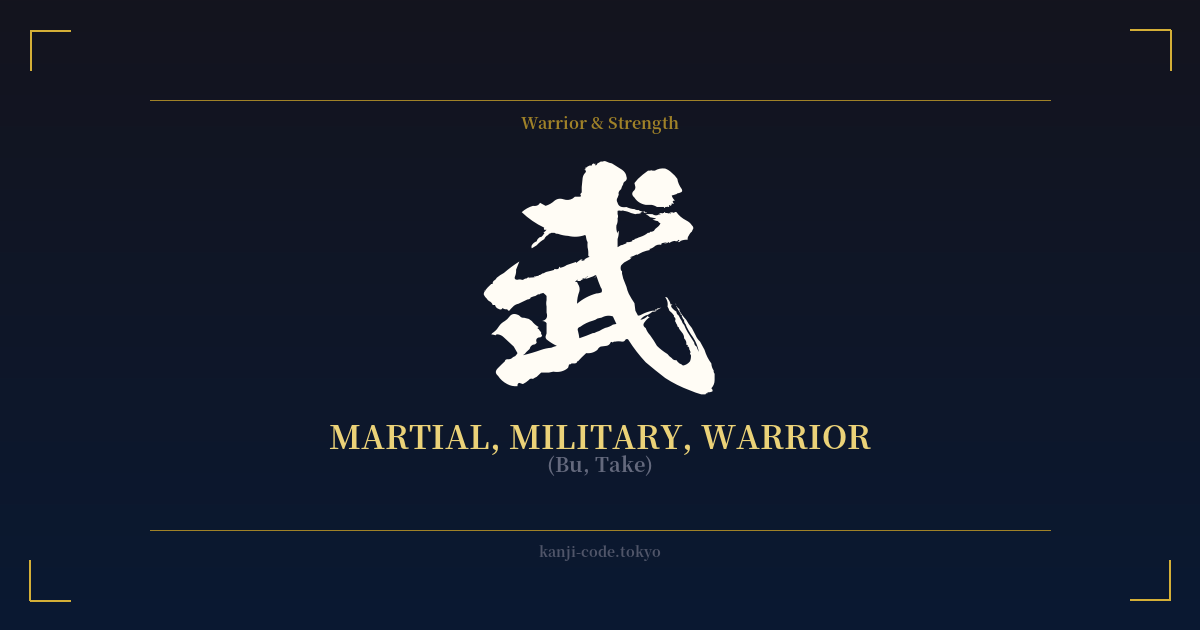
The same kanji can look dramatically different depending on the calligraphy style. Choose a font that matches the mood you want for your tattoo or design.
🎨 Tattoo Suitability
📐 Tattoo Design Guide
The kanji 勇 is a strong and versatile choice for a tattoo, lending itself to a variety of styles and placements.
– Placement Suggestions: Consider areas of the body that convey strength and forward motion. The inner forearm, the calf, the back of the shoulder, or across the chest are all excellent choices that complement the kanji's powerful meaning.
– Font Style Recommendations: The character's form allows for diverse artistic interpretations. A dynamic, semi-cursive calligraphy style (gyōsho) can emphasize the active, energetic nature of courage. For a feeling of stability and unwavering resolve, a bold, traditional block script (kaisho) is highly effective.
– Visual Tips: While 勇 stands powerfully on its own, it can be integrated into a larger piece. It could be the centerpiece of a design featuring a dragon, a koi fish swimming upstream, or elements of samurai armor. However, its simple, bold form is often most impactful when left uncluttered, allowing the meaning itself to be the focus.
Comments