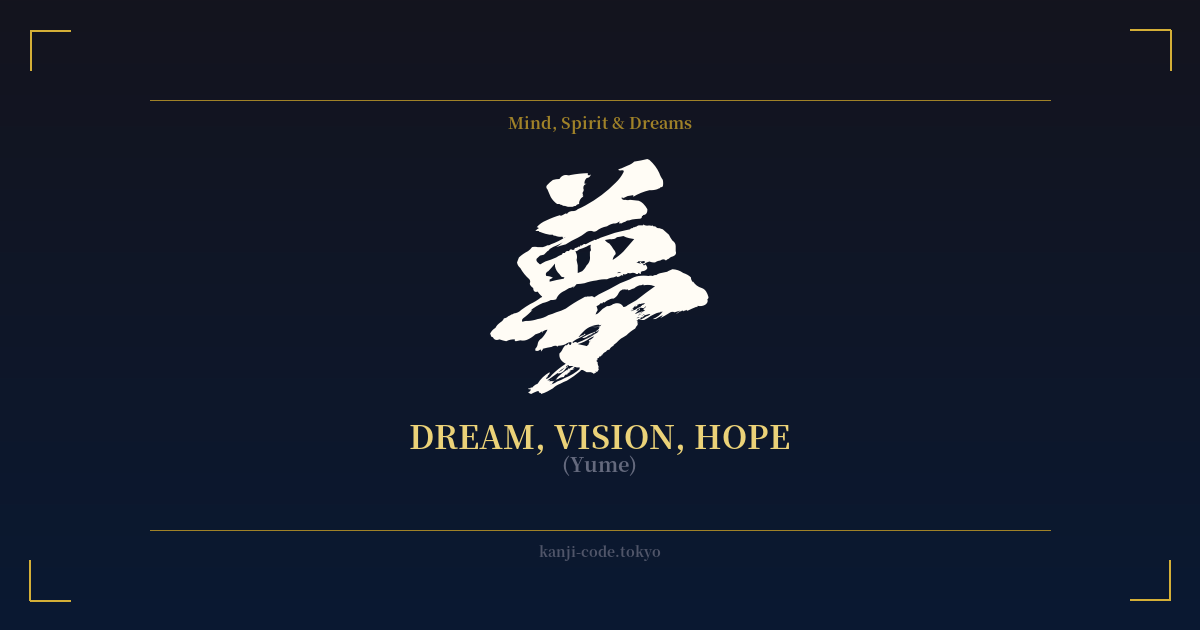
✍️ 夢 (Yume) — Cultural Context
The Japanese kanji 夢 (Yume) is a single character that holds two powerful, intertwined worlds within its thirteen strokes: the ephemeral visions we experience in sleep and the driving ambitions we chase in our waking lives.
Its ancient form tells a story of its origin. The character was once a pictograph depicting a person lying in bed (represented by the component 夕, meaning 'evening' or 'night'), with an emphasized eye (目), suggesting sight during sleep. The top portion, now resembling grass (艹), was originally a more complex shape representing a flowing, unclear quality—the hazy nature of a dreamscape. It literally meant “to see while asleep.”
Over centuries, this literal meaning blossomed into a powerful metaphor. Yume became the word not just for what the mind creates at night, but for what the heart yearns for by day. It embodies hope, aspiration, and the grand goals that define a person's life journey. This duality is the source of its immense cultural power in Japan.
You'll find 夢 everywhere, from the banners of art schools urging students to follow their creative passions, to the slogans of tech startups aiming to change the world. The phrase 「夢を追いかける」 (yume o oikakeru), “to chase a dream,” is a common and deeply respected expression of determination.
One of the most cherished traditions is the hatsuyume (初夢), the first dream of the New Year. Japanese folklore holds that this dream can predict your fortune for the year ahead. Dreaming of Mount Fuji, a hawk, or an eggplant is considered especially auspicious, promising good luck and success.
This cultural weight makes 夢 a bridge between the subconscious and the conscious, the mystical and the practical. It acknowledges that our greatest achievements begin as intangible thoughts, as visions just as fleeting and powerful as those we have in our deepest sleep. Choosing this kanji is to embrace the entire spectrum of human experience, from the quiet introspection of the mind to the outward pursuit of a brighter future.
🖌️ Font Styles for 夢
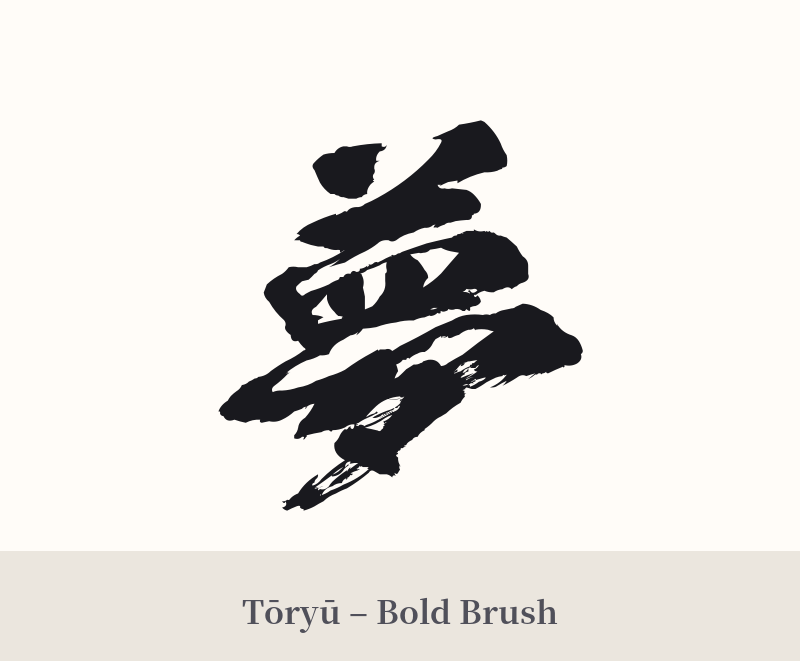
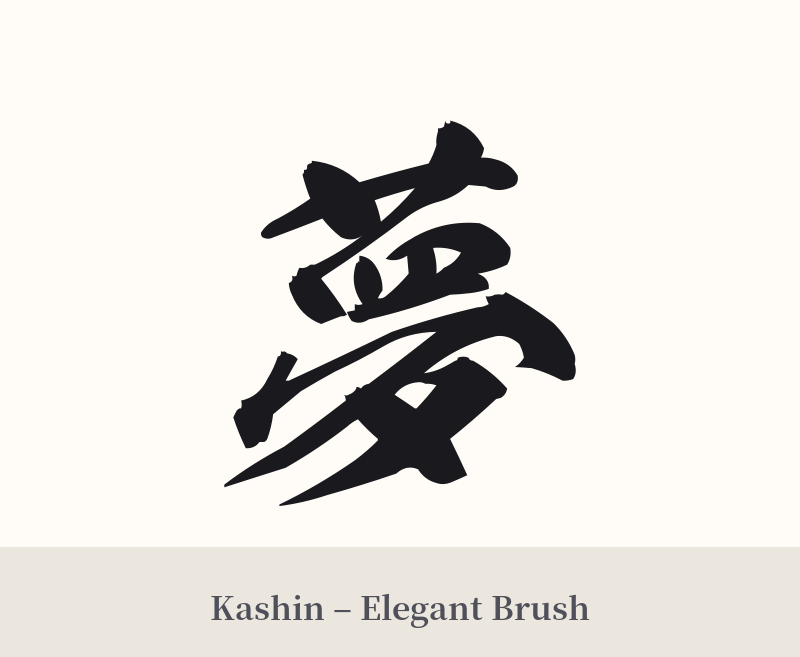
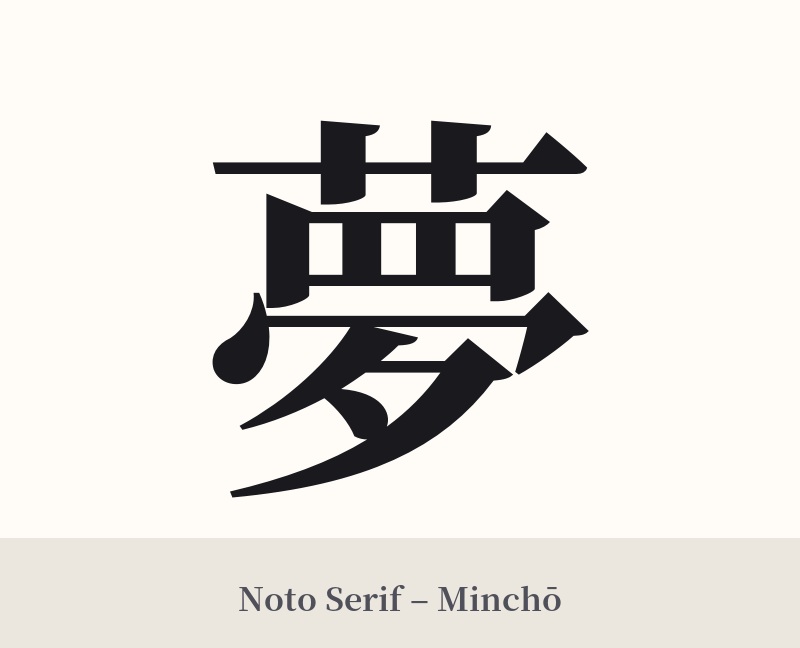
The same kanji can look dramatically different depending on the calligraphy style. Choose a font that matches the mood you want for your tattoo or design.
🎨 Tattoo Suitability
📐 Tattoo Design Guide
The kanji 夢 (Yume) offers wonderful versatility for a tattoo design, allowing for both bold statements and subtle expressions.
– Placement: For a strong, clear statement, consider placing it vertically on the forearm, the spine, or the calf. For a more personal and intimate tattoo, the back of the neck, behind the ear, or along the ribs are excellent choices.
– Font Style: The style dramatically changes the feeling. A crisp, angular Kaisho (block script) emphasizes the 'aspiration' and 'goal' meaning, conveying strength and determination. A fluid, connected Sōsho (cursive script) leans into the 'sleeping dream' aspect, creating an ethereal, flowing, and artistic feel.
– Visual Embellishments: Yume pairs beautifully with other imagery. Consider integrating it with watercolor splashes in soft blues and purples to evoke a dreamscape. You could also have the character emerge from clouds or mist. Incorporating a crescent moon can be a subtle nod to the 夕 ('evening') component within the kanji itself. For a more Japanese aesthetic, framing it with cherry blossoms can symbolize the beautiful but transient nature of both dreams and life.
Comments