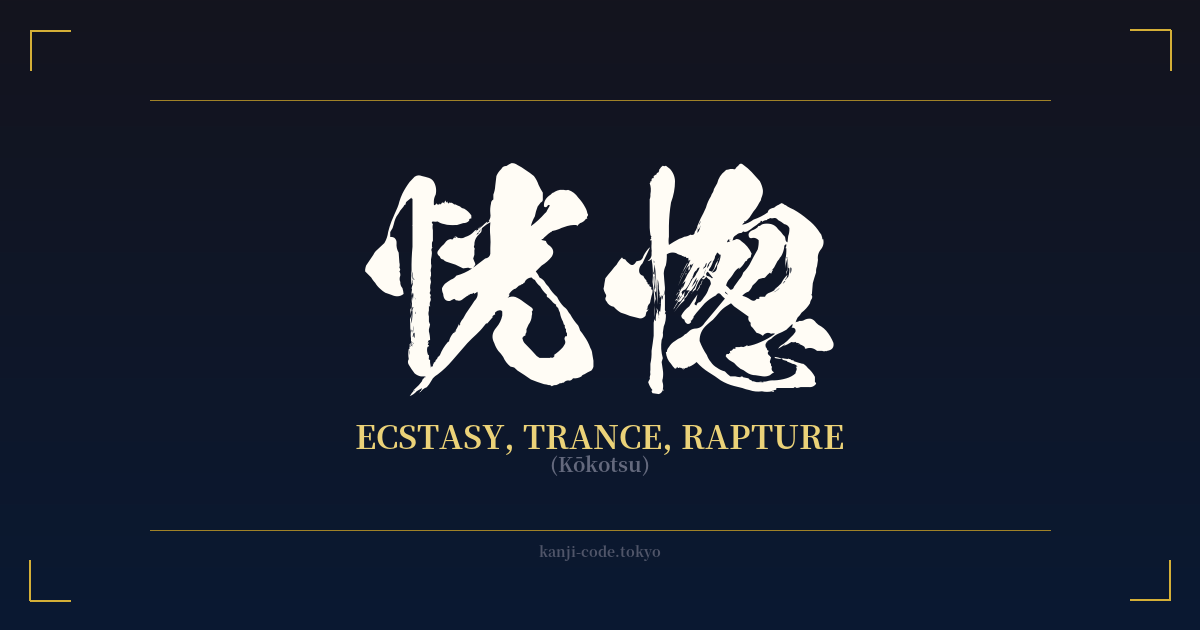
✍️ 恍惚 (Kōkotsu) — Cultural Context
恍惚 (Kōkotsu) is a word that delves deep into the human psyche, describing a state of being that transcends simple happiness. It’s not the cheerful contentment of a sunny day, but the profound, all-consuming experience of ecstasy, trance, or rapture. It’s the feeling of being so utterly absorbed in a moment that the self seems to dissolve.
This is a highly literary and poetic term, rarely heard in casual conversation. You are more likely to find 恍惚 in the pages of a novel, the lyrics of a song, or a philosophical text. It captures the state of a musician lost in their own melody, an artist mesmerized by a masterpiece, or a person gazing at a star-filled sky, completely detached from their surroundings and everyday concerns.
The origin of the word is beautifully illustrative. The two kanji, 恍 and 惚, both contain the radical for 'heart' or 'mind' (忄). 恍 suggests a mind that is hazy, blurry, or indistinct. 惚 points to a mind that is captivated, enchanted, or infatuated. Together, they paint a picture of a mental state where the sharp edges of consciousness have faded, replaced by an overwhelming sensory or emotional experience. It is a trance-like state born from intense focus and absorption.
In a cultural context, 恍惚 can be connected to aesthetic and spiritual concepts. It resonates with the idea of 'mono no aware', the gentle sadness and appreciation for the transience of beauty, as one might feel a rapturous melancholy watching cherry blossoms fall. It also touches upon Zen principles of 'mushin' (無心), or 'no-mind', where the practitioner acts and reacts from a place beyond ego and conscious thought. In this state of 恍惚, the boundary between the observer and the observed breaks down.
To use 恍惚 is to describe a peak experience. It’s the feeling of being intoxicated by beauty, love, or art. While words like 幸せ (shiawase – happiness) or 喜び (yorokobi – joy) describe positive feelings, 恍惚 describes a different dimension of experience—one that is more intense, more immersive, and ultimately, more transformative.
🖌️ Font Styles for 恍惚
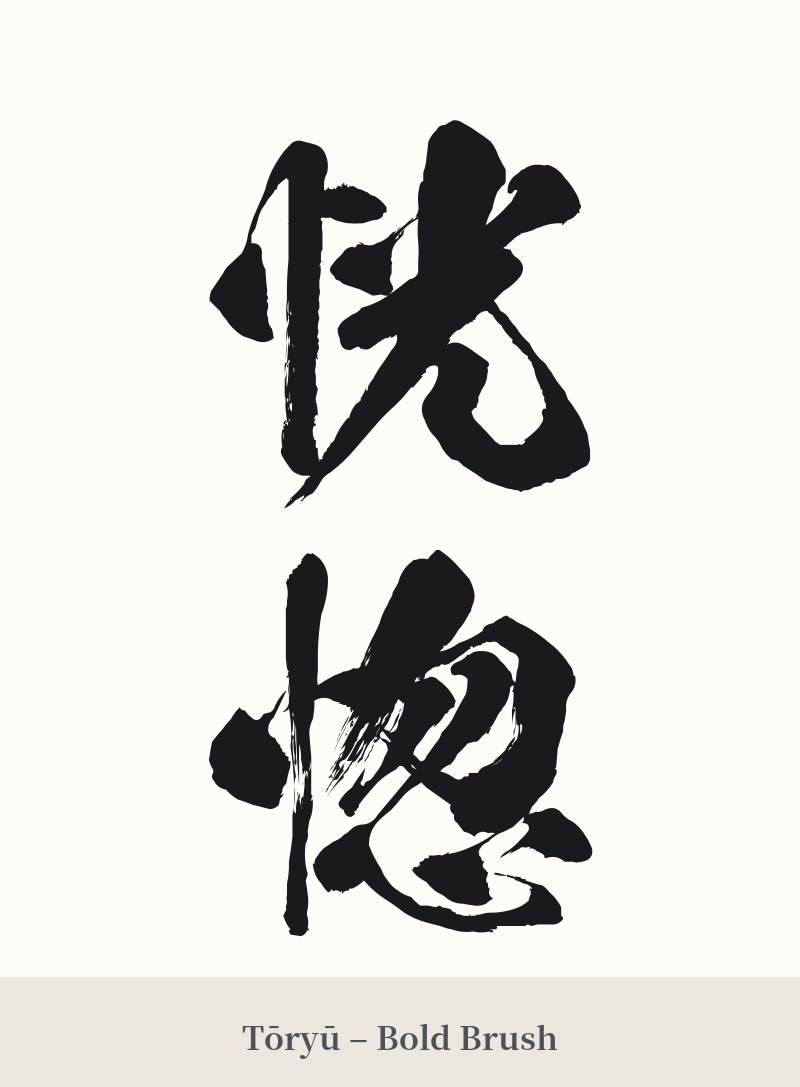
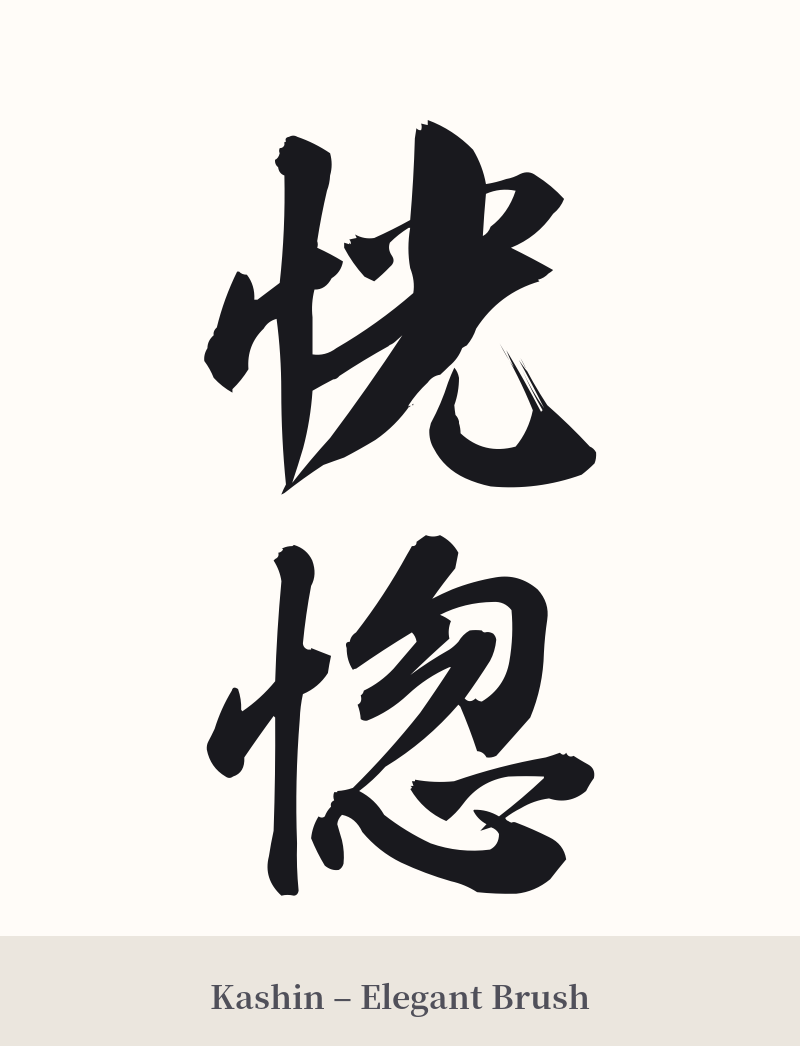
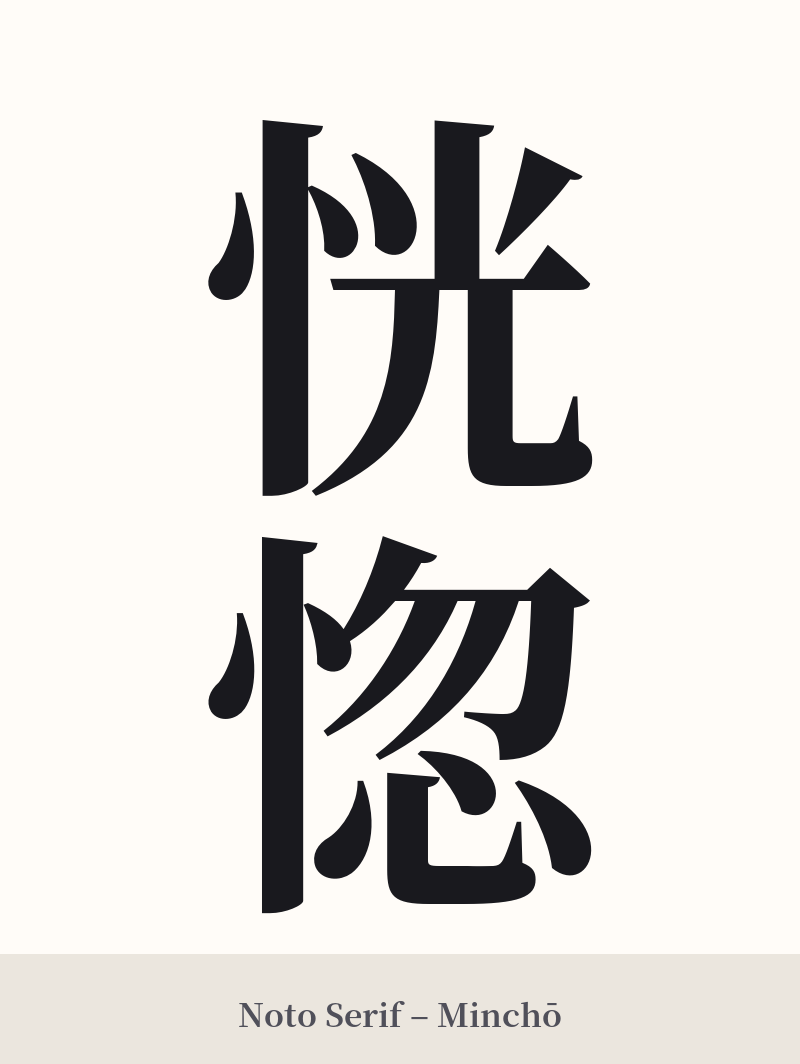
The same kanji can look dramatically different depending on the calligraphy style. Choose a font that matches the mood you want for your tattoo or design.
🎨 Tattoo Suitability
📐 Tattoo Design Guide
The deep, ethereal nature of 恍惚 lends itself to artistic and flowing tattoo designs.
– Placement: Vertical arrangements are particularly striking for two-character words. Consider the spine, the inner forearm, the calf, or running down the ribs. These placements allow the characters to flow with the body's natural lines.
– Font Style: Avoid rigid, blocky fonts like Mincho or Gothic. Instead, opt for more expressive, calligraphic styles. Gyosho (semi-cursive) or the more abstract Sosho (cursive) would beautifully capture the fluid, trance-like meaning of the word.
– Visual Tips: This kanji pairs well with imagery that evokes its meaning. Consider integrating it with soft, abstract brushstrokes (like an ensō circle), swirling mist or water, a full moon, or delicate flower petals. The goal is to create a design that feels immersive and dream-like, rather than sharp and defined.
Comments