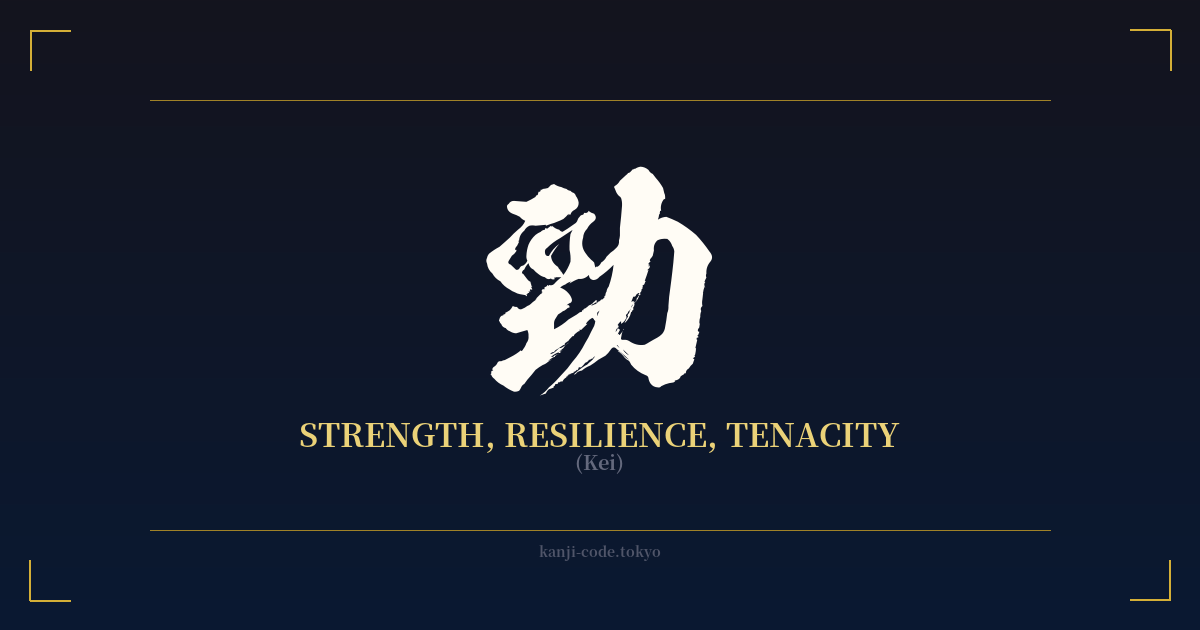
✍️ 勁 (Kei) — Cultural Context
The kanji 勁 (kei) represents a form of strength that is deep, resilient, and unyielding. It goes beyond the simple concept of physical might, delving into the realm of fortitude, tenacity, and inner power. This isn't the explosive, outward strength of a single action, but the enduring, quiet power that withstands pressure and overcomes adversity over time.
Its origin offers a beautiful insight into this meaning. The character is a combination of 巠 (kei) and 力 (chikara). The radical 力 is universally understood as 'power' or 'strength'. The upper component, 巠, originally depicted the vertical warp threads on a loom—threads that must be kept taut, strong, and straight to form the foundation of the fabric. Together, they create a powerful image: a force that is as strong, straight, and unyielding as a tightly pulled cord.
In Japanese culture, 勁 is often associated with the spirit of budō (martial arts). Here, it describes a refined power that is not just muscular but is channeled from the core (hara) and is both firm and flexible. It’s the strength that allows a martial artist to absorb an opponent's attack and remain steadfast. Think of the phrase 勁敵 (keiteki), which means a 'formidable rival.' This doesn't just mean a strong opponent, but one who is tough, resilient, and won't be easily defeated—a true test of one's own abilities.
Another evocative term is 勁草 (keisō), literally 'strong grass.' This refers to plants that can withstand strong winds, a metaphor for a person of strong character and integrity who remains steadfast during times of turmoil and chaos. This captures the essence of 勁: it's the strength of bamboo that bends but doesn't break, the resilience of a rock in a rushing river.
Compared to other kanji for 'strength,' 勁 has a distinct nuance. 力 (chikara) is raw, fundamental power. 強 (tsuyoi) is a general term for 'strong.' 剛 (gō) implies hardness and rigidity. 勁, however, is the quality of that strength—its endurance, its suppleness, its unbreakability. It represents a mature, sophisticated understanding of power, one that values persistence and inner fortitude above all else.
🖌️ Font Styles for 勁
The same kanji can look dramatically different depending on the calligraphy style. Choose a font that matches the mood you want for your tattoo or design.
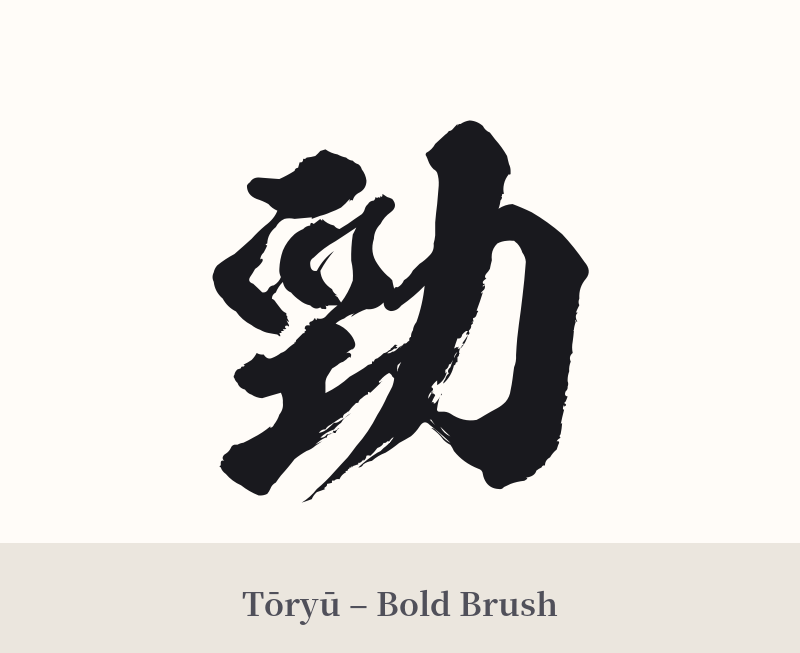
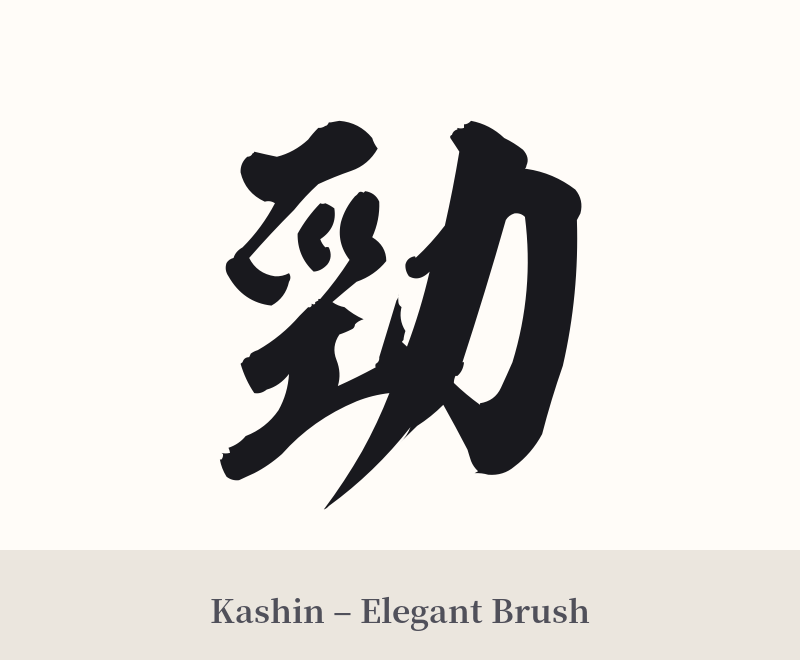
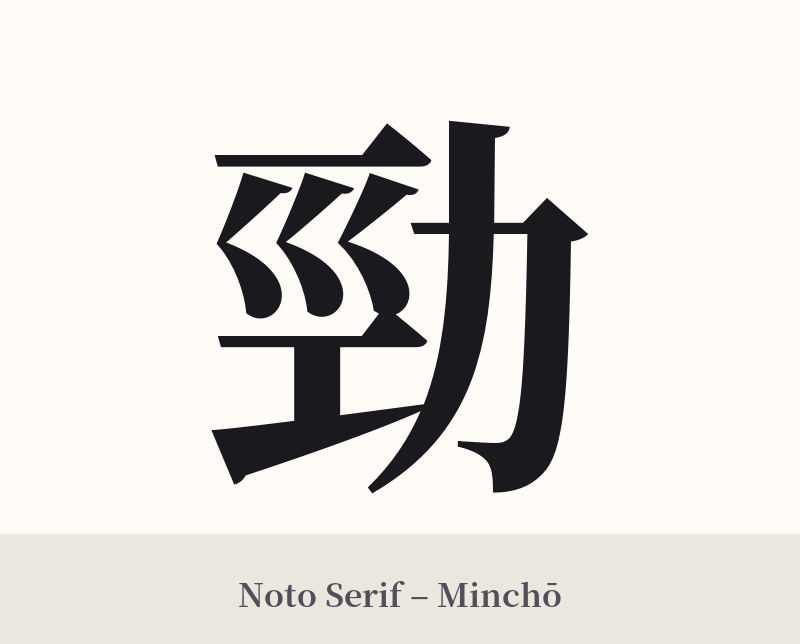
🎨 Tattoo Suitability
📐 Tattoo Design Guide
The kanji 勁 (kei) has a strong, stable structure that works well for tattoo designs. Its meaning of resilient strength lends itself to placements that suggest a foundation of power.
– Placement: The forearm, calf, or back of the shoulder are excellent choices, as they are areas associated with strength and movement. A design on the ribs or along the spine can also work well, symbolizing a core, inner fortitude.
– Style: For a powerful and dynamic feel, a bold semi-cursive (gyōsho) or cursive (sōsho) calligraphy style is highly recommended. These styles can convey a sense of fluid, adaptable strength. For a more grounded and solid look, a standard block script (kaisho) in thick, confident strokes is a great option.
– Visuals: While it stands strong on its own, 勁 can be paired with imagery that reinforces its meaning. Consider combining it with bamboo stalks (resilience), a stoic mountain (endurance), or waves crashing against a rock (unyielding strength).
Comments