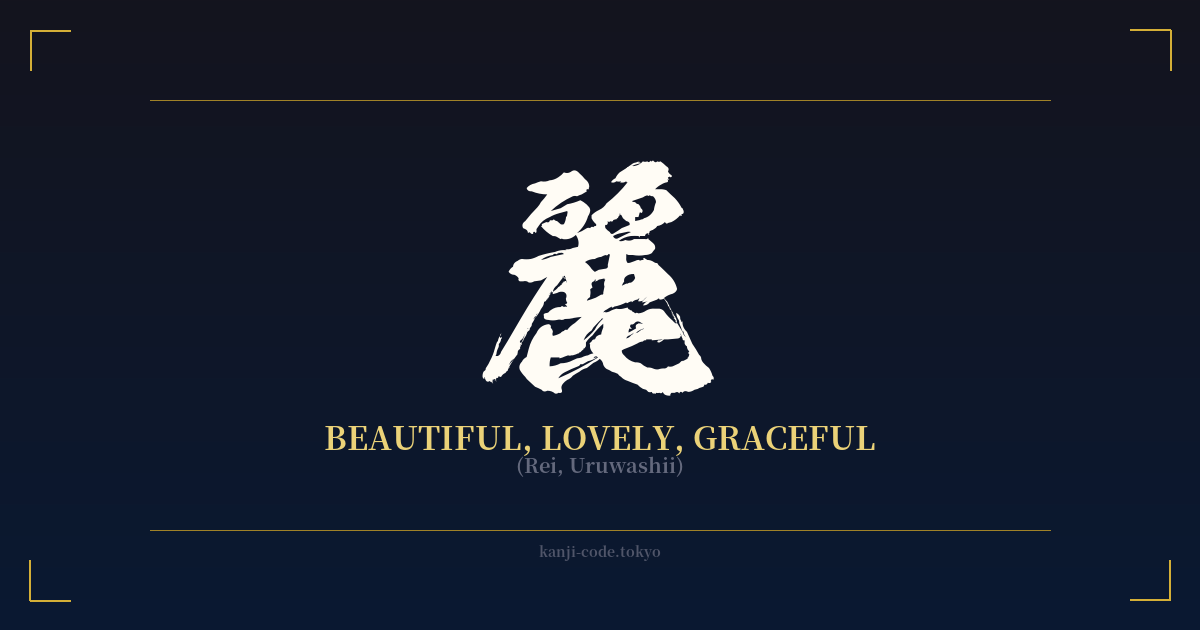
✍️ 麗 (Rei, Uruwashii) — Cultural Context
The kanji 麗, read as 'Rei' or found in the adjective 'uruwashii,' is a character that encapsulates a specific and profound type of beauty. It goes far beyond the simple 'pretty' or 'cute.' Instead, 麗 speaks to a refined, graceful, and splendid elegance. While the more common kanji for beauty, 美 (bi), can describe almost anything attractive, 麗 carries connotations of magnificence, clarity, and a well-ordered, harmonious appearance.
Its origin story provides a beautiful visual metaphor. The character is a pictograph depicting a deer (鹿, shika) with prominent, beautiful antlers. In its ancient form, it even showed two deer traveling together, a symbol of grace and natural elegance. This imagery—of a noble, graceful creature moving through the wilderness—infuses the kanji with a sense of natural, untamed, yet perfectly composed beauty.
Historically and culturally, 麗 is associated with the high culture of the imperial court, particularly during the Heian period (794-1185). It was used in literature and poetry to describe the exquisite beauty of court ladies, the serene splendor of a landscape, or the masterful craftsmanship of a work of art. It evokes the aesthetic ideal of 'miyabi' (雅), or courtly elegance, which values refinement and sophistication above all else. To call something 'uruwashii' was a high compliment, suggesting a beauty that was both visually stunning and spiritually uplifting.
In modern Japan, 麗 remains a powerful and cherished character. It is a very popular component in female names, such as Reina (麗奈) or Reika (麗香), chosen by parents who wish for their daughters to possess not just outer beauty but also inner grace and a refined spirit. The word 綺麗 (kirei), meaning 'beautiful' or 'clean,' uses a simplified form of this kanji, linking everyday beauty to this classical ideal. The term 麗人 (reijin) specifically refers to a 'beautiful person,' often with an air of classic, almost untouchable elegance.
Choosing the kanji 麗 is to choose a concept of beauty that is deep, detailed, and dignified. It is not a fleeting or fashionable attractiveness, but a timeless grace that is both seen in form and felt in spirit. It represents a beauty that is clear, bright, and impeccably composed, like a perfect poem or a masterfully painted screen.
🖌️ Font Styles for 麗
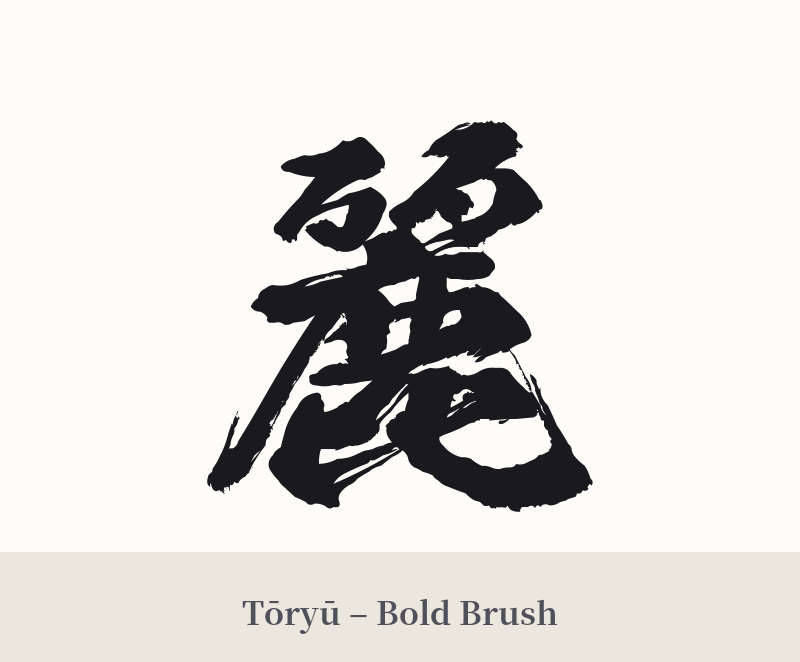
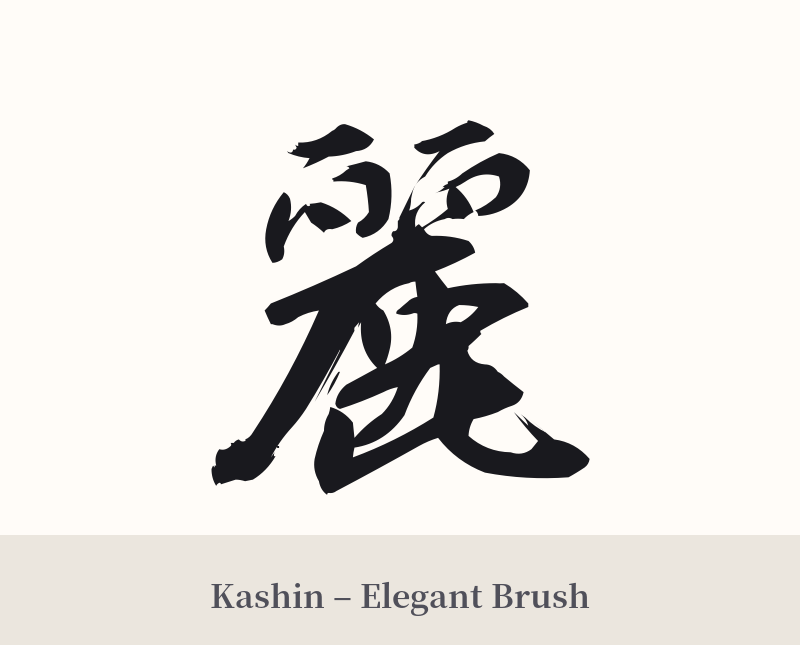
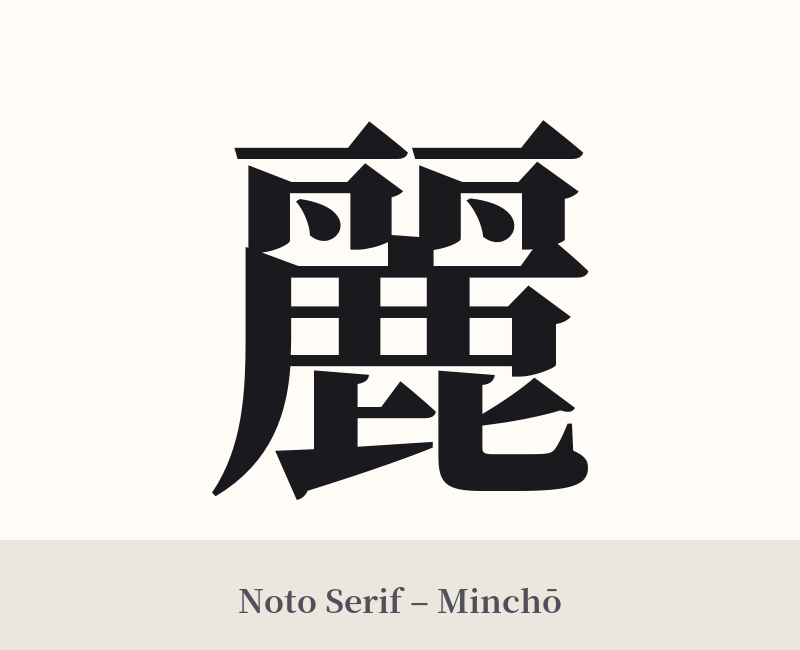
The same kanji can look dramatically different depending on the calligraphy style. Choose a font that matches the mood you want for your tattoo or design.
🎨 Tattoo Suitability
📐 Tattoo Design Guide
The visual complexity of 麗 makes it a fantastic subject for a tattoo, but it requires thoughtful design.
– Placement: Due to its detail, this kanji is best suited for larger, flatter areas of the body where the lines can remain crisp. Consider the upper back, between the shoulder blades, the forearm, or the calf. Avoid smaller areas like the wrist, ankle, or fingers, as the strokes may blur over time.
– Style: A flowing, semi-cursive script (gyōsho) can beautifully emphasize the character's inherent grace and elegance. For a more dramatic and artistic look, a full cursive script (sōsho) would be stunning, though it may be less legible to the untrained eye. Conversely, a bold, precise block script (kaisho) can highlight its architectural symmetry and formal dignity.
– Visual Elements: This kanji pairs well with other symbols of Japanese elegance. Consider integrating it with images of cranes, koi fish swimming upstream, blooming peonies, or delicate cherry blossoms. A background of subtle waves or clouds, done in a traditional sumi-e (ink wash) style, can create a beautiful sense of depth and context.
Comments