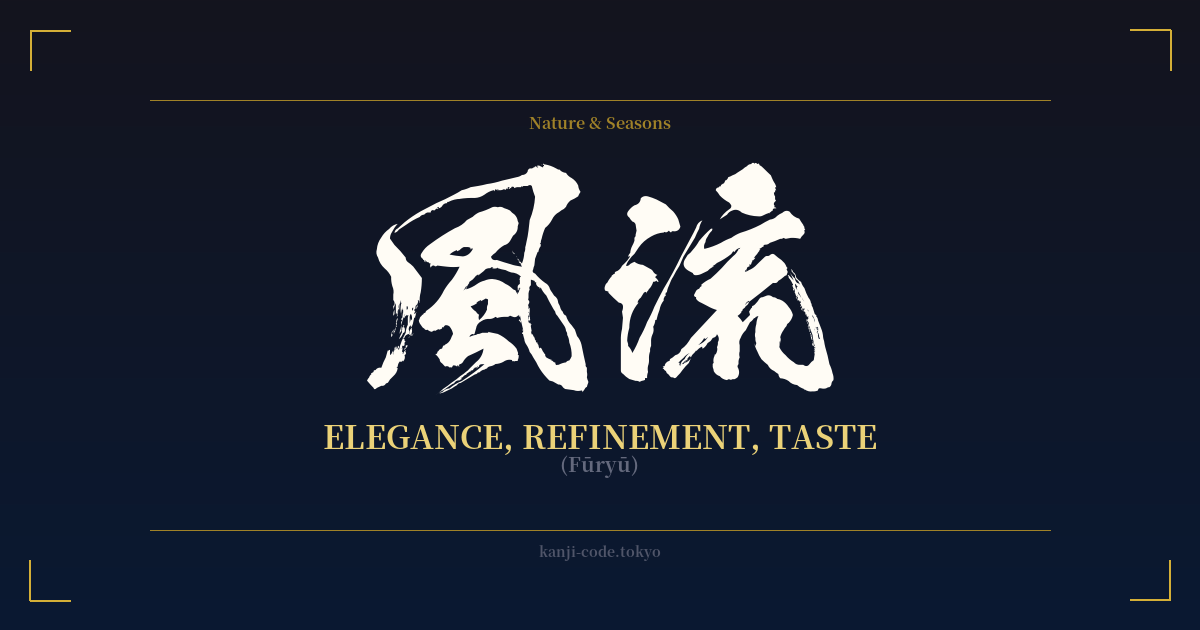
✍️ 風流 (Fūryū) — Cultural Context
風流 (Fūryū) is one of Japan's most elegant and nuanced aesthetic concepts. At its most literal, the characters mean 'wind' (風) and 'flow' (流), painting a picture of something natural, graceful, and untethered. However, its true meaning transcends this simple image, embodying a sophisticated ideal of elegance, artistic refinement, and a deep appreciation for beauty, particularly in nature.
The origins of Fūryū can be traced back to the Heian period (794-1185), an era of immense artistic and cultural flourishing among the imperial court aristocracy. To be a person of Fūryū was to be someone who turned away from the mundane, vulgar concerns of politics and wealth to instead pursue a life of refined taste. This involved composing poetry (waka), mastering calligraphy, playing musical instruments, and engaging in elegant pastimes like moon-viewing parties and incense-smelling ceremonies.
Fūryū is not just about appreciating art; it is a way of being. It's about finding profound beauty in the transient moments of life—the sight of cherry blossoms scattering in the wind, the sound of a deer calling in the mountains, or the specific arrangement of flowers in a vase. It implies a certain detachment from worldly desires, favoring a kind of spiritual and aesthetic freedom. The great haiku master Matsuo Bashō is often seen as an exemplar of the Fūryū spirit, having renounced a more conventional life to travel the country, living simply and capturing the beauty he observed in his poetry.
In this sense, Fūryū is the antithesis of the coarse and the commercial. It values the subtle over the obvious, the natural over the artificial, and the artistic over the purely functional. While the term might seem old-fashioned to some in modern Japan, the underlying spirit of Fūryū persists. It can be seen in the minimalist design of a modern home, the meticulous care of a Japanese garden, or the quiet reverence for the changing seasons. It represents a timeless yearning to live with grace, taste, and a deep connection to the beautiful, flowing currents of the natural world.
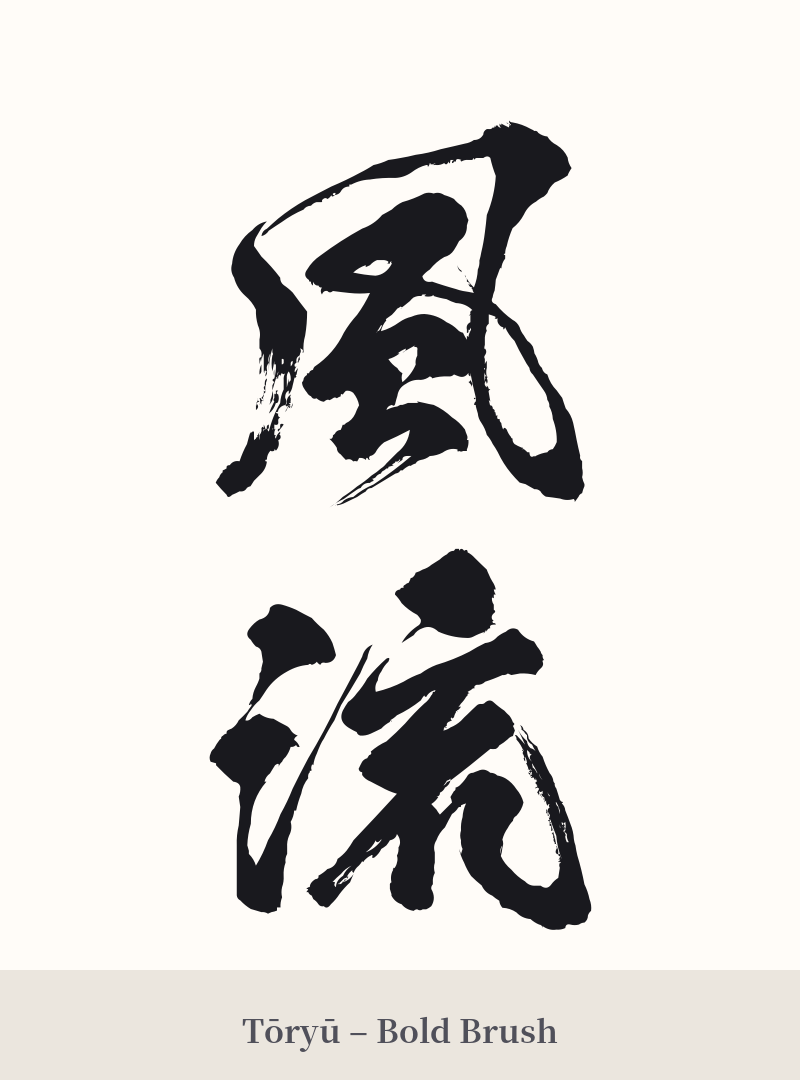
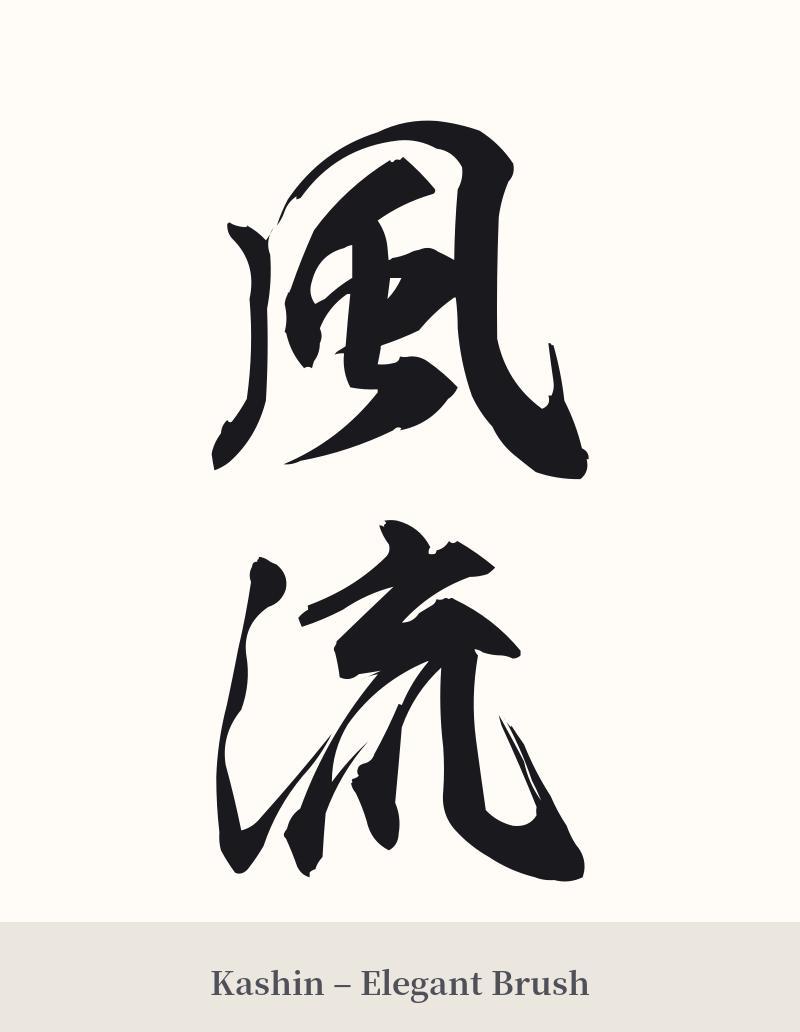
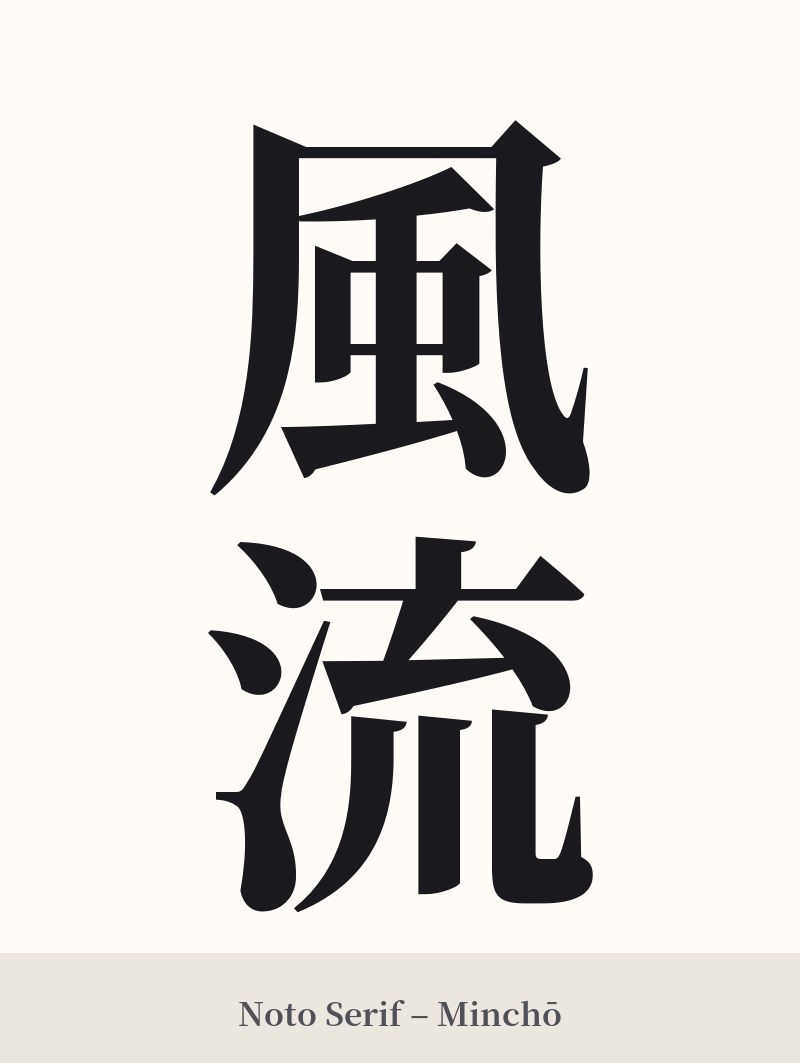
🖌️ Font Styles for 風流
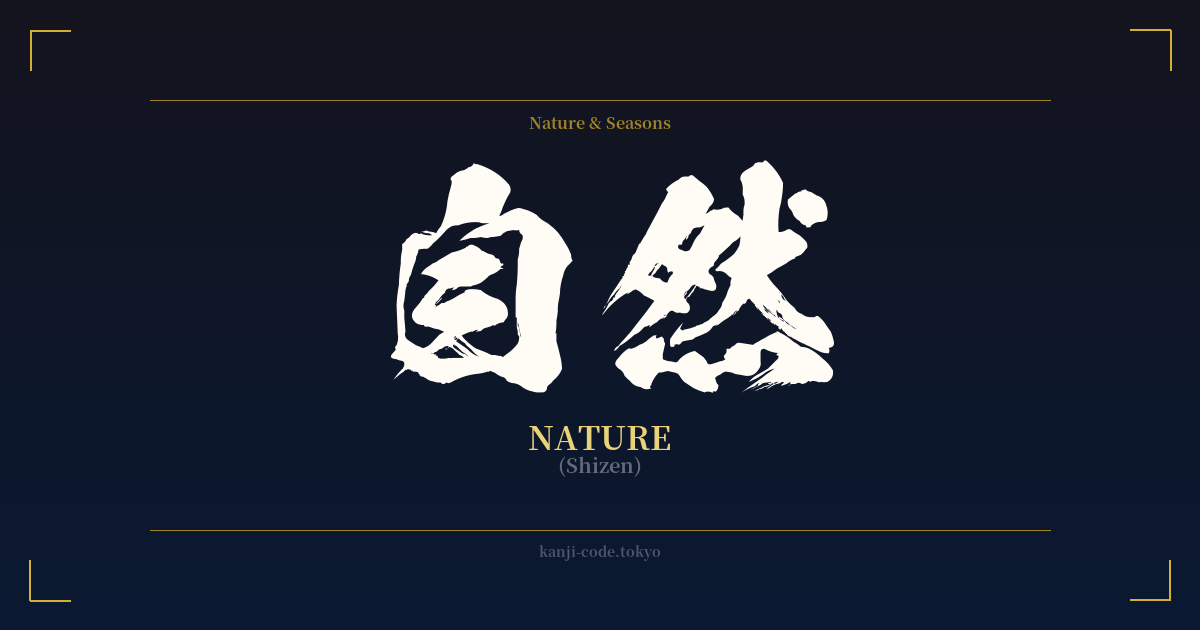
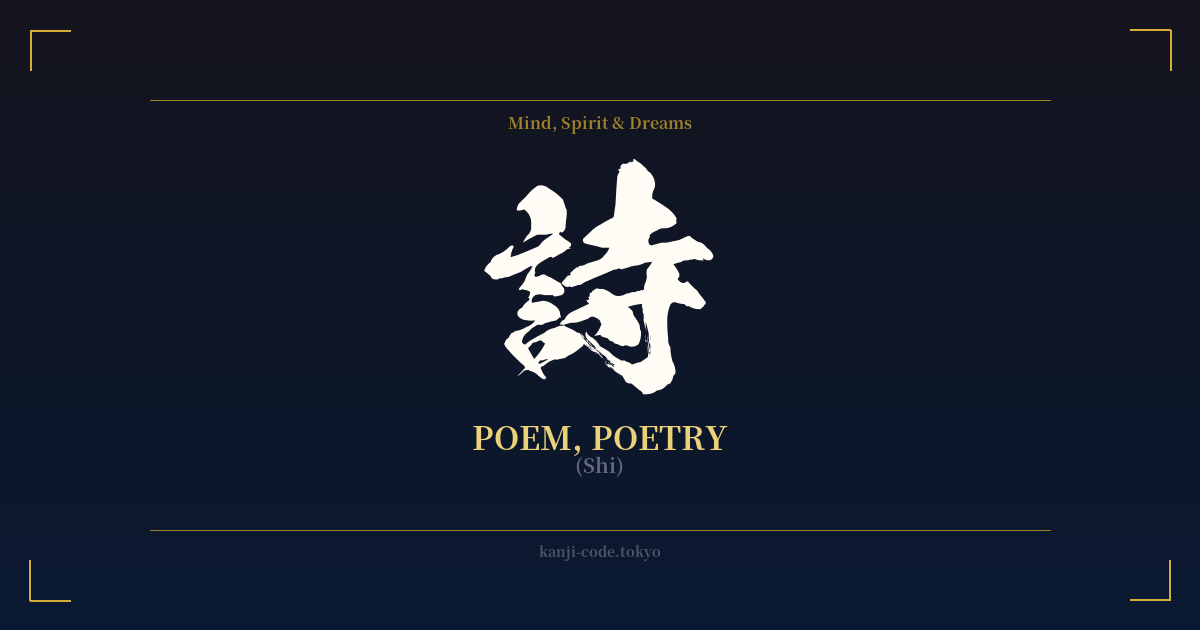
The same kanji can look dramatically different depending on the calligraphy style. Choose a font that matches the mood you want for your tattoo or design.
🎨 Tattoo Suitability
📐 Tattoo Design Guide
For a 風流 (Fūryū) tattoo, the design should reflect its meaning of elegance and natural flow.
– Placement: Vertical alignment is highly recommended to mimic traditional Japanese calligraphy. The spine, forearm, inner bicep, or calf are all excellent choices that provide a long, clean canvas.
– Font Style: Cursive and semi-cursive calligraphic styles (sōsho or gyōsho) are perfect for this word. These styles emphasize movement and fluidity, directly connecting to the 'wind' and 'flow' elements of the characters. A clean, minimalist kaisho (block) script can also work if you prefer a more modern, crisp interpretation of 'refinement'.
– Visual Additions: If you wish to add imagery, keep it minimal and symbolic of the Fūryū spirit. Consider a few gently falling maple leaves, a simple crescent moon, a stalk of bamboo, or the outline of a distant mountain. The goal is to complement the kanji, not overwhelm it, staying true to the concept of refined simplicity.
Comments