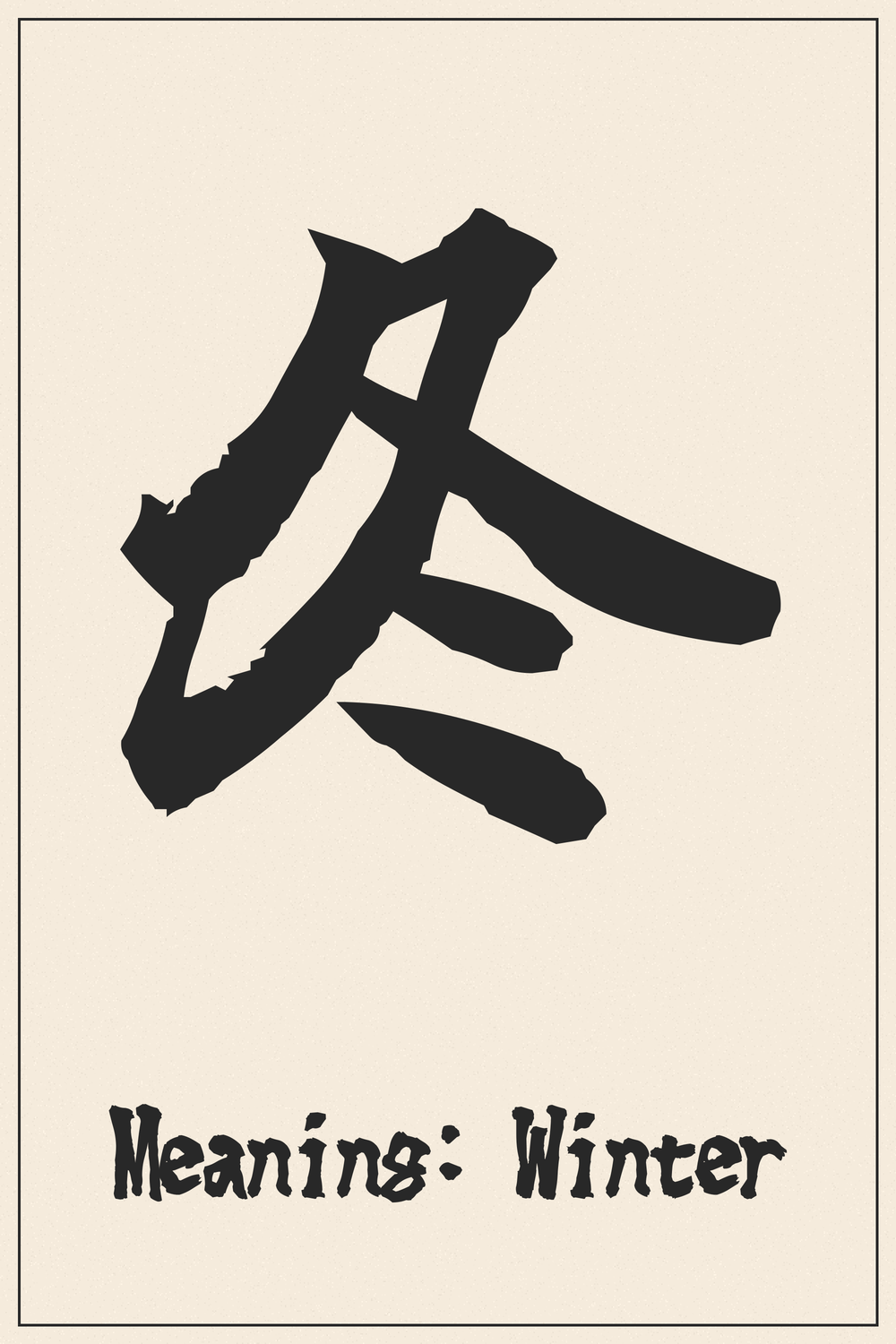
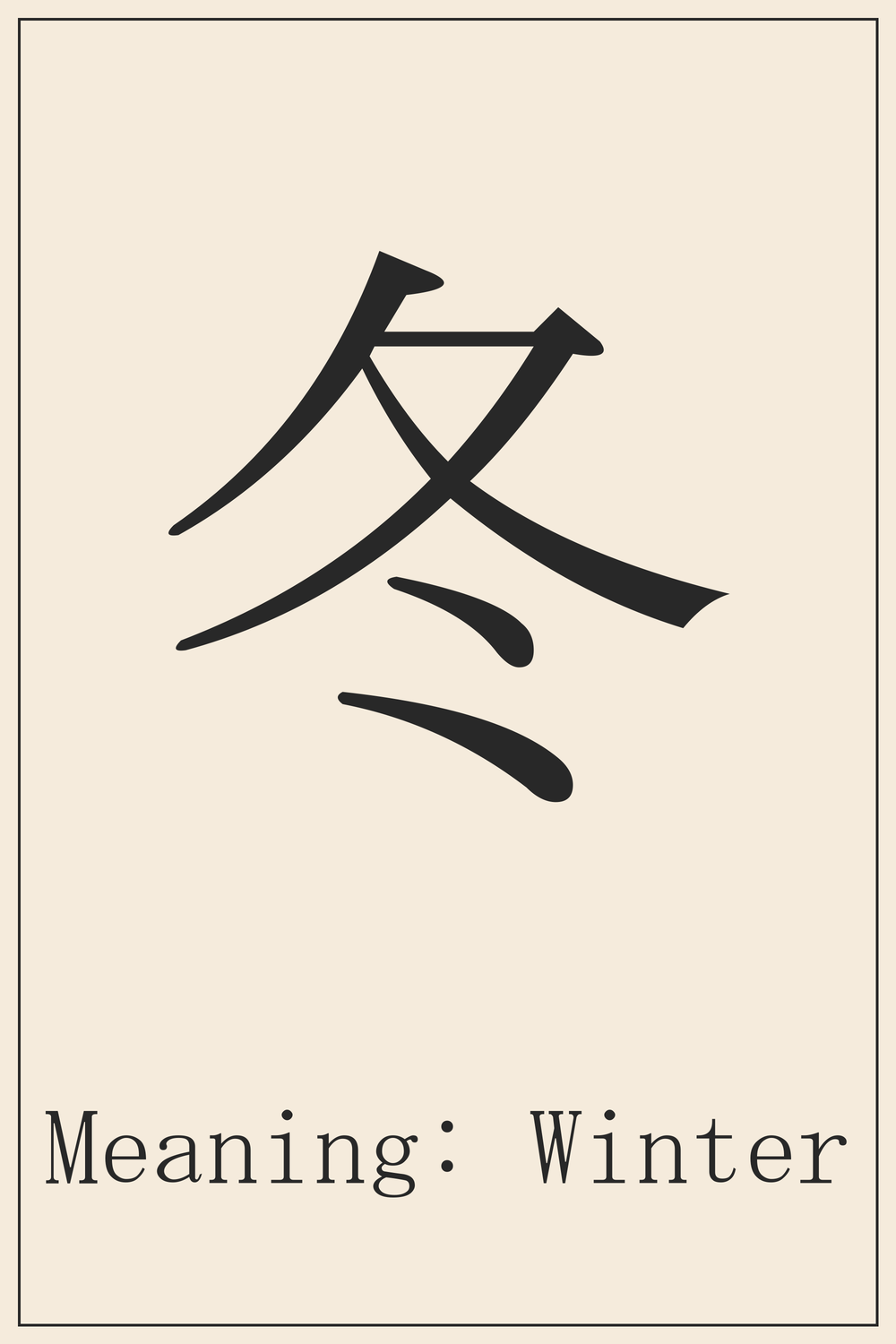
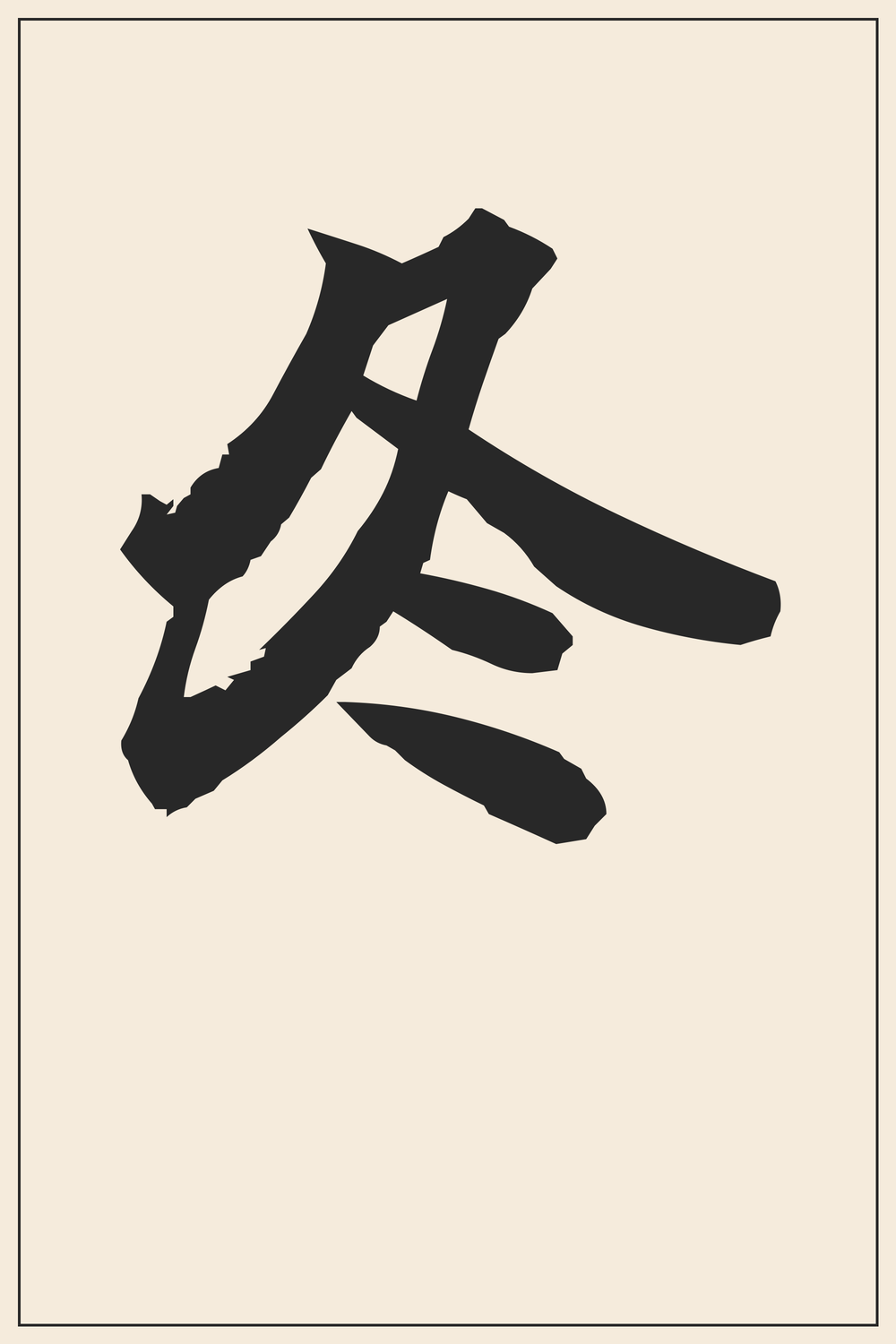
The Kanji for ‘Winter’, 冬, holds profound symbolism in Japanese culture, representing a period of reflection, resilience, and quiet strength. This single character encapsulates the essence of the coldest season.
The atmosphere of a Kanji character changes dramatically depending on the font style. A character that looks elegant in a brush style might look bold and modern in a different font.
Recommendation:
Since a tattoo is permanent, we strongly recommend comparing various font styles beyond what is shown here. Use our designs as a trusted reference for the correct structure, but feel free to explore different artistic variations to find the perfect match for your vision.
The Deep Meaning Behind 冬
The ancient form of 冬 depicted a thread passed through the ends of a bundle, symbolizing the binding and closing associated with the end of the year or season. Over time, it evolved to represent the season of winter itself, marking a period of completion and rest.
In Japanese culture, winter is a season of stark beauty and quiet introspection. It’s often associated with endurance, preparing for renewal, and the serene landscapes covered in snow, embodying a period of essential rest and hidden vitality before spring’s awakening.
Kanji Breakdown
The Kanji 冬 is a standalone character. Its etymology traces back to a pictographic representation that captures the essence of winter’s closure and dormancy.
The Character Itself: Derived from ancient forms symbolizing the end of a cycle, a binding, or the storage of goods for the year’s close. It directly signifies the season of winter, evoking images of cold, stillness, and the gathering of resources.
Conclusion
The Kanji 冬 beautifully encapsulates the essence of winter – a season of quietude, strength, and the promise of new beginnings. It symbolizes resilience against adversity, the cyclical nature of life, and the profound beauty found in dormancy.
As a tattoo, 冬 serves as a powerful reminder of inner strength and the profound beauty found in dormancy. It’s an ideal choice for those who resonate with the tranquil power and enduring spirit of the winter season, offering a design that is both elegant and deeply meaningful.
Comments