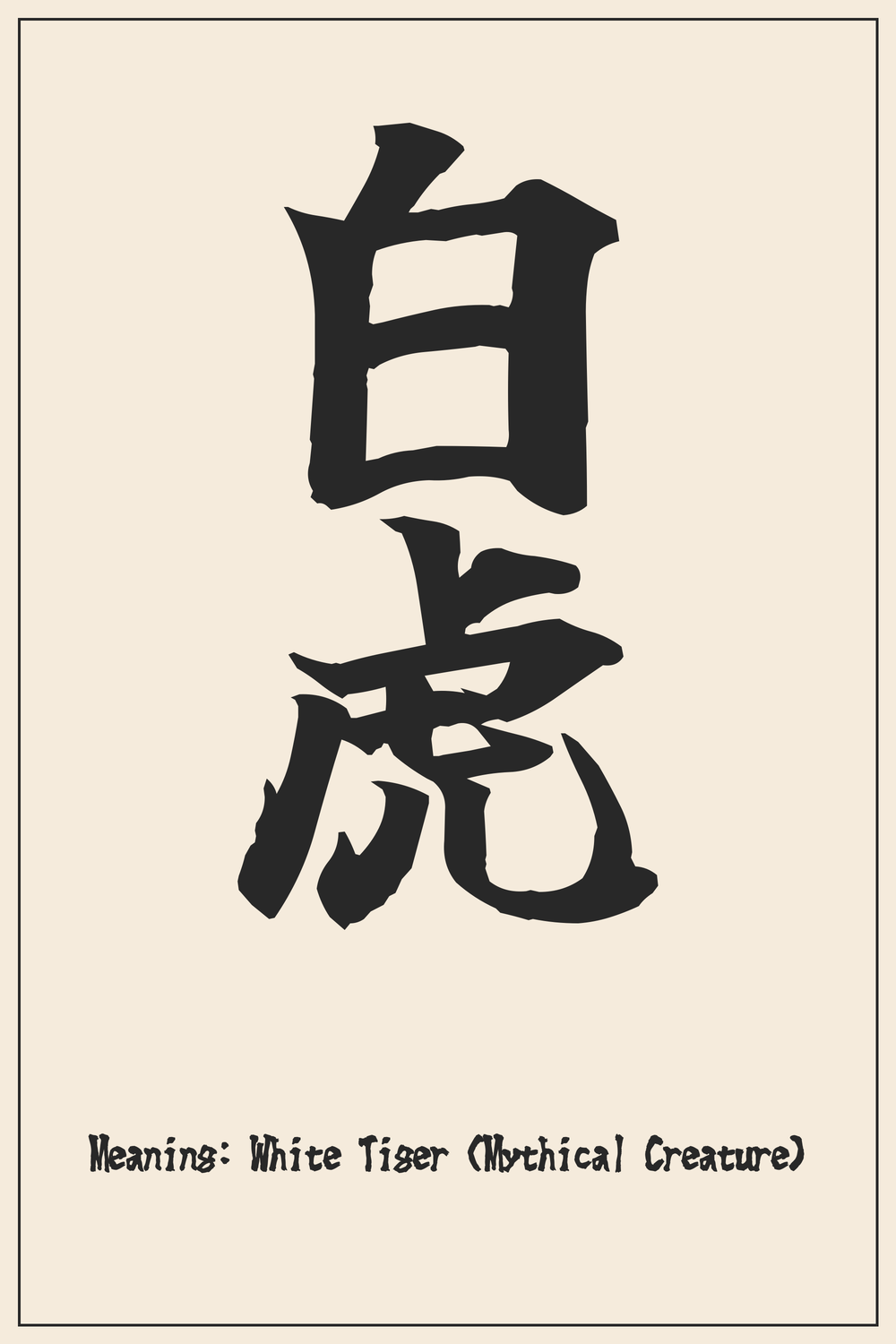
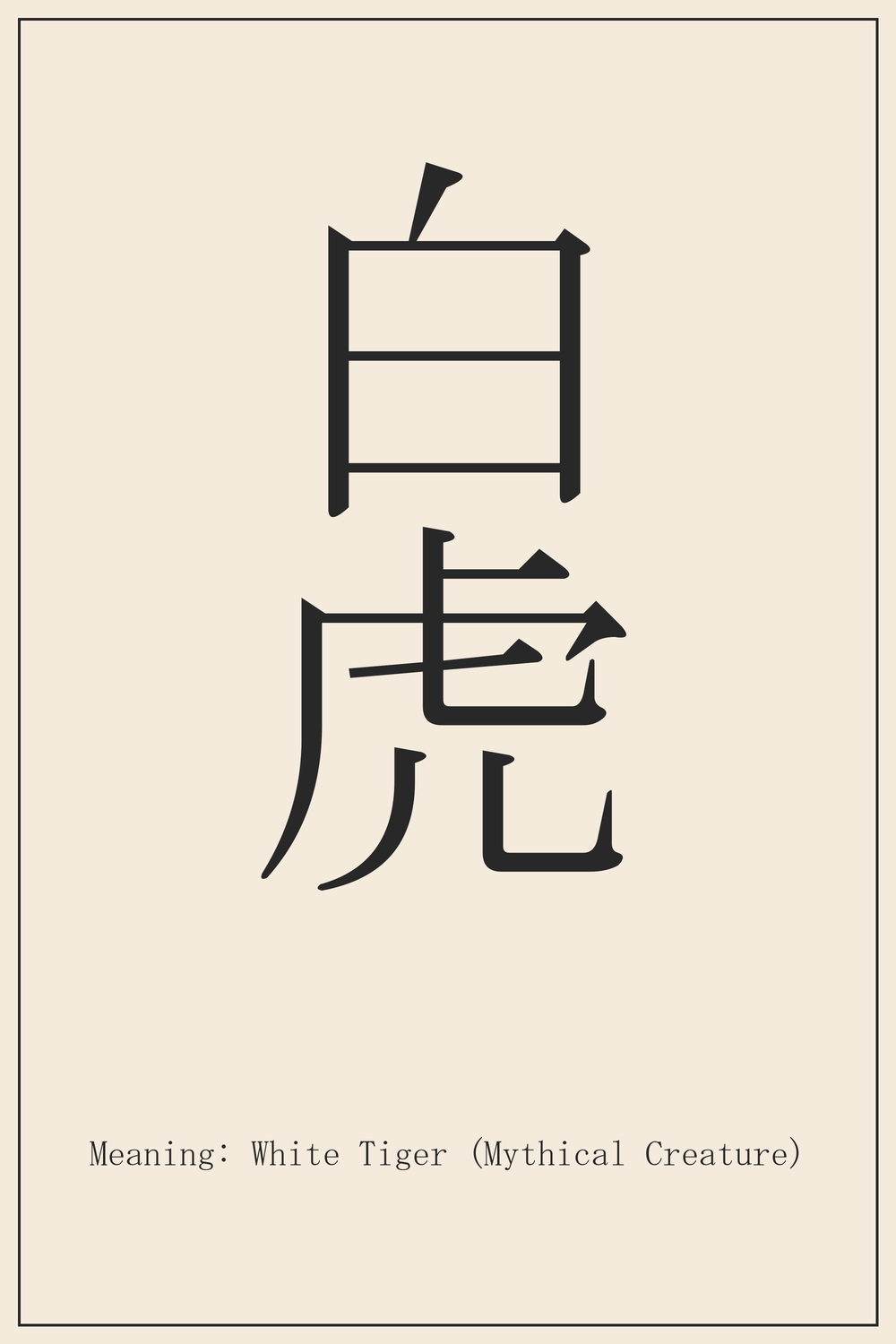
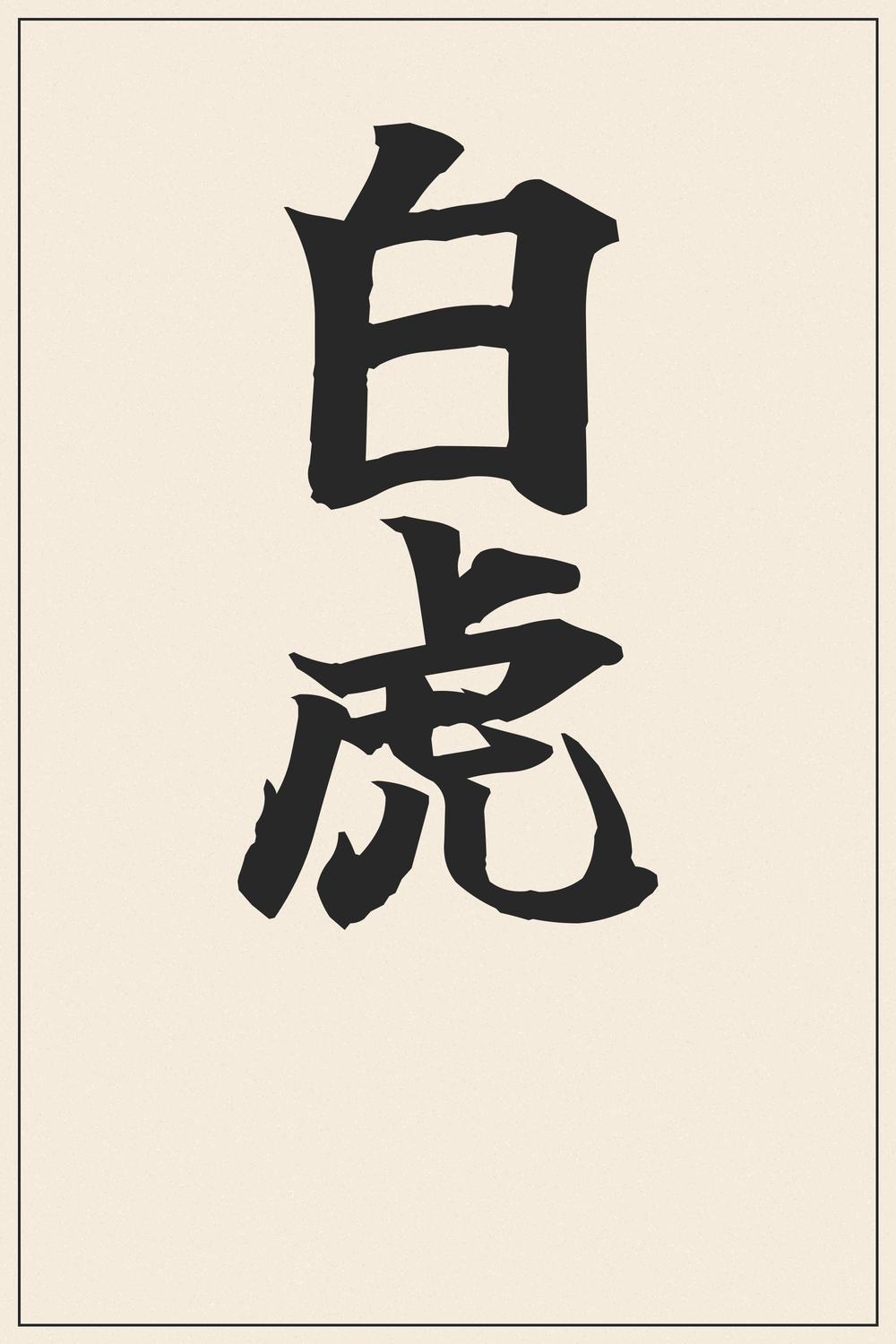
Embodying the fierce spirit of the West, 白虎 (Byakko) stands as a powerful symbol of protection and martial prowess. This sacred white tiger represents not just an animal, but a profound guardian from ancient cosmology.
The atmosphere of a Kanji character changes dramatically depending on the font style. A character that looks elegant in a brush style might look bold and modern in a different font.
Recommendation:
Since a tattoo is permanent, we strongly recommend comparing various font styles beyond what is shown here. Use our designs as a trusted reference for the correct structure, but feel free to explore different artistic variations to find the perfect match for your vision.
The Deep Meaning Behind 白虎
The term 白虎 (Byakko) literally translates to ‘White Tiger.’ It refers to one of the Four Symbols (四神, Shishin) of Chinese constellations, representing the West, the autumn season, and the element of metal. In ancient cosmology, these divine beasts guard the four cardinal directions.
The White Tiger is revered as a powerful protector, a symbol of military might, and a bringer of auspicious omens when it appears. Its image is frequently found in temples, shrines, and traditional art, signifying its enduring role as a guardian spirit across East Asian cultures, including Japan.
Kanji Breakdown
To fully appreciate the depth of 白虎, let’s examine its constituent Kanji characters.
Meaning: White. The character 白 depicts a drop of sweat falling from a forehead, signifying the purity or clarity associated with the color white. It embodies brightness and auspiciousness.
Meaning: Tiger. The character 虎 is a pictograph of a tiger, emphasizing its powerful stance and distinctive stripes. It symbolizes strength, courage, and fierce protection.
Conclusion
The 白虎 (Byakko) is far more than a simple animal; it is an emblem of formidable protection, martial prowess, and a cosmic guardian. Its association with the West and autumn imbues it with a sense of resolute strength and the wisdom of the changing seasons.
Choosing 白虎 for a tattoo signifies a connection to ancient wisdom and a desire for powerful guardianship. It is an excellent choice for those who resonate with its blend of fierce elegance and profound spiritual significance.
Comments