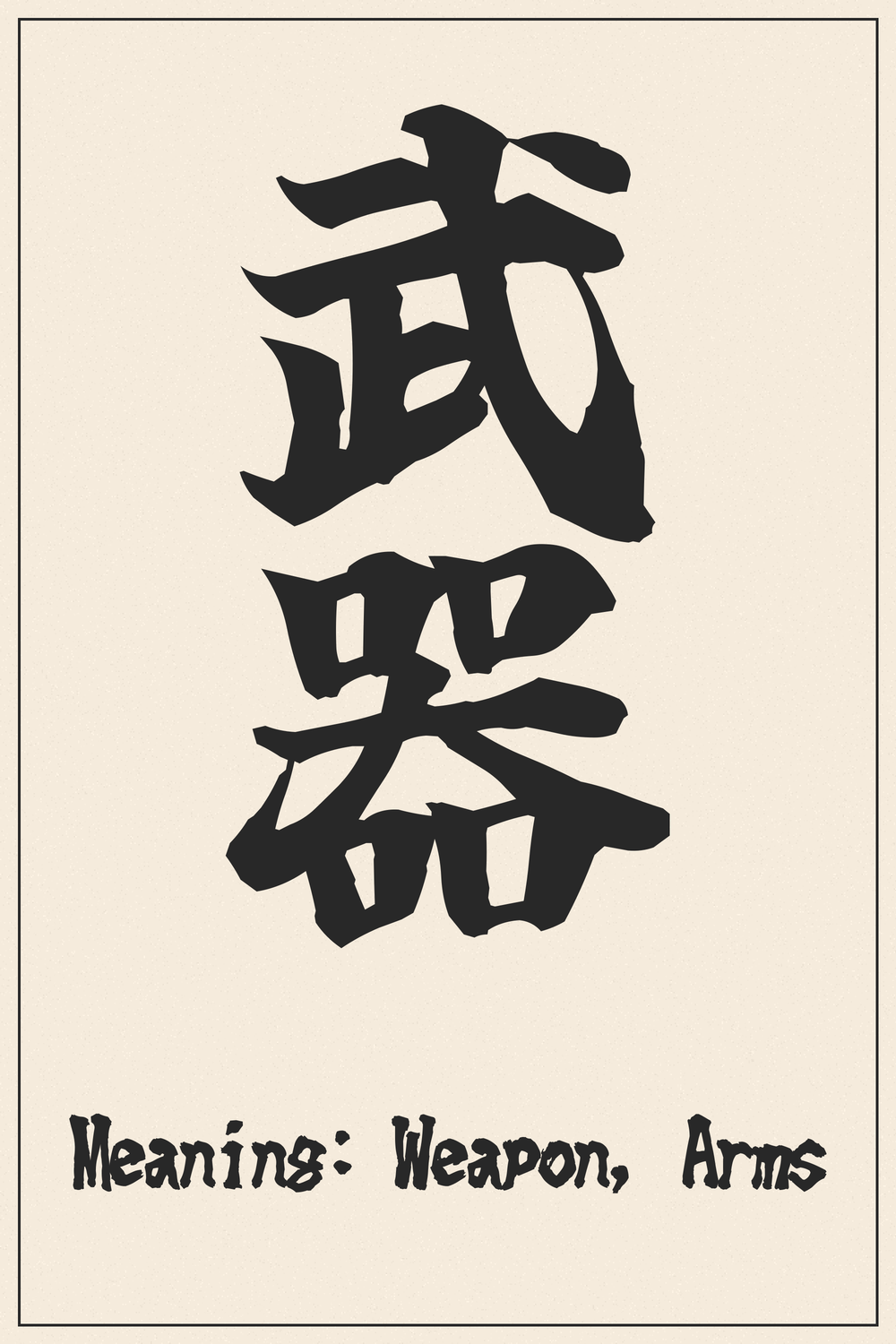
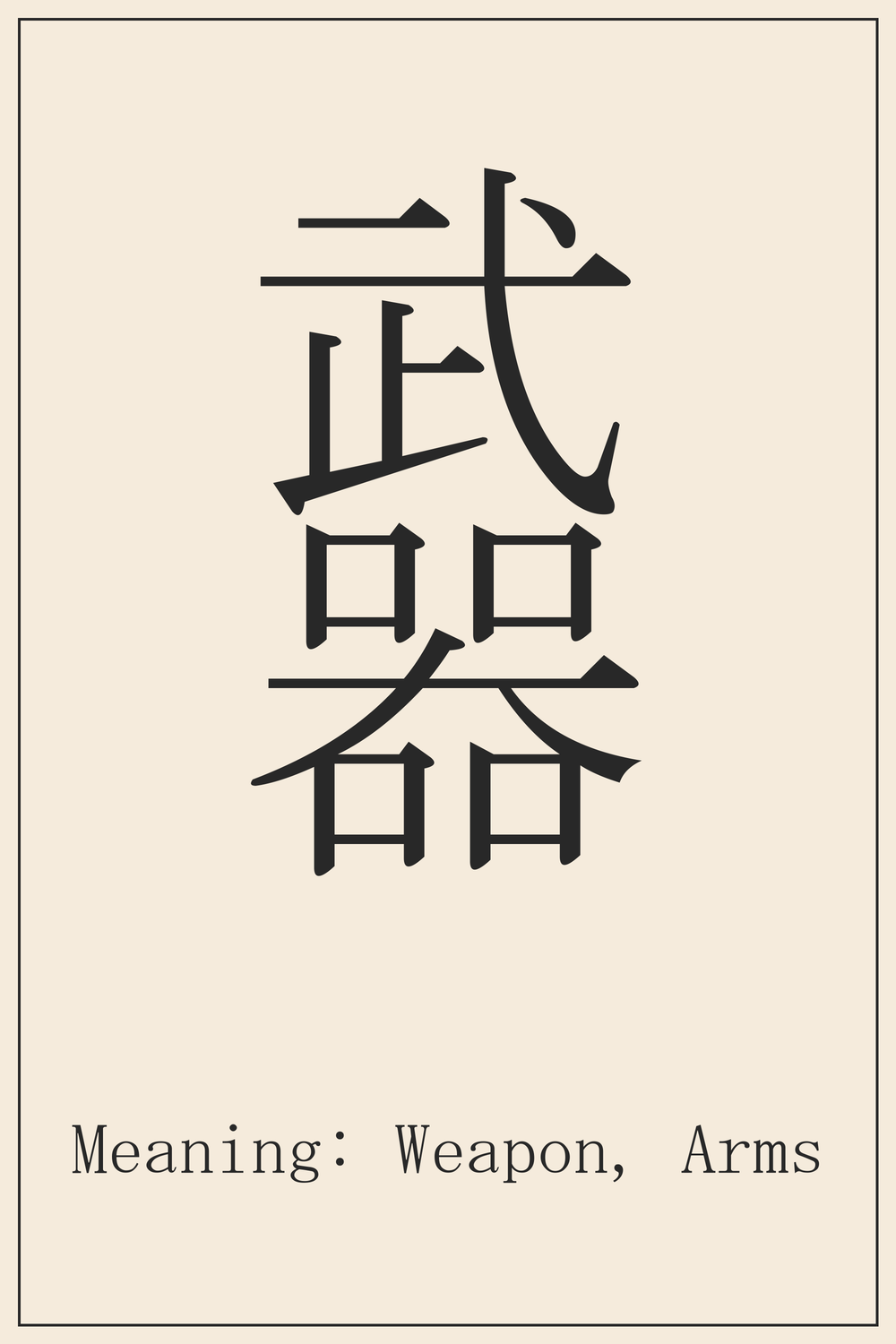
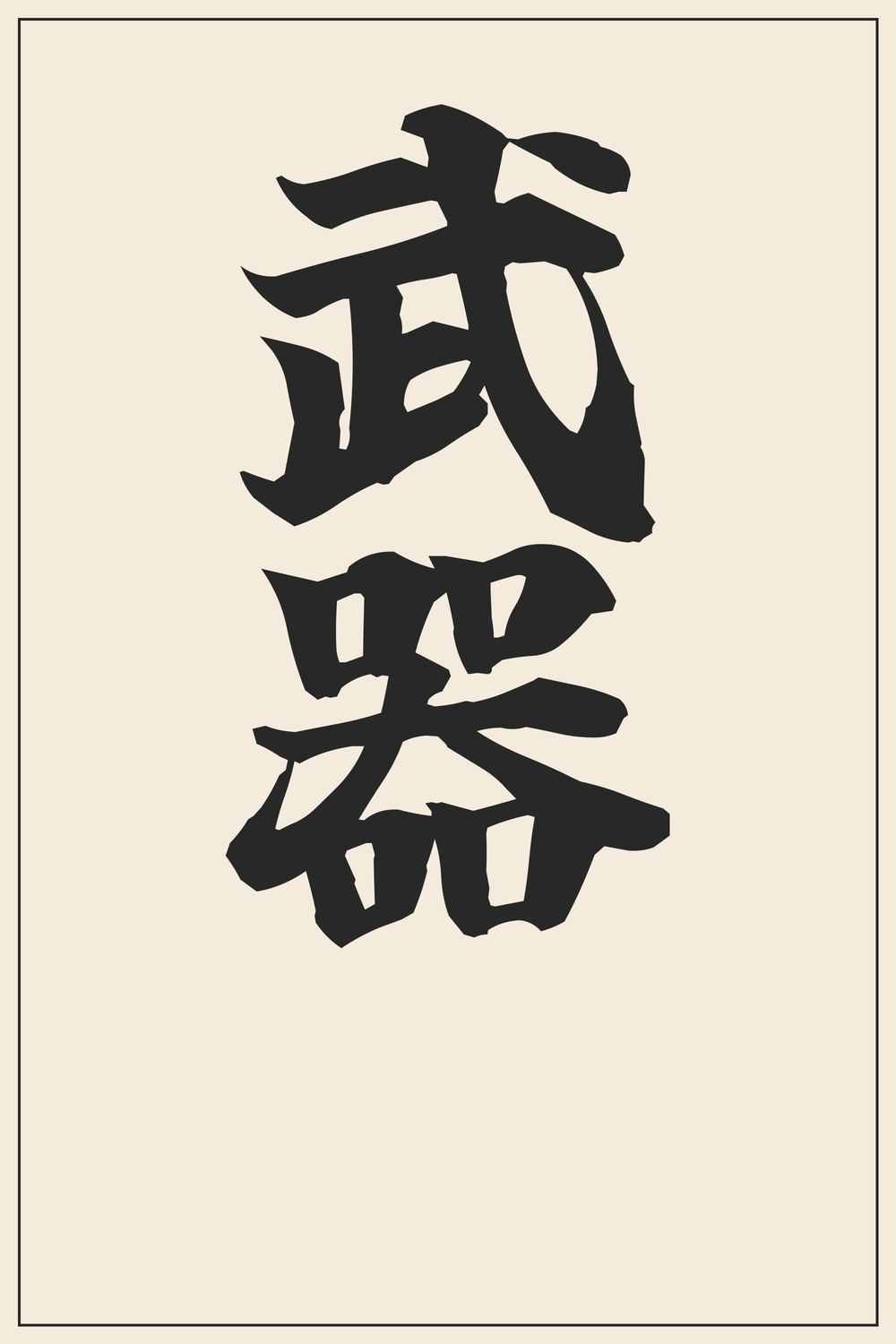
The Kanji for 武器, meaning ‘weapon’ or ‘arms,’ embodies both the capacity for destruction and the means of protection. It represents the raw power and tools of conflict, integral to the concept of the warrior.
The atmosphere of a Kanji character changes dramatically depending on the font style. A character that looks elegant in a brush style might look bold and modern in a different font.
Recommendation:
Since a tattoo is permanent, we strongly recommend comparing various font styles beyond what is shown here. Use our designs as a trusted reference for the correct structure, but feel free to explore different artistic variations to find the perfect match for your vision.
The Deep Meaning Behind 武器
The term 武器 (Buki) directly translates to ‘weapon’ or ‘arms.’ It combines the concept of the ‘martial’ (武) with that of a ‘tool’ or ‘vessel’ (器).
In Japanese culture, particularly within the samurai tradition, a weapon is more than a tool for killing; it is a symbol of authority, protection, and spiritual discipline. It represents the external instrument through which a warrior expresses their internal resolve and skill, bridging the gap between intent and action.
Kanji Breakdown
The compound 武器 is formed by two characters that categorize the object as a specific type of tool.
Meaning: Martial, Military, Warrior. This character combines 戈 (halberd/spear) and 止 (foot/stop). While often philosophically interpreted as “stopping the spear” (bringing peace through strength), etymologically it depicts a warrior marching with a weapon, symbolizing military force.
Meaning: Tool, Vessel, Implement. This character features four 口 (mouths/containers) surrounding 犬 (dog). Anciently, it depicted distinct vessels used in rituals (possibly guarded by a dog), evolving to mean any specialized instrument, utensil, or container. In this context, it denotes a “tool” designed for a specific purpose.
Conclusion
The Kanji 武器 embodies the essence of martial power and the tangible instruments used in conflict or for defense. It represents not just a physical object but the force and capability behind it, making it a compelling choice for those who resonate with themes of strength, strategy, and self-reliance.
For a tattoo, 武器 serves as a straightforward declaration of these qualities. Its clear and strong characters can be a powerful symbol for anyone who values protection, readiness, or the disciplined pursuit of strength, provided the design is of an appropriate size to ensure its legibility and lasting impact.
Comments