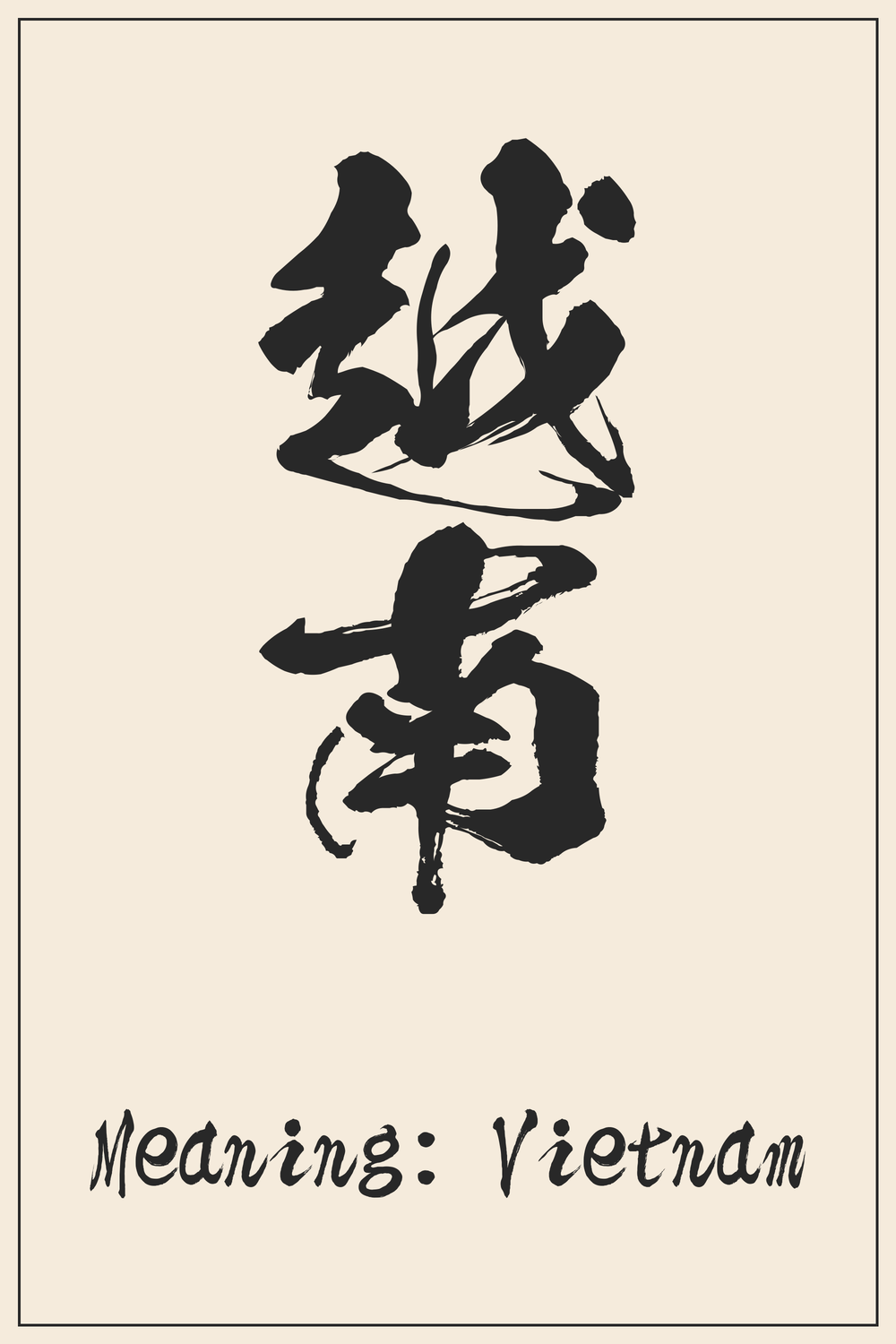
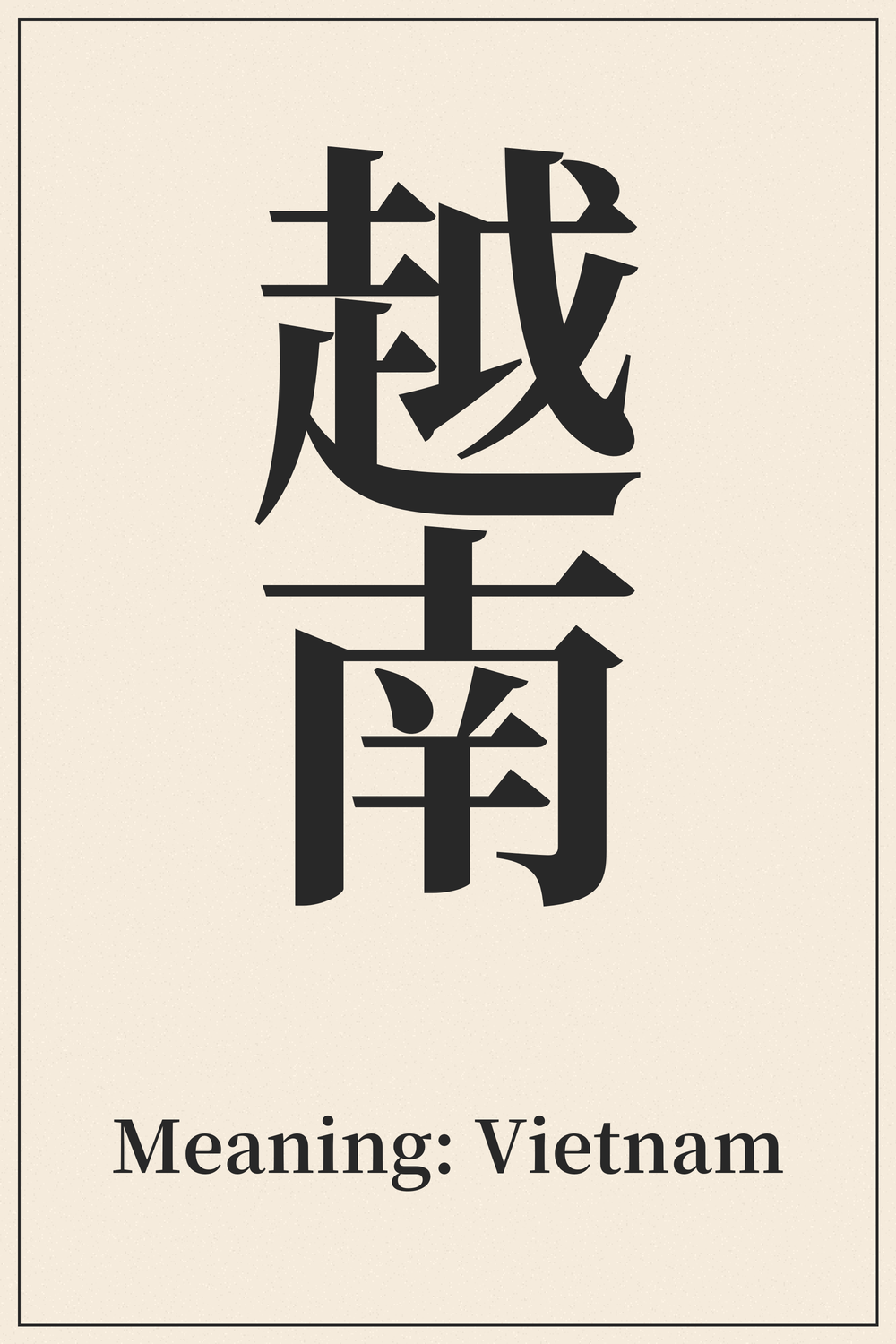
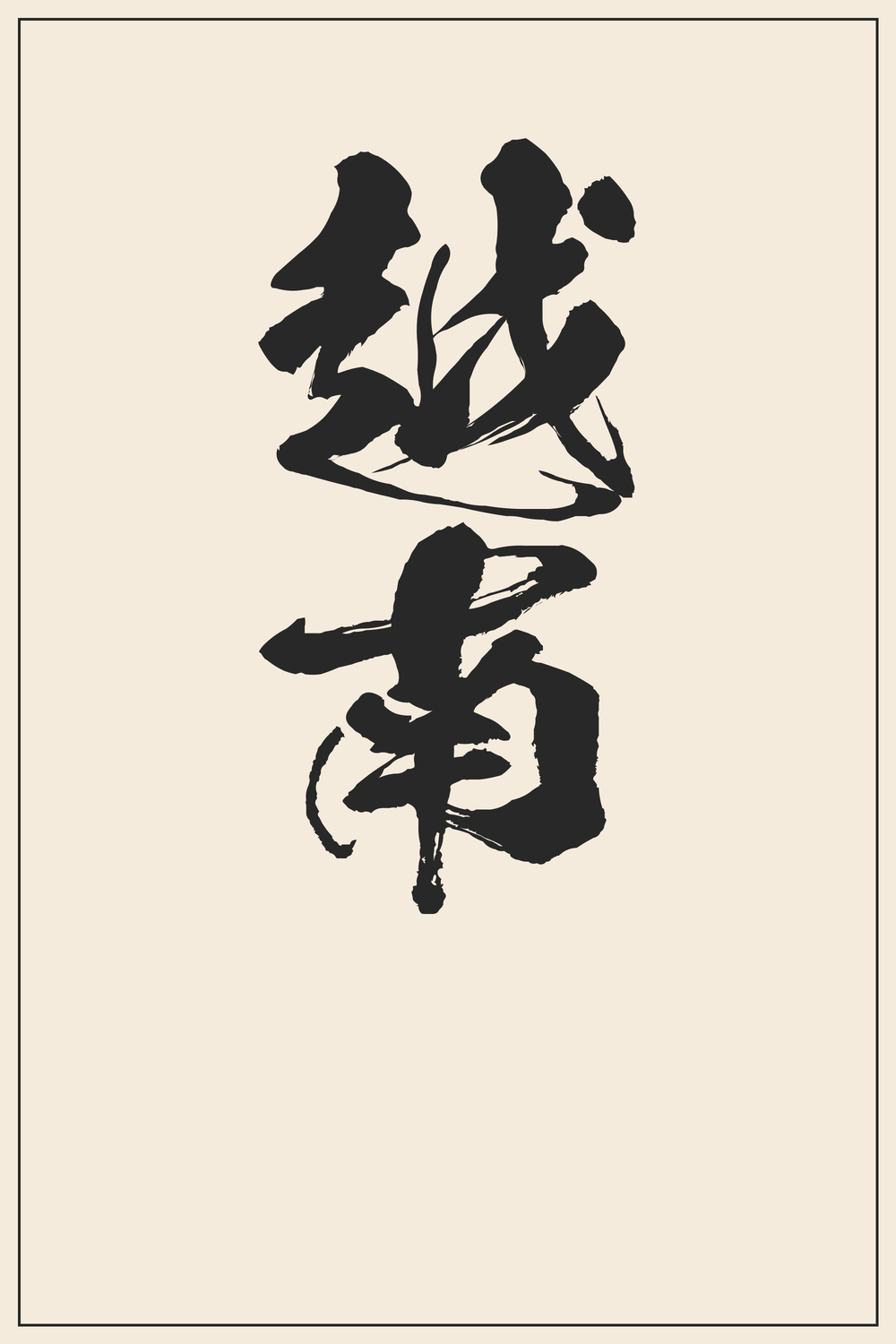
The Kanji for ‘Vietnam’, 越南, offers a glimpse into how foreign country names are often transliterated into Japanese through phonetic choices. It highlights a unique aspect of linguistic adaptation in Japanese culture.
The atmosphere of a Kanji character changes dramatically depending on the font style. A character that looks elegant in a brush style might look bold and modern in a different font.
Recommendation: Since a tattoo is permanent, we strongly recommend comparing various font styles beyond what is shown here. Use our designs as a trusted reference for the correct structure, but feel free to explore different artistic variations to find the perfect match for your vision.
The Deep Meaning Behind 越南
The Kanji combination 越南 (Etsunan) serves as an *ateji* (当て字), a phonetic representation used by the Japanese to write the name of the country Vietnam. This means the characters were primarily chosen for their sounds rather than their individual meanings in this specific context.
Literally, 越 (etsu) means ‘to cross over’ or ‘to surpass,’ and 南 (nan) means ‘south.’ Therefore, the characters objectively translate to something like ‘Crossing South’ or ‘South Beyond,’ reflecting historical geographical relations of the region relative to China. It is a direct phonetic adaptation of the Chinese name for Vietnam, Yuènán.
Kanji Breakdown
The compound 越南 is formed by two individual Kanji, each contributing to its phonetic value and historical context.
Meaning: ‘To cross over,’ ‘to pass over,’ ‘to surpass.’ This character is used phonetically here, but its original meaning suggests movement or transcendence.
Meaning: ‘South.’ This character maintains its directional meaning, which aligns with Vietnam’s geographical position south of China.
Conclusion
In summary, 越南 (Etsunan) is the Japanese phonetic rendering of the country name Vietnam. While its characters literally mean ‘Crossing South’ or ‘South Beyond,’ this combination functions as an *ateji*, chosen for its sound rather than a deep symbolic meaning for the country itself. Its use reflects a historical linguistic tradition of adapting foreign names.
For those considering 越南 for a tattoo, it is important to understand its primary role as a phonetic representation of a country name in Japanese. Its literal meaning, though interesting from an etymological standpoint, does not carry profound philosophical or personal significance beyond designating the nation of Vietnam. It is a culturally specific designation for the country.
Comments