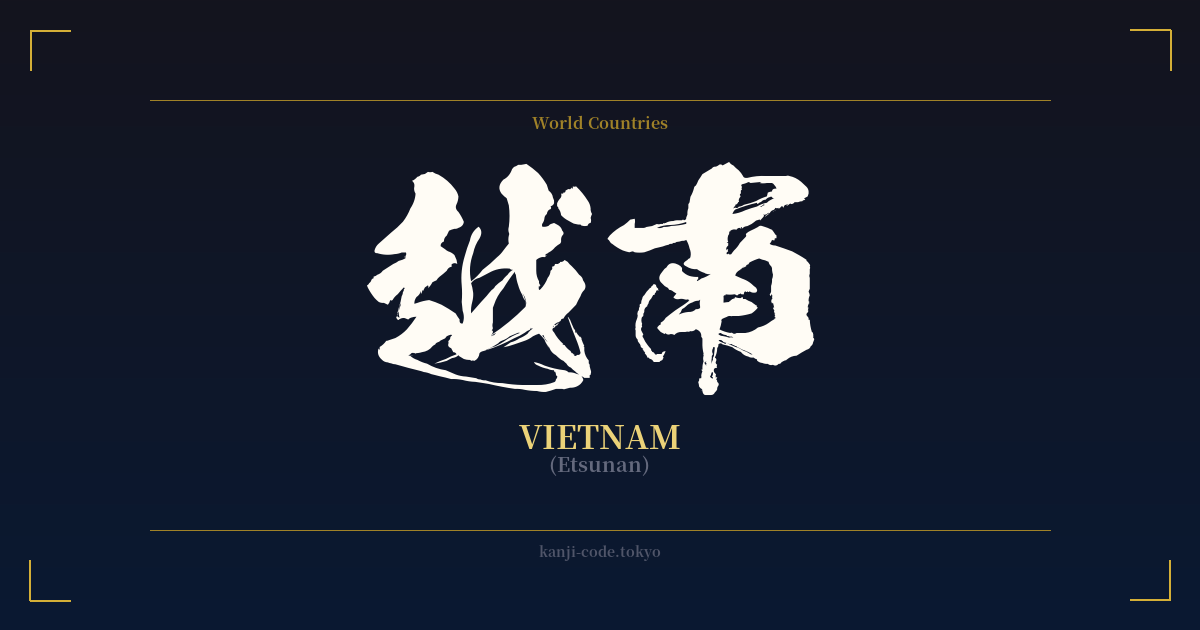
✍️ 越南 (Etsunan) — Contexto cultural
La palabra 越南 (Etsunan) es la representación en caracteres kanji japoneses del país de Vietnam. Si bien el japonés moderno suele utilizar la escritura katakana (Betonamu) para los nombres de países extranjeros en contextos cotidianos, 越南 persiste en documentos más formales, históricos y legales. Su existencia revela una fascinante historia lingüística compartida en Asia Oriental.
Los caracteres en sí son un préstamo directo del nombre sino-vietnamita del país, Việt Nam. No se trata de una simple asignación fonética; los caracteres tienen un profundo significado histórico. El primer kanji, 越 (Etsu), significa "cruzar" o "superar", pero históricamente se refería al pueblo Baiyue, un antiguo grupo que habitaba lo que hoy es el sur de China y el norte de Vietnam. El segundo kanji, 南 (Nan), simplemente significa "sur".'
Por lo tanto, 越南 se traduce literalmente como 'el Vietnam del Sur'. Este nombre representaba una poderosa declaración de identidad. Durante siglos, la región fue conocida en China como An Nam (安南), que significa 'el Sur Pacificado', un nombre con connotaciones coloniales. A principios del siglo XIX, el emperador Gia Long de la dinastía Nguyễn negoció con éxito con el emperador chino Jiaqing para adoptar oficialmente el nombre de Việt Nam, revirtiendo el término anterior y afirmando una identidad nacional propia.
En Japón, la adopción de 越南 refleja esta historia. Es un nombre formal, que se ve a menudo en frases como 日越関係 (Nichi-Etsu kankei), que significa 'relaciones entre Japón y Vietnam'. Este uso resalta un nivel de respeto y formalidad que la versión más común en katakana podría no transmitir. Reconoce a Vietnam no solo como un lugar extranjero, sino como una nación con una historia rica e intrínsecamente ligada a la influencia cultural china, que por supuesto incluye al propio Japón.
Hoy, contemplar 越南 nos recuerda una época en la que un sistema de escritura compartido conectaba culturas distantes. Si bien Vietnam adoptó oficialmente el alfabeto Quốc ngữ, basado en el latín, en el siglo XX, el legado de Chữ Hán (caracteres chinos) y la escritura Chữ Nôm, relacionada con este, perdura en sus textos históricos, inscripciones en templos y en nombres como este. Para quienes se interesan por la historia de la región, 越南 es más que un nombre; es una puerta de entrada para comprender siglos de intercambio cultural, identidad e independencia.
🖌️ Estilos de fuente para 越南
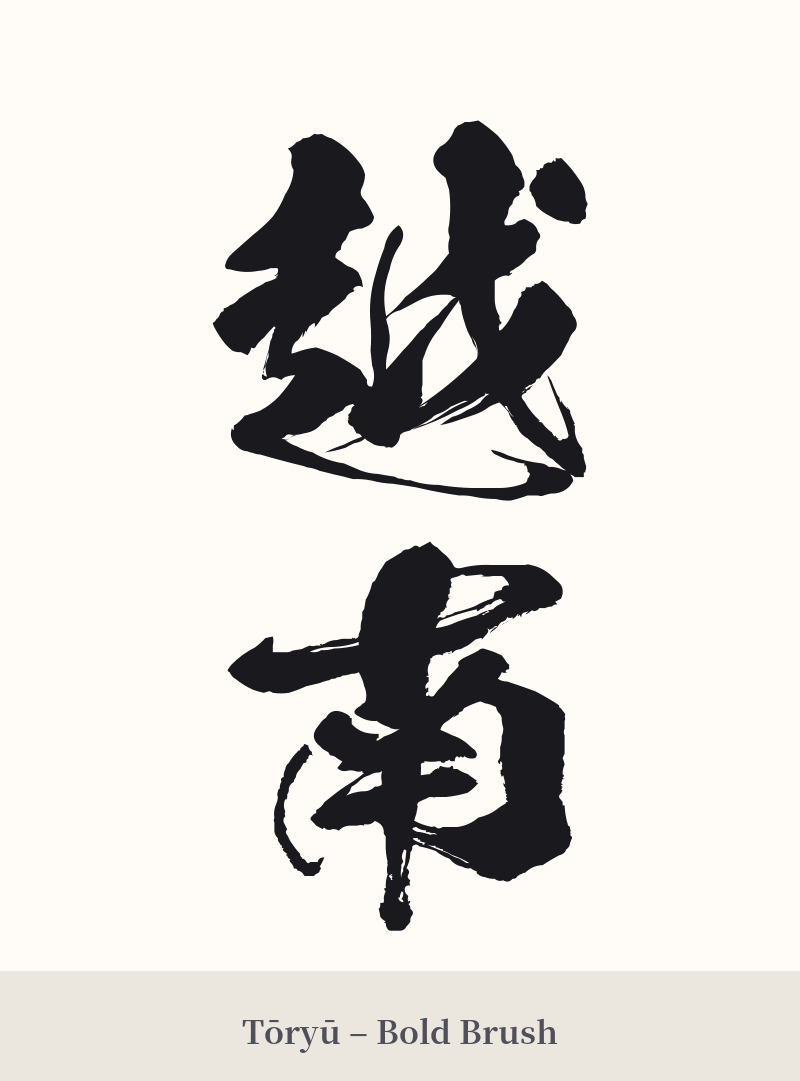
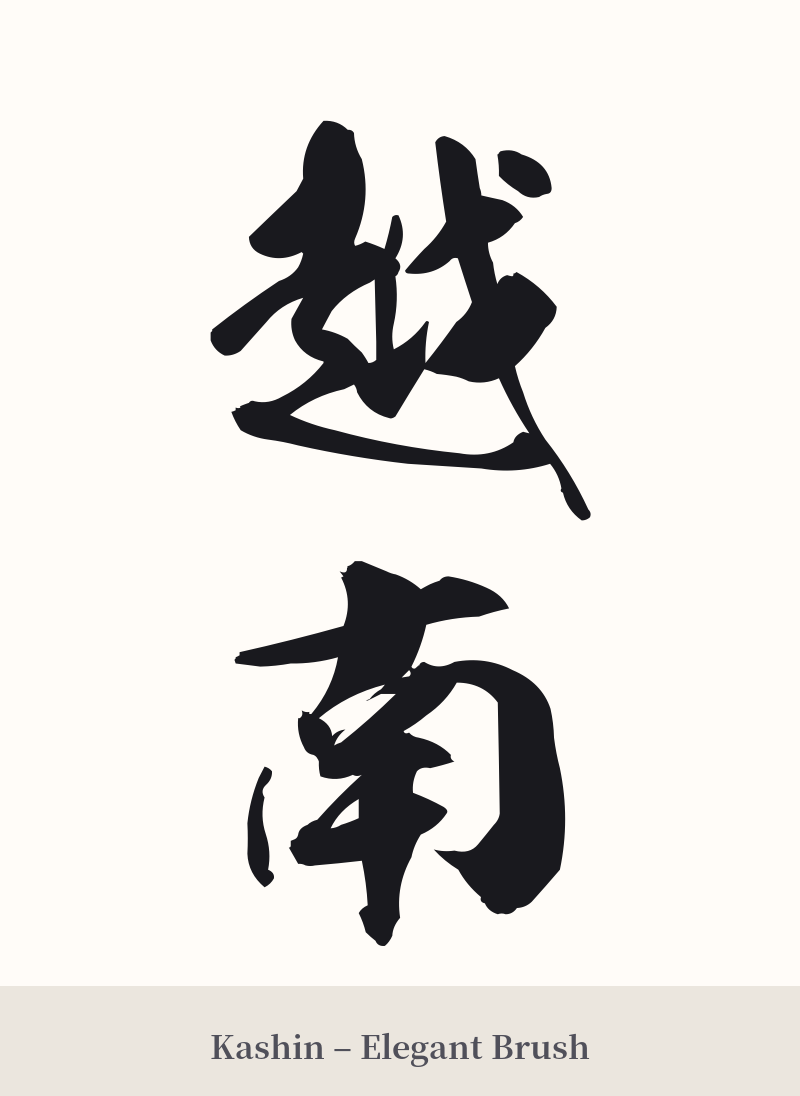
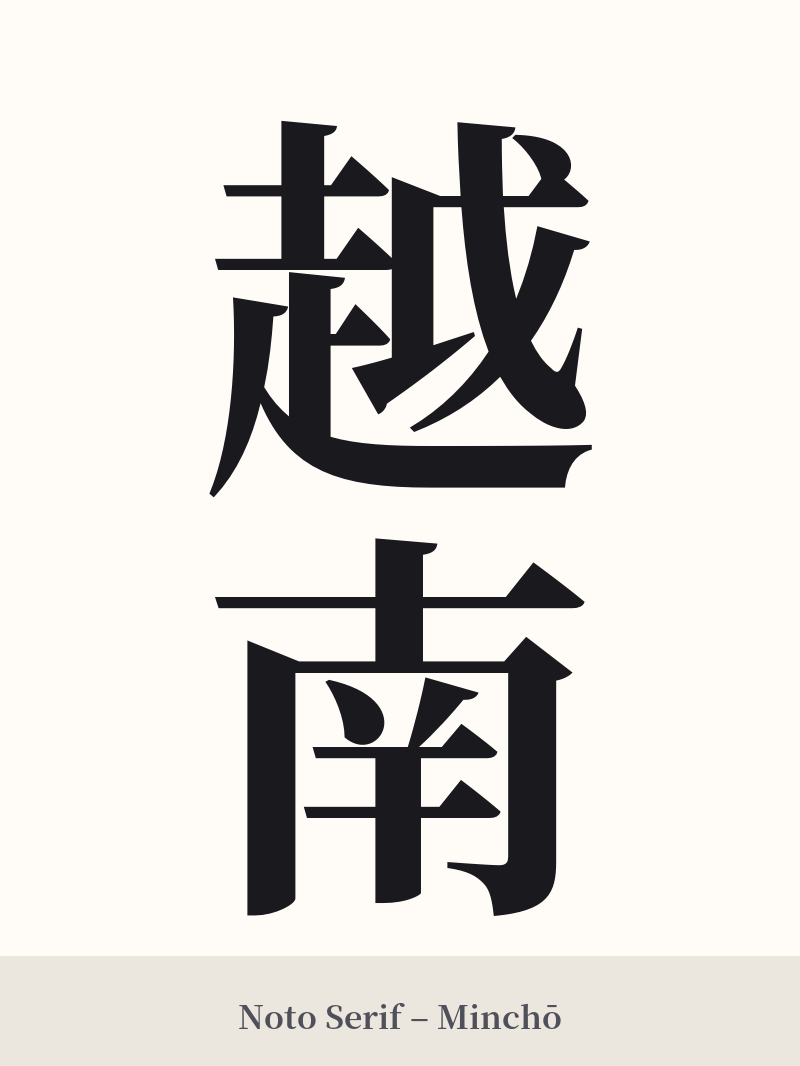
Los mismos caracteres kanji pueden verse muy diferentes según el estilo de caligrafía. Elige una fuente que se ajuste al ambiente que deseas para tu tatuaje o diseño.
🎨 Idoneidad para tatuajes
📐 Guía de diseño de tatuajes
Para un tatuaje de 越南, la armonía visual y el equilibrio entre los dos caracteres son fundamentales. Se recomienda una disposición vertical, ya que se ajusta a la caligrafía tradicional de Asia Oriental y crea una elegante columna en el cuerpo.
– Ubicación: El antebrazo, la pantorrilla o la columna vertebral son excelentes opciones para un diseño vertical. Esto permite que los caracteres sean lo suficientemente grandes como para que sus detalles sean claros y se aprecien.
– Estilo de fuente: La elección de la tipografía puede alterar drásticamente la impresión general. Un estilo Gyosho dinámico y semicursivo puede enfatizar la sensación de movimiento en el carácter 越 ('cruzar'). Para una apariencia más formal y solemne, una tipografía Kaisho nítida y de líneas rectas es perfecta. Una fuente Mincho ofrece un estilo limpio, clásico y legible que recuerda al texto impreso.
Consejos visuales: Debido a los 21 trazos combinados, evite que el tatuaje sea demasiado pequeño, ya que los detalles más finos de los caracteres podrían difuminarse con el tiempo. Considere dejar suficiente espacio en blanco alrededor de los kanji para que el diseño respire y se destaque por sí solo como una declaración impactante.
Comentarios