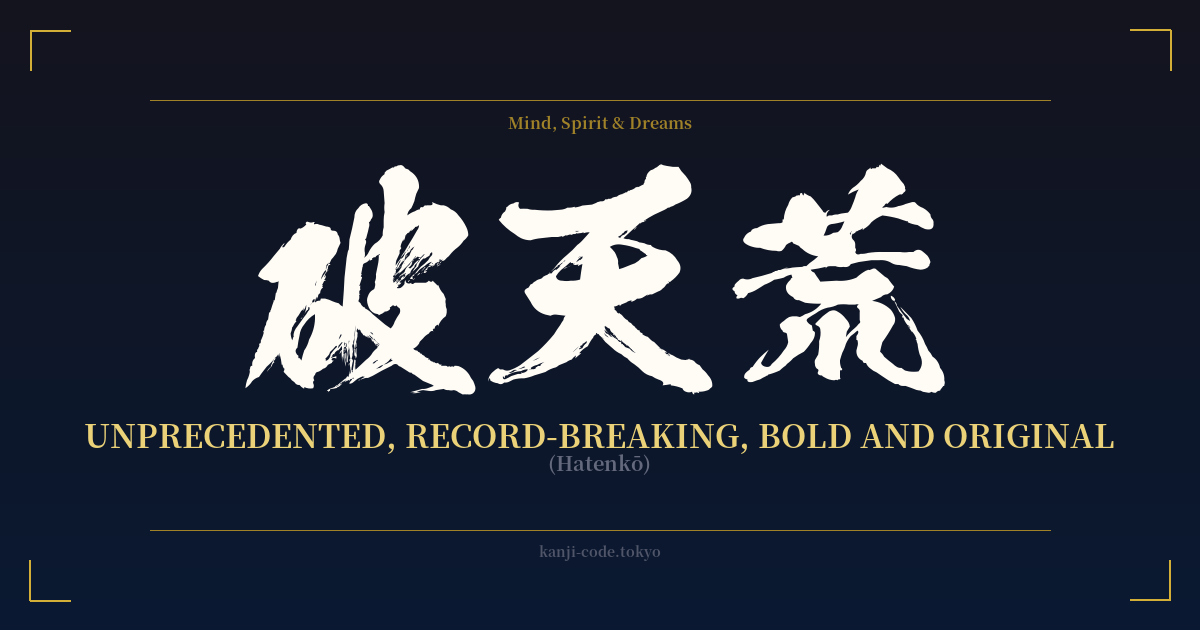
✍️ 破天荒 (Hatenkō) — Cultural Context
Hatenkō (破天荒) is a powerful Japanese idiom that speaks to the very essence of shattering expectations and achieving the impossible. While often translated as "unprecedented" or "record-breaking," its true depth is revealed through its dramatic origin story and literal meaning: "to break the uncultivated heavens."
The term originates from a historical anecdote from Tang Dynasty China. In the province of Jingnan, no scholar had ever successfully passed the rigorous imperial examinations. Because of this long streak of failure, the region was mockingly referred to as "Tenkō" (天荒), or the "uncultivated heavens"—a wild, barren land where intellectual achievement could not blossom.
This all changed when a scholar named Liu Shi finally passed the exam, earning his place in the imperial court. His incredible success was hailed as "Hatenkō"—he had broken through the barrenness and achieved what was thought to be impossible for his people. He didn't just pass a test; he shattered a generational curse and created a new precedent.
This story is the heart of the word's meaning. Hatenkō is not just about doing something new; it's about being the very first to do it, especially after a long period where it was deemed unattainable. It evokes the image of a pioneer, a trailblazer who carves a path through an untouched wilderness for others to follow. It's the spirit of the athlete who smashes a decades-old world record, the scientist who makes a discovery that changes their field forever, or the artist whose work defies all existing genres.
In modern Japan, Hatenkō retains this noble meaning but has also evolved. It's frequently used in media to describe public figures, athletes, or innovators who display audacious originality. More casually, it can also describe a person with a wild, eccentric, and unpredictable personality—someone who breaks social norms with bold, almost reckless, abandon. This newer sense is less about historical achievement and more about a person's character, but it still carries the core idea of deviating from the expected path in a dramatic way.
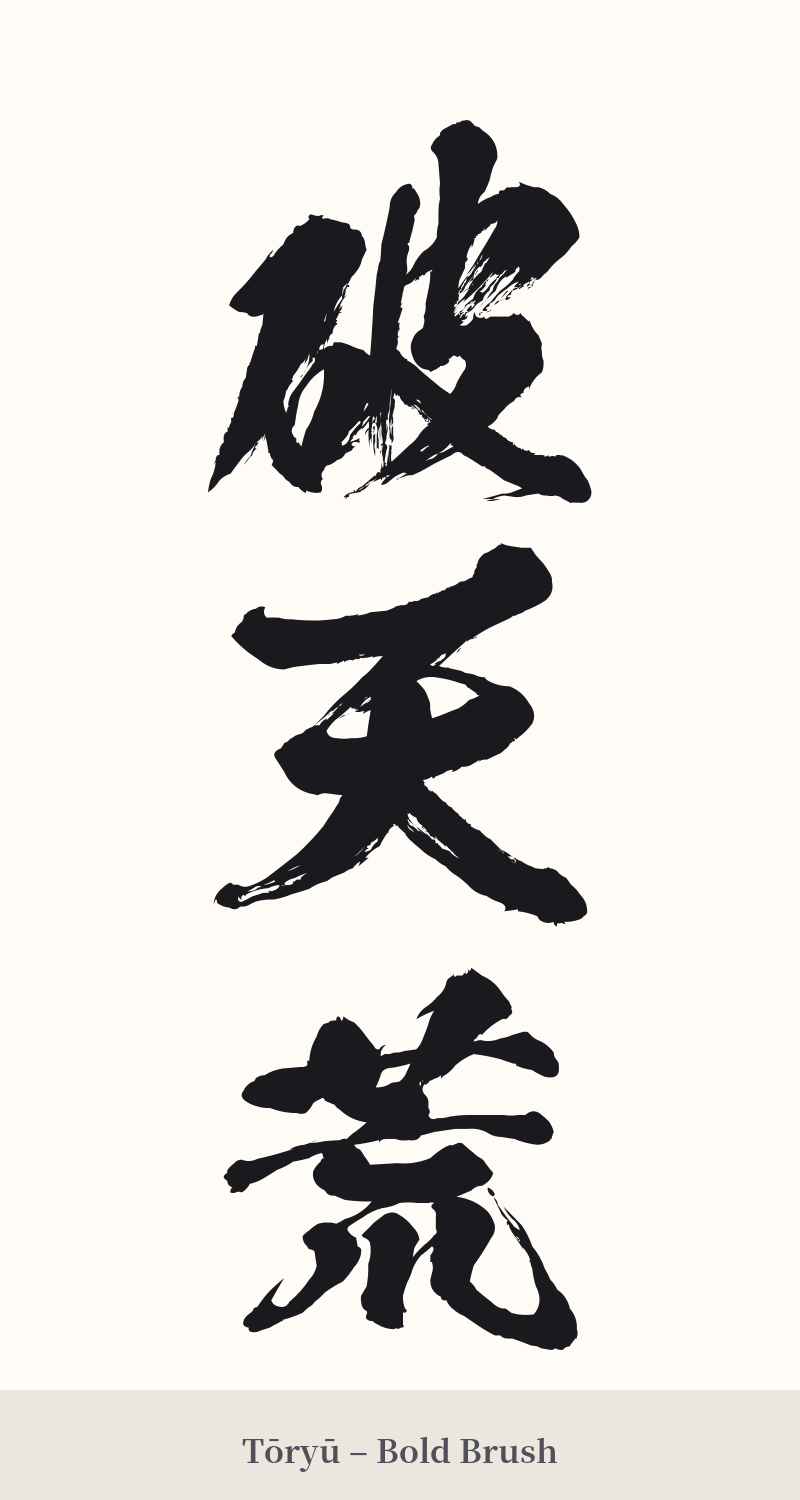
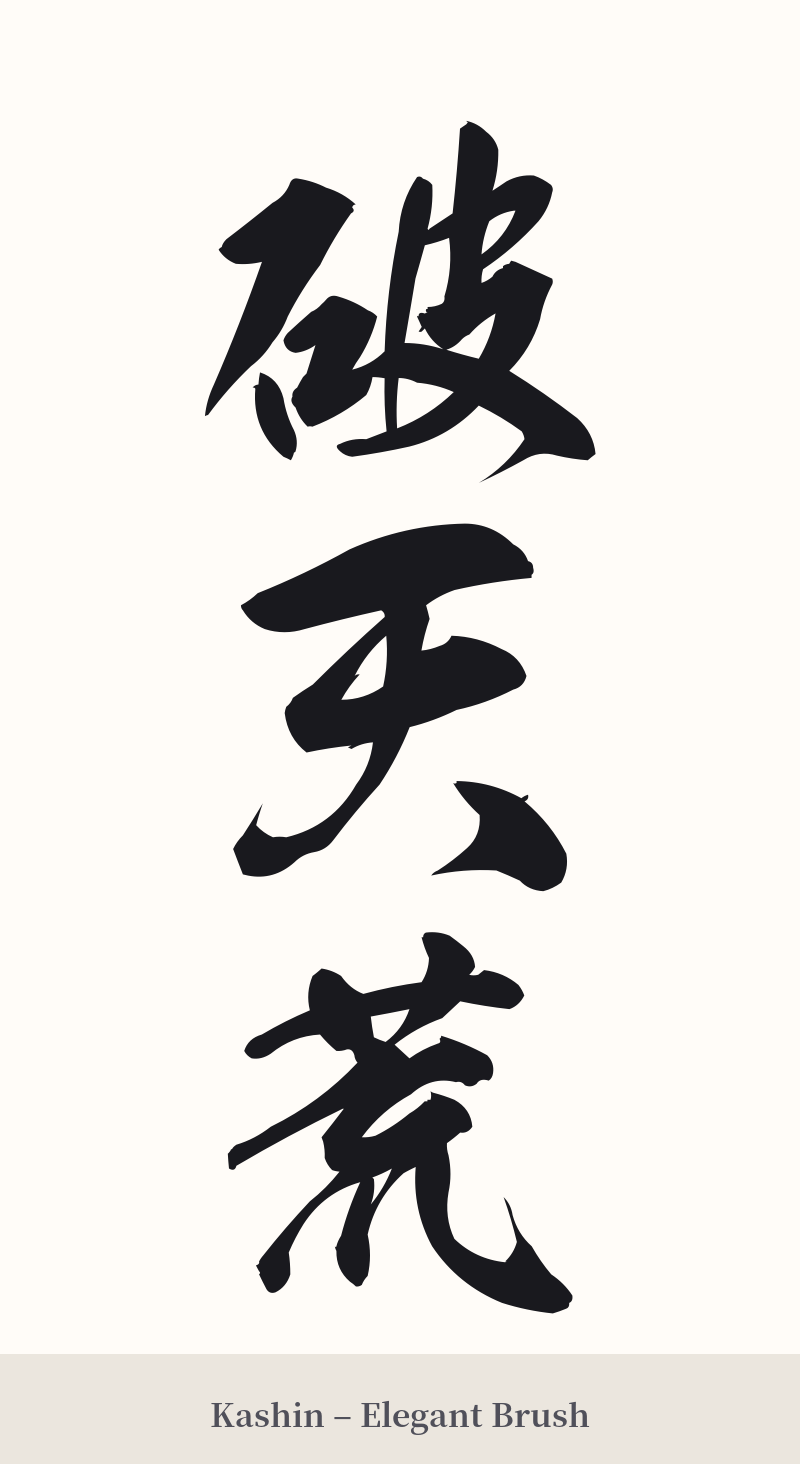
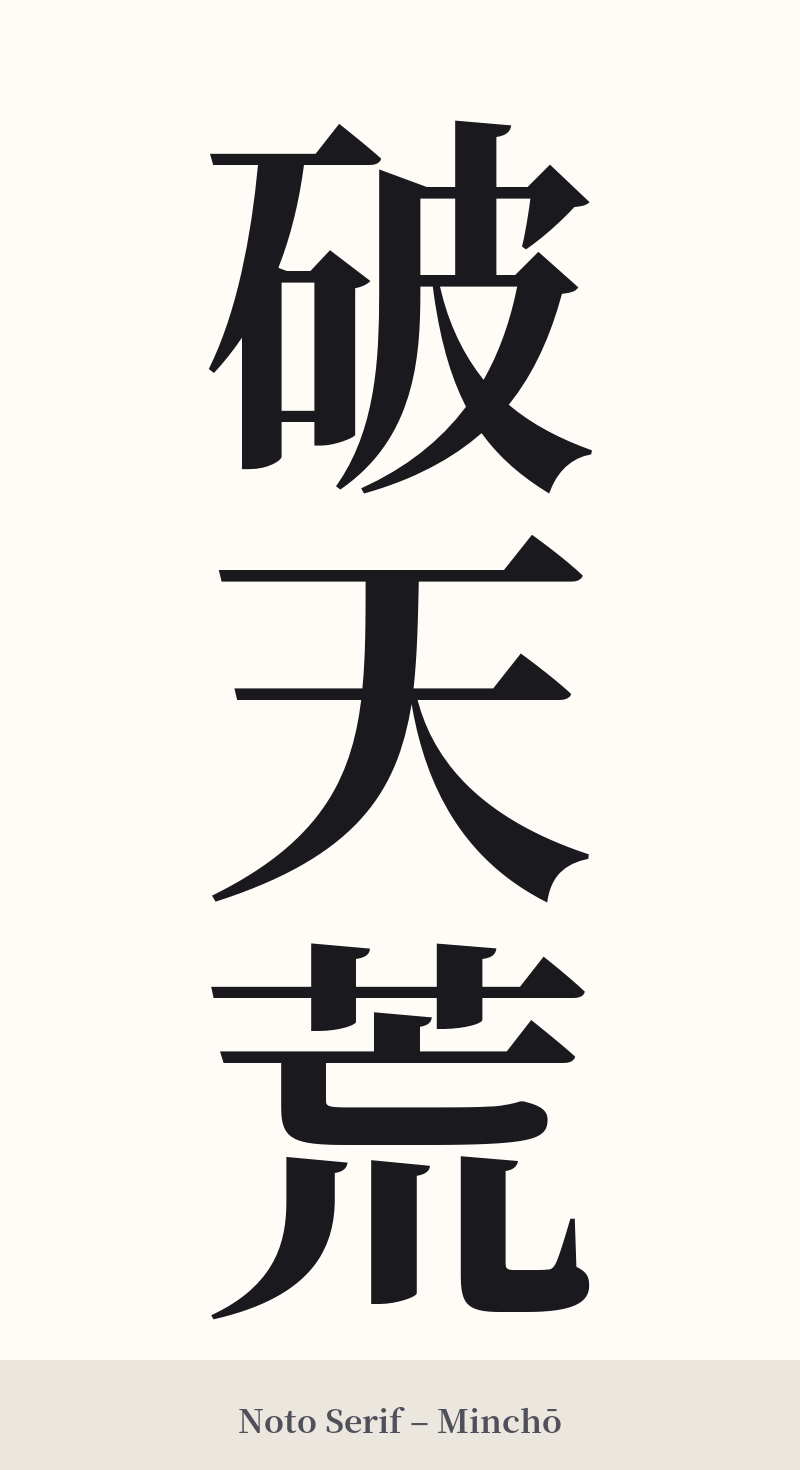
🖌️ Font Styles for 破天荒
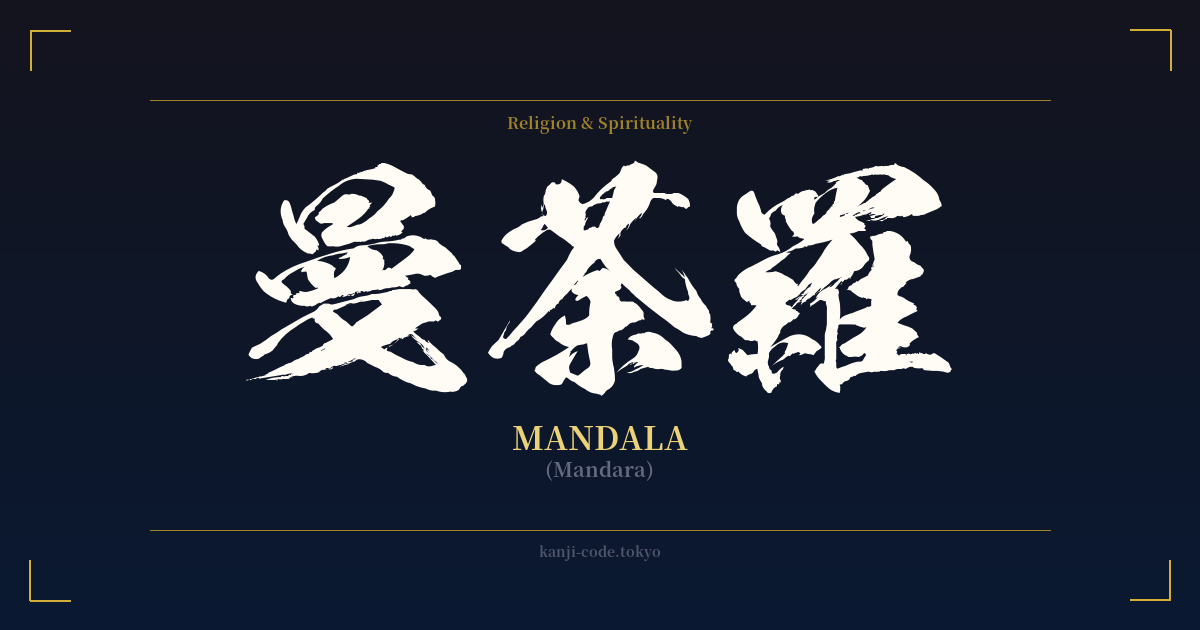
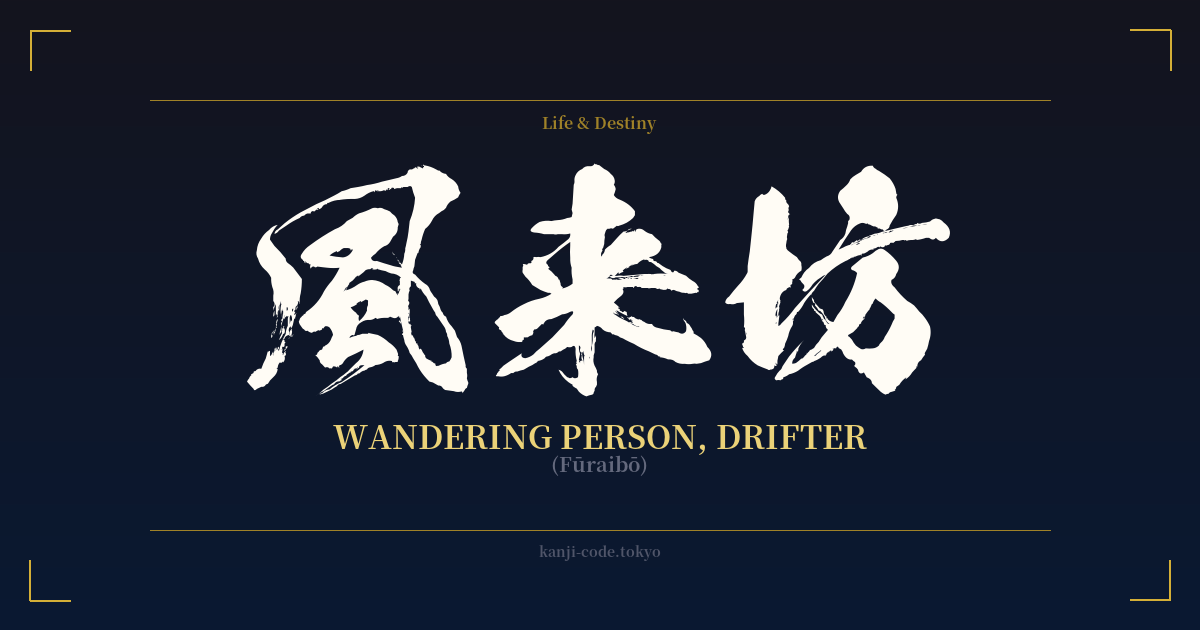
The same kanji can look dramatically different depending on the calligraphy style. Choose a font that matches the mood you want for your tattoo or design.
🎨 Tattoo Suitability
📐 Tattoo Design Guide
For a Hatenkō tattoo, the design should match the word's bold and impactful nature.
– Placement: A vertical alignment is highly recommended to honor traditional Japanese script. This looks powerful along the spine, forearm, or calf. For a horizontal design, the upper back or across the chest provides a strong canvas.
– Font Style: A dynamic, expressive font is key. A rough, energetic calligraphy style (Gyōsho or Sōsho) can capture the feeling of 'breaking' and movement. A strong, angular block script (Kaisho) can emphasize the monumental, record-setting aspect of the word.
– Visual Tips: The kanji alone are powerful enough to convey the meaning. However, you could subtly incorporate a 'crack' or a shattering effect into one of the strokes of '破' (ha) to visually enhance the concept. Avoid overly complex backgrounds, as they can distract from the strength of the characters themselves.
Comments