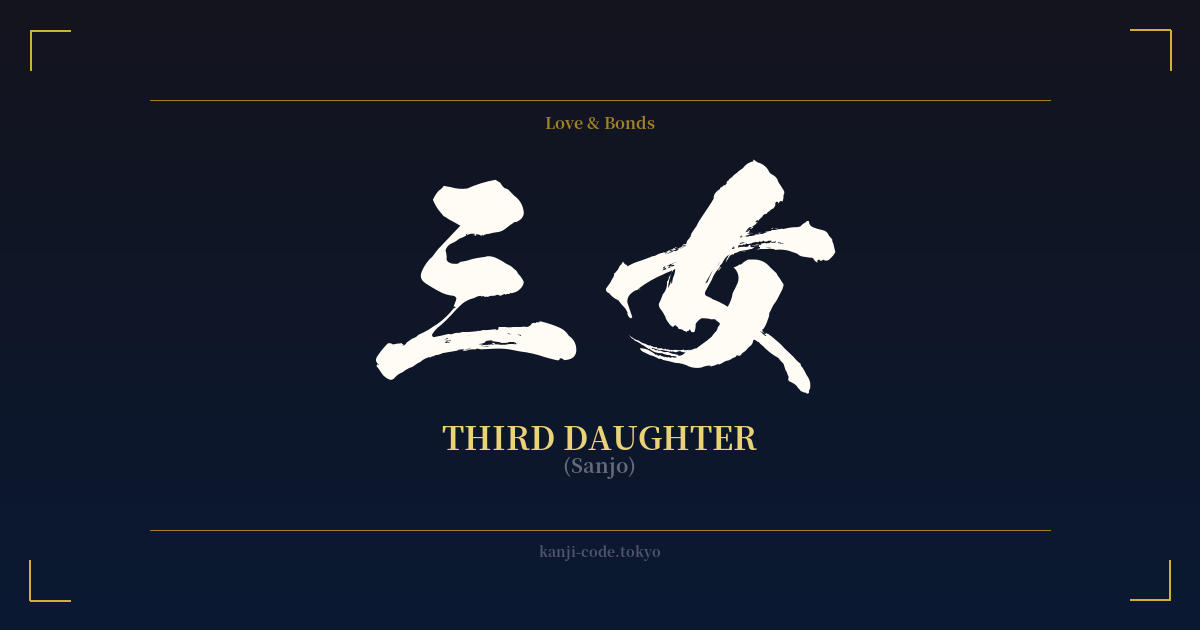
✍️ 三女 (Sanjo) — Cultural Context
三女 (Sanjo) is a Japanese word that directly translates to 'third daughter.' It's a straightforward compound of the kanji 三 (san), meaning 'three,' and 女 (jo/onna), meaning 'woman' or 'female.' While simple on the surface, this term is deeply embedded in the structure and traditions of the Japanese family.
In Japan, there is a specific and widely used system for referring to siblings by birth order. The eldest daughter is the 長女 (chōjo), the second is the 次女 (jijo), and the third is the 三女 (sanjo). This system provides immediate context about a person's position within their family, a piece of information that historically held significant weight.
Historically, under the traditional family system known as the 'ie' (家), birth order was paramount. The eldest son (長男, chōnan) was typically the heir, inheriting the family's property, business, and responsibility for caring for aging parents. Daughters, particularly in pre-modern times, were often seen in relation to marriage alliances. The eldest daughter (chōjo) often carried significant responsibility, expected to be a role model and help raise her younger siblings.
By contrast, the third daughter, or sanjo, was often in a unique position. Freed from the direct succession duties of the eldest son and the immediate responsibilities of the eldest daughter, the third daughter could sometimes experience a different kind of upbringing. In literature and popular culture, the 'sanjo' character archetype is sometimes portrayed as more free-spirited, independent, or perhaps even overlooked compared to her older siblings. This position could afford a degree of freedom not available to the first or second child.
Today, while the rigid 'ie' system has been legally abolished, its cultural echoes remain. Using terms like chōjo, jijo, and sanjo is still common in everyday conversation. It's a simple, factual way to describe one's family, but it can also carry subtle nuances about personality and family dynamics, whether real or perceived. For someone who is a third daughter, the word 三女 is a direct and undeniable part of her identity within the family unit.
🖌️ Font Styles for 三女
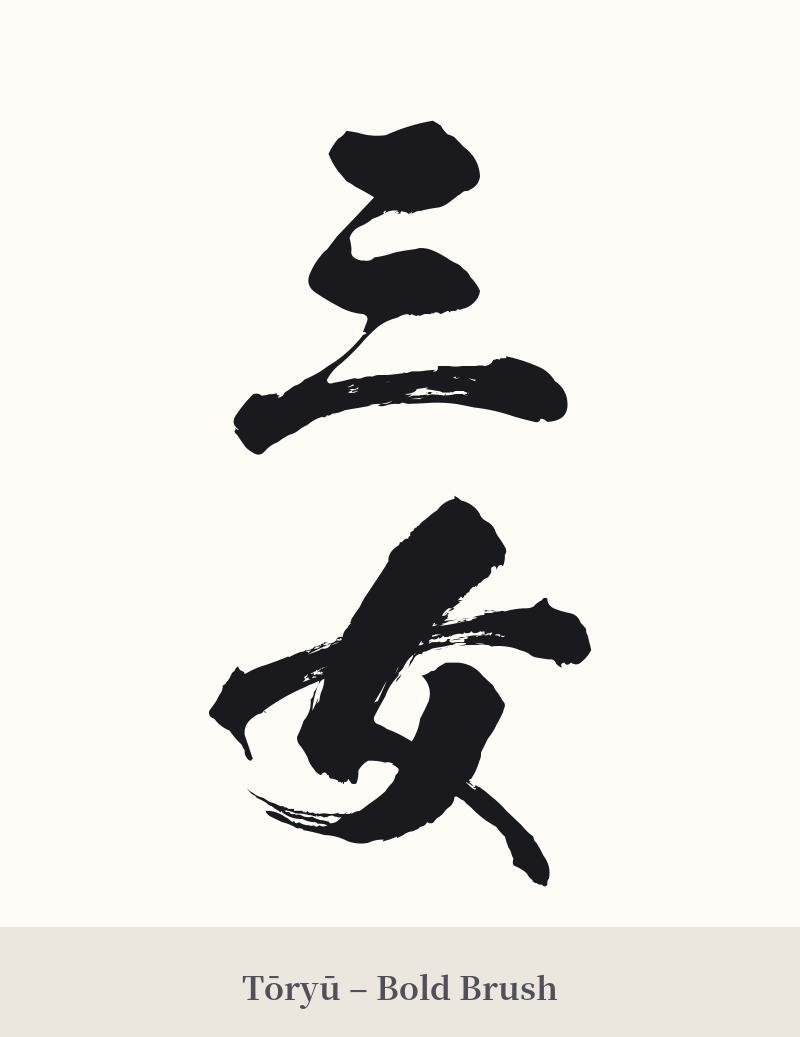
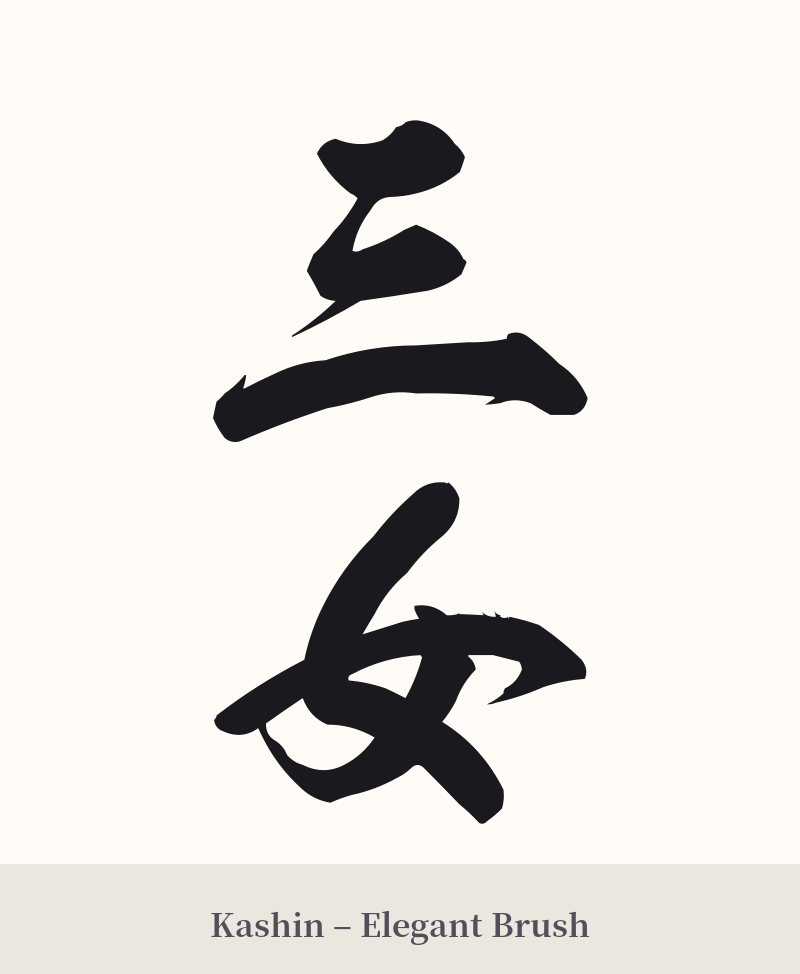
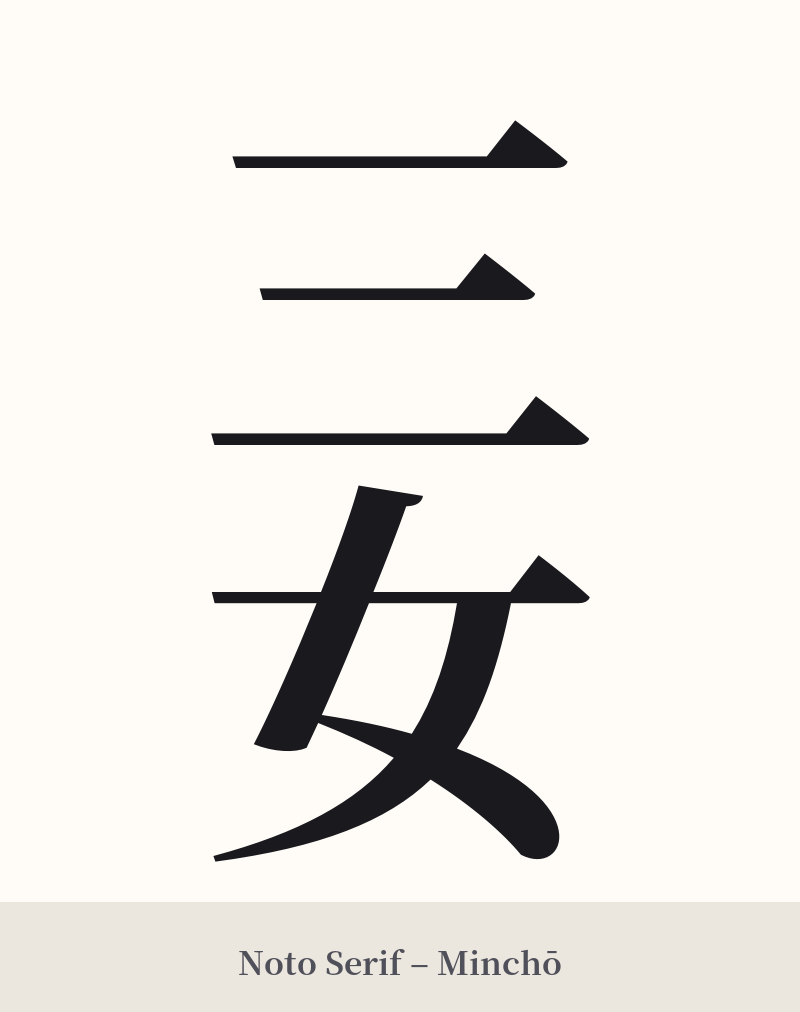
The same kanji can look dramatically different depending on the calligraphy style. Choose a font that matches the mood you want for your tattoo or design.
🎨 Tattoo Suitability
📐 Tattoo Design Guide
Because 三女 is a highly personal and specific term, the design should reflect its intimate nature rather than aiming for a bold public statement.
– Placement: This kanji is best suited for small, personal locations. Consider the inner wrist, the ankle, behind the ear, or along the collarbone. These spots allow the tattoo to be a personal reminder rather than a large centerpiece.
– Font Style: The characters are very simple (3 strokes each), so a clean, well-executed font is key. A classic Mincho (serif) style can lend a touch of elegance and tradition. For a more modern and straightforward look, a crisp Kaisho (block) font is an excellent choice. A flowing, semi-cursive Gyosho script could add a softer, more personal feel, but ensure it remains legible.
– Visual Tips: The word can be written horizontally (三女) or vertically (with 三 above 女), which is the more traditional orientation. Consider incorporating a small, meaningful symbol next to the kanji, such as a birth flower or a subtle element that represents your individuality as the third daughter.
Comments