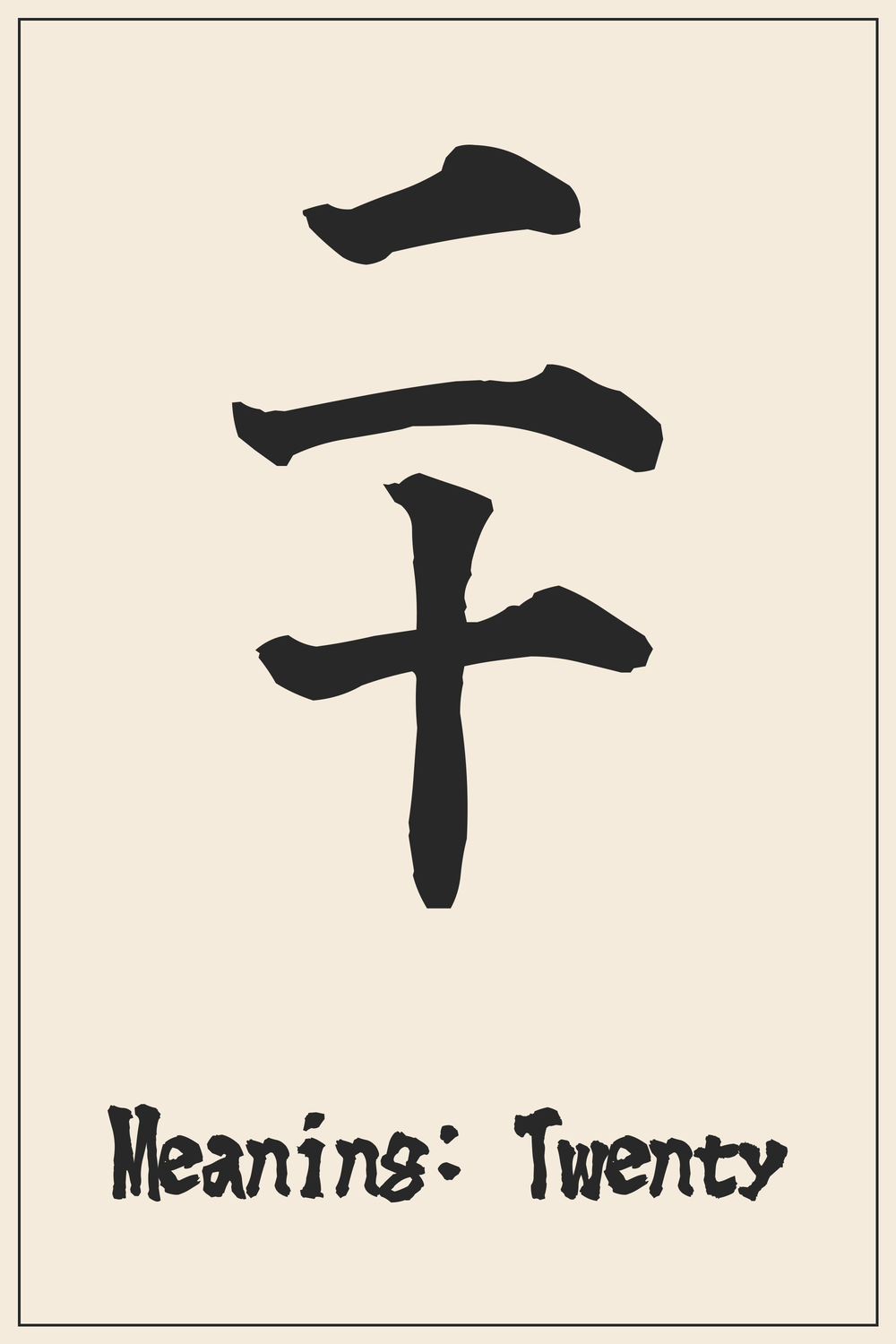
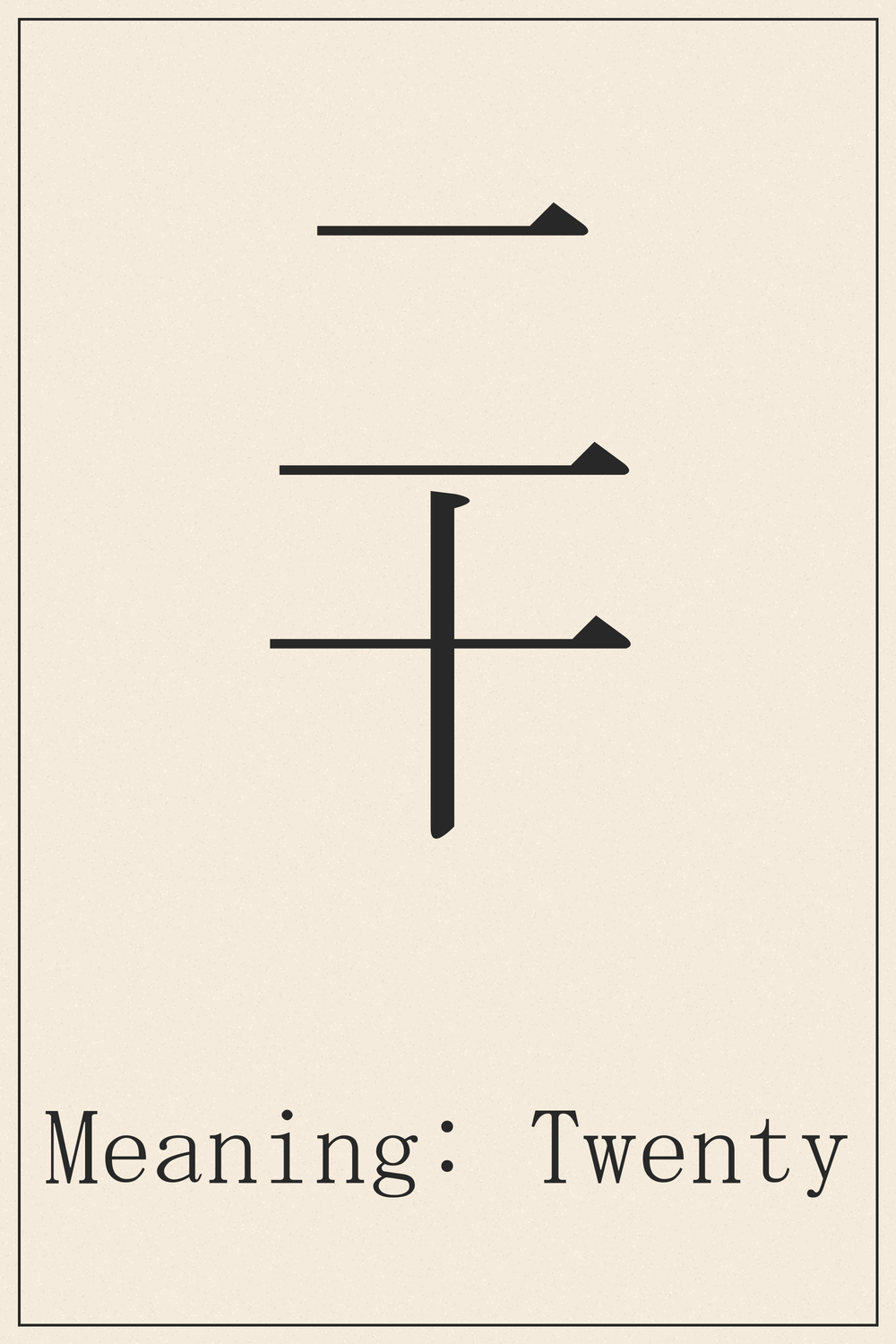
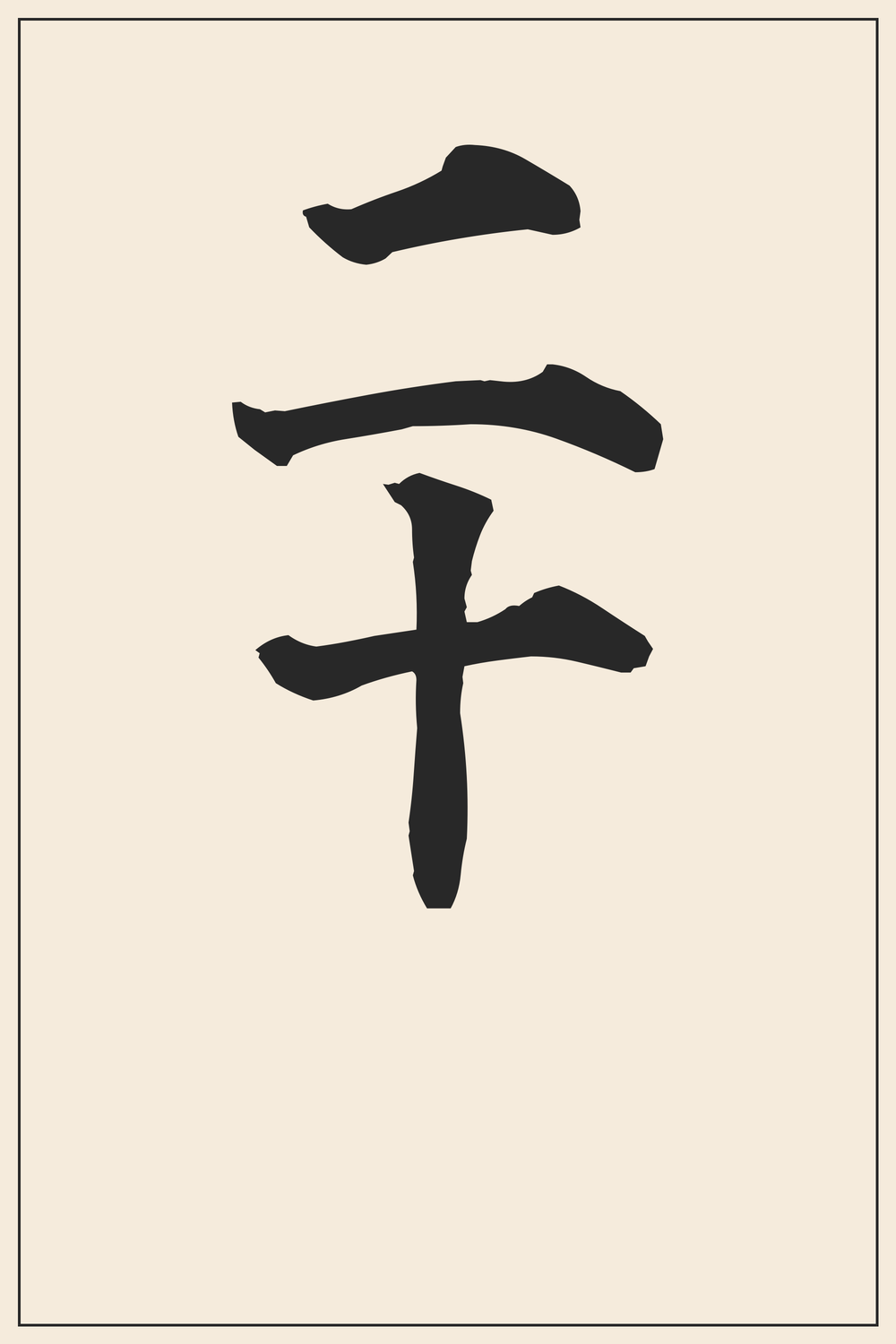
The Kanji for “Twenty,” 二十, offers a simple yet profound representation of quantity, age, or a significant numerical value. Its directness makes it a clear and uncomplicated symbol.
The atmosphere of a Kanji character changes dramatically depending on the font style. A character that looks elegant in a brush style might look bold and modern in a different font.
Recommendation:
Since a tattoo is permanent, we strongly recommend comparing various font styles beyond what is shown here. Use our designs as a trusted reference for the correct structure, but feel free to explore different artistic variations to find the perfect match for your vision.
The Deep Meaning Behind 二十
The Kanji 二十 (nijuu) directly translates to “twenty,” formed by combining 二 (ni), meaning “two,” and 十 (juu), meaning “ten.” This straightforward combination illustrates a fundamental aspect of the Japanese numerical system, where compound numbers are often constructed from simpler components.
Culturally, the number twenty holds various significances. In Japan, 20 was traditionally the age of legal adulthood (seijin) until recently, marking a significant transition point in one’s life, celebrated with the Seijin no Hi (Coming of Age Day). Beyond this, it serves as a common measure for counting, representing completion, a set period, or a simple quantity.
Kanji Breakdown
The Kanji 二十 is a compound numeral, deriving its meaning from the combination of its two constituent characters:
Meaning: Two
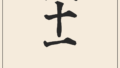
Explanation: This character consists of two horizontal strokes, visually representing the concept of a pair, duality, or the second in a sequence. It is one of the simplest and most fundamental Kanji.
Meaning: Ten
Explanation: The character 十, a cross shape, is thought to have originated from a knot in a rope or a tally stick used for counting. It signifies the base unit of ten in the traditional East Asian counting system and often represents completion or entirety within a decimal system.
Conclusion
Choosing 二十 for a tattoo is an elegant way to symbolize the number twenty, whether it signifies a special age, a milestone, or a specific count important in your life. Its clear and balanced form ensures a design that is both meaningful and aesthetically pleasing.
This Kanji offers a classic and timeless representation of a fundamental numerical concept, embodying clarity and personal significance for those who appreciate its direct yet profound message.
Comments