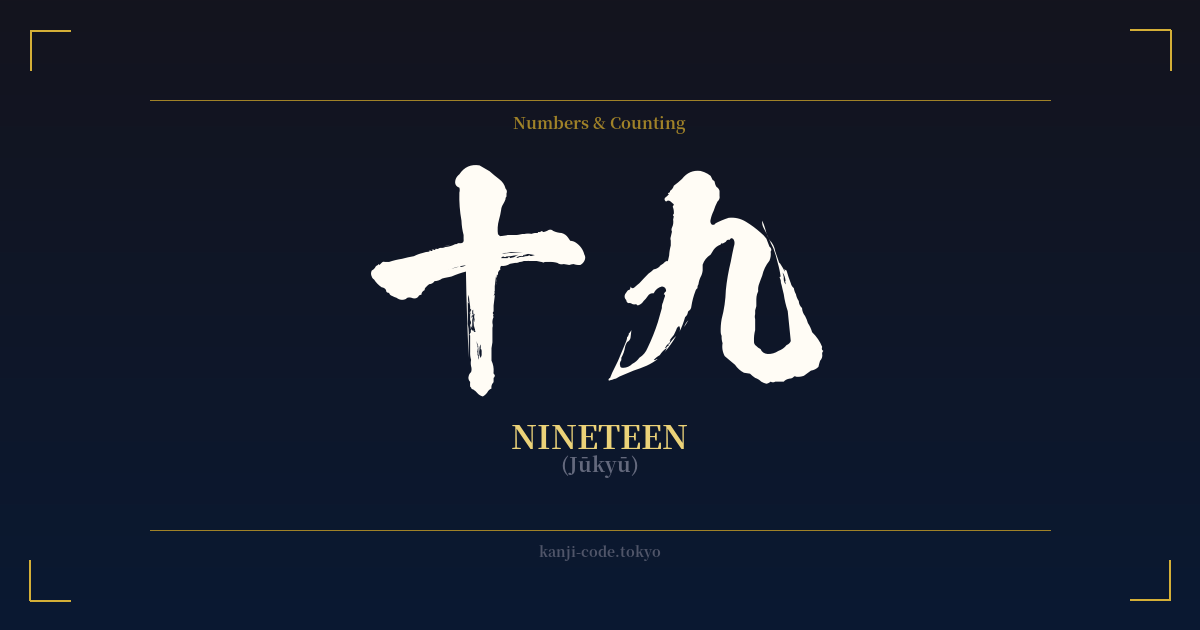
✍️ 十九 (Jūkyū) — Cultural Context
The Japanese word for nineteen, 十九 (Jūkyū), is a straightforward and logical construction. It combines the kanji for ten, 十 (jū), with the kanji for nine, 九 (kyū), literally meaning 'ten-nine'. This additive system is a hallmark of East Asian numbering and makes counting beautifully transparent.
In Japan, the age of nineteen holds a unique cultural position. It is the final year of being a teenager before reaching the traditional age of majority, which was twenty (二十, nijū) for centuries. While the legal age of adulthood was lowered to 18 in 2022, the cultural milestone of turning twenty, marked by the 'Seijin no Hi' (Coming of Age Day) ceremony, remains deeply ingrained. Therefore, being nineteen is often seen as a year of transition—the last moments of youth before taking on the full responsibilities of an adult.
This 'in-between' status gives the number a subtle poignancy. It represents potential, anticipation, and the cusp of a major life change. It's a time of looking forward to the future while still holding onto the final threads of adolescence.
Interestingly, the number nineteen is fundamental to one of Japan's most revered cultural pastimes: the board game of Go, known as 囲碁 (Igo). The standard Go board is a 19×19 grid, a vast battlefield of strategic possibility. In this context, nineteen isn't just a number but the very foundation of a universe of immense complexity and intellectual depth. The game's elegance and focus on territory and influence have made it a metaphor for life and strategy for centuries.
While the kanji 九 (kyū) can sometimes be considered unlucky because its pronunciation is identical to the word for suffering (苦, ku), this association is significantly diluted in compound numbers like 十九 (Jūkyū). The context of simple counting removes the superstitious weight, and the number is generally viewed neutrally in daily life. Its primary significance remains tied to age, counting, and its foundational role in the game of Go.
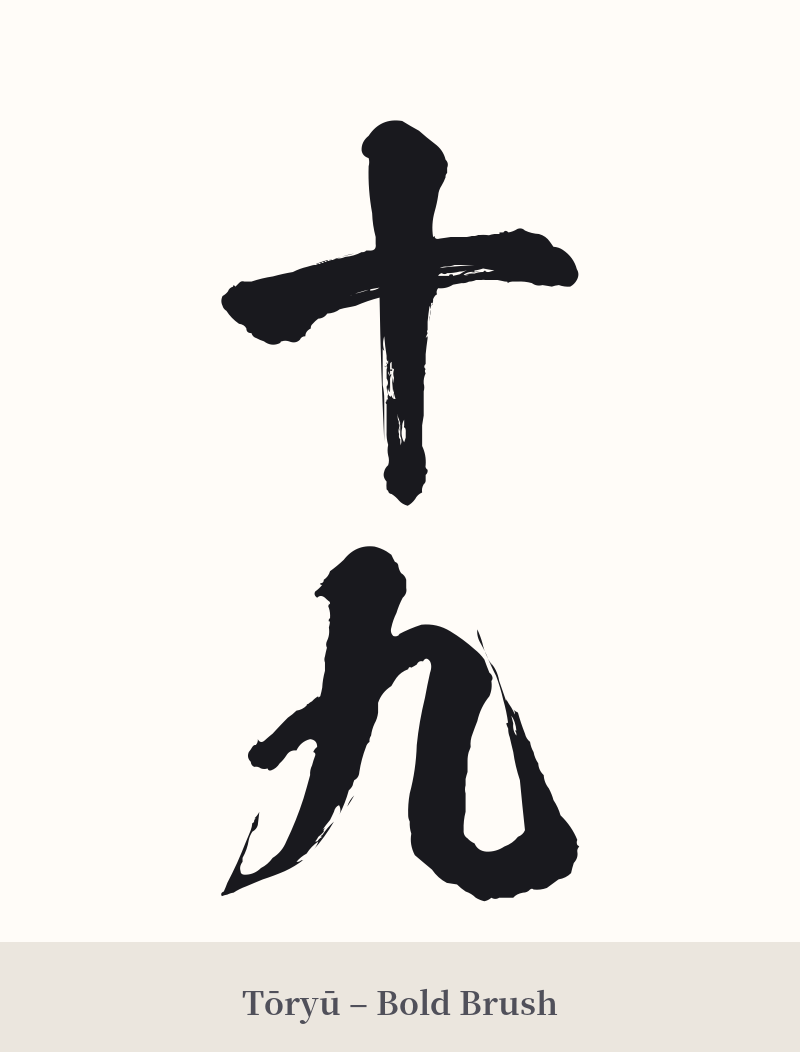
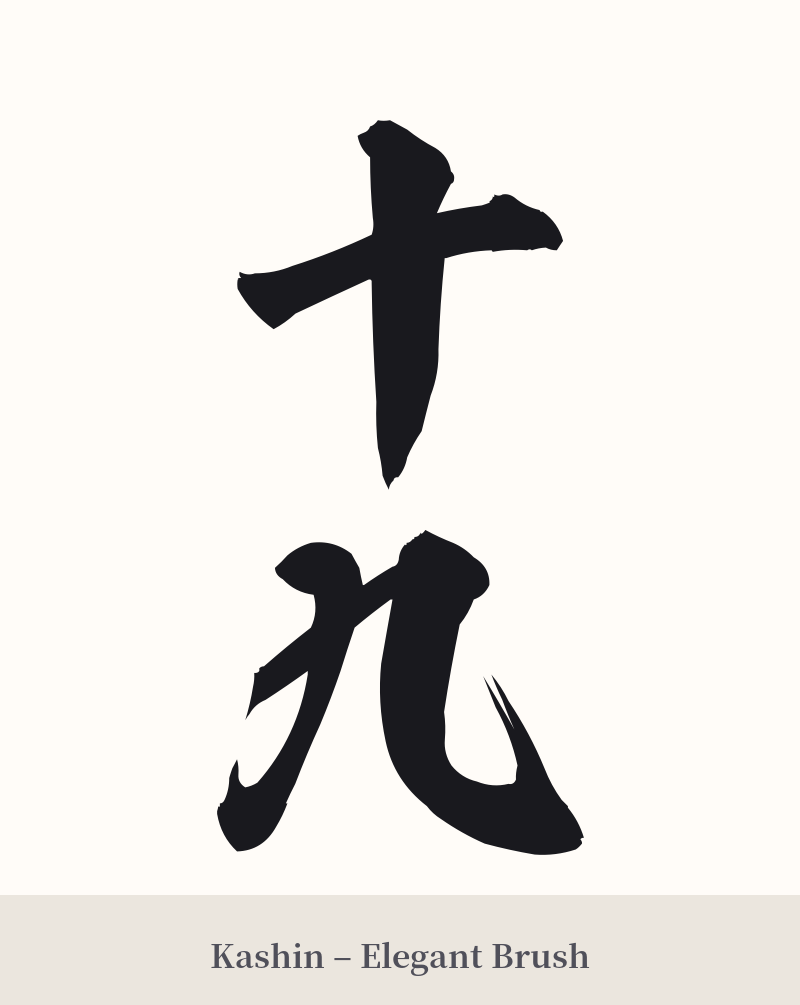
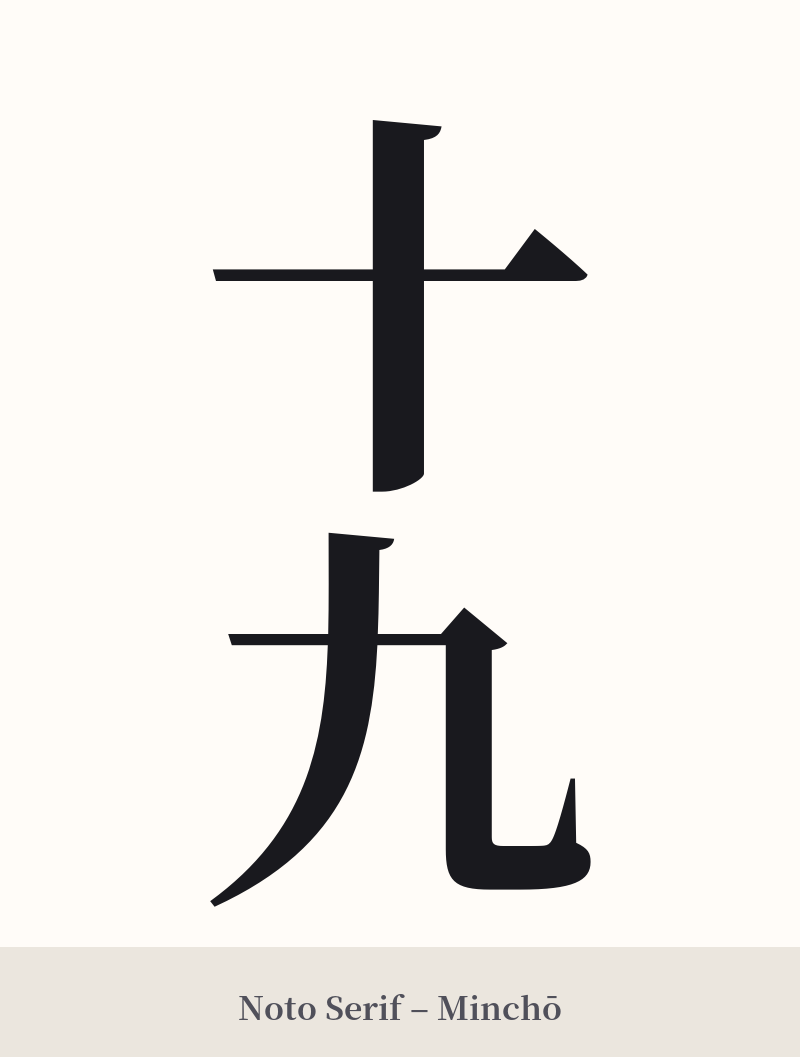
🖌️ Font Styles for 十九
The same kanji can look dramatically different depending on the calligraphy style. Choose a font that matches the mood you want for your tattoo or design.
🎨 Tattoo Suitability
📐 Tattoo Design Guide
Due to the extreme simplicity of the characters 十 and 九, the design choices are crucial to making a tattoo of 十九 feel intentional and stylish.
– Font Style: Avoid thin, delicate fonts which can make the characters look frail or disappear. Instead, opt for a bold, blocky Mincho style or a strong, semi-cursive Gyosho script to give the design more presence and personality.
– Placement: This is an ideal kanji for small, discreet placements. Consider the wrist, ankle, behind the ear, or along the collarbone. A large-scale version on a back or chest would likely look sparse and empty.
– Composition: Vertical alignment is traditional and visually appealing for this two-character word. It creates a nice, linear flow. Horizontal is also correct but can sometimes look more like a mathematical equation.
– Complementary Elements: To add meaning and visual interest, consider incorporating 十九 as part of a larger design. It could be a date (along with other numbers for the month and day), or paired with an element that represents what 'nineteen' means to you—a flower that bloomed at that time, an animal, or an abstract symbol of transition.
Comments