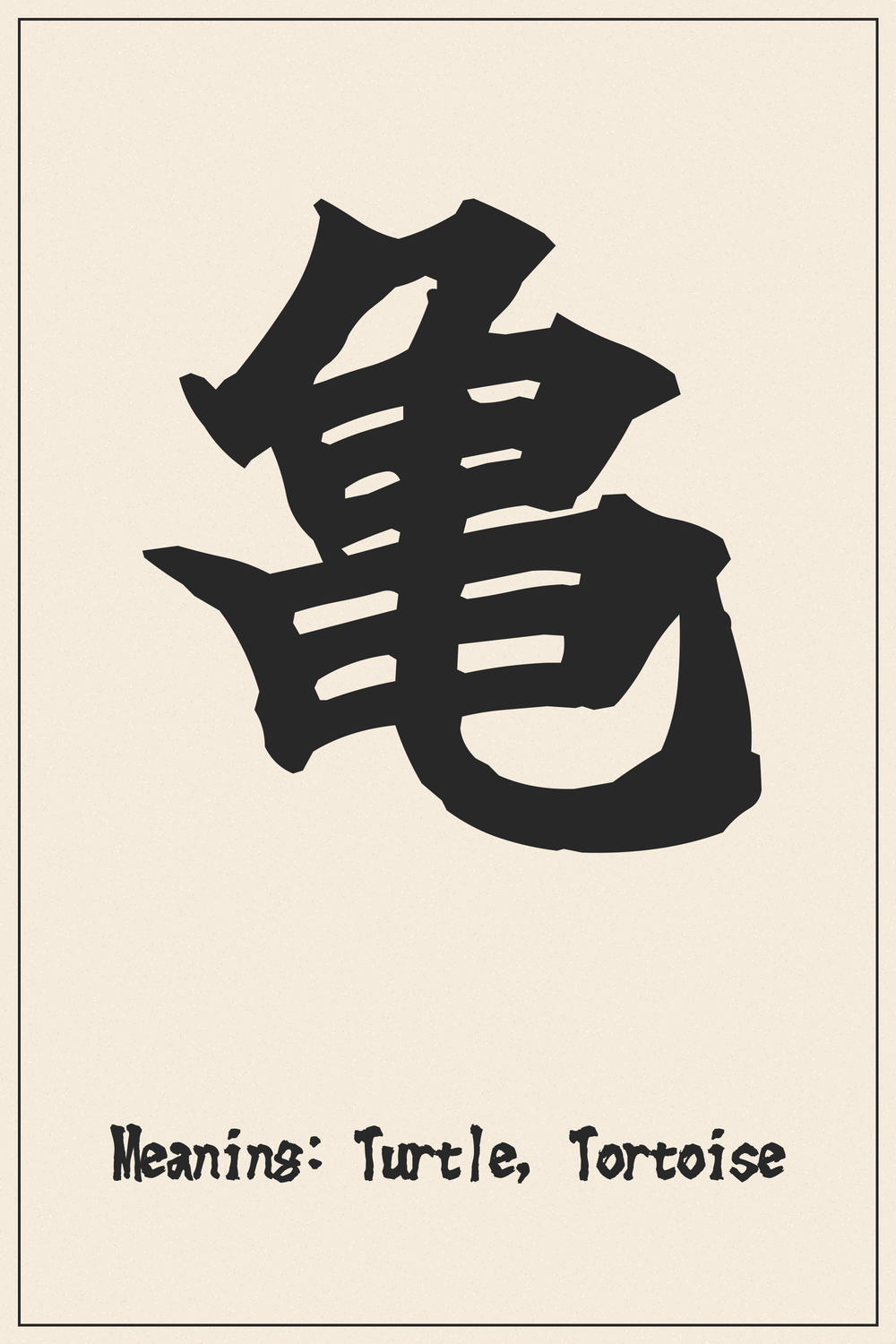
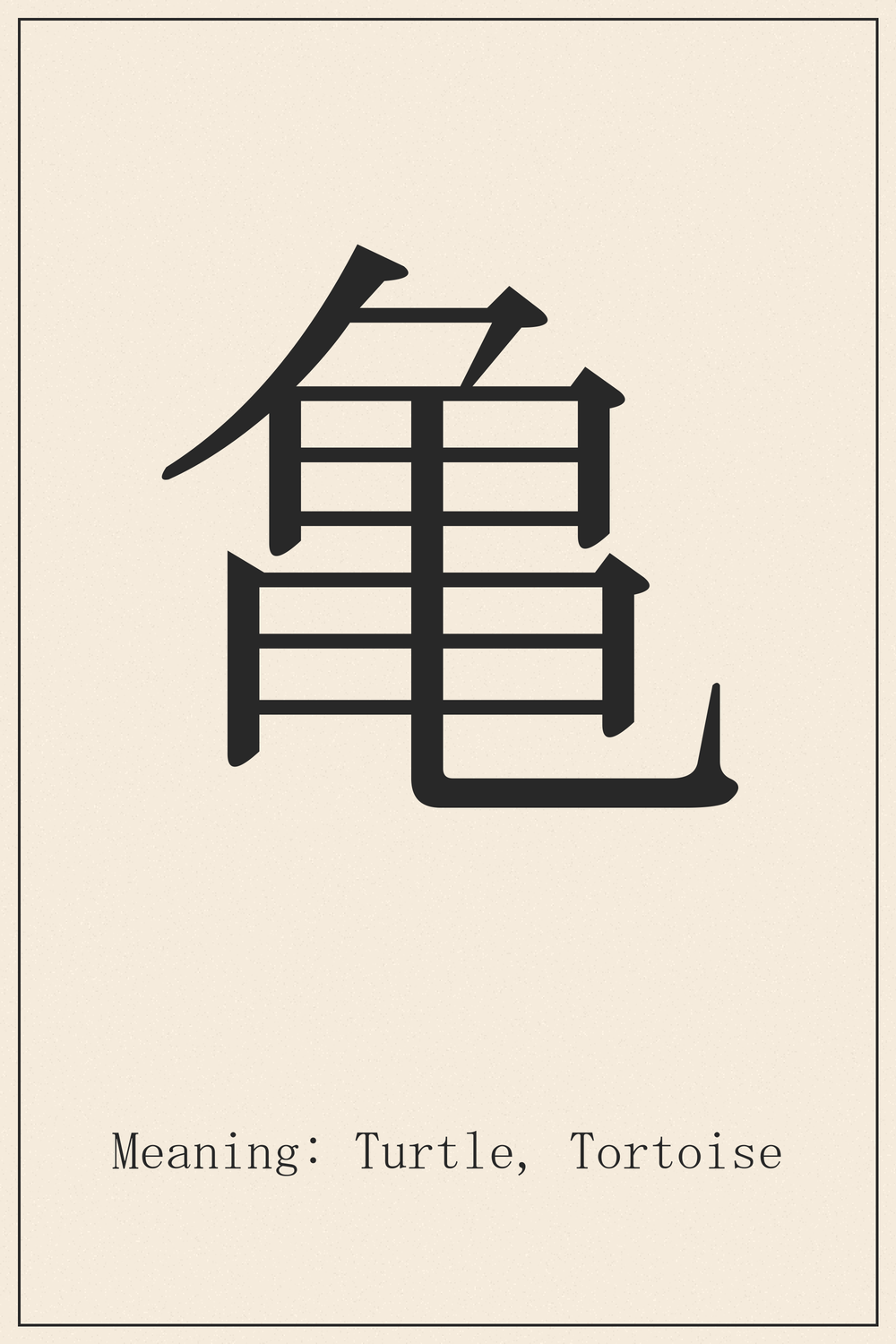
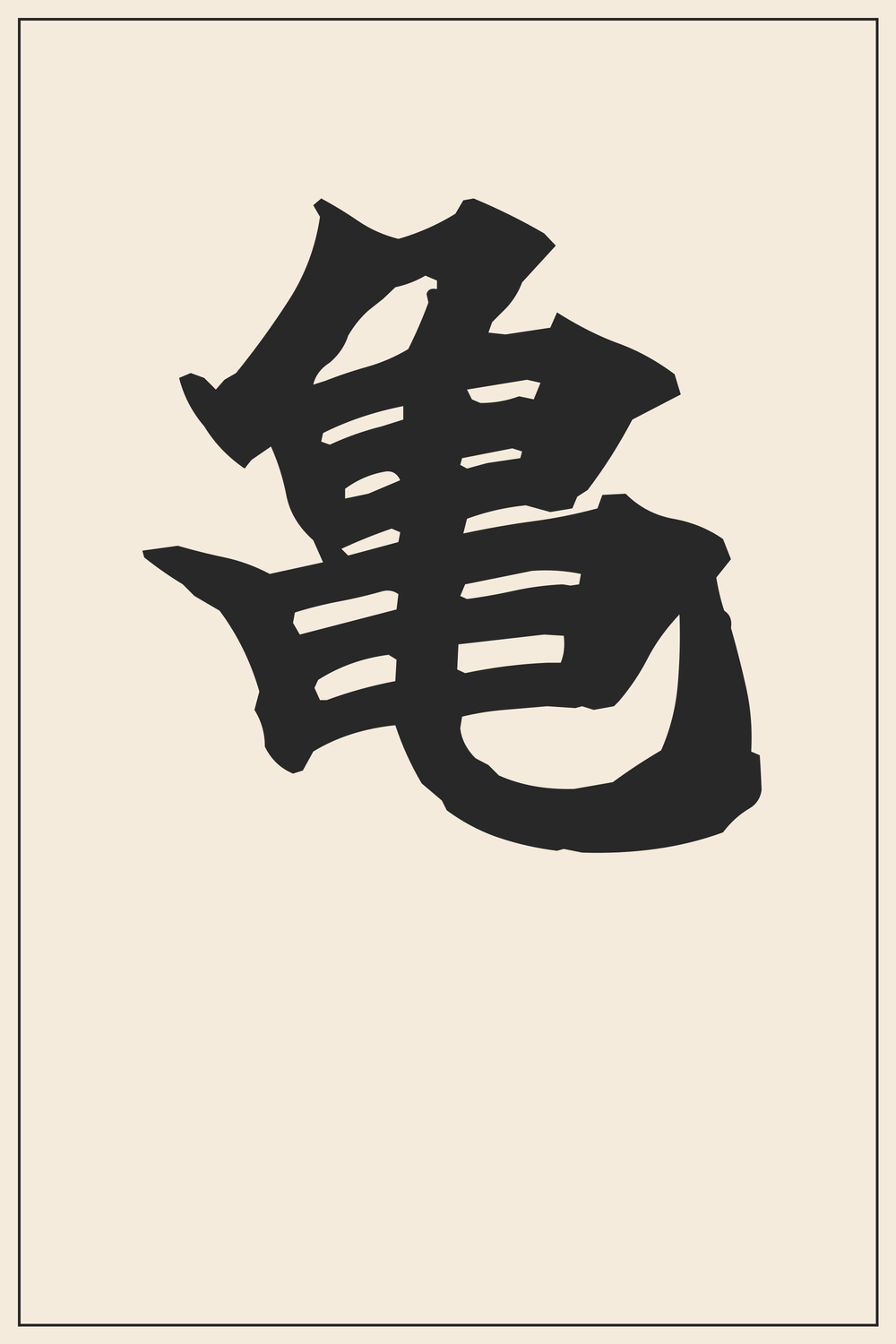
The Kanji for ‘Turtle’, 亀 (Kame), carries profound cultural weight as a symbol of longevity and good fortune. Its ancient origins reflect a creature deeply revered for its wisdom and resilience across many traditions.
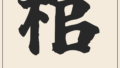
The atmosphere of a Kanji character changes dramatically depending on the font style. A character that looks elegant in a brush style might look bold and modern in a different font.
Recommendation:
Since a tattoo is permanent, we strongly recommend comparing various font styles beyond what is shown here. Use our designs as a trusted reference for the correct structure, but feel free to explore different artistic variations to find the perfect match for your vision.
The Deep Meaning Behind 亀
The character 亀 (Kame) is an ancient ideogram, originally a pictograph depicting a turtle from an overhead perspective. Its evolution through various scripts, from oracle bone to modern forms, consistently retains the essence of this long-lived reptile, symbolizing its sturdy shell and deliberate movement.
In Japanese culture, the turtle is a revered animal, often paired with the crane (鶴 – tsuru) as a symbol of immense longevity and good fortune. This pairing, known as 鶴亀 (Tsurukame), is a common motif in art and celebrations, representing a wish for a long and prosperous life. The turtle is also associated with wisdom due to its ancient appearance and slow, contemplative nature.
Kanji Breakdown
The Kanji 亀 is a distinctive character that represents the animal itself. Its structure has evolved over millennia from its earliest pictographic forms.
Turtle/Tortoise: This character is a direct pictographic representation of a turtle. Its strokes evoke the animal’s shell, head, and legs, capturing its unique form and making it immediately recognizable as the creature it symbolizes. It stands as a complete semantic unit, embodying the essence of the animal.
Conclusion
Choosing the Kanji 亀 for a tattoo is to embrace a symbol rich with cultural significance, representing longevity, wisdom, and good fortune. It’s a timeless emblem, universally understood within Japanese aesthetics to signify endurance and a blessed life.
For those seeking a tattoo that embodies a deep connection to nature, resilience, and a wish for a long and prosperous journey, 亀 offers a powerful and visually appealing choice. Its classic design and profound meaning make it a truly inspiring piece of personal expression.
Comments