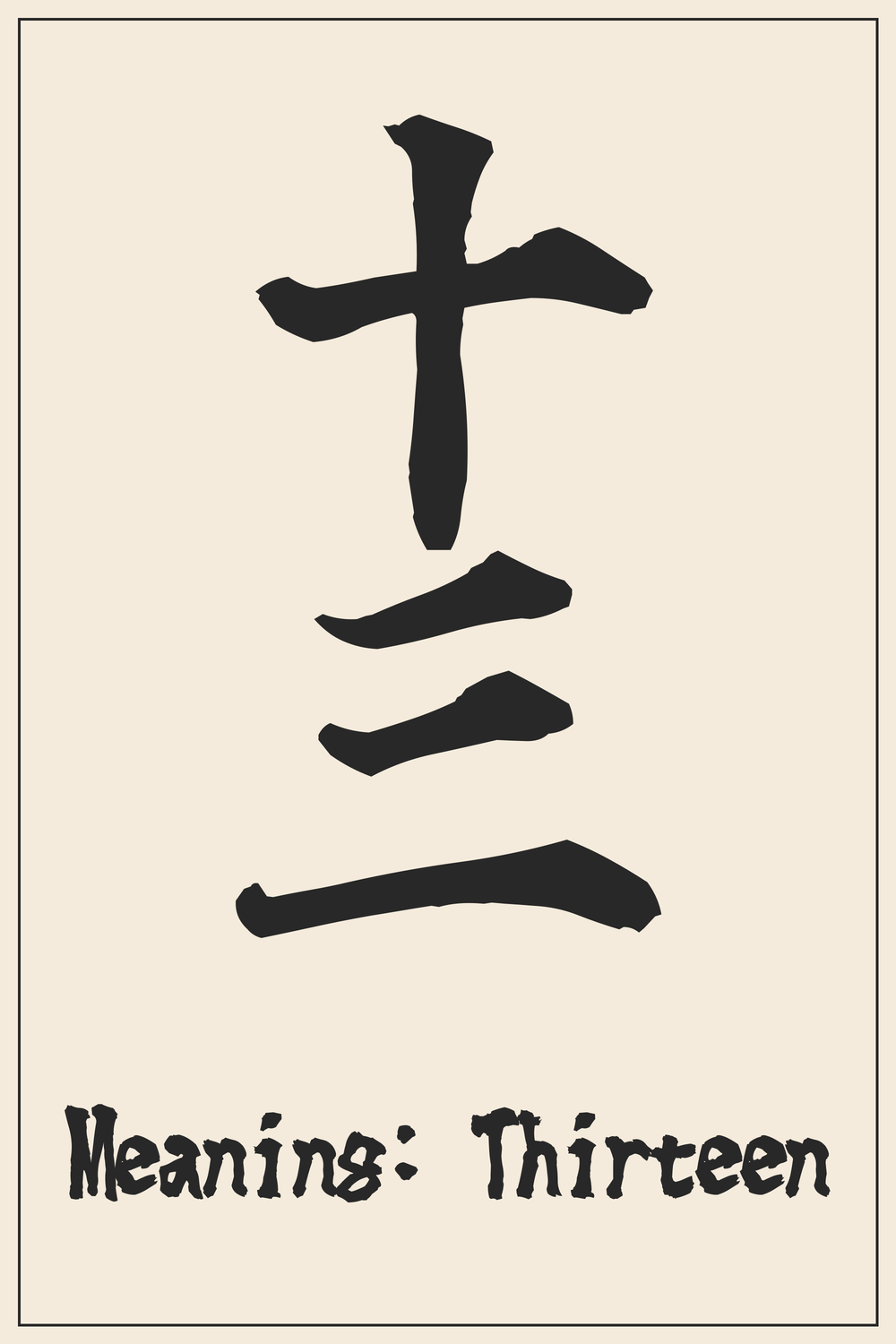
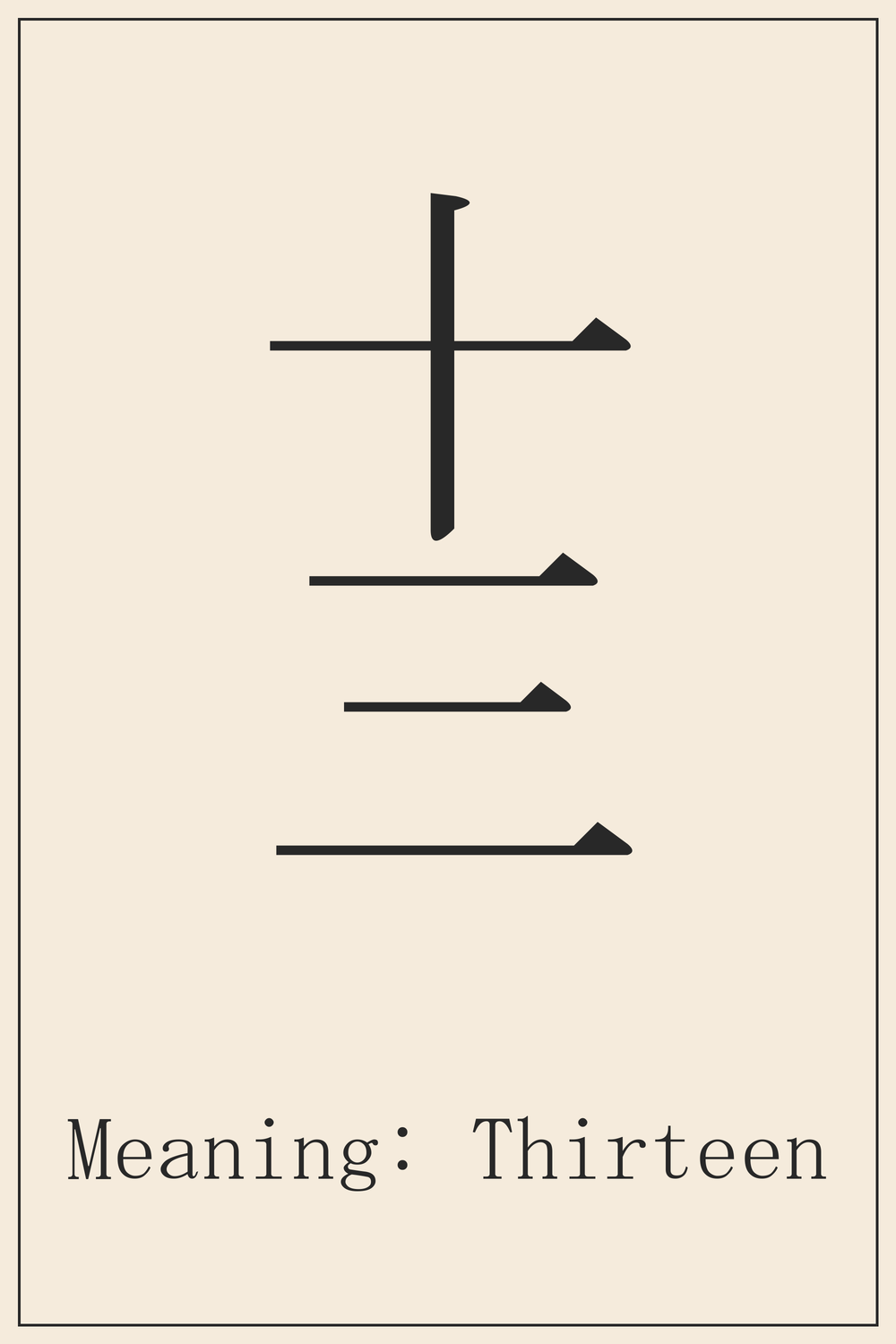
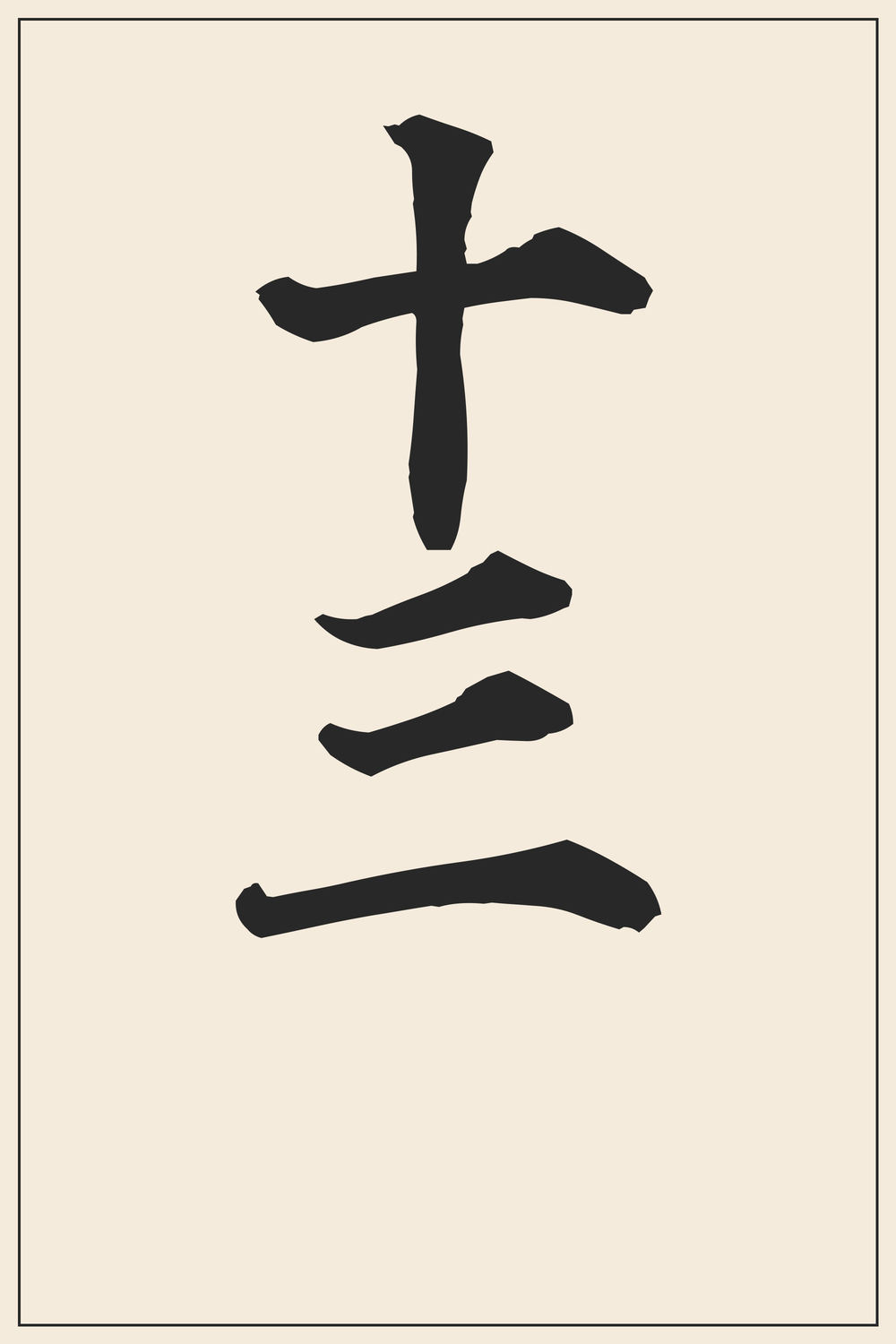
The Kanji for ‘Thirteen,’ 十三, represents a fundamental concept of quantity, a building block in our understanding of the world. While simple in form, numbers like this often hold personal significance, marking moments or milestones in one’s journey.
The atmosphere of a Kanji character changes dramatically depending on the font style. A character that looks elegant in a brush style might look bold and modern in a different font.
Recommendation:
Since a tattoo is permanent, we strongly recommend comparing various font styles beyond what is shown here. Use our designs as a trusted reference for the correct structure, but feel free to explore different artistic variations to find the perfect match for your vision.
The Deep Meaning Behind 十三
The character 十三 is a compound of two basic Kanji: 十 (juu), meaning ‘ten,’ and 三 (san), meaning ‘three.’ Both characters are ancient and ideographic, derived from simple strokes representing counting marks. 十 originally depicted a vertical stroke crossing a horizontal stroke, symbolizing completeness or unity of ten fingers. 三 is simply three horizontal strokes, directly representing the quantity three.
In Japanese culture, while some numbers like four (shi) and nine (ku) are considered unlucky due to homophones for death and suffering, thirteen (juusan) does not carry such negative connotations. It is generally a neutral number, often used to denote age, the day of a month, or a specific quantity. Its straightforward nature allows for personal interpretation, making it a clean canvas for individual meaning rather than imposing a predefined cultural narrative.
Kanji Breakdown
The Kanji 十三 is composed of two fundamental numerical characters.
Meaning: Ten. This kanji is thought to originate from a single vertical stroke representing ‘one,’ and later a horizontal stroke added, perhaps symbolizing ‘complete’ or ‘all’ when counting to ten. It denotes completeness in a decimal system.
Meaning: Three. This character is one of the simplest and most direct ideograms, representing three parallel horizontal lines to visually denote the quantity three. Its form is ancient and universally recognizable for its numerical value.
Conclusion
The Kanji 十三, signifying ‘Thirteen,’ offers a clear and precise representation of this fundamental number. Free from complex historical burdens in Japanese culture, it stands as a versatile symbol for individual interpretation.
For those seeking a tattoo that marks a specific age, date, or a personal count, ‘Thirteen’ provides an elegant and timeless choice. Its simplicity and universal recognition make it a meaningful and aesthetically pleasing addition to any collection of personal symbols.
Comments