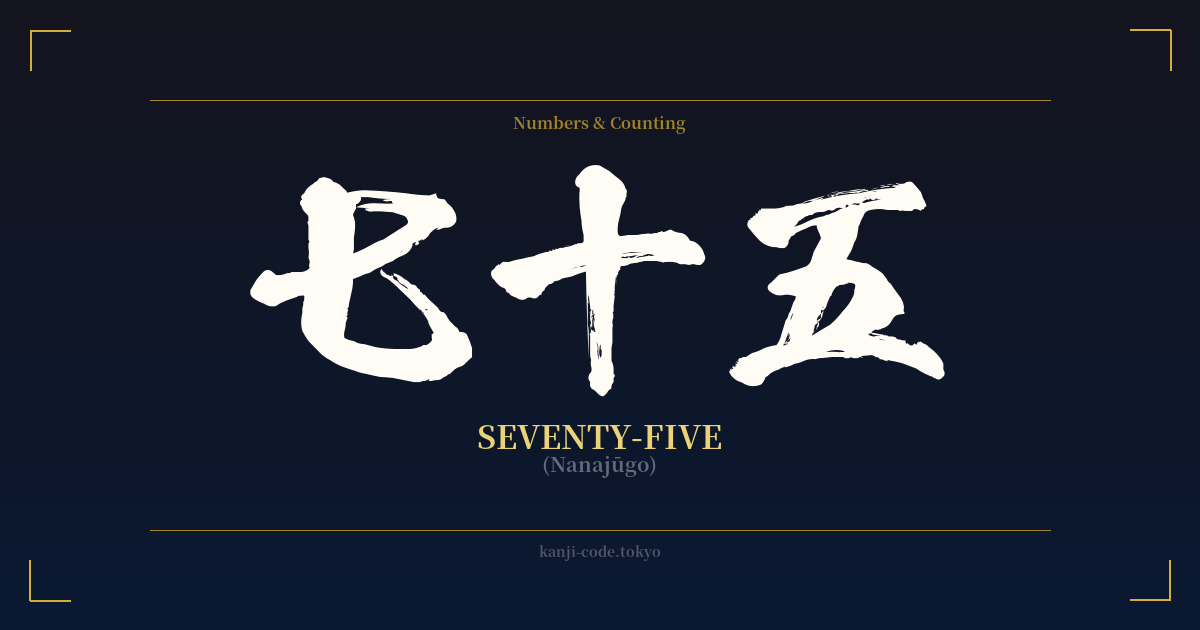
✍️ 七十五 (Nanajūgo) — Cultural Context
The kanji compound 七十五 (Nanajūgo) is the Japanese word for the number seventy-five. Its construction is a beautiful example of the logical and additive nature of the Japanese numbering system. It is composed of three distinct characters: 七 (nana) for seven, 十 (jū) for ten, and 五 (go) for five. Read together, it literally translates to 'seven tens and five,' or seventy-five.
While the number 75 itself doesn't hold a singular, overarching symbolic meaning in the way that numbers like seven or eight do, its component parts are culturally significant. The characters 七 (seven) and 五 (five) are central to one of Japan's most cherished traditions: Shichi-Go-San (七五三). This festival is a rite of passage for boys aged three and five, and girls aged three and seven, who visit shrines to pray for health and a prosperous future. Although 七十五 is not directly related to the festival, the presence of its digits evokes this heartwarming cultural milestone.
In modern Japan, the age of 75 carries a specific societal context. It marks the entry point into the 'kōki kōreisha' (後期高齢者) or 'late-stage elderly' demographic. This is a practical designation primarily used for healthcare and social services in Japan's super-aged society. For an individual, reaching 75 can be a significant personal landmark, representing a long life filled with experience and wisdom.
Historically, the number can be tied to specific eras. For example, the year '75 in any century marks a point of transition. The year 1875 was a pivotal time during the Meiji Restoration when Japan was rapidly modernizing. Similarly, 1975 marked the end of the Shōwa era's high-growth period and the beginning of a new social and economic chapter. Therefore, the number can serve as a subtle nod to a particular period in history that holds personal resonance.
Because of its direct and unambiguous nature, 七十五 is less about abstract symbolism and more about concrete representation. It is most often chosen to signify a specific, personal number—a birth year, a lucky number, the age of a loved one, or a commemorative anniversary. Its power lies not in ancient myth, but in the personal story it represents for the individual.
🖌️ Font Styles for 七十五
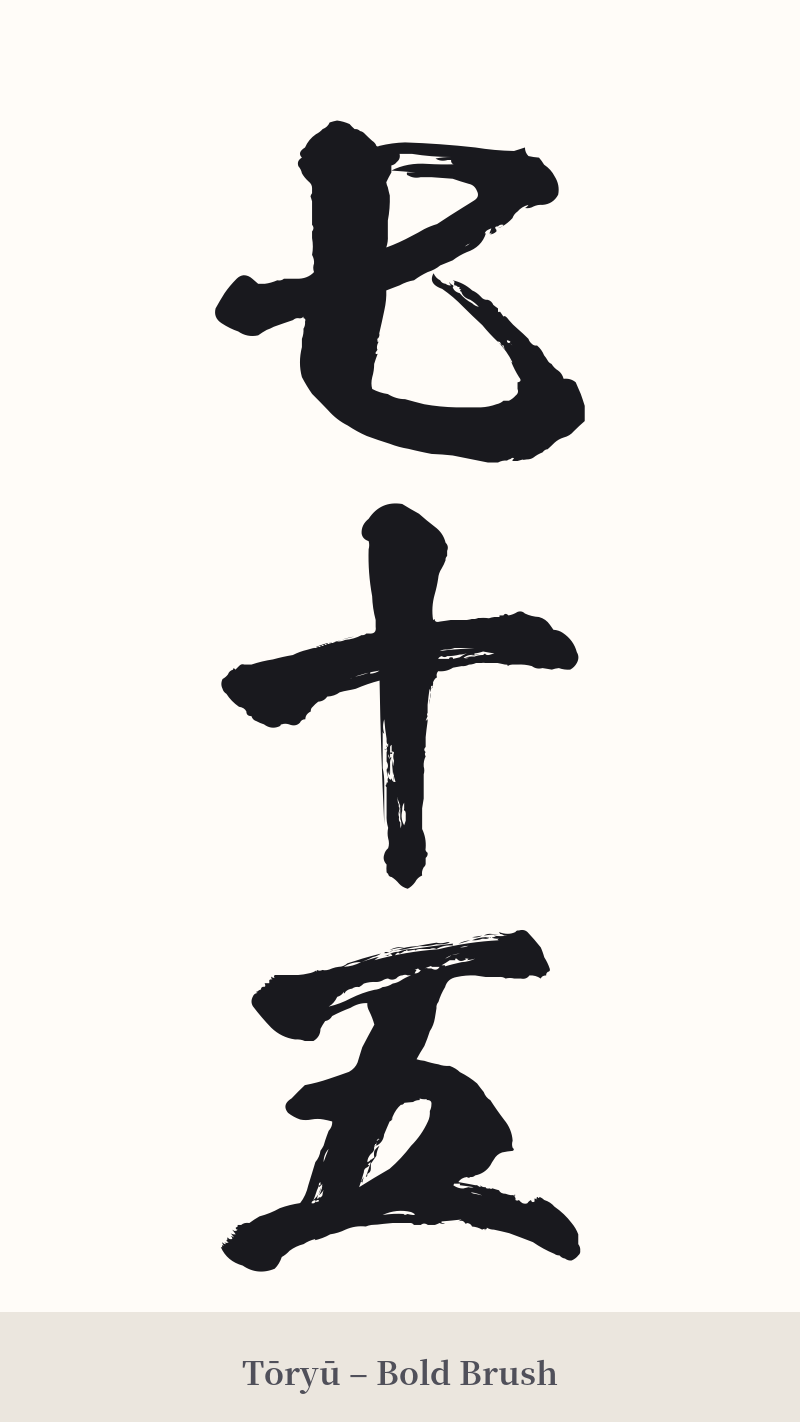
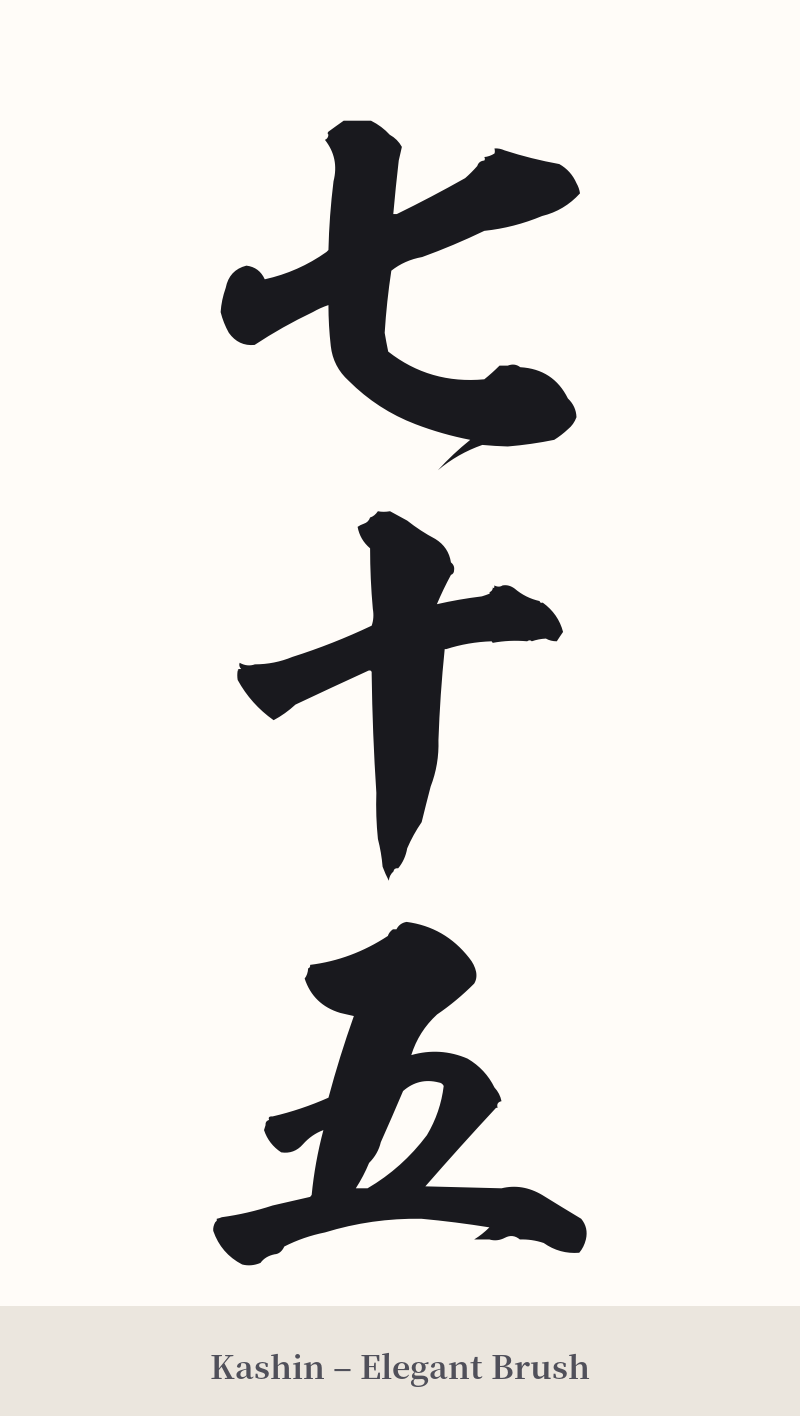
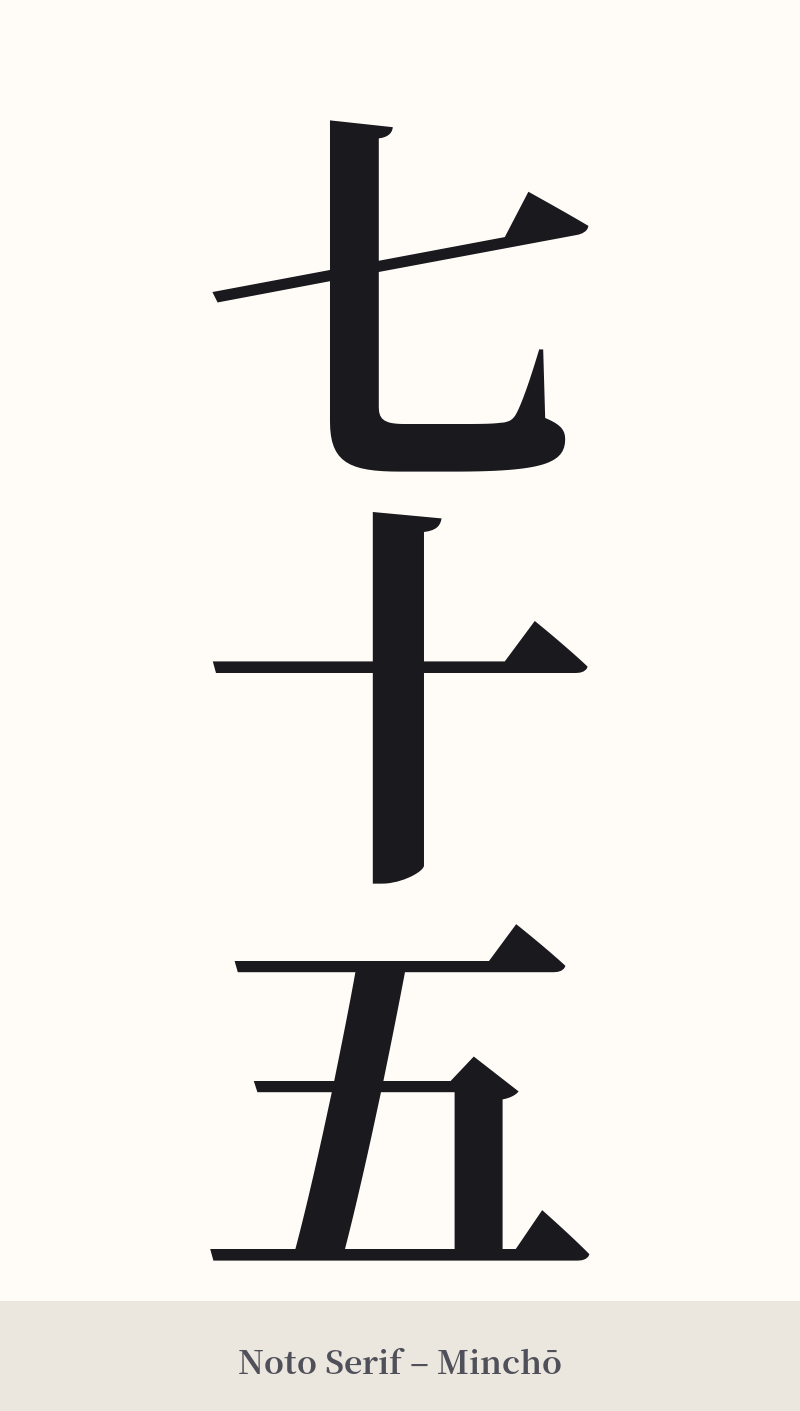
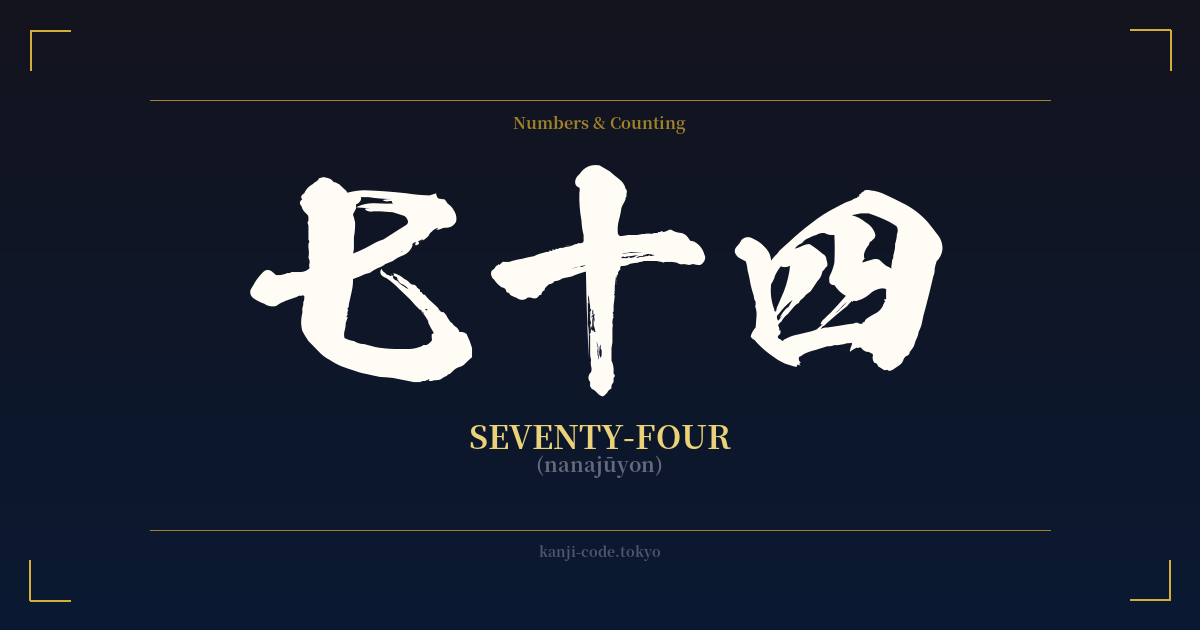
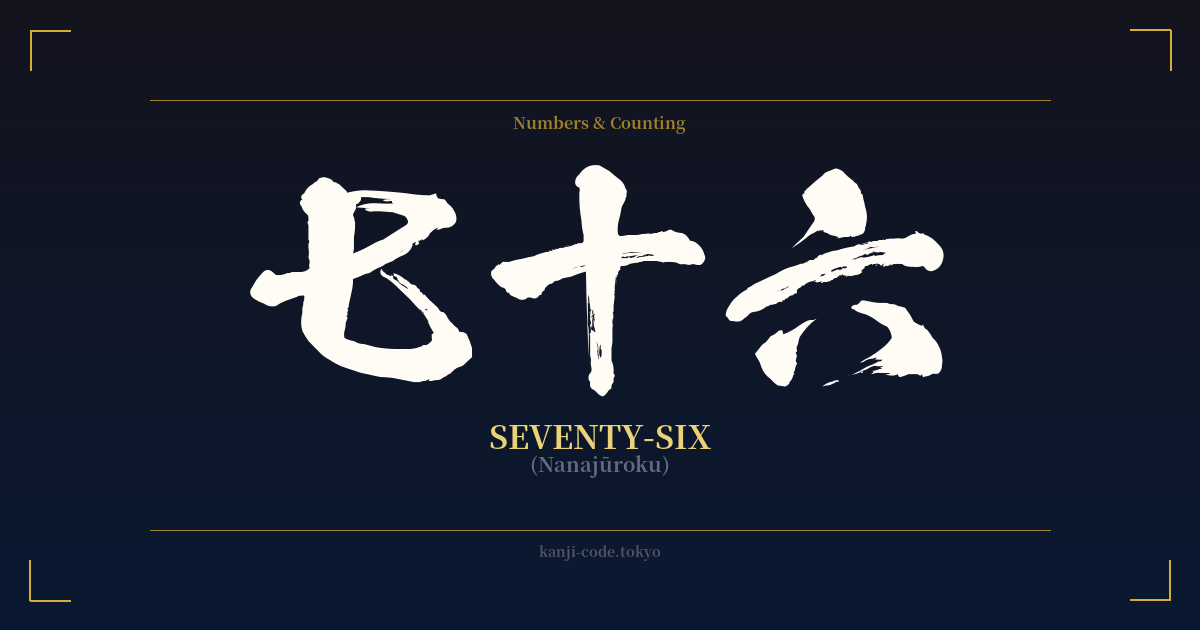
The same kanji can look dramatically different depending on the calligraphy style. Choose a font that matches the mood you want for your tattoo or design.
🎨 Tattoo Suitability
📐 Tattoo Design Guide
A design for 七十五 (Nanajūgo) is an exercise in clarity and form. Because the characters are simple, the choice of style and placement is crucial to its impact.
– Placement: A vertical orientation is highly recommended. This is the traditional way of writing in Japanese and creates a graceful, flowing look. Consider placing it along the spine, the forearm, or the calf. A horizontal design can also work well across the chest or upper back.
– Font Style: For an artistic and expressive feel, a semi-cursive (gyōsho) or cursive (sōsho) calligraphy style is ideal. This will add movement and personality to the simple strokes. For a more modern, direct, and clean look, a standard block script (kaisho) or even a stylized sans-serif font can be very effective.
– Visual Tips: Since the kanji itself is straightforward, consider pairing it with a small, meaningful symbol that hints at its significance to you. This could be a date in numerals, a flower, or an abstract design that complements the story behind the number. The simplicity of the strokes means the quality of the line work is paramount, so choose an artist skilled in Japanese calligraphy.
Comments