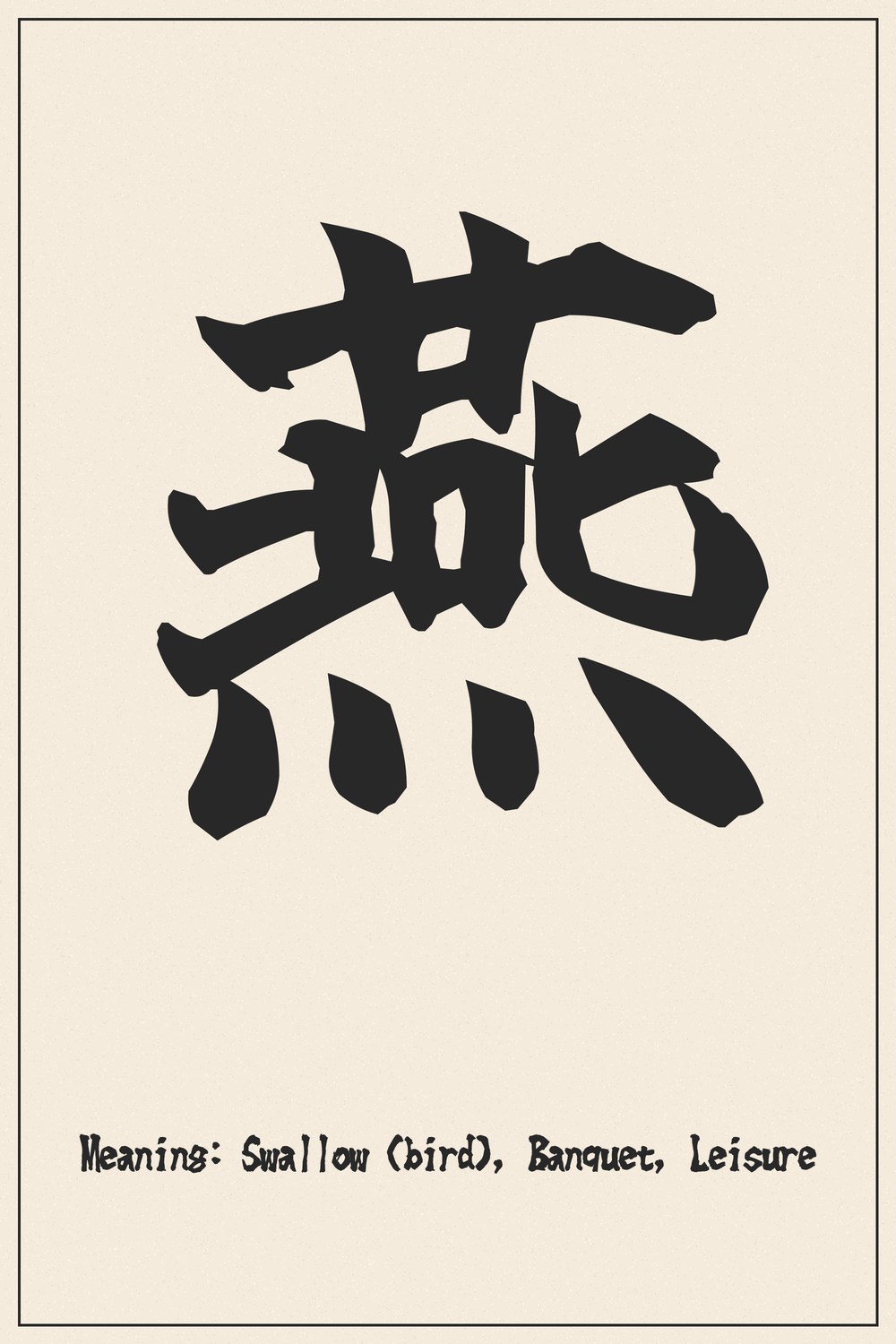
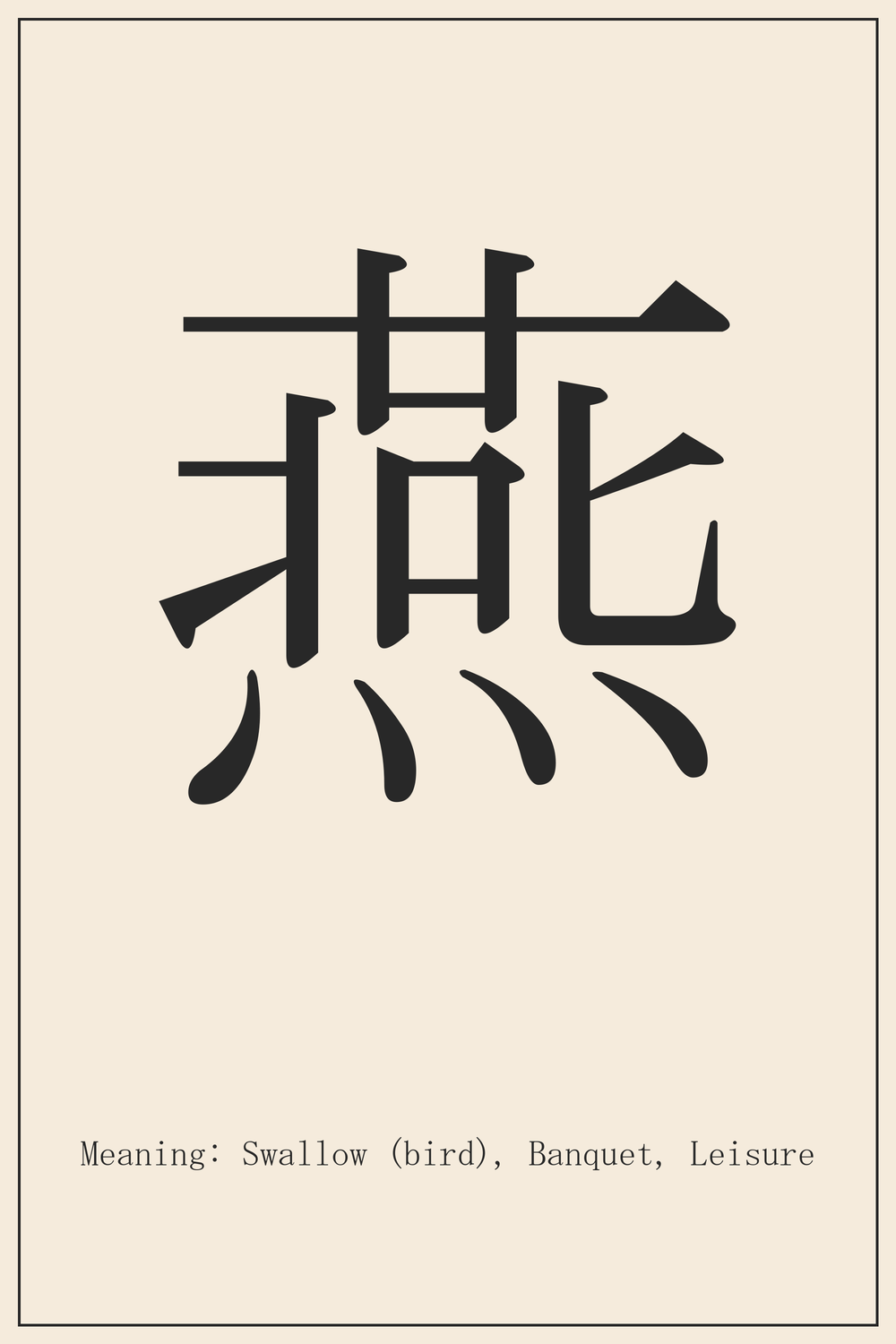
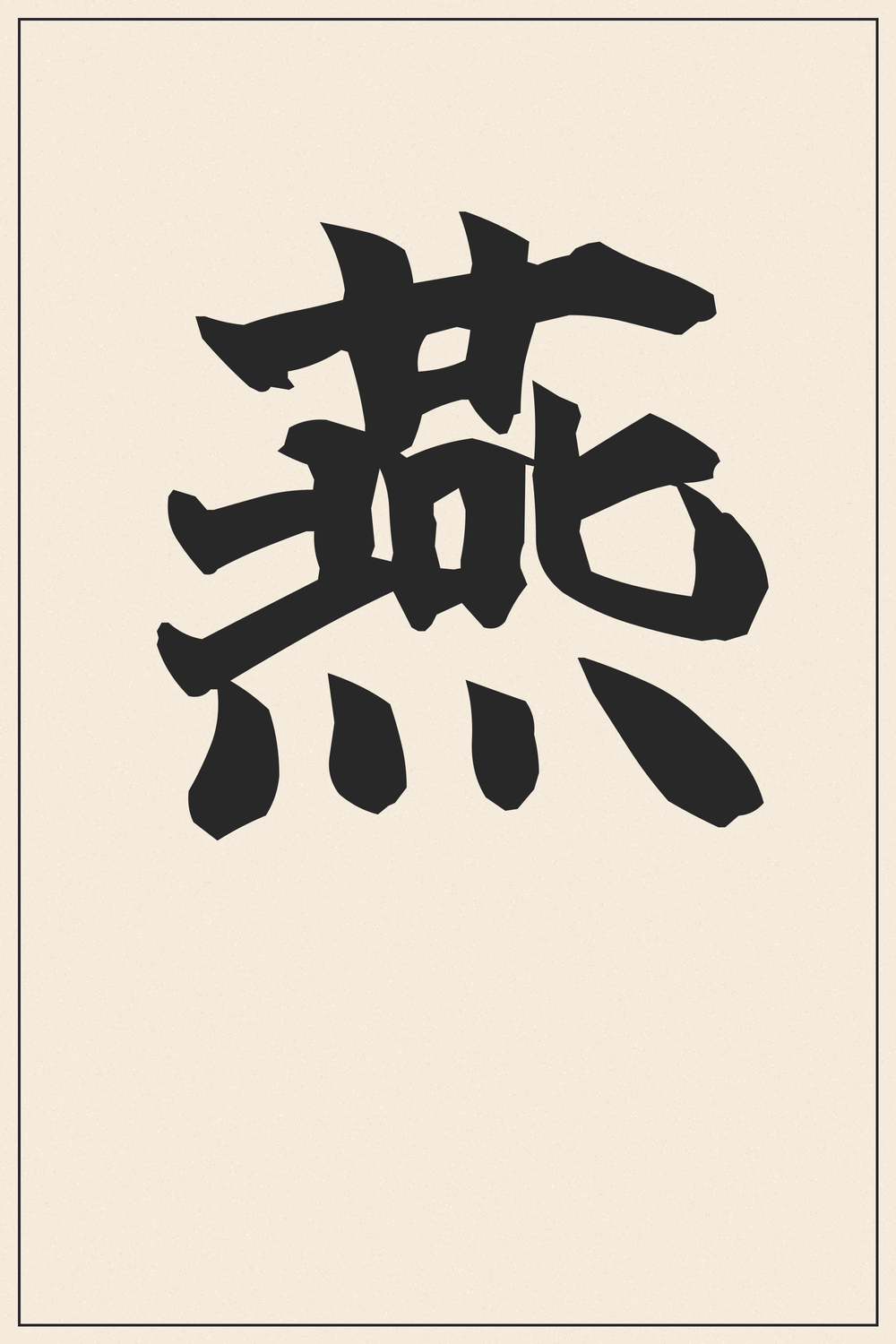
The Kanji 燕 embodies the swift grace of the swallow, a bird revered across cultures for its symbolism. Adorning this character can signify hope, freedom, and the warmth of returning spring.
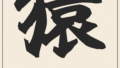
The atmosphere of a Kanji character changes dramatically depending on the font style. A character that looks elegant in a brush style might look bold and modern in a different font.
Recommendation:
Since a tattoo is permanent, we strongly recommend comparing various font styles beyond what is shown here. Use our designs as a trusted reference for the correct structure, but feel free to explore different artistic variations to find the perfect match for your vision.
The Deep Meaning Behind 燕
The character 燕 (tsubame) is an ancient ideogram, meticulously crafted to depict the swallow bird itself. Its form has evolved from early pictographs that vividly captured the bird’s distinctive shape, including its long forked tail and pointed wings, as it gracefully navigates the air.
In Japanese culture, the swallow is a powerful symbol, predominantly associated with spring, fertility, and good luck. These migratory birds are believed to bring prosperity to homes where they nest, and their return signals the arrival of warmer seasons and new life. This makes 燕 a profound choice, embodying hope and renewal.
Kanji Breakdown
The Kanji 燕 is an intricate single character that functions as a semantic unit, historically representing the swallow bird through its form.
Swallow (Bird): The entire character 燕 is an ideogram that visually represents the swallow. Its complex structure is a stylized depiction of the bird’s body, wings, and distinctive tail, capturing its essence in a single, flowing form. It is not easily broken down into simpler, independently meaningful radicals in modern interpretation, but rather stands as a complete pictorial representation.
Conclusion
Choosing the Kanji 燕 for a tattoo is to embrace a symbol of spring’s arrival, new beginnings, and the enduring promise of good fortune. It speaks to a deep appreciation for nature’s cycles and the quiet strength found in delicate forms.
A tattoo of 燕 will serve as a constant reminder of renewal and hope, a graceful emblem for those who value elegance, freedom, and the positive energies that nature bestows. It is a timeless piece that carries profound meaning with beautiful simplicity.
Comments