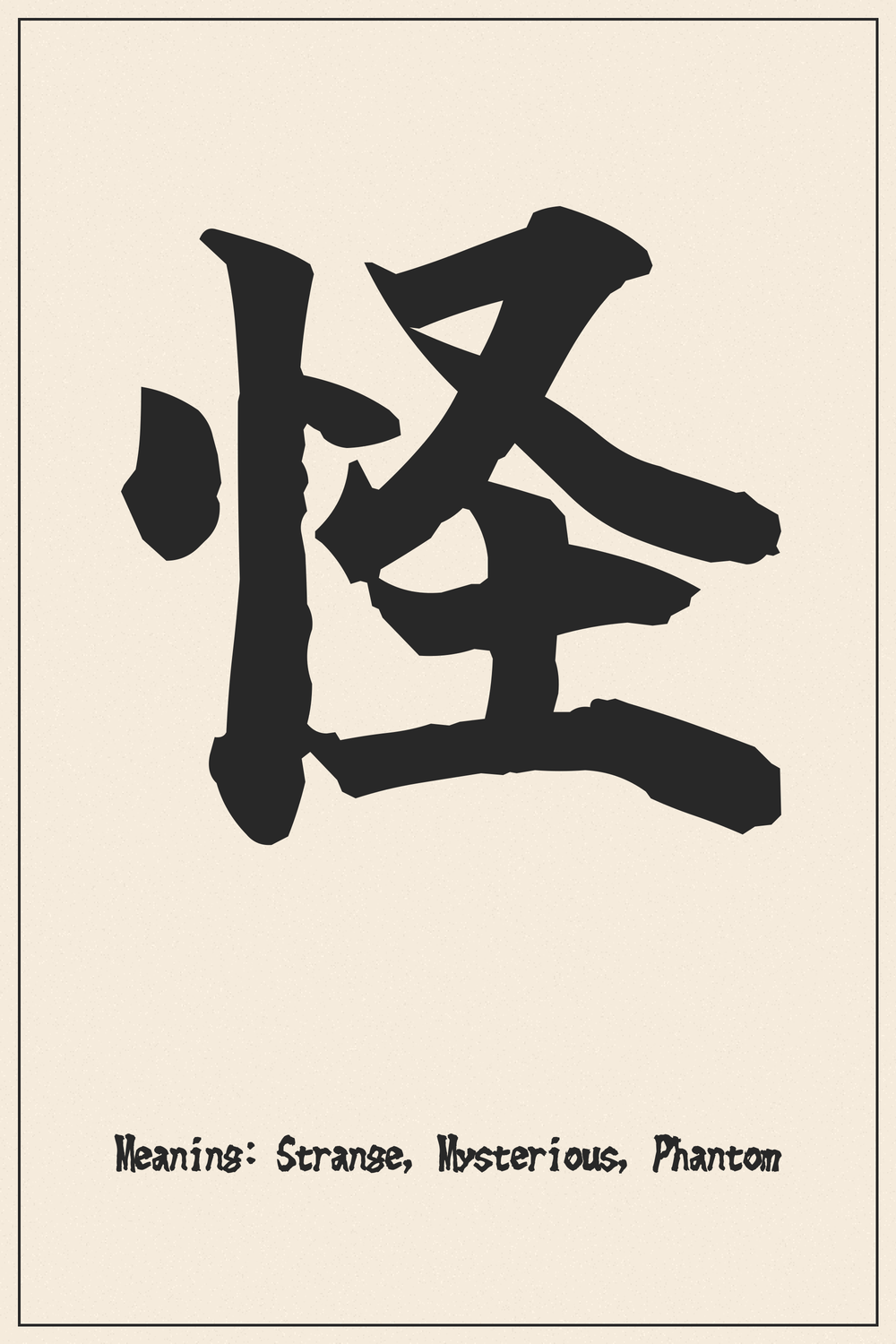
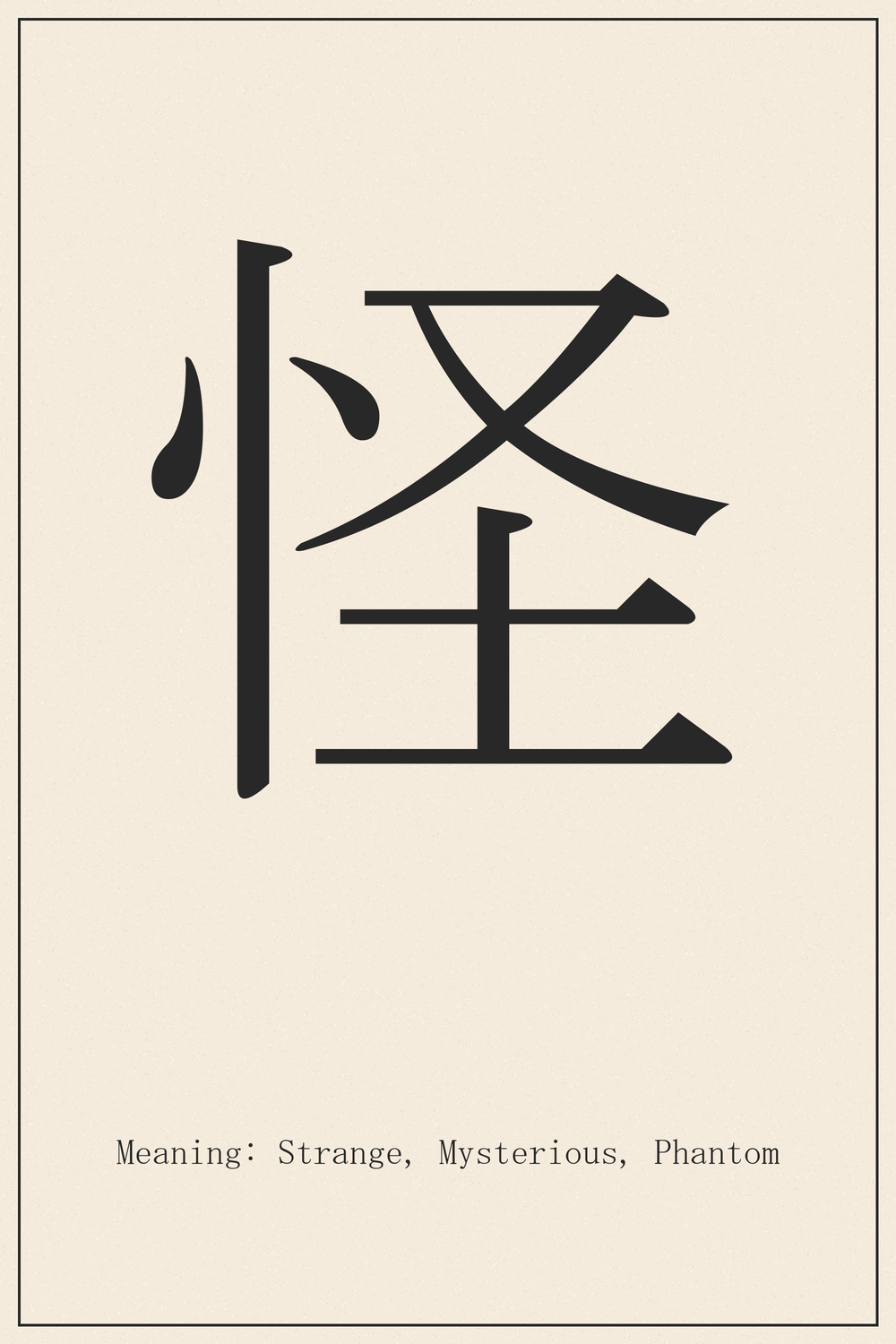
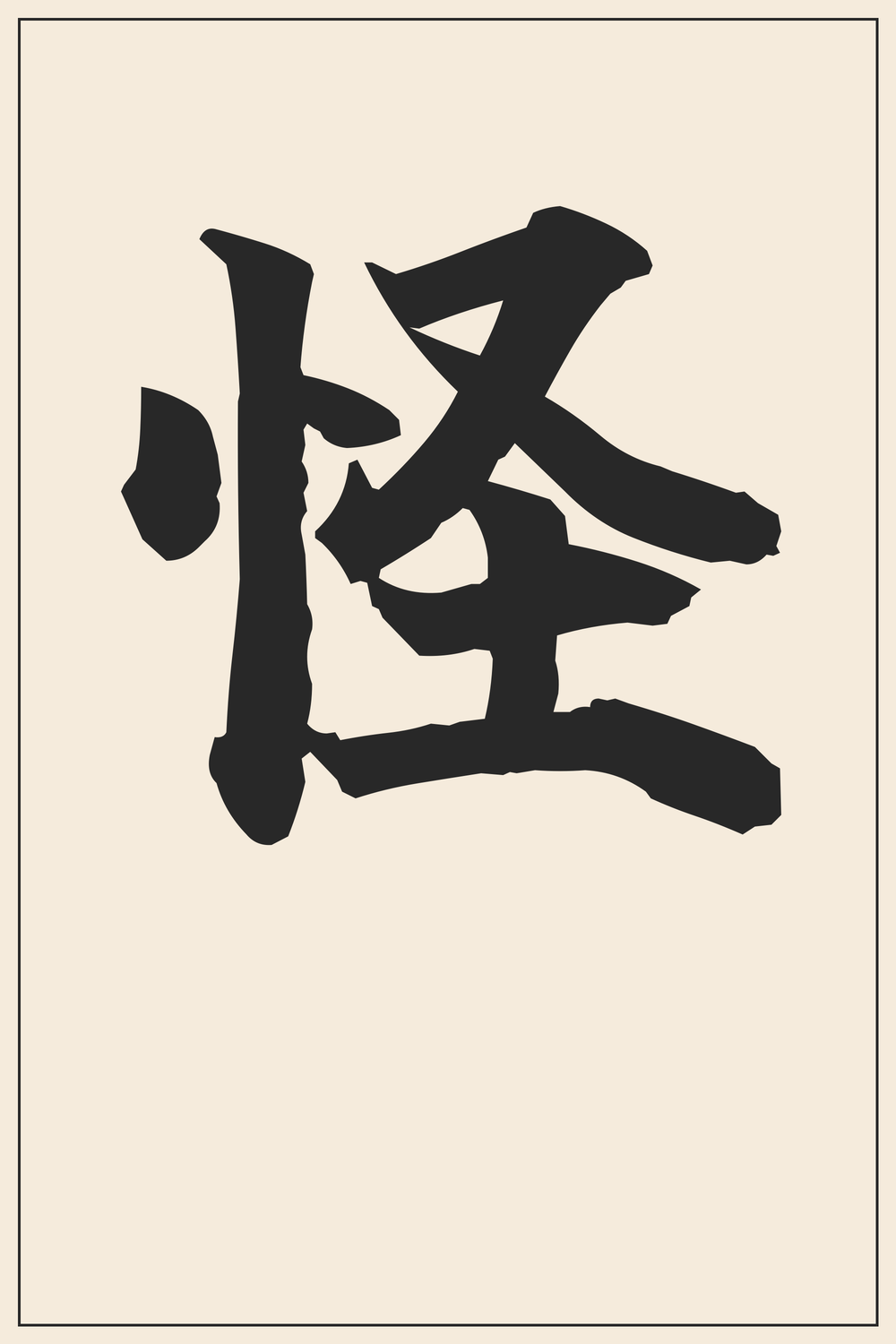
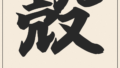
The Kanji 怪 (Kai) beckons to the enigmatic, embodying the essence of what is strange, mysterious, and beyond the ordinary. It captures the human fascination with the unknown and the supernatural.
The atmosphere of a Kanji character changes dramatically depending on the font style. A character that looks elegant in a brush style might look bold and modern in a different font.
Recommendation:
Since a tattoo is permanent, we strongly recommend comparing various font styles beyond what is shown here. Use our designs as a trusted reference for the correct structure, but feel free to explore different artistic variations to find the perfect match for your vision.
The Deep Meaning Behind 怪
The character 怪 combines 心 (kokoro, heart/mind) on the left with 圣 (sei/shō), a phonetic component suggesting ‘mound’ or ‘sacred’, on the right. This union implies a state where the heart or mind is unsettled by something unusual, leading to feelings of strangeness or suspicion.
In Japanese culture, 怪 often appears in words related to the supernatural, such as 妖怪 (yōkai – supernatural beings) or 怪談 (kaidan – ghost stories), signifying the mysterious and often eerie aspects of folklore. It embodies the intriguing allure of the unexplained.
Kanji Breakdown
The Kanji 怪 is composed of two primary elements, each contributing to its multifaceted meaning.
Heart, Mind: This radical grounds the Kanji in human perception and emotion, indicating an internal reaction to something external.
Phonetic Component: This component acts primarily as a phonetic indicator, but its historical connection to ‘mound’ or ‘sacred’ can subtly imply something out of place or revered in an unusual way, further enhancing the sense of strangeness.
Conclusion
The Kanji 怪 encapsulates the intriguing realm of the strange, mysterious, and sometimes monstrous. It represents the captivating pull of the unknown, challenging conventional understanding and inviting curiosity.
A tattoo of 怪 can be a powerful symbol for those drawn to the enigmatic or the unexplained. It serves as a personal emblem of one’s openness to mystery and the profound wonder of things that lie beyond the ordinary.
Comments