✍️ 伊達男 (Dateotoko) — Cultural Context
The Japanese word 伊達男 (Dateotoko) translates to 'dandy' or 'fashionable man,' but this simple definition barely scratches the surface of its rich cultural tapestry. It doesn't just mean someone who wears nice clothes; it describes a man who embodies a particular brand of flamboyant, confident, and effortless style. The term is a direct nod to one of Japan's most iconic historical figures: Date Masamune.
Date Masamune (1567-1636), known as the 'One-Eyed Dragon of Ōshū,' was a formidable daimyō (feudal lord) during the Sengoku (Warring States) period. While renowned for his military prowess and political cunning, he was equally famous for his distinctive sense of style. His iconic black armor and large, crescent-moon-adorned helmet were designed to be both intimidating and unforgettable. This flair extended to his entire army.
The warriors of the Date clan were known to march into battle in splendid, eye-catching armor and uniforms, a stark contrast to the more practical, uniform gear of other clans. Their appearance was so striking and ostentatious that the name 'Date' itself became a byword for flamboyance, showiness, and a certain kind of stylish bravado. The expression 'Date-mono' (a 'Date thing') emerged to describe anything flashy or gaudy.
Over time, this association solidified into the word 伊達男. The term combined the clan's reputation for style (伊達) with the character for man (男). A 'Dateotoko' is therefore not just a well-dressed man, but one who carries himself with the same self-assured panache as Date Masamune and his samurai. It implies a conscious performance of masculinity that is both cool and a little bit showy, without being garish.
In modern Japan, the spirit of the Dateotoko lives on. It's the archetype of the cool, confident character in anime or manga who always looks impeccable, or the celebrity known for a bold fashion sense. It differs from a word like 'oshare' (お洒落), which simply means 'fashionable.' A Dateotoko has an attitude and a story behind his style; it’s a form of self-expression rooted in a legacy of warrior aesthetics.
🖌️ Font Styles for 伊達男
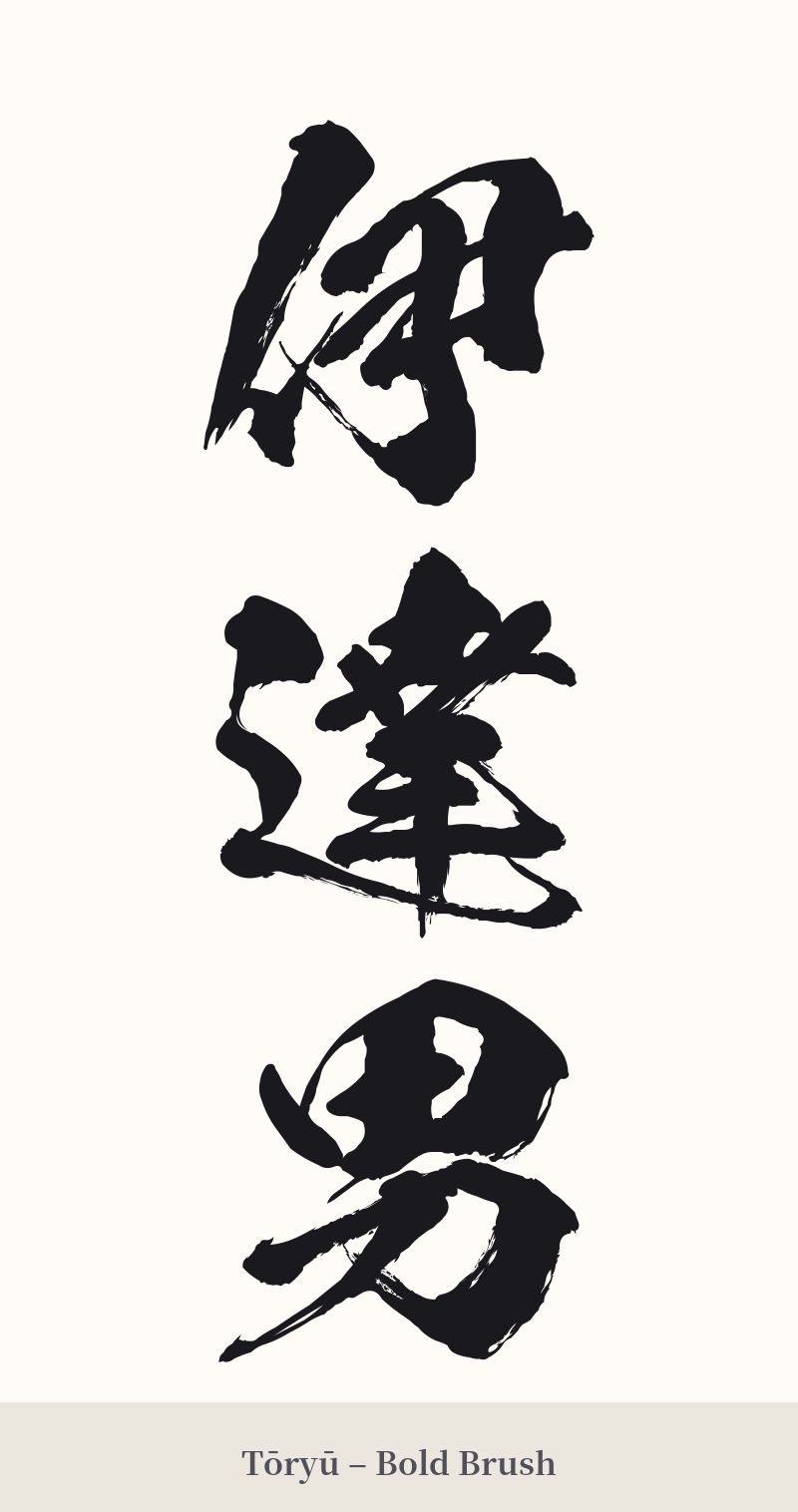
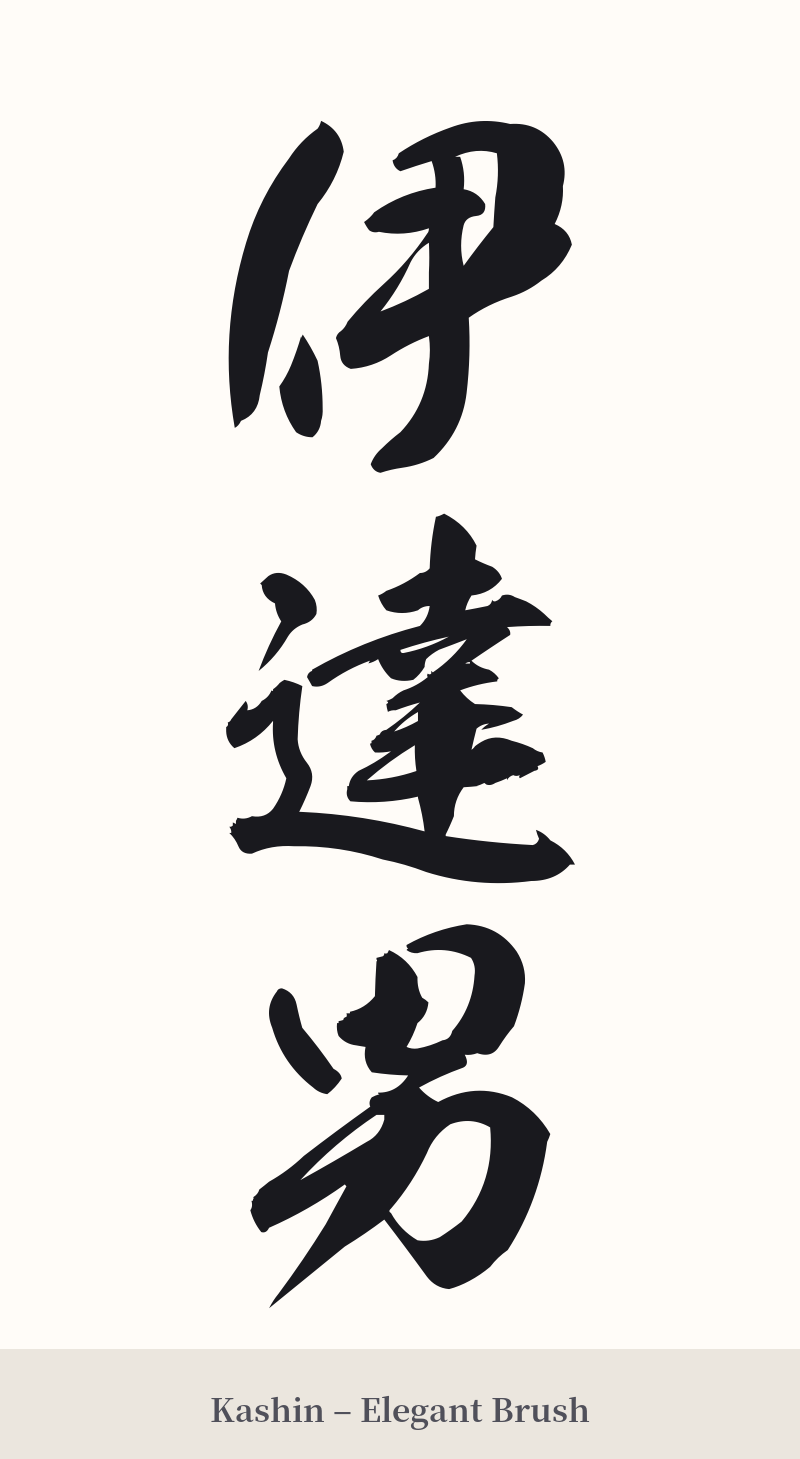
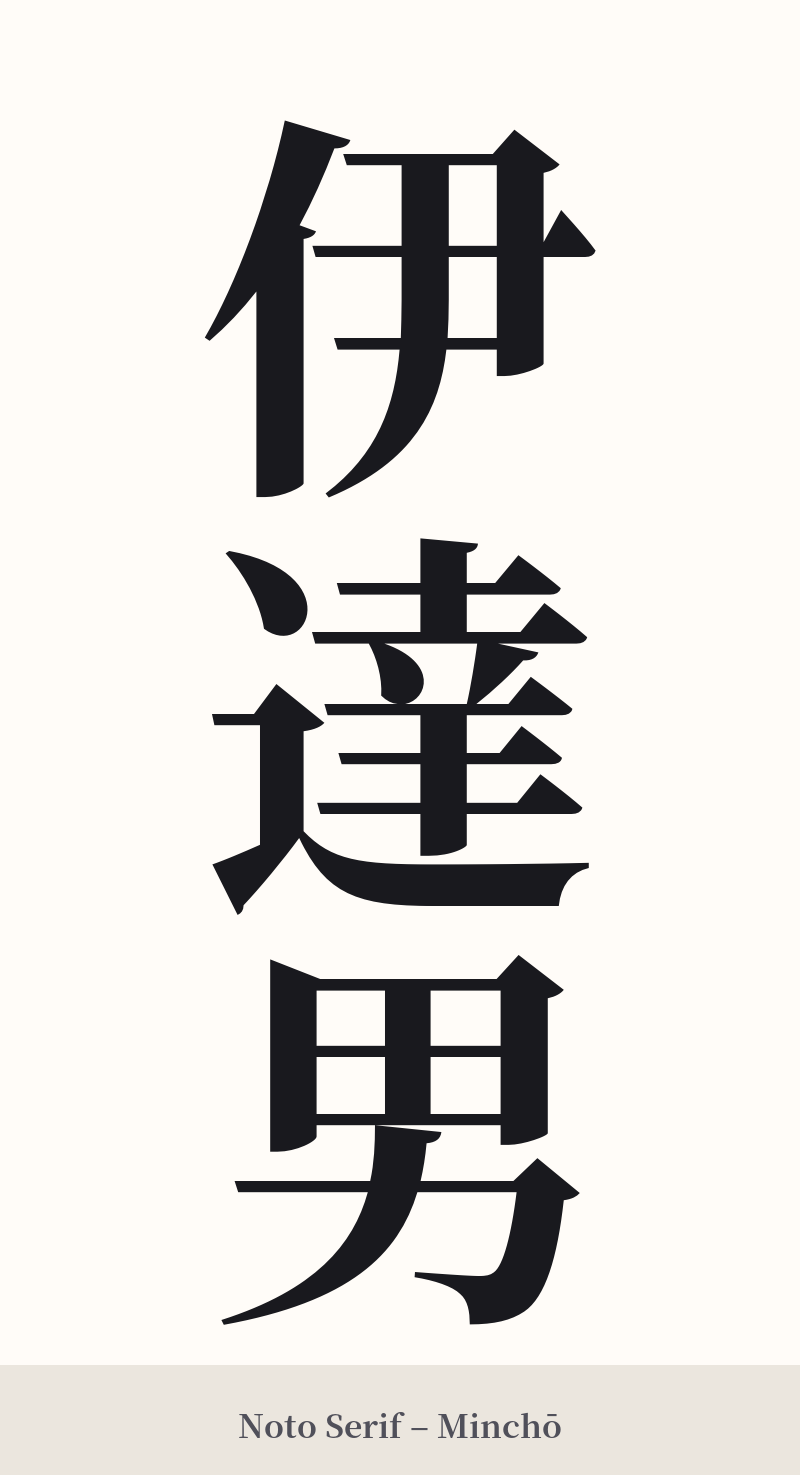
The same kanji can look dramatically different depending on the calligraphy style. Choose a font that matches the mood you want for your tattoo or design.
🎨 Tattoo Suitability
📐 Tattoo Design Guide
The three characters of 伊達男 lend themselves beautifully to a vertical tattoo, the traditional orientation for Japanese script. This placement works exceptionally well on the forearm, bicep, calf, or along the spine, creating a strong, linear statement.
For font styles, consider the following: – Gyōsho (semi-cursive): This style is highly recommended. It captures the dual nature of the word—the flowing elegance of the 'dandy' and the underlying strength of its samurai origins. – Kaisho (block script): A bold, angular kaisho font can emphasize the martial roots and the 'man' (男) aspect of the word, giving it a more powerful and grounded feel. – Sōsho (cursive): A highly stylized, cursive script could work for a more abstract or artistic interpretation, but risks becoming illegible if not executed by a skilled artist.
To enhance the design, you could incorporate a subtle motif associated with Date Masamune, such as his famous crescent moon helmet crest (kabuto) or a small dragon emblem, subtly placed near the kanji.
Comments