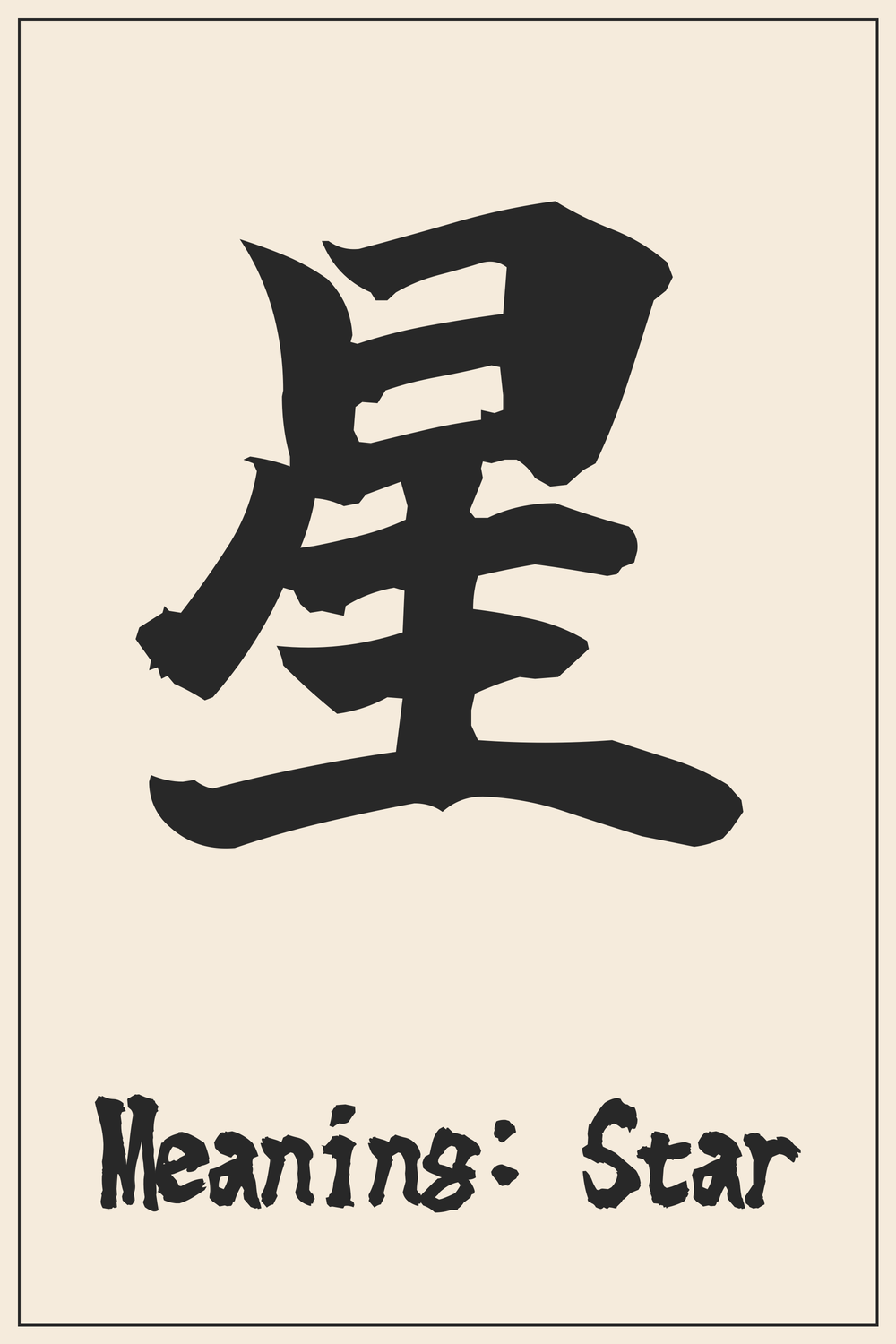
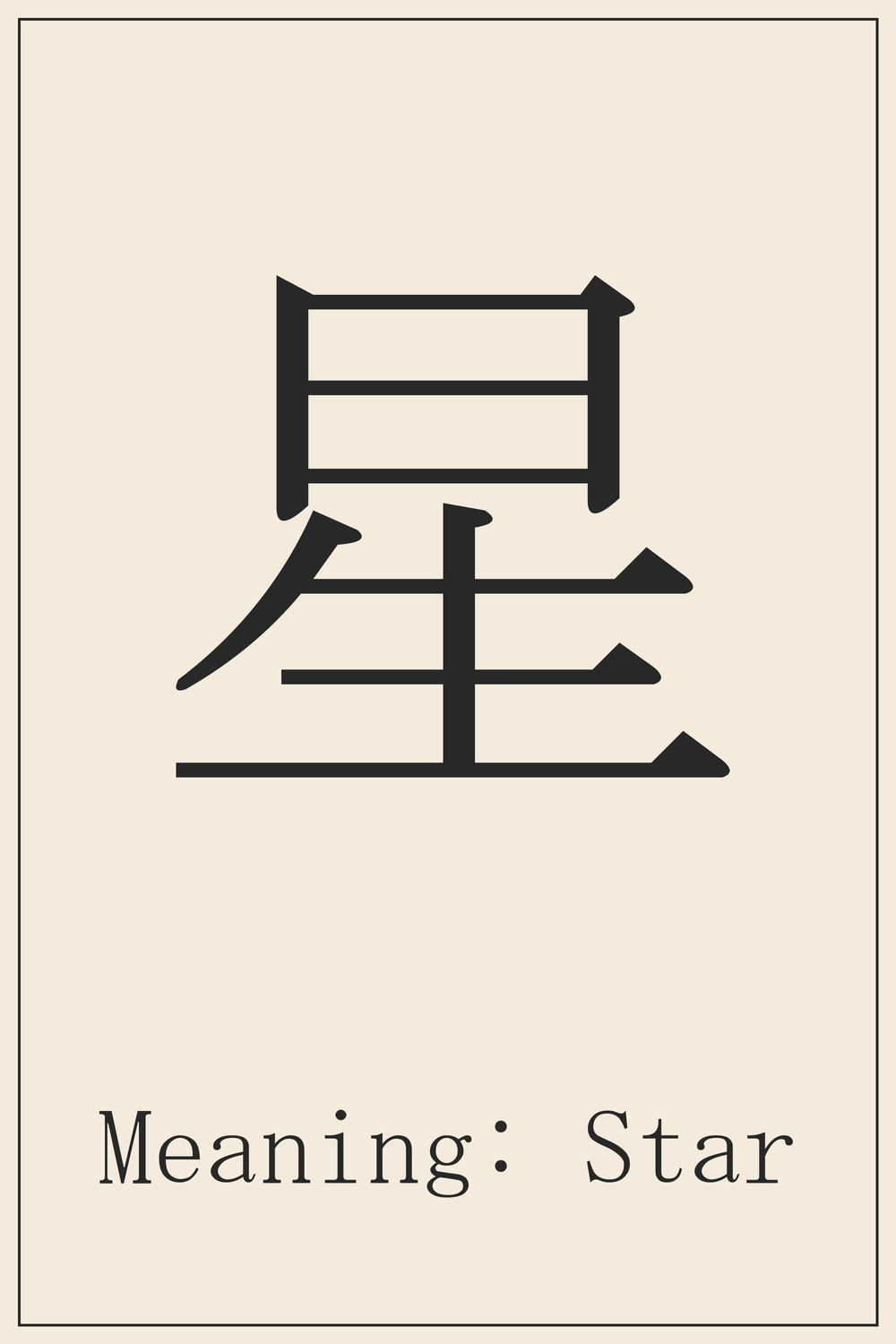
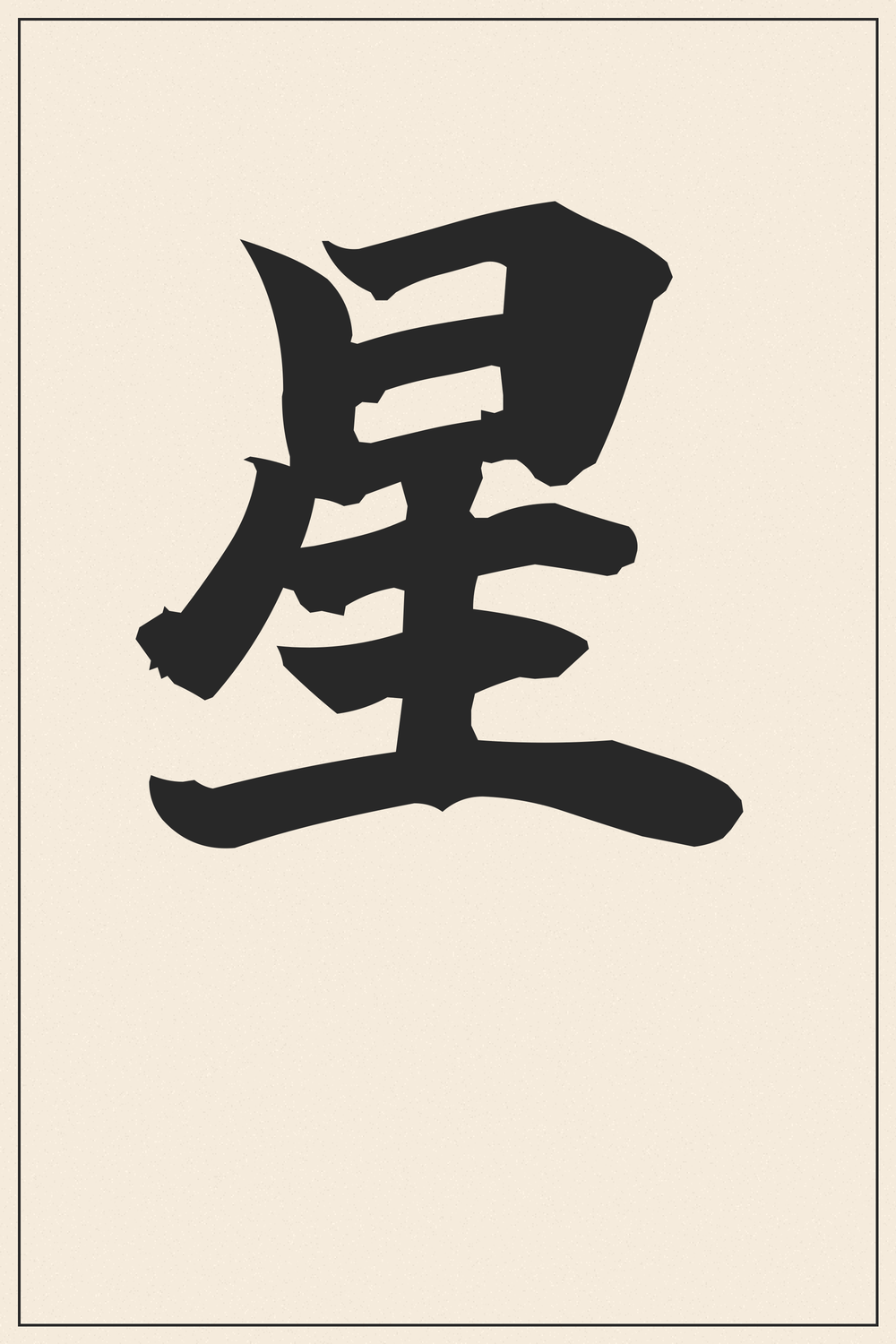
The Kanji 星, pronounced Hoshi, embodies the timeless allure of the night sky. It captures the essence of celestial bodies that have guided humanity for millennia.
The atmosphere of a Kanji character changes dramatically depending on the font style. A character that looks elegant in a brush style might look bold and modern in a different font.
Recommendation:
Since a tattoo is permanent, we strongly recommend comparing various font styles beyond what is shown here. Use our designs as a trusted reference for the correct structure, but feel free to explore different artistic variations to find the perfect match for your vision.
The Deep Meaning Behind 星
The Kanji 星 (Hoshi) is a fascinating ideogram. It combines the radical 日 (hi), meaning ‘sun’ or ‘day,’ and the component 生 (sei/shō), meaning ‘life,’ ‘birth,’ or ‘grow.’ This ancient composition conceptually links celestial bodies to the cycles of day and night, and perhaps to the genesis of light itself or life-giving properties.
In Japanese culture, ‘Hoshi’ holds deep significance beyond its literal meaning. Stars are revered as guiding lights, symbols of hope, destiny, and distant dreams. They are integral to traditions such as Tanabata (the Star Festival), celebrating the reunion of celestial lovers, representing enduring love and aspirations.
Kanji Breakdown
Understanding the individual components of 星 reveals its profound visual and conceptual roots.
Meaning: Sun, Day. This radical represents the sun, often depicted as a square with a line in the middle, symbolizing a day or the celestial body that gives light.
Meaning: Life, Birth, Grow. This component signifies the concept of life, birth, or growth, lending a dynamic and vital aspect to the overall meaning of ‘star’ as a source of light or an origin point.
Conclusion
The Kanji 星 transcends a simple astronomical term; it is a profound symbol of guidance, aspiration, and the vast, beautiful mysteries of the cosmos. Its elegant structure reflects the quiet majesty of the night sky.
For those seeking a tattoo that embodies hope, direction, or a connection to the eternal universe, 星 is an exceptional choice. Its classic form ensures a timeless piece of art, carrying a message of inspiration wherever you go.
Comments