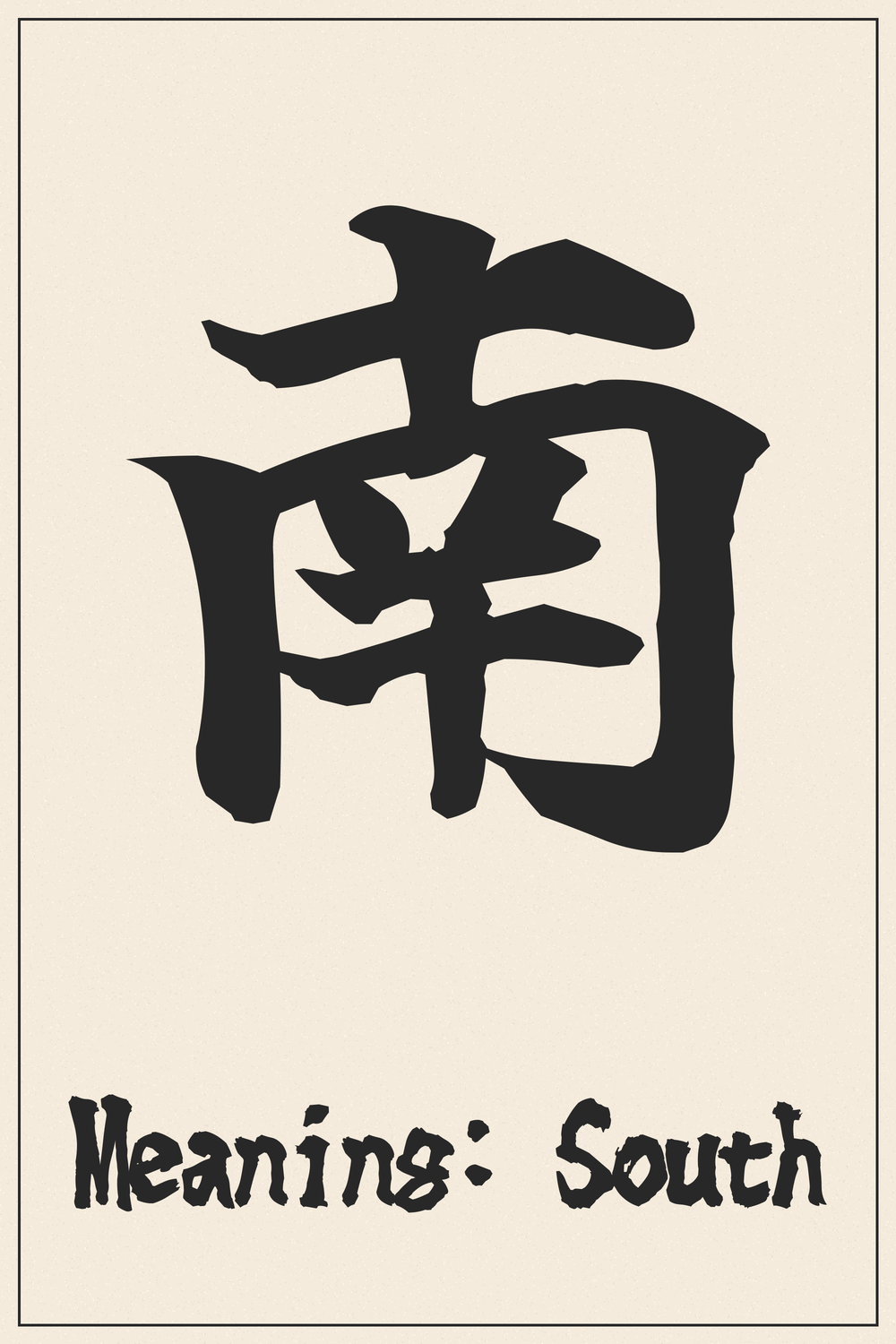
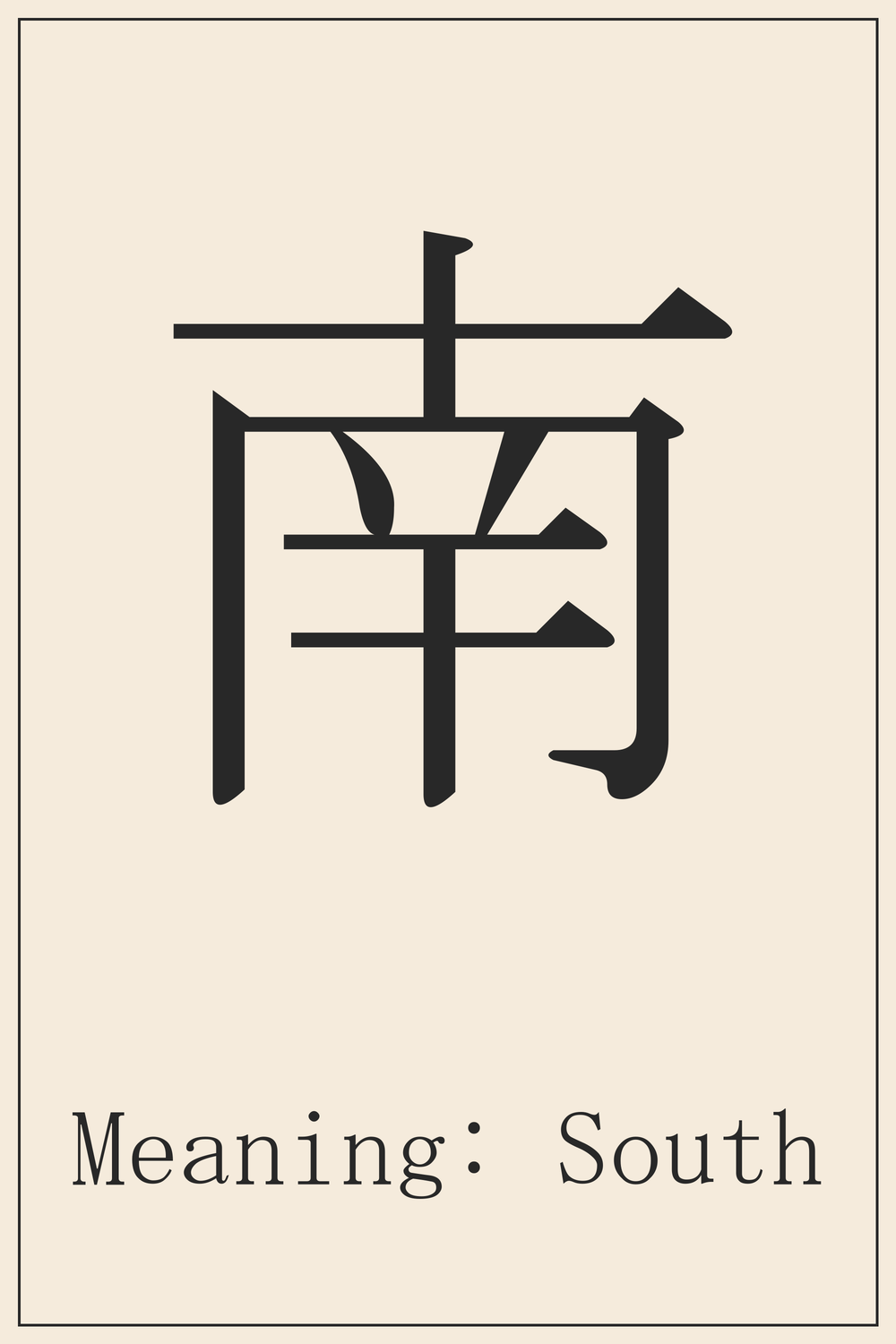
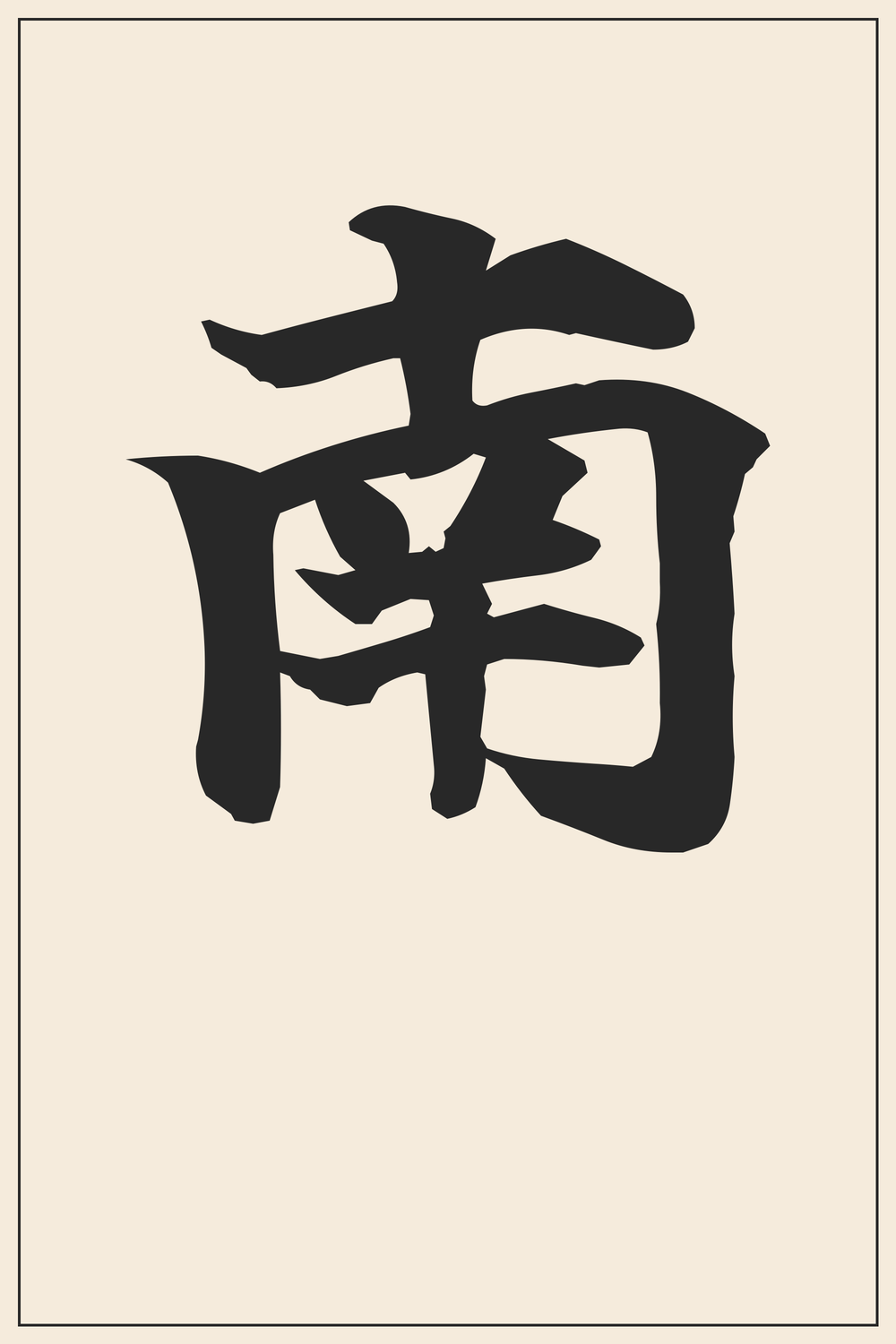
The Kanji 南 (Minami) symbolizes ‘South,’ representing a cardinal direction often associated with warmth, light, and a specific orientation in the world. Its clear and concise form makes it a powerful symbol for guidance or origin.
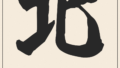
The atmosphere of a Kanji character changes dramatically depending on the font style. A character that looks elegant in a brush style might look bold and modern in a different font.
Recommendation:
Since a tattoo is permanent, we strongly recommend comparing various font styles beyond what is shown here. Use our designs as a trusted reference for the correct structure, but feel free to explore different artistic variations to find the perfect match for your vision.
The Deep Meaning Behind 南
The ancient form of 南 (nan) is believed to depict a bell or a musical instrument, possibly a drum, often played or positioned facing south in ancient rituals or ceremonies. Over time, this pictographic representation evolved to signify the cardinal direction itself, connecting the instrument’s ceremonial orientation with the concept of ‘south’.
In Japanese culture, ‘South’ (Minami) holds significance beyond a mere direction. It is often associated with warmth, sunlight, and sometimes specific geographic regions like the ‘southern islands’ (南の島 – minami no shima) of Okinawa, known for their subtropical climate and distinct culture. It can also metaphorically represent a desired destination or a starting point in a journey.
Kanji Breakdown
The single Kanji 南, while seemingly simple, carries a rich etymological background relating to its ancient usage and form.
Meaning: Historically, the character 南 is believed to have originated from a pictogram depicting an ancient musical instrument or bell positioned toward the south. This connection solidified its meaning as the cardinal direction ‘South’ over centuries, reflecting ancient directional practices.
Conclusion
The Kanji 南 (Minami) elegantly encapsulates the essence of ‘South’ – a direction that evokes images of warmth, light, and sometimes a specific journey or origin. Its directness and clarity make it a compelling symbol.
Choosing 南 for a tattoo can represent a connection to a southern place, a desire for warmth and light, or a personal guidepost. Its balanced form ensures it will make a meaningful and aesthetically pleasing statement.
Comments