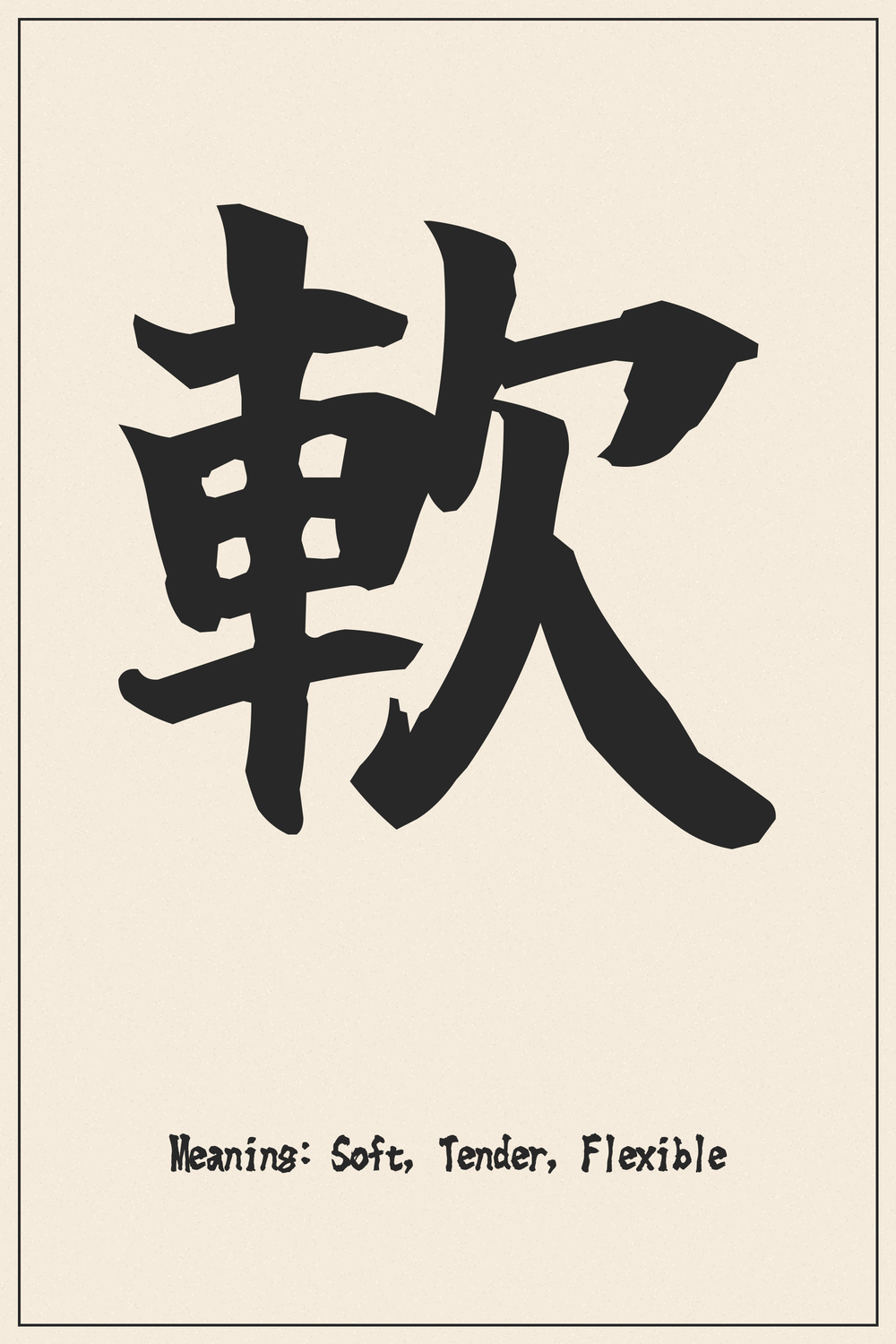
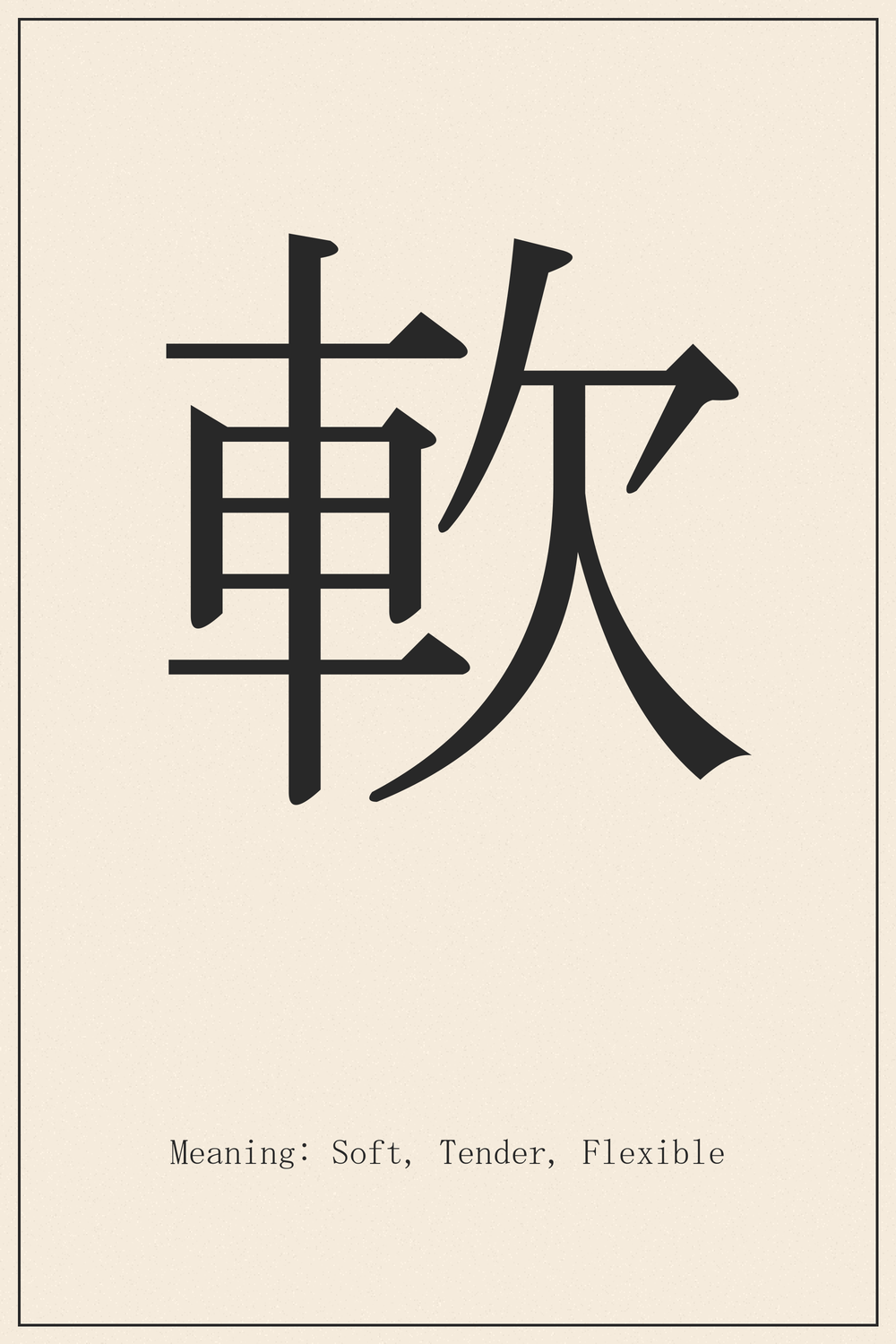
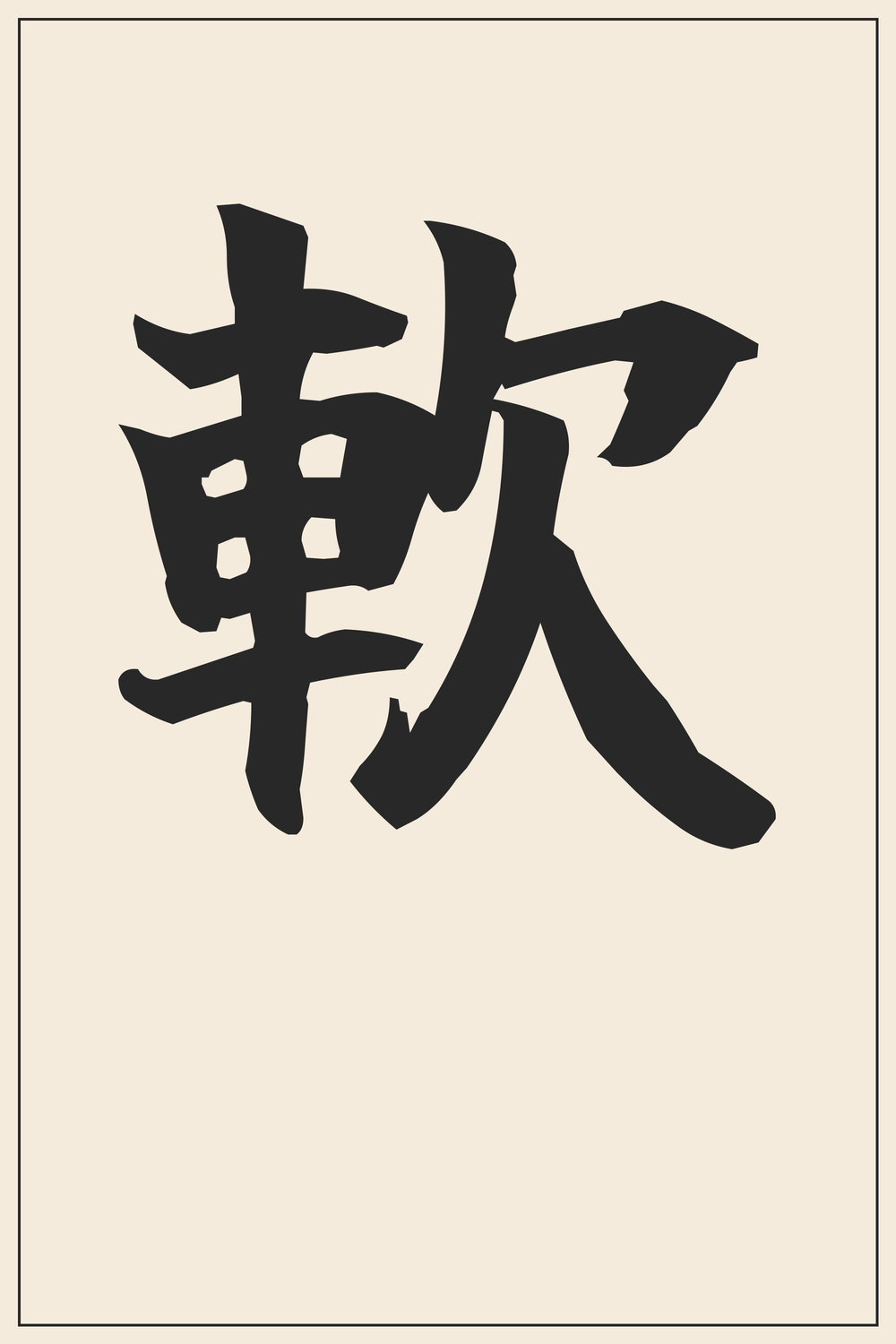
The Kanji 軟 embodies the essence of softness and flexibility, transcending mere physical attributes to represent adaptability and gentle strength. It speaks to the power of yielding and resilience, qualities often overlooked but profoundly impactful.
The atmosphere of a Kanji character changes dramatically depending on the font style. A character that looks elegant in a brush style might look bold and modern in a different font.
Recommendation:
Since a tattoo is permanent, we strongly recommend comparing various font styles beyond what is shown here. Use our designs as a trusted reference for the correct structure, but feel free to explore different artistic variations to find the perfect match for your vision.
The Deep Meaning Behind 軟
The Kanji 軟 (nan, yawarakai) fundamentally means ‘soft,’ ‘tender,’ or ‘pliable.’ Its origins can be traced back to its components, which combine to convey the idea of something that yields easily or is not rigid. This primary meaning extends beyond the physical to encompass mental and spiritual attributes.
In Japanese culture and philosophy, ‘softness’ is not always equated with weakness but often with adaptability, gentleness, and resilience. Like bamboo that bends with the wind rather than breaking, 軟 can symbolize the strength found in flexibility and the wisdom of knowing when to yield. It represents a subtle, enduring power that navigates challenges with grace and pliability.
Kanji Breakdown
The Kanji 軟 is a phonetic-semantic compound, composed of two main elements that contribute to its meaning and sound.
Meaning: Vehicle, Wheel. In the context of 軟, this radical often implies something that moves, yields, or is pliable, like the wooden parts of a cart or chariot that flex and absorb impact.
Meaning: Lack, yawn, open mouth. While its original meaning varies, in this context, 欠 primarily serves as a phonetic component, providing the ‘nan’ sound, and can also subtly suggest a state of being ‘deficient’ in hardness or rigidity.
Conclusion
The Kanji 軟 is a nuanced symbol representing softness, flexibility, and adaptability. It reminds us that true strength often lies not in rigid unyielding force, but in the capacity to bend and adjust. This concept resonates deeply, offering a valuable perspective on resilience in both physical and mental realms.
For a tattoo, 軟 can be a beautiful choice for those who value gentleness, a flexible spirit, or the quiet power of adaptability. Its clear form ensures a legible and aesthetically pleasing design, making it a subtle yet meaningful personal emblem.
Comments