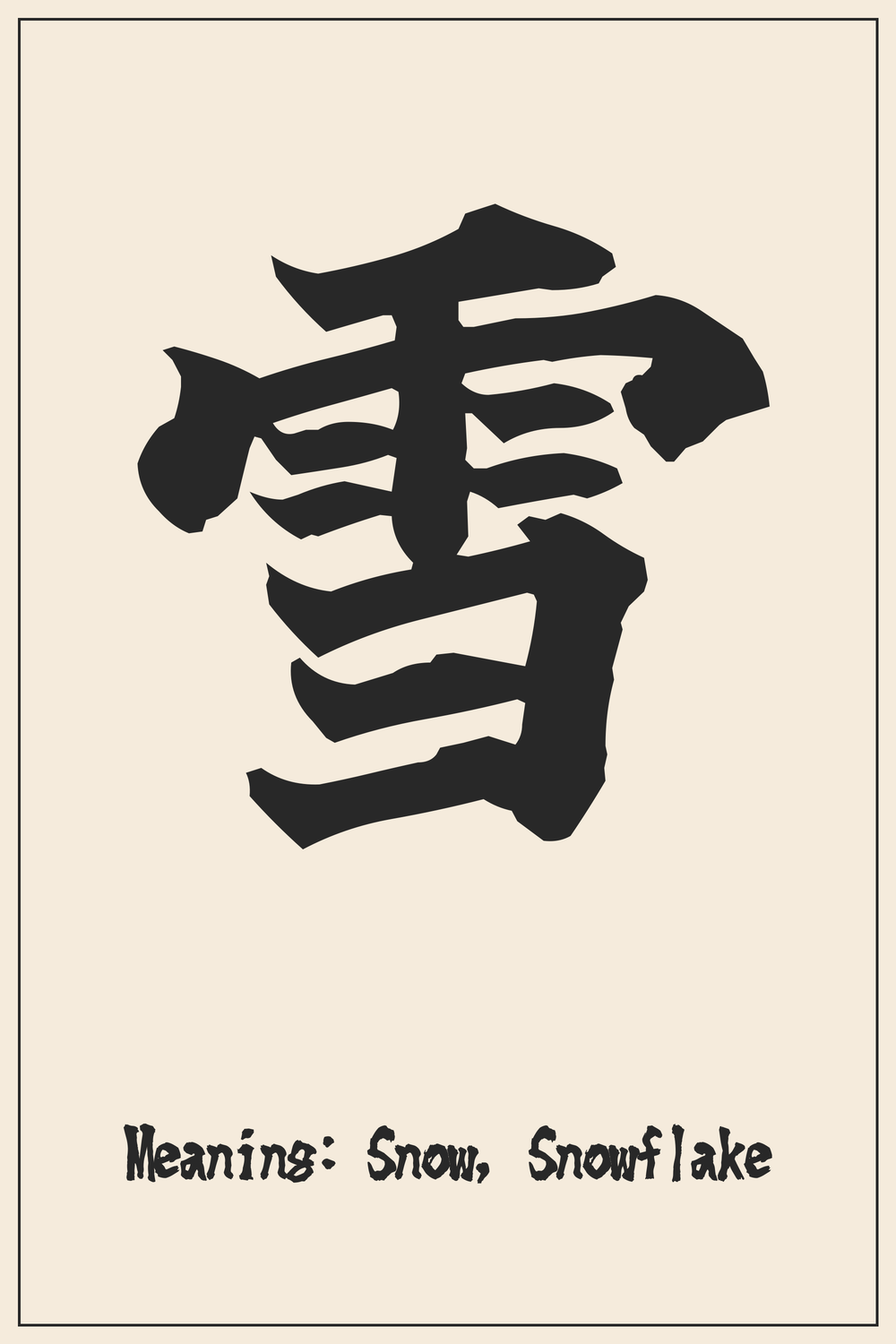
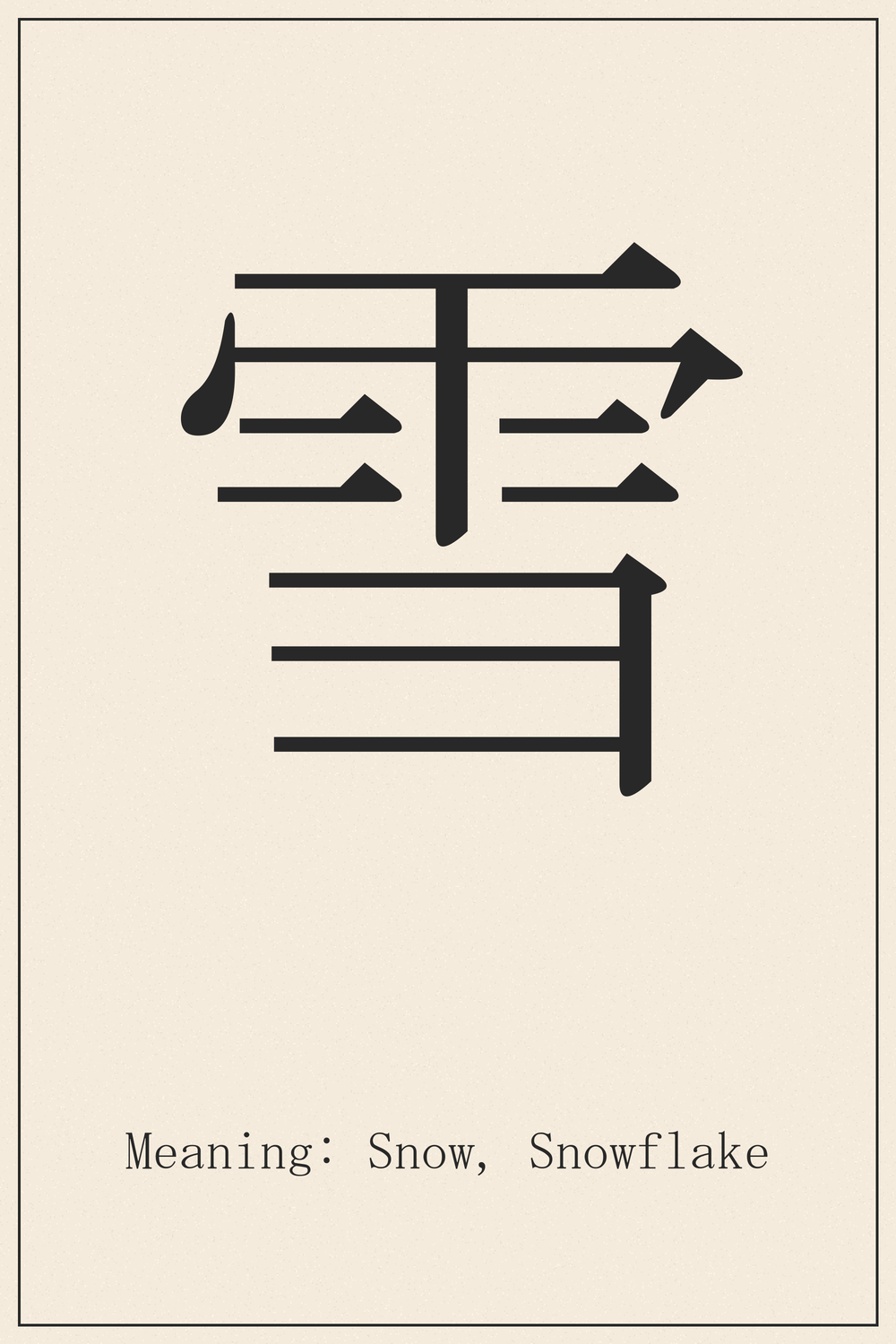
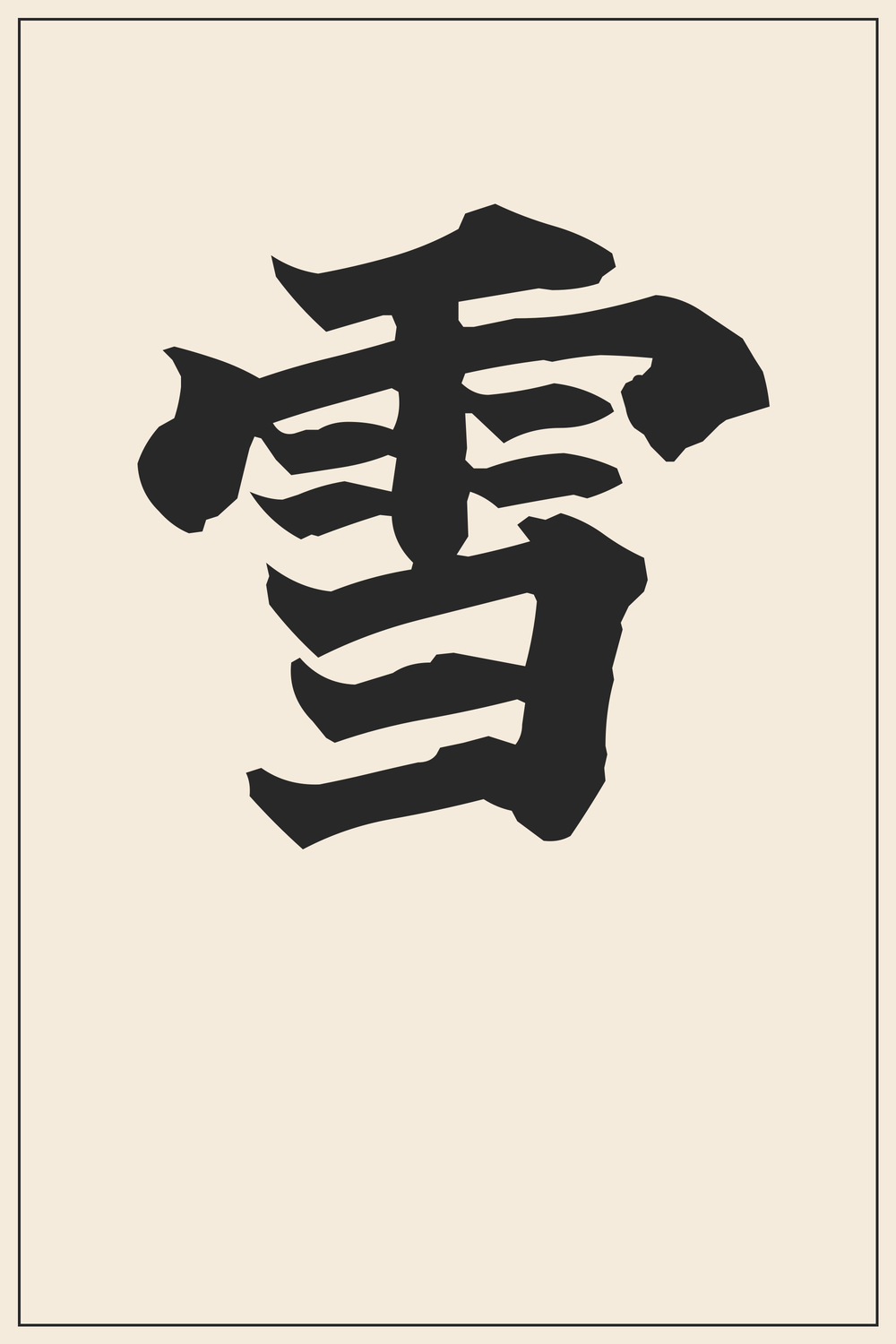
The Kanji for ‘Snow’, 雪, evokes images of serene winter landscapes and the quiet beauty of falling flakes. It captures the essence of a season celebrated in Japanese culture for its purity and fleeting majesty.
The atmosphere of a Kanji character changes dramatically depending on the font style. A character that looks elegant in a brush style might look bold and modern in a different font.
Recommendation:
Since a tattoo is permanent, we strongly recommend comparing various font styles beyond what is shown here. Use our designs as a trusted reference for the correct structure, but feel free to explore different artistic variations to find the perfect match for your vision.
The Deep Meaning Behind 雪
The Kanji for snow, 雪, is a composite character whose origins beautifully capture its essence. It is composed of the radical 雨 (ame), meaning ‘rain’, placed atop another component, often interpreted as a stylized depiction of falling flakes or a broom sweeping. This structure visually conveys the idea of precipitation falling from the sky and covering the ground.
In Japanese culture, snow is much more than just a weather phenomenon; it is a profound symbol embedded in art, literature, and seasonal traditions. It represents purity, transient beauty, renewal, and the quiet resilience of nature. The stark, pristine beauty of a snow-covered landscape often inspires contemplation and a sense of calm, making it a revered aspect of the Japanese aesthetic.
Kanji Breakdown
The character 雪 is primarily composed of two significant elements:
Meaning: This radical signifies ‘rain’ and forms the top part of the character, clearly indicating the meteorological origin of snow as a form of precipitation.
Meaning: This component, often found at the bottom, is interpreted as a stylized hand or a broom, suggesting the act of falling and accumulating, or the sweeping motion of wind-blown flakes.
Conclusion
The Kanji 雪 beautifully encapsulates the serene majesty and transient purity of snow. It is a symbol deeply woven into the fabric of Japanese aesthetic, representing not just a season, but also themes of renewal, calm, and understated beauty.
Choosing 雪 for a tattoo is a powerful way to honor the sublime beauty of nature and the profound cultural significance of winter. Its elegant form and rich meaning make it an exceptional choice for a personal and meaningful statement.
Comments