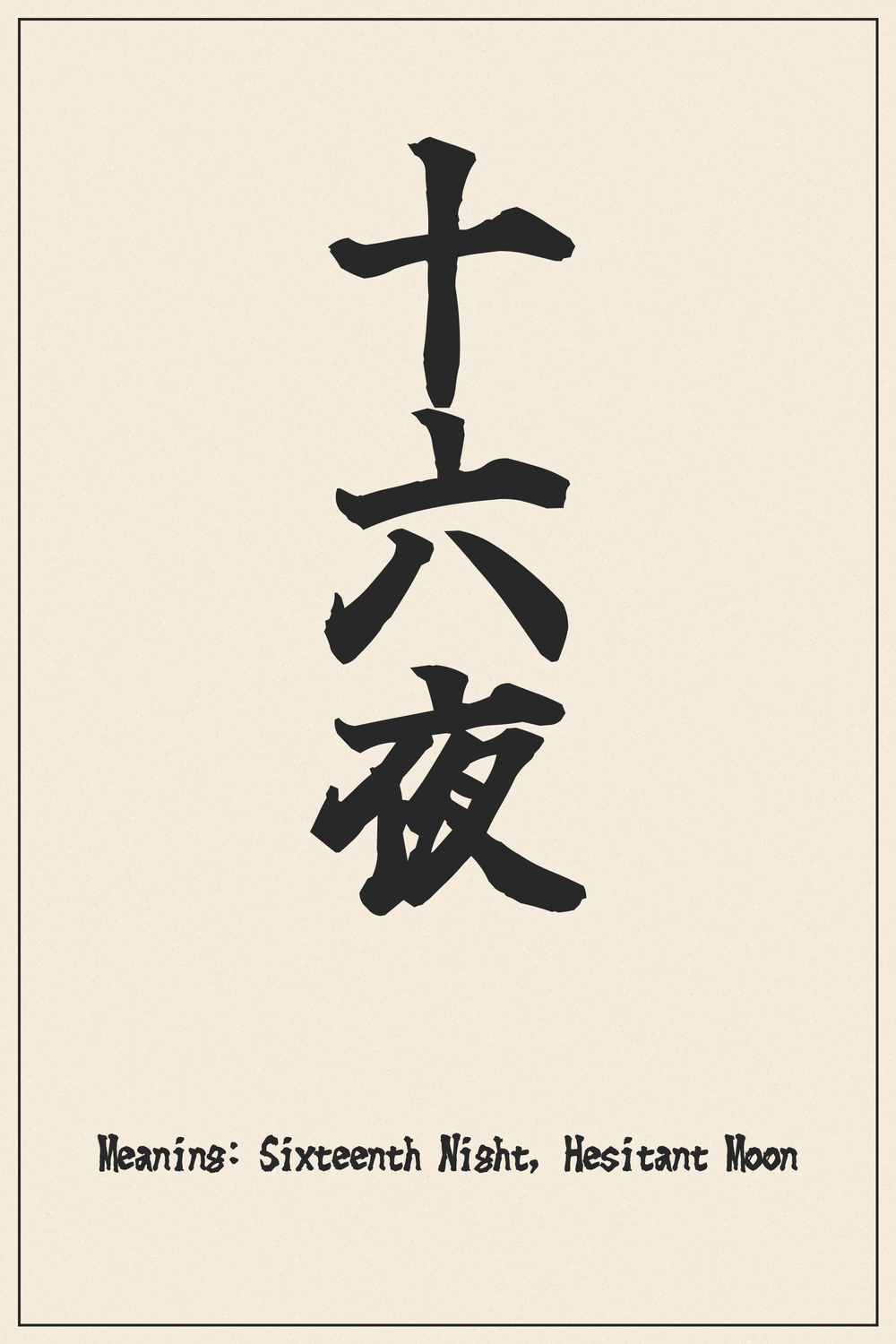
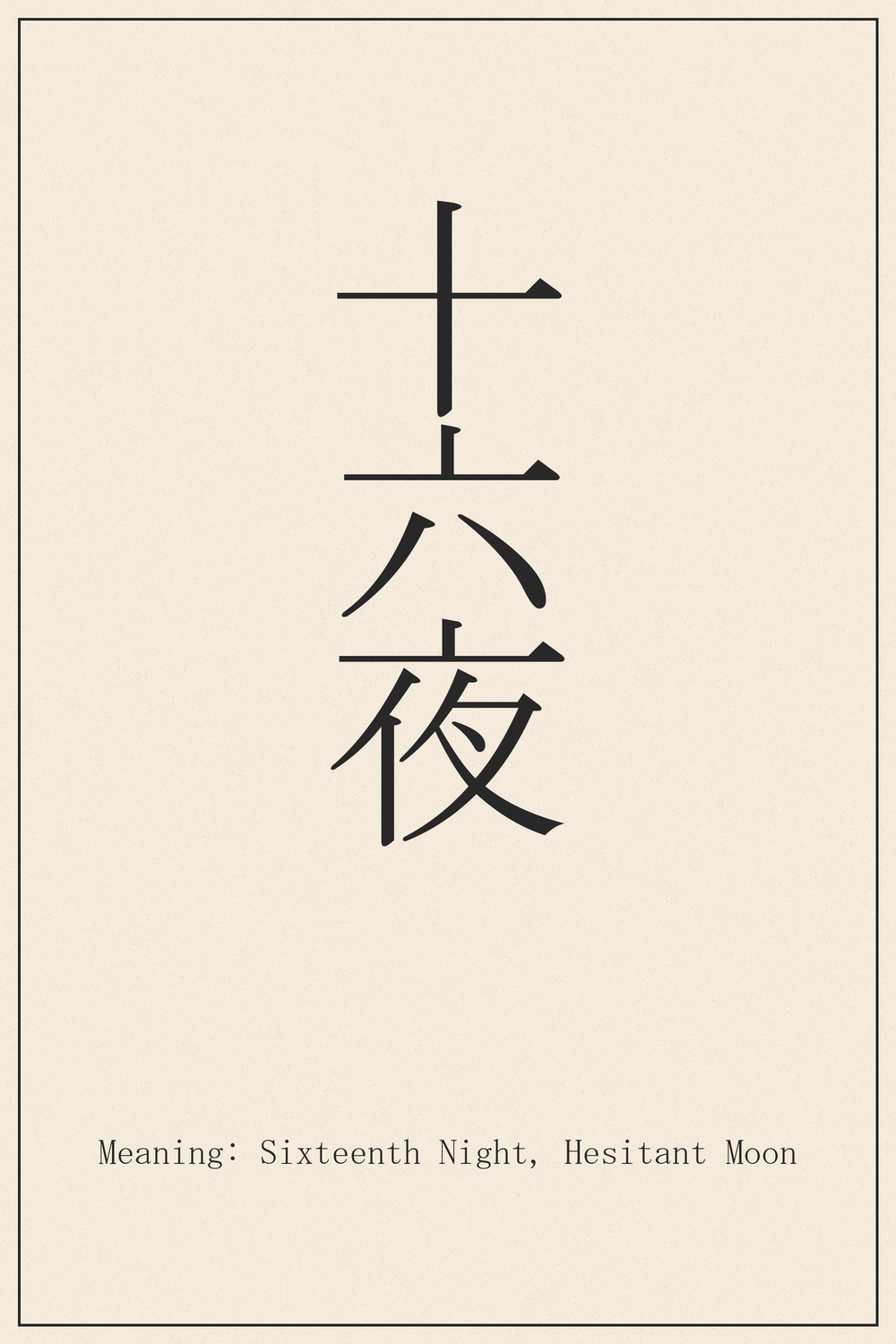
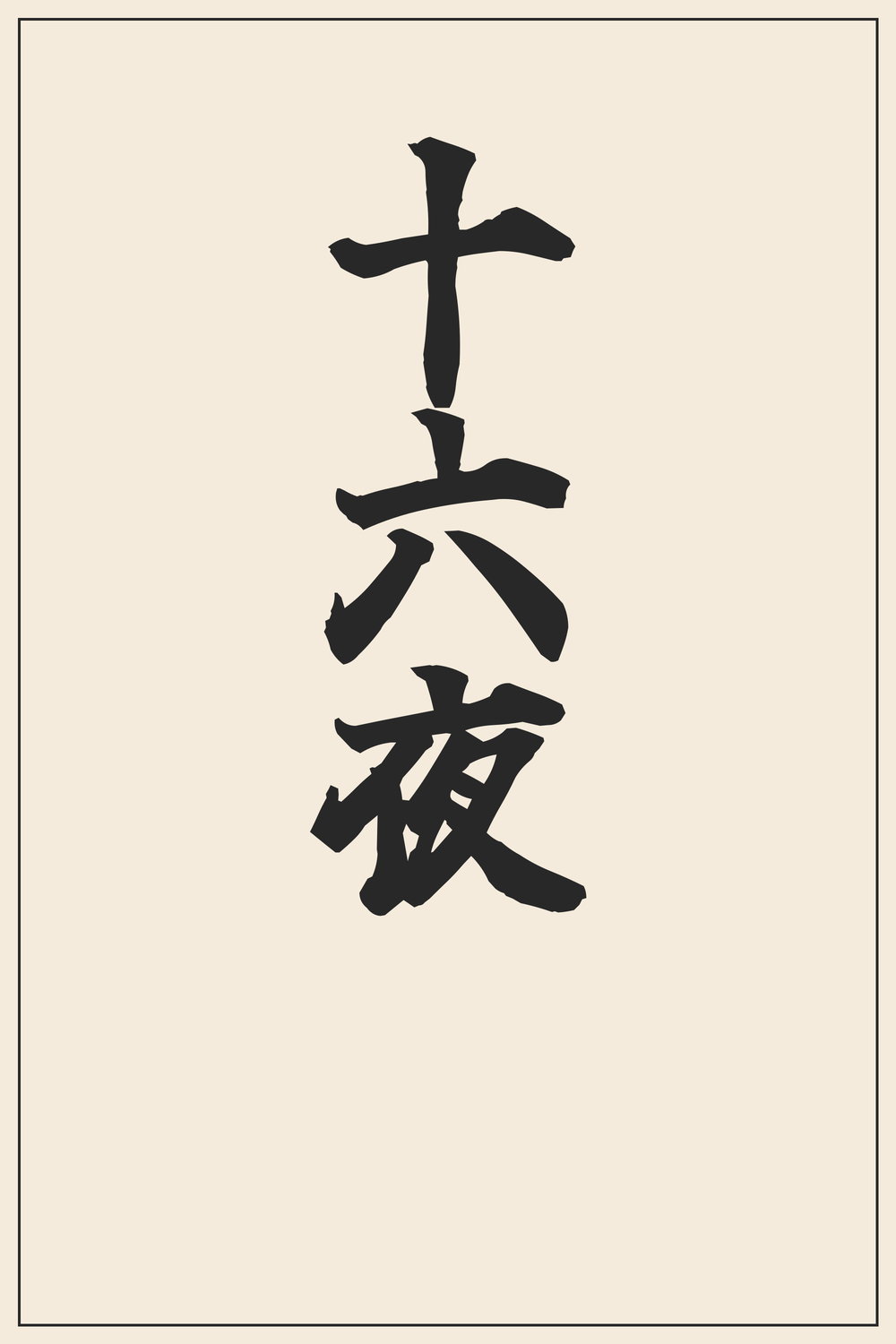
Embrace the subtle beauty of the night sky with 十六夜, a Kanji compound that captures a uniquely Japanese sense of celestial wonder. This poetic term goes beyond mere counting, embodying a delicate moment in the lunar cycle.
The atmosphere of a Kanji character changes dramatically depending on the font style. A character that looks elegant in a brush style might look bold and modern in a different font.
Recommendation:
Since a tattoo is permanent, we strongly recommend comparing various font styles beyond what is shown here. Use our designs as a trusted reference for the correct structure, but feel free to explore different artistic variations to find the perfect match for your vision.
The Deep Meaning Behind 十六夜
The term 十六夜 (Izayoi) literally translates to ‘sixteenth night,’ combining 十 (jū) for ‘ten,’ 六 (roku) for ‘six,’ and 夜 (yo) for ‘night.’ The reading ‘Izayoi’ is thought to derive from ‘iyoiyo-zayou,’ meaning ‘to hesitate increasingly,’ or ‘iza yoi,’ an archaic expression meaning ‘come, night.’ This linguistic evolution perfectly encapsulates the moon’s slightly delayed appearance on this particular night.
In traditional Japanese aesthetics and literature, the ‘sixteenth night’ holds a special place. After the brilliance of the full moon on the fifteenth night, the moon of the sixteenth night is perceived as slightly slower to rise, as if hesitant or shy. This nuance has inspired countless poems (waka) and works of art, symbolizing a subtle beauty, a moment of reflection, and the transient nature of beauty.
Kanji Breakdown
The poetic beauty of 十六夜 is derived from its individual components, each contributing to its rich meaning.
Meaning: Ten. This Kanji represents the number ten, often depicted as a cross symbolizing all directions or completion.
Meaning: Six. This character simply denotes the number six.
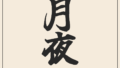
Meaning: Night. The character 夜 represents “Night.” It depicts the time when the sun has set and daily activities cease. The character is composed of elements symbolizing “Evening” and a “Person” (or specifically, a person under a cover/roof), suggesting the period when people withdraw from the outside world to rest.
Conclusion
十六夜 (Izayoi) offers a profound connection to the rhythm of nature and the poetic sensitivity of Japanese culture. It represents more than just a date; it embodies a feeling, a subtle shift in the moon’s celestial dance, making it a symbol of reflective beauty and understated elegance.
For those seeking a tattoo that whispers of moonlit nights and ancient Japanese poetry, 十六夜 is an exceptional choice. Ensure your artist is skilled in capturing the intricate strokes, and consider a slightly larger placement to truly honor its delicate complexity and ensure its timeless clarity.
Comments