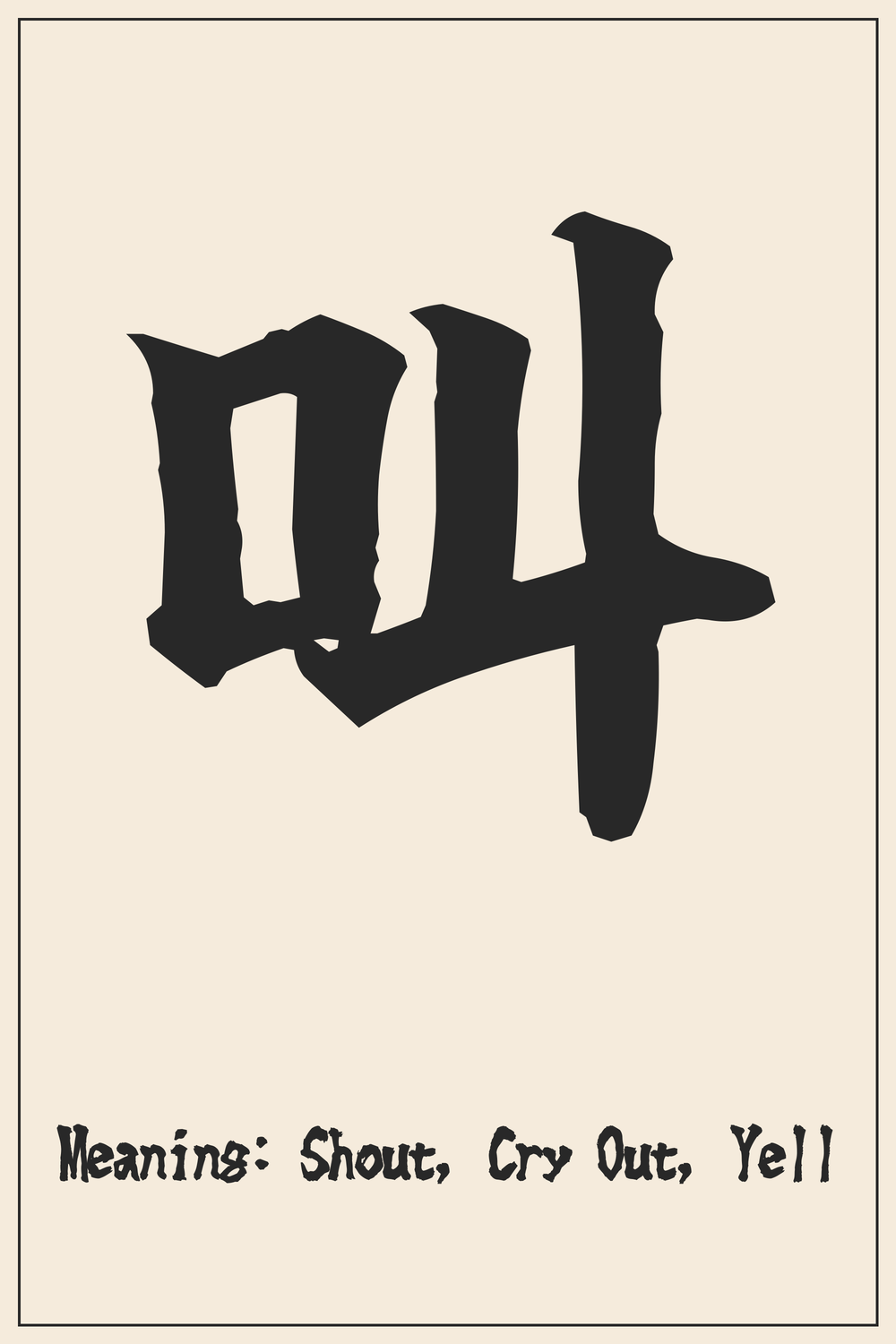
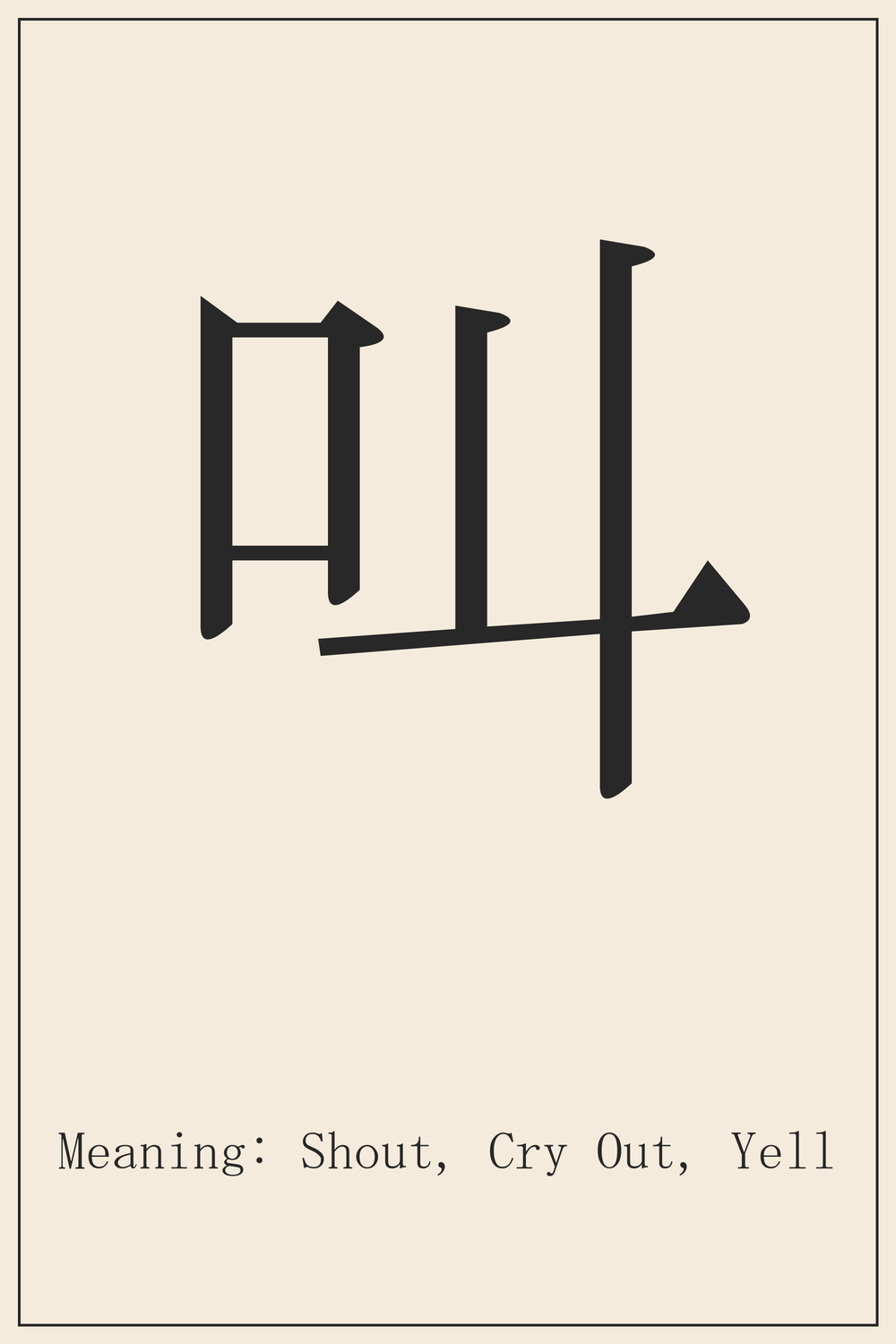
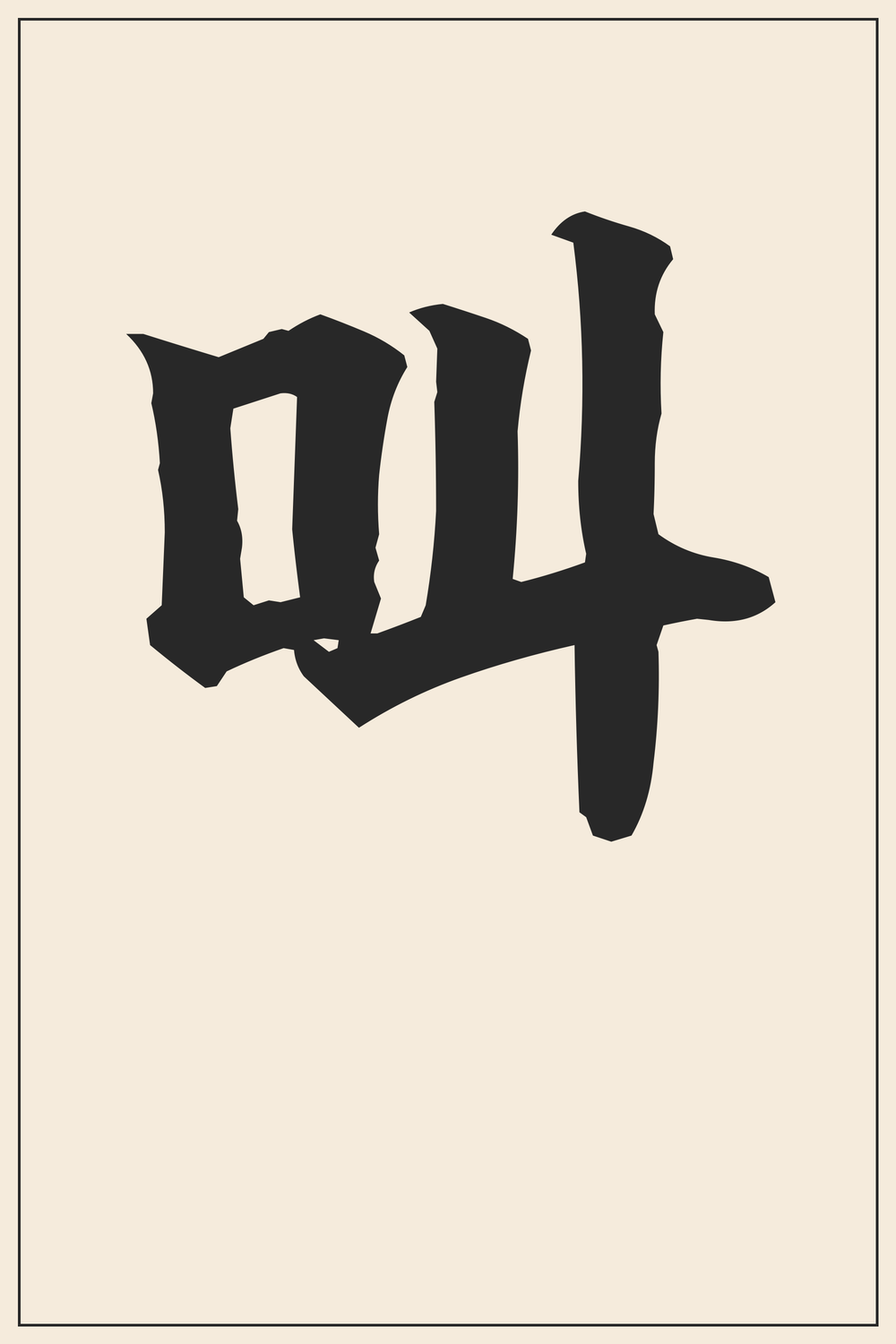
The Kanji 叫 encapsulates the raw power of the human voice, expressing profound emotions or urgent calls. It signifies a direct, unmediated outburst, a vocalization from the depths of one’s being.
The Deep Meaning Behind 叫
The Kanji 叫 (sakebu, kyoo) fundamentally captures the action of vocalizing loudly. Its origin lies in combining the radical for ‘mouth’ with a phonetic component that suggests a twisting or gathering, implying the concentrated effort of emitting a sound.
In Japanese culture, 叫 often signifies a raw, unfiltered emotional release—be it a cry of anguish, a shout of joy, a battle cry, or an urgent plea. It embodies the powerful, innate human capacity to express deeply felt sentiments through vocalization, serving as a direct channel from inner spirit to the external world.
Kanji Breakdown
The Kanji 叫 is composed of two primary elements that visually and phonetically contribute to its meaning of ‘to shout’ or ‘to cry out’.
Mouth: This radical clearly denotes the physical apparatus used for speaking, eating, and, in this context, vocalizing. It is central to the action of shouting.
Phonetic component (entangle/call): While serving primarily as a phonetic element indicating the ‘kyoo’ or ‘shou’ sound, this component can also imply a sense of entangling or gathering, metaphorically referring to the focused effort involved in projecting one’s voice.
Conclusion
The Kanji 叫 is a potent symbol for the act of shouting or crying out, embodying the essence of vocal expression. It represents the urgency, emotion, and directness of conveying one’s feelings or intentions loudly and clearly, a primal form of communication.
For those seeking a tattoo that symbolizes the release of deep emotion, the courage to speak up, or the power of one’s voice, 叫 offers a simple yet profound choice. Its clean lines and evocative meaning make it a striking emblem of inner strength and outward expression.
Comments