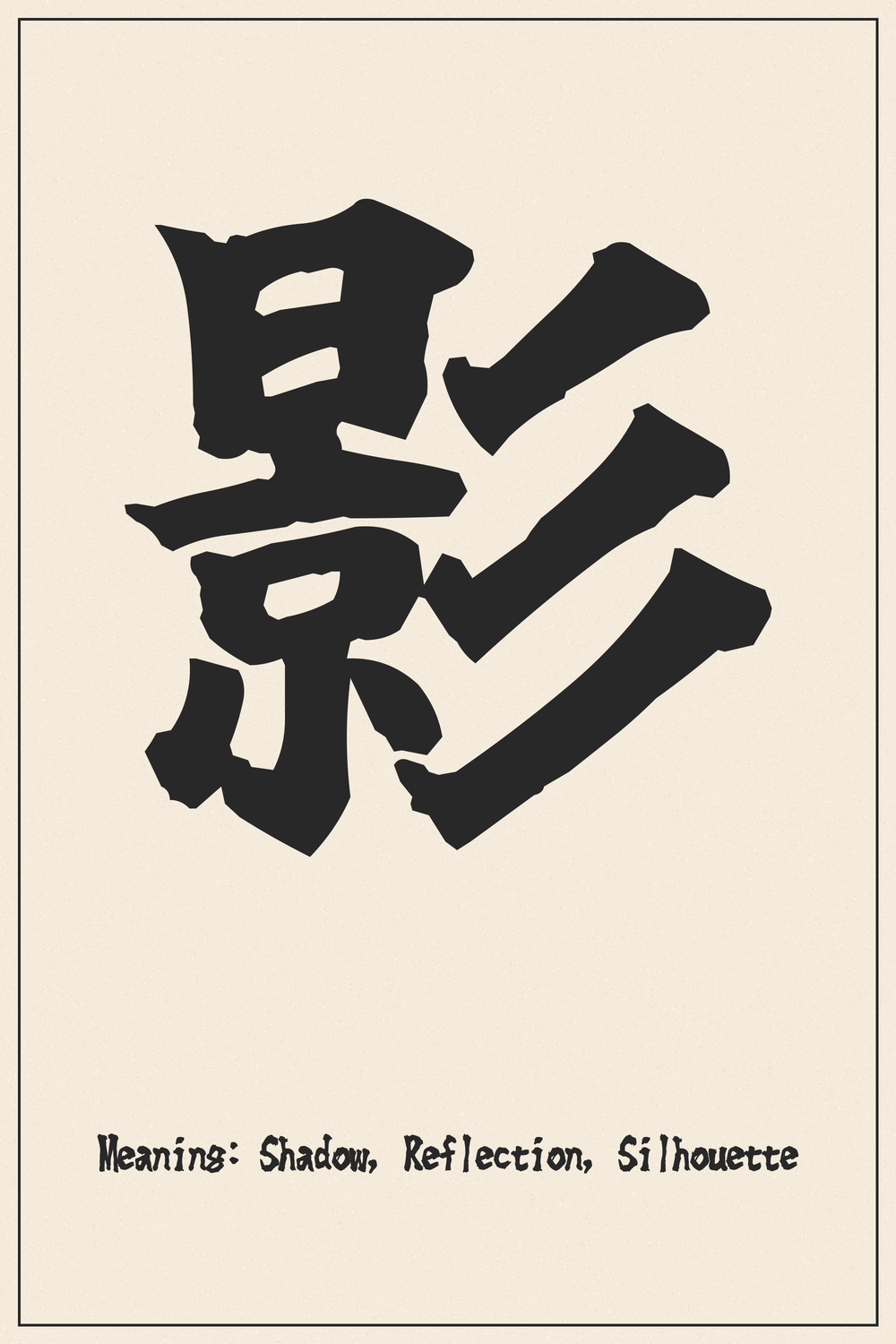
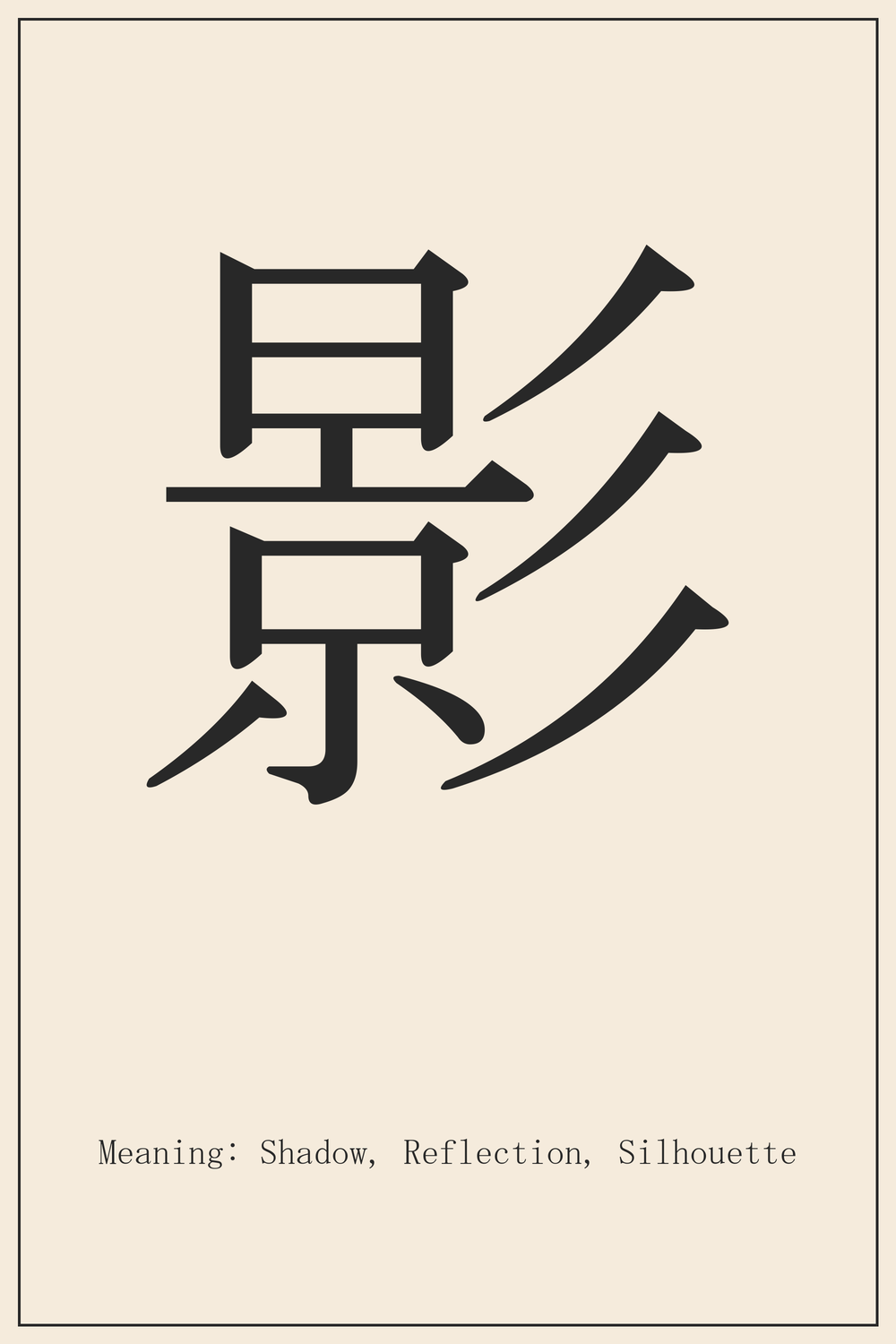
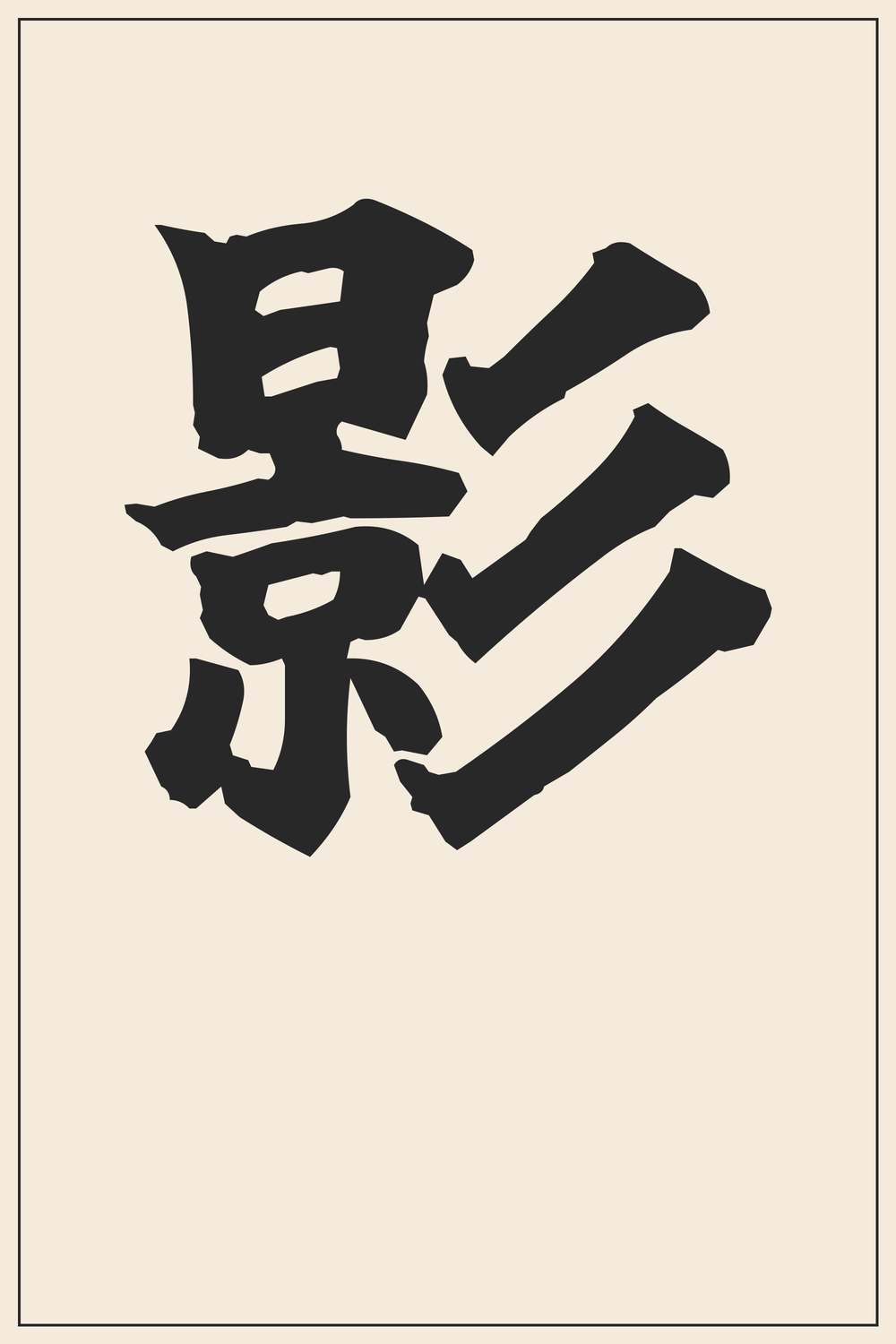
The Kanji 影 (Kage) encapsulates the profound duality of presence and absence. It speaks to the unseen aspects of existence, from a literal shadow to the subtle reflections of the self.
The atmosphere of a Kanji character changes dramatically depending on the font style. A character that looks elegant in a brush style might look bold and modern in a different font.
Recommendation:
Since a tattoo is permanent, we strongly recommend comparing various font styles beyond what is shown here. Use our designs as a trusted reference for the correct structure, but feel free to explore different artistic variations to find the perfect match for your vision.
The Deep Meaning Behind 影
The character 影 is a fascinating example of how Kanji capture abstract concepts. It is formed by combining 景 (kei), meaning ‘scenery’ or ‘light,’ and 彡 (san), which denotes a subtle pattern or trace. This combination visually represents the outline (shadow) cast by an object in light, hinting at the ephemeral and derivative nature of a shadow.
In Japanese culture, 影 (kage) transcends its literal meaning. It often symbolizes the hidden aspects of one’s being, the influence of the past, or the transient nature of life itself. It can evoke a sense of mystery, introspection, or the invisible forces that shape our reality, frequently appearing in poetry and philosophical discourse to denote depth and impermanence.
Kanji Breakdown
The character 影 is composed of two primary elements that convey its meaning of shadow or reflection.
Meaning: Light, scenery, bright.
This component represents the ‘light’ or ‘view’ that casts the shadow. It fundamentally relates to visibility and the conditions under which a shadow is formed.
Meaning: Hair, pattern, trace.
Often appearing as a radical related to hair or decoration, here it signifies the subtle outline or the faint trace of something, emphasizing the shadowy aspect that is not fully concrete but merely an impression.
Conclusion
The Kanji 影 is a potent symbol for those who resonate with themes of mystery, introspection, and the interplay between presence and absence. It invites contemplation on the unseen forces and the profound reflections that define our journey.
Choosing 影 for a tattoo is a testament to embracing depth and the subtle beauty of what lies beyond immediate perception. It’s a statement of embracing your own complexities and the rich tapestry of life’s hidden dimensions.
Comments