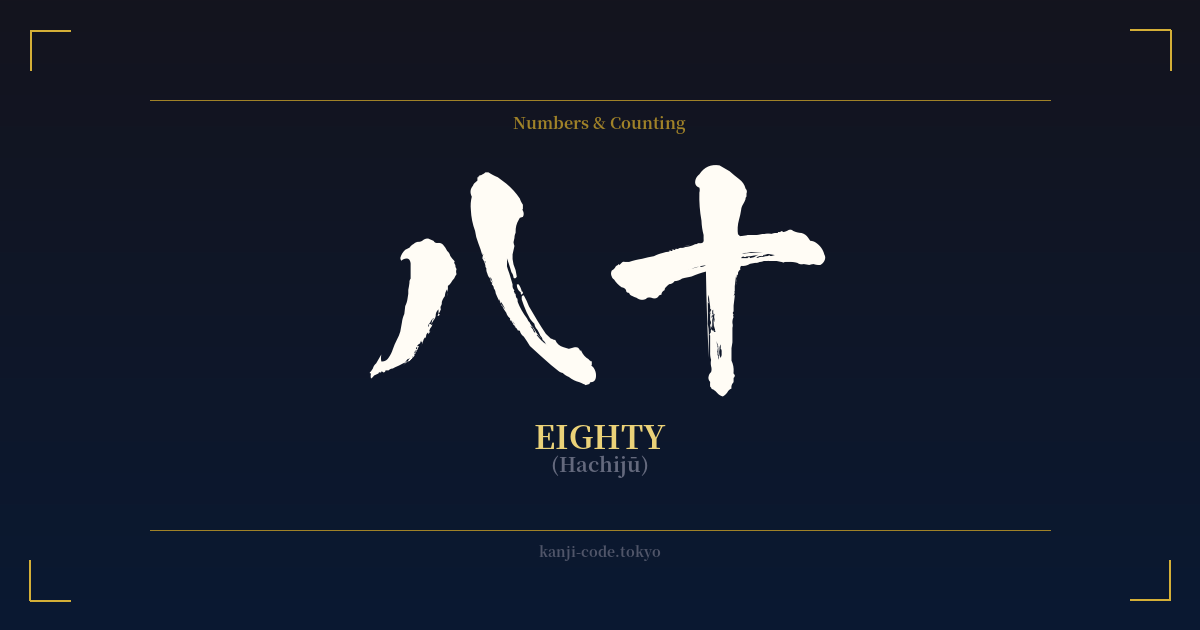
✍️ 八十 (Hachijū) — Cultural Context
The kanji word 八十 (Hachijū) is the Japanese term for the number eighty. Its construction is a perfect example of the logical, multiplicative nature of the Japanese numbering system. It is composed of the character for eight, 八 (hachi), followed by the character for ten, 十 (jū). In essence, it reads as "eight tens," or 8 x 10, equaling eighty.
While the number itself is straightforward, its components carry their own cultural weight. The character 八 (hachi) is considered a lucky number in Japan. This is due to its shape, which widens at the bottom, a form known as 'suehirogari' (末広がり). This shape symbolizes growth, expansion, and ever-increasing prosperity, making the number eight a highly auspicious figure in business, gift-giving, and celebrations.
The most significant cultural touchstone for the number eighty is the 80th birthday celebration, known as 'sanju' (傘寿). This term is a clever play on words. The traditional character for umbrella, 傘 (kasa or san), can be informally abbreviated in calligraphy as 仐. This simplified form visually appears to be composed of the characters for eight (八) and ten (十) stacked together. Therefore, the "umbrella age" became a poetic and widely recognized name for celebrating one's 80th year, a milestone of longevity and experience.
This celebration is part of a larger tradition of honoring age in Japan, known as 'chōju no iwai' (長寿の祝い), which includes other key birthdays like 'kanreki' (60th) and 'koki' (70th). For the 'sanju' celebration, the symbolic color is often yellow or gold, and family members gather to honor the elder with gifts and a special meal, celebrating their long and full life.
Beyond this specific celebration, 八十 appears in various contexts simply as a number, whether in dates, measurements, or historical texts. However, its primary cultural resonance for modern Japanese people is inextricably linked to the 'sanju' birthday, a testament to a life that has weathered many seasons, much like a sturdy umbrella.
🖌️ Font Styles for 八十
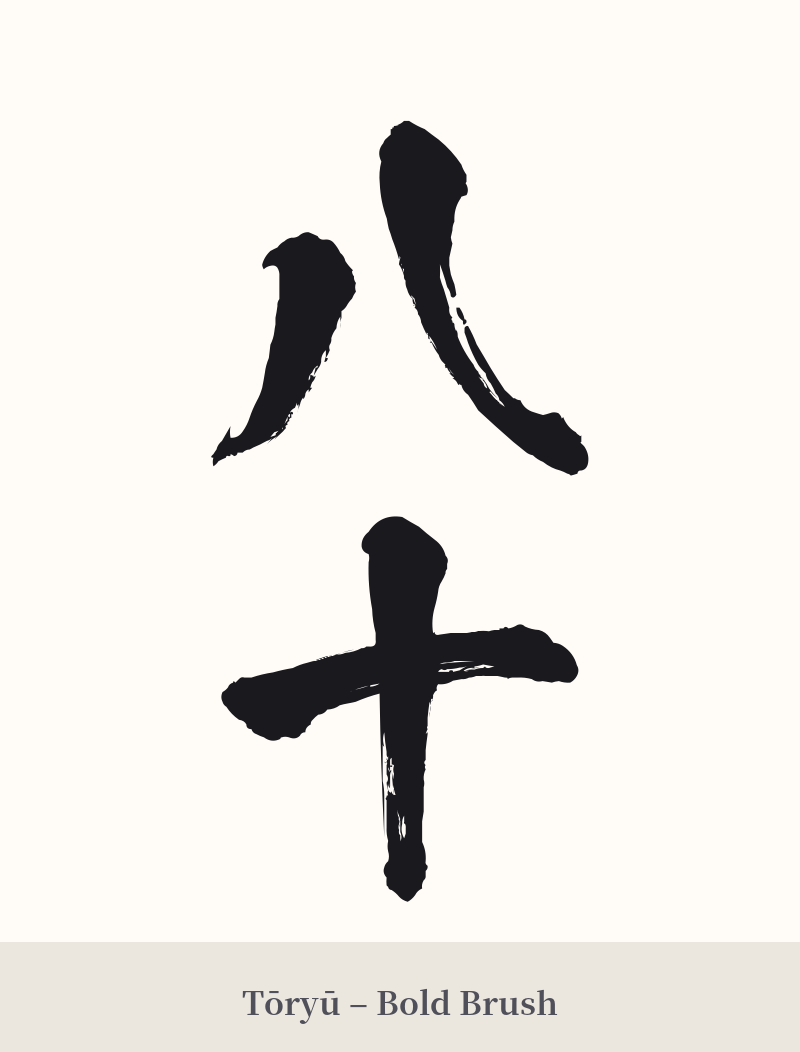
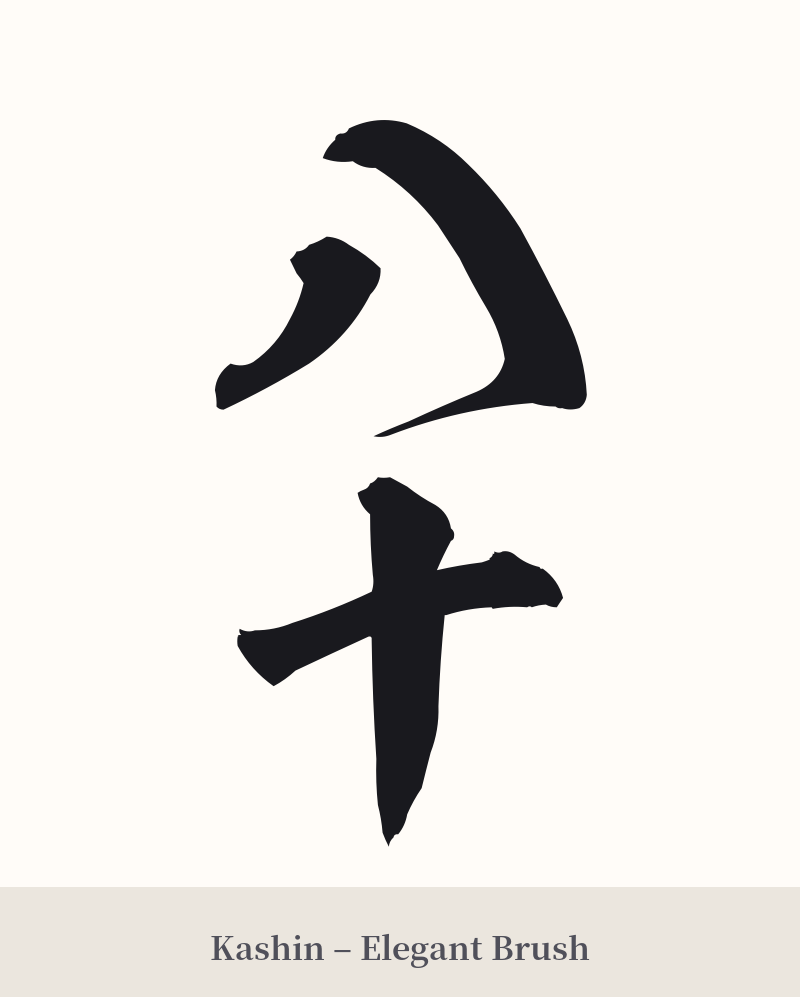
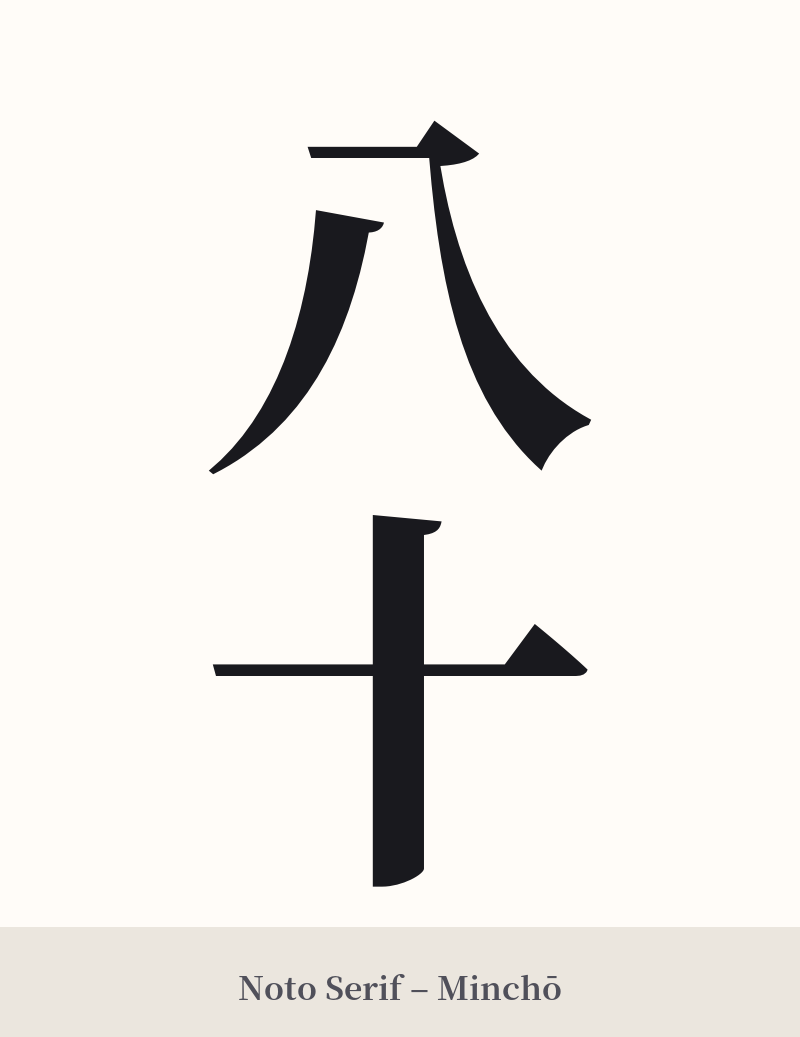
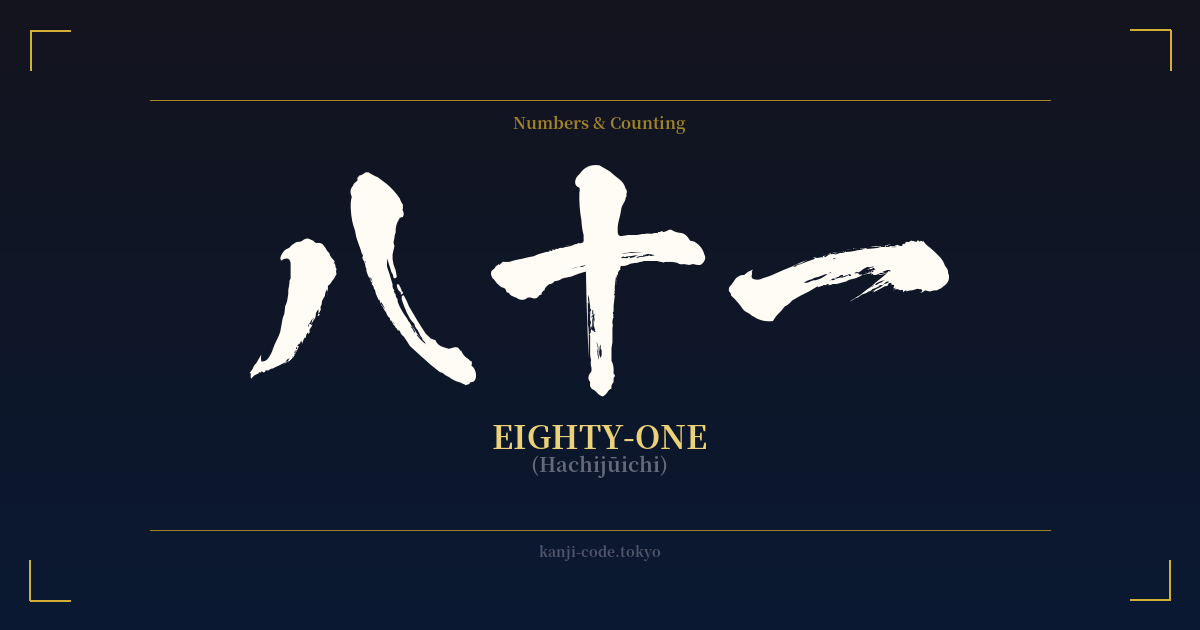
The same kanji can look dramatically different depending on the calligraphy style. Choose a font that matches the mood you want for your tattoo or design.
🎨 Tattoo Suitability
📐 Tattoo Design Guide
Due to its minimalist nature, 八十 works best in designs that emphasize its clean lines or integrate it into a larger, more personal concept.
– Placement: Its simplicity lends itself to smaller, more discreet placements. Consider the wrist, inner arm, ankle, or behind the ear. It can also be placed vertically along the spine or forearm.
– Style: A bold, angular 'Kaisho' (block script) font will emphasize its simple geometry and modern feel. For a more artistic and less literal look, a flowing 'Sosho' (cursive script) can connect the two simple characters into a single, elegant brushstroke.
– Visual Tips: To add more meaning, consider combining 八十 with another visual element. For an 80th birthday tribute, it could be paired with an image of an umbrella (傘) to evoke 'sanju'. It can also be incorporated as a small detail within a larger piece, such as a date on a scroll or a number on a jersey, to anchor the design in a personal memory.
Comments