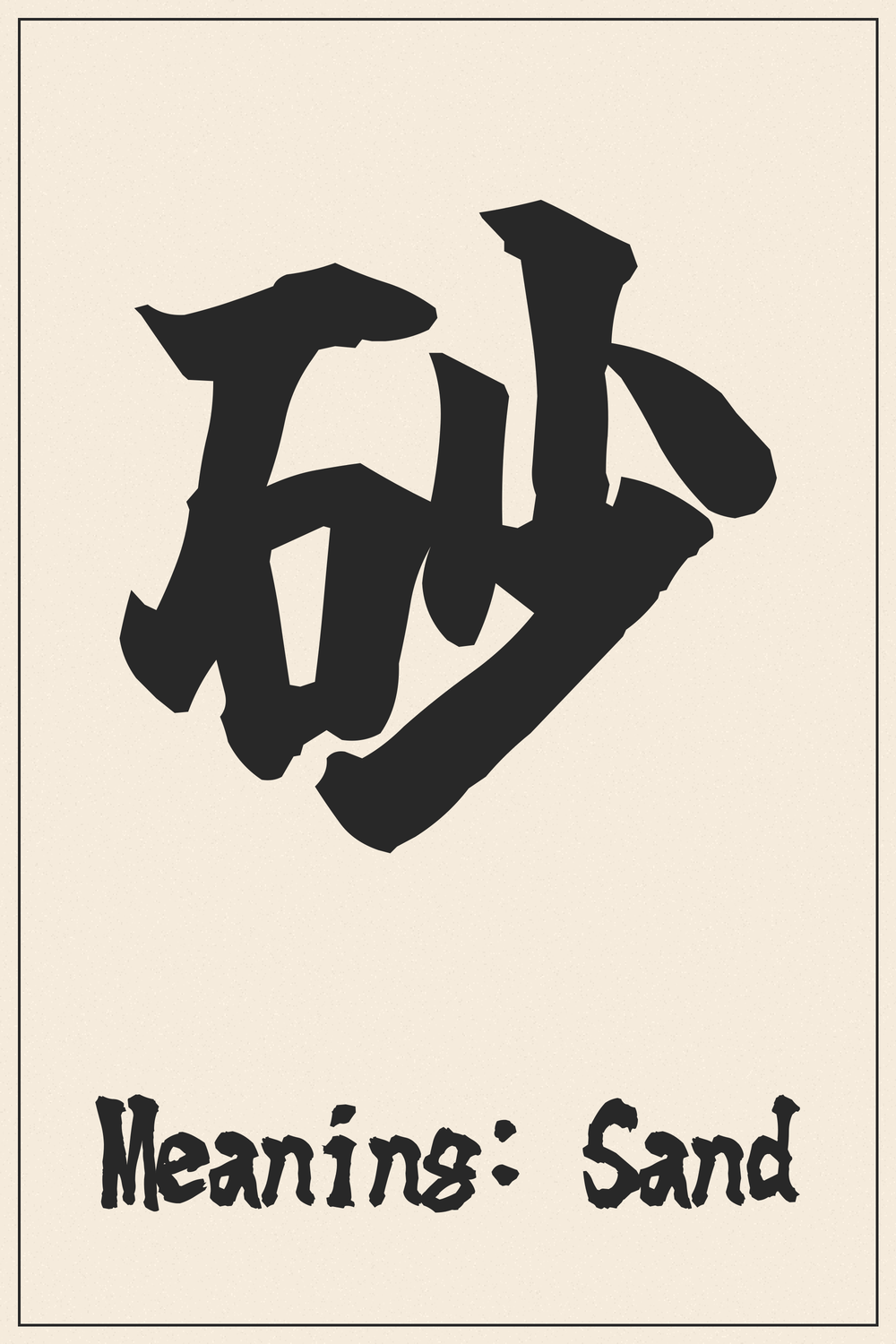
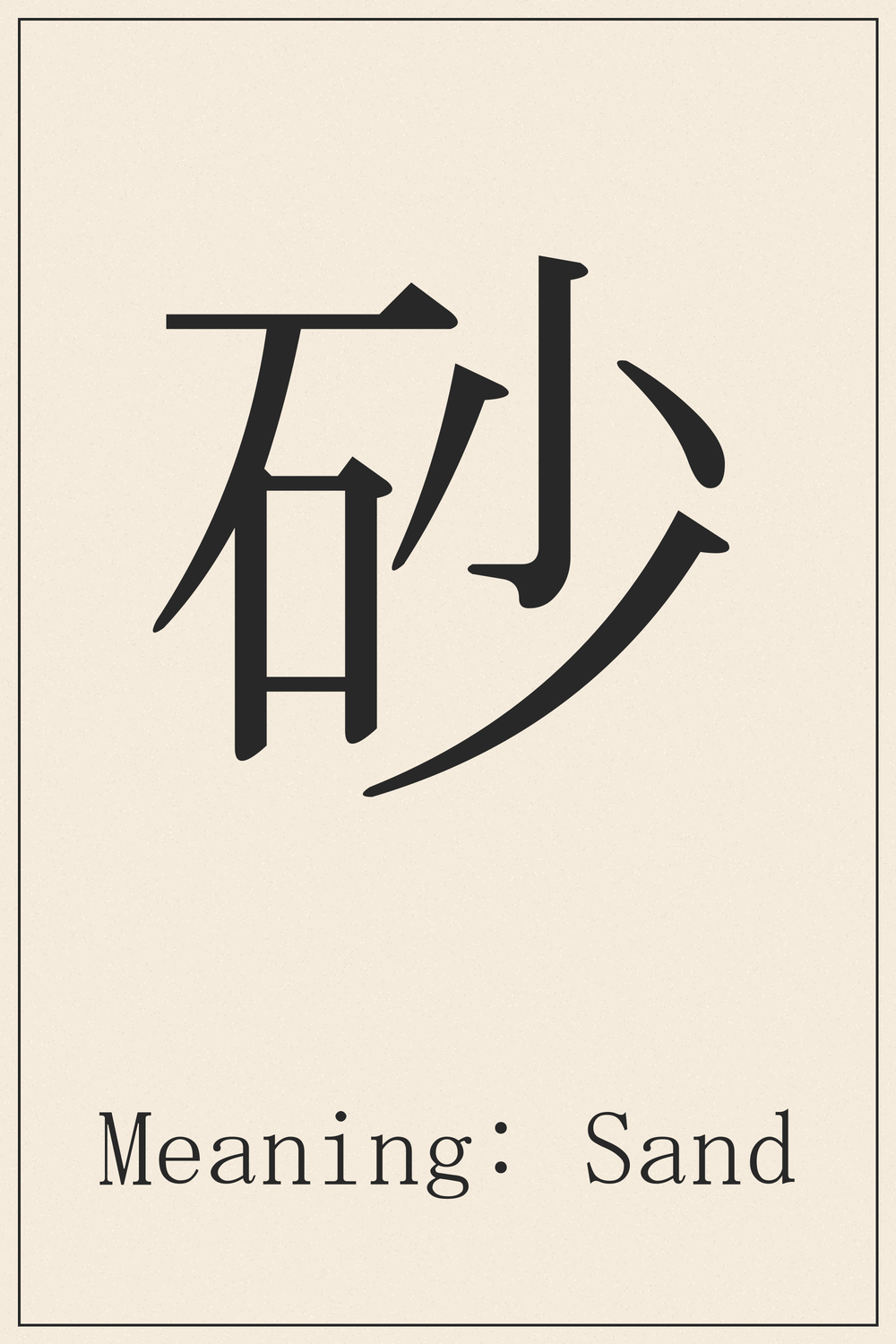
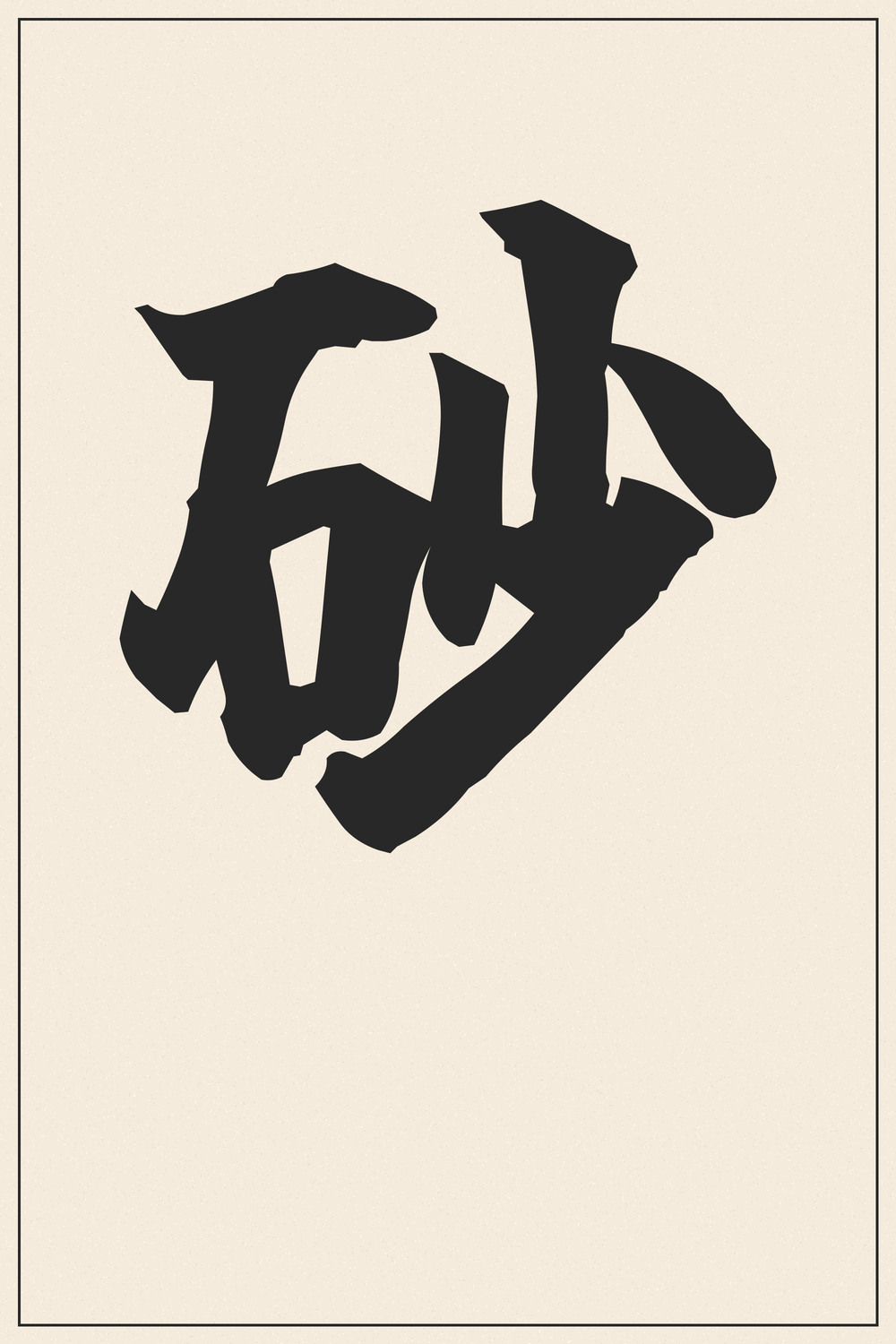
Sand, seemingly simple, holds profound meanings of time, erosion, and the countless small elements that form the vast. This kanji captures that delicate yet powerful essence.
The atmosphere of a Kanji character changes dramatically depending on the font style. A character that looks elegant in a brush style might look bold and modern in a different font.
Recommendation:
Since a tattoo is permanent, we strongly recommend comparing various font styles beyond what is shown here. Use our designs as a trusted reference for the correct structure, but feel free to explore different artistic variations to find the perfect match for your vision.
The Deep Meaning Behind 砂
The kanji 砂 is a phono-semantic compound. It combines the radical 石 (ishi), meaning “stone” or “rock,” with 少 (shō), meaning “few,” “little,” or “small.” Together, these components graphically represent “small stones” or “grains of rock,” directly conveying the meaning of sand.
In Japanese culture, sand is often associated with transience (諸行無常 shogyō mujō) and the impermanence of life, notably seen in Zen gardens (枯山水 karesansui) where raked sand represents water or abstract landscapes, symbolizing a vast, contemplative space. It also represents a multitude of small, individual parts forming a greater whole, like “grains of sand on a beach.”
Kanji Breakdown
The character 砂 is a fascinating example of how components combine to create a precise meaning.
Meaning: Stone, rock.
Meaning: Few, little, small.
Conclusion
The kanji 砂 beautifully encapsulates the essence of sand: countless tiny particles derived from stone, symbolizing both the infinite and the ephemeral. It speaks to the beauty of natural erosion and the formation of vast landscapes from humble beginnings.
For those drawn to the quiet power of nature, the transient beauty of existence, or the strength found in collective smallness, a tattoo of 砂 can be a subtle yet meaningful choice. Its simplicity ensures a clean and elegant design.
Comments