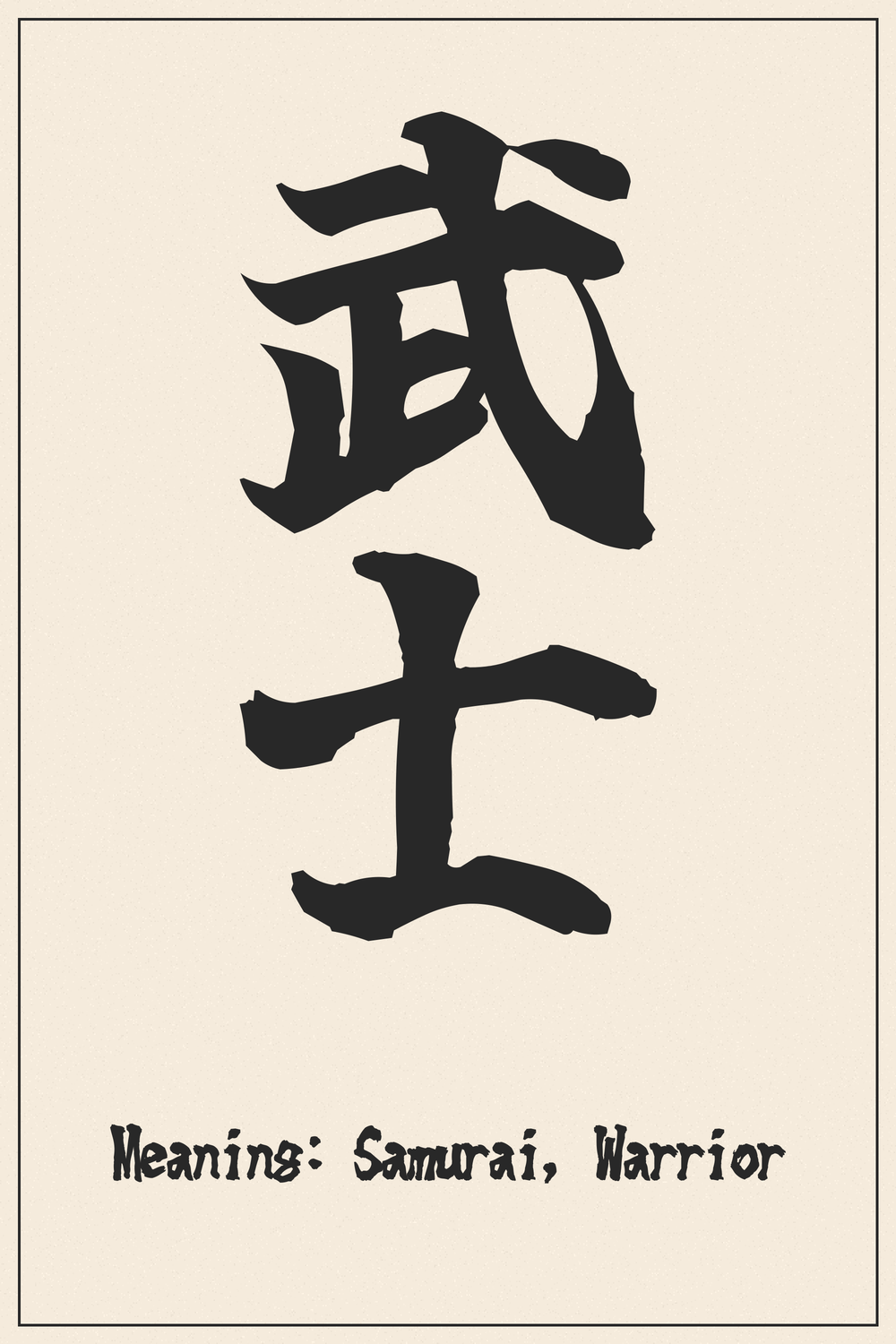
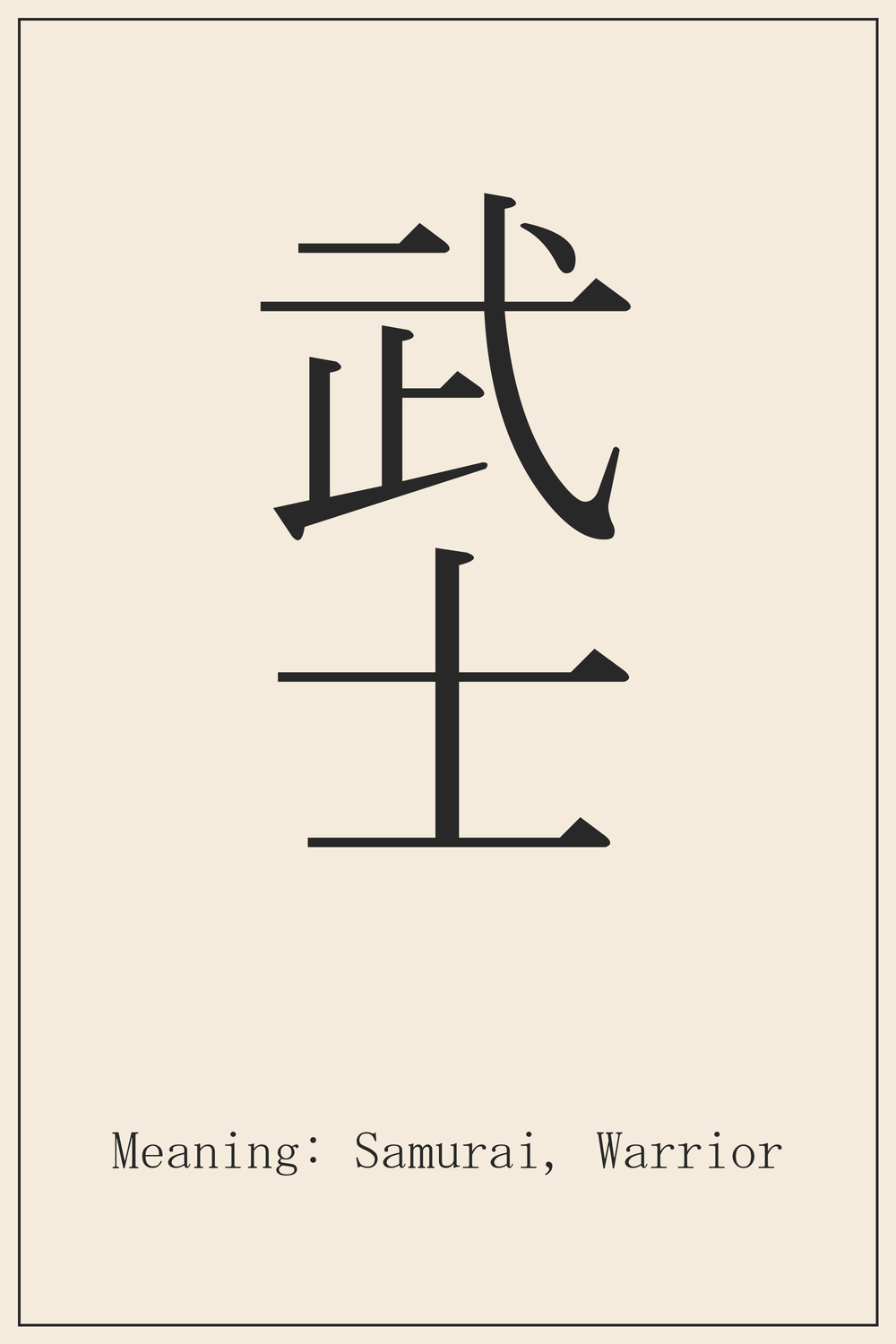
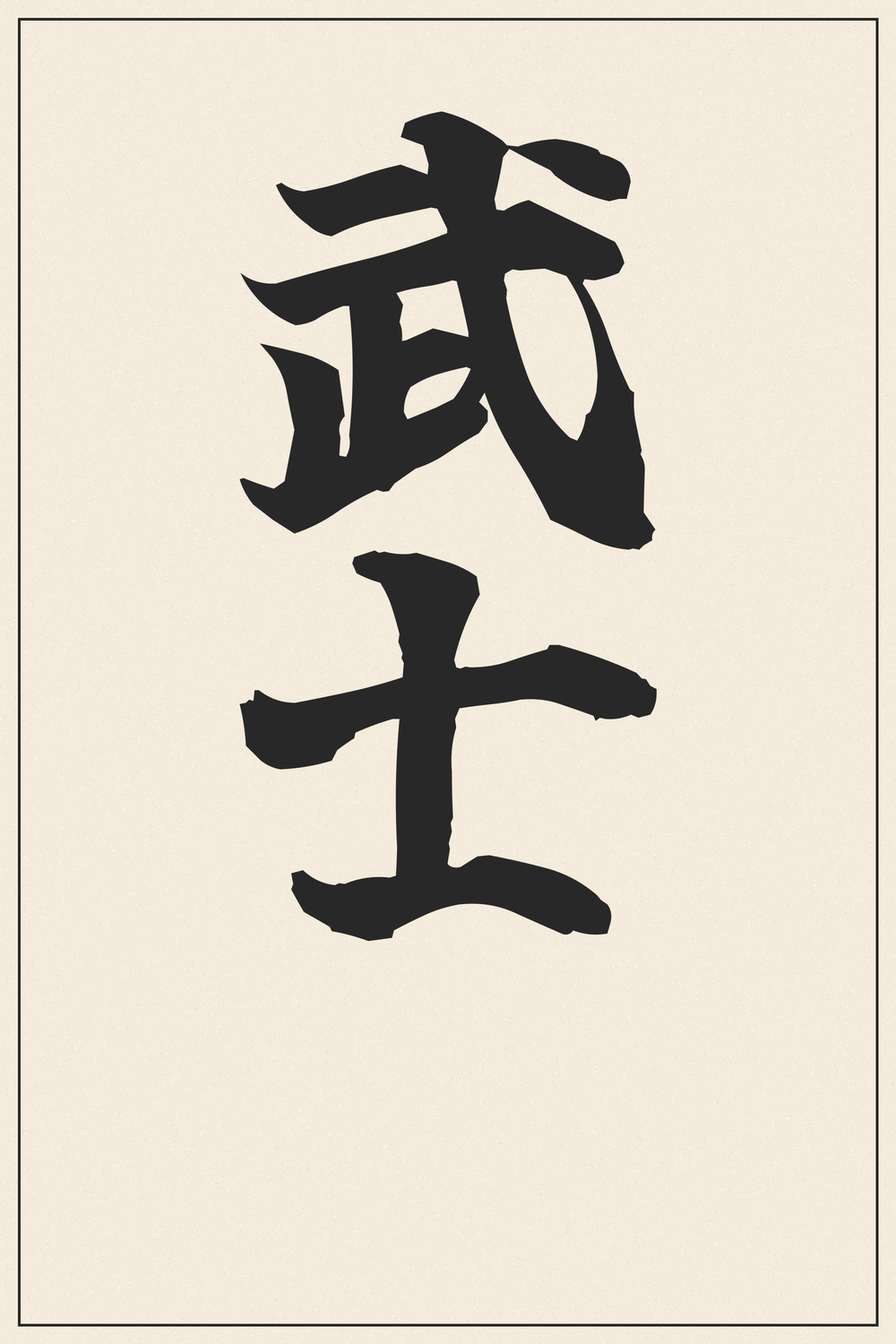
The Kanji 武士, pronounced Bushi, evokes the enduring spirit of Japan’s legendary warriors. It’s a powerful emblem of dedication, discipline, and unwavering loyalty.
The atmosphere of a Kanji character changes dramatically depending on the font style. A character that looks elegant in a brush style might look bold and modern in a different font.
Recommendation:
Since a tattoo is permanent, we strongly recommend comparing various font styles beyond what is shown here. Use our designs as a trusted reference for the correct structure, but feel free to explore different artistic variations to find the perfect match for your vision.
The Deep Meaning Behind 武士
The term “Bushi” is a compound word formed from two distinct Kanji: 武 (Bu) and 士 (Shi). 武 fundamentally signifies military prowess, martial arts, or the cessation of conflict. 士 denotes a gentleman, scholar, or a member of the gentry class, often implying a person of refined skill and intellect.
Together, 武士 encapsulated the ideal of the samurai: not merely a fighter, but an educated warrior guided by the strict moral code of Bushido. This code emphasized virtues such as loyalty, honor, courage, rectitude, and benevolence, making “Bushi” a symbol of a comprehensive way of life rather than just a profession.
Kanji Breakdown
The term 武士 combines two powerful characters, each contributing to its profound meaning.
Meaning: Military, Martial, Warrior
Explanation: This character is composed of 戈 (hoko), meaning ‘halberd’ or ‘weapon,’ and 止 (tomaru), meaning ‘to stop.’ While often interpreted as ‘military’ or ‘martial,’ a deeper philosophical interpretation suggests ‘to stop the spear’ or ‘to cease conflict,’ embodying the idea that true military strength is used to maintain peace.
Meaning: Gentleman, Scholar, Warrior
Explanation: 士 originally referred to a class of educated noblemen or scholars. In the context of 武士, it elevates the warrior from a mere combatant to a person of intellect, moral standing, and social influence, embodying the refined and cultured aspects of the samurai ideal.
Conclusion
The Kanji 武士 represents far more than just a soldier; it encapsulates the disciplined life, honor, and profound moral code of the samurai. It is a timeless symbol of strength, integrity, and the pursuit of excellence in both martial and intellectual endeavors.
Choosing 武士 for a tattoo is a declaration of respect for these virtues and a personal commitment to living with purpose and honor. Its classic aesthetic and powerful historical resonance make it an excellent and meaningful choice for a permanent emblem.
Comments