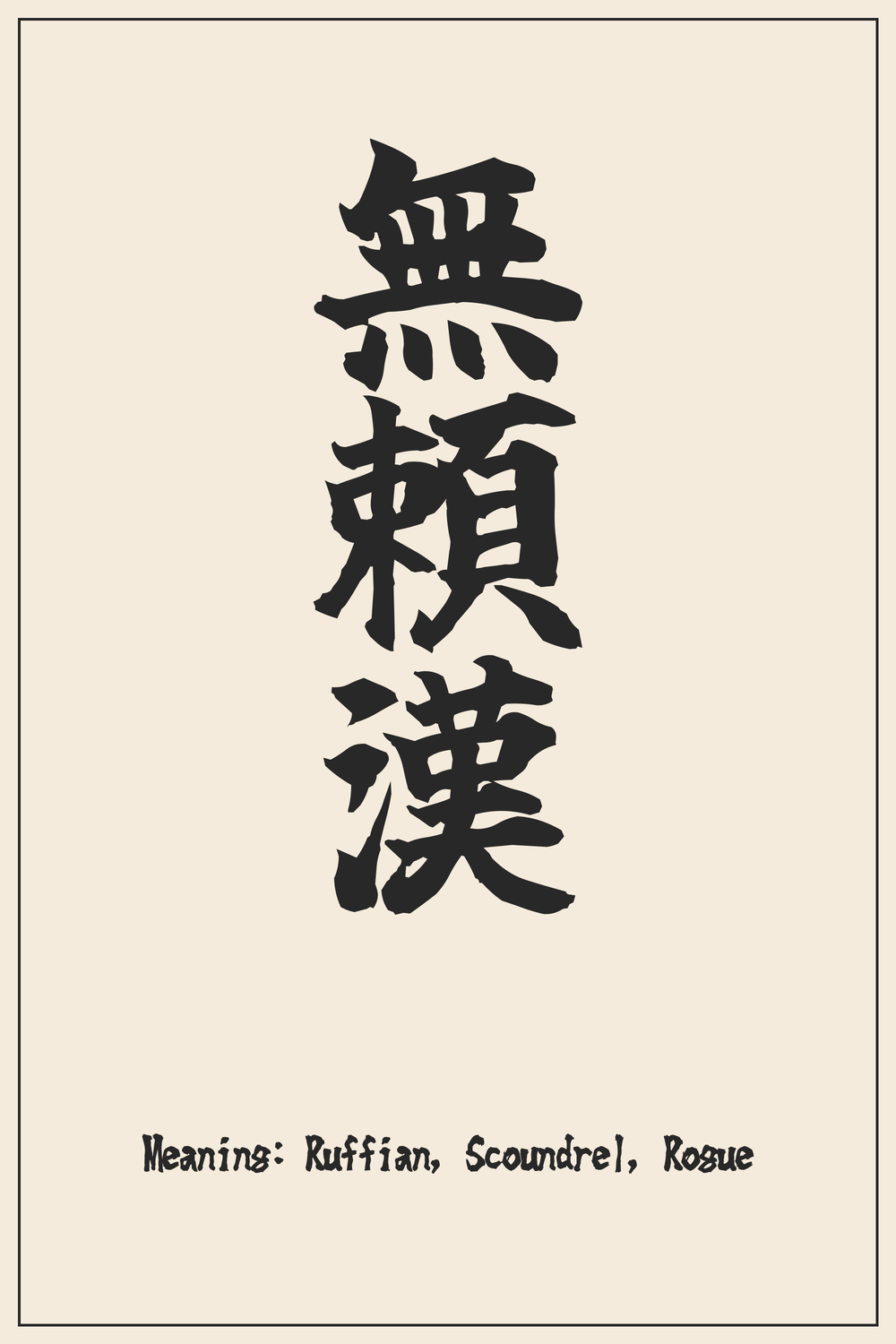
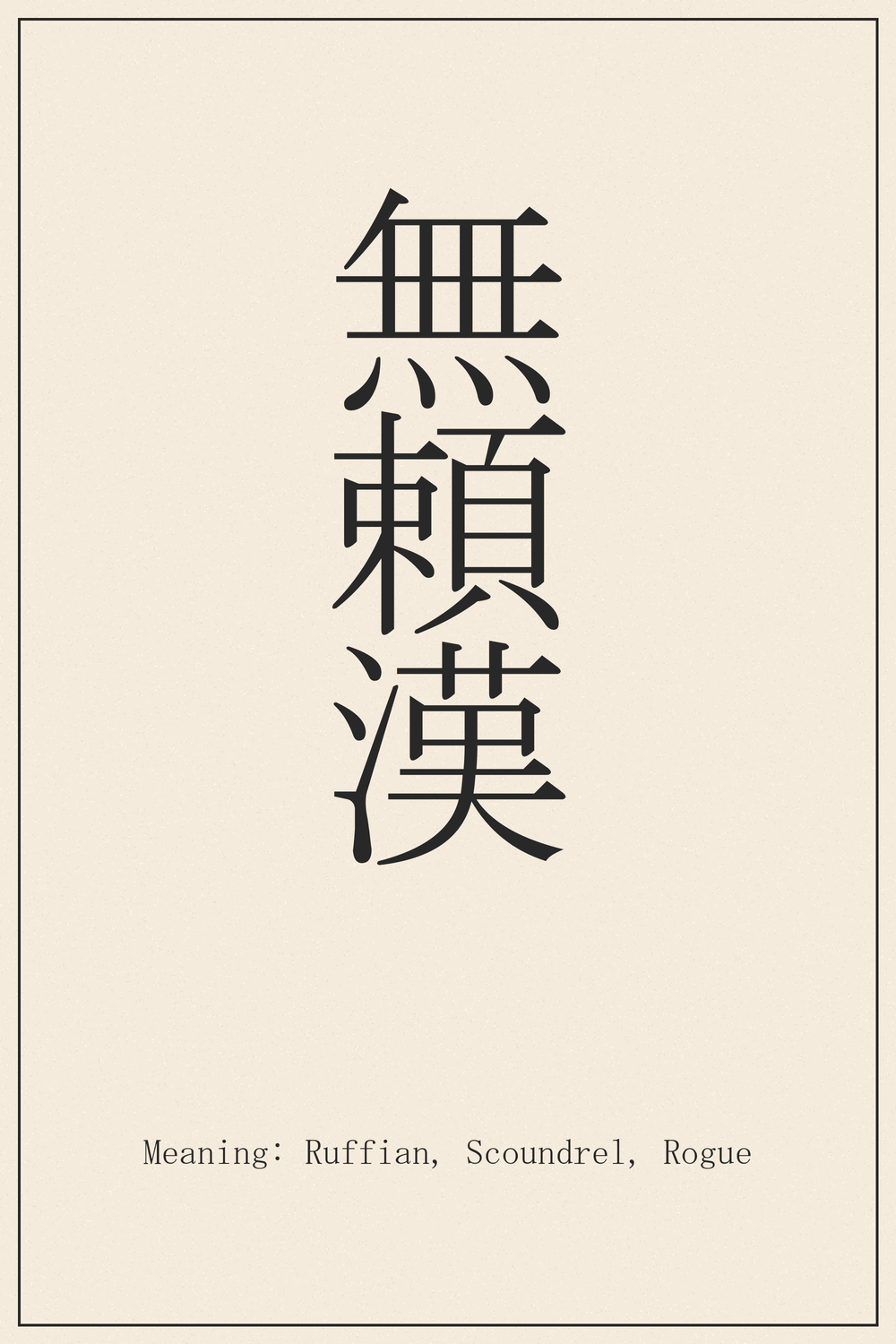
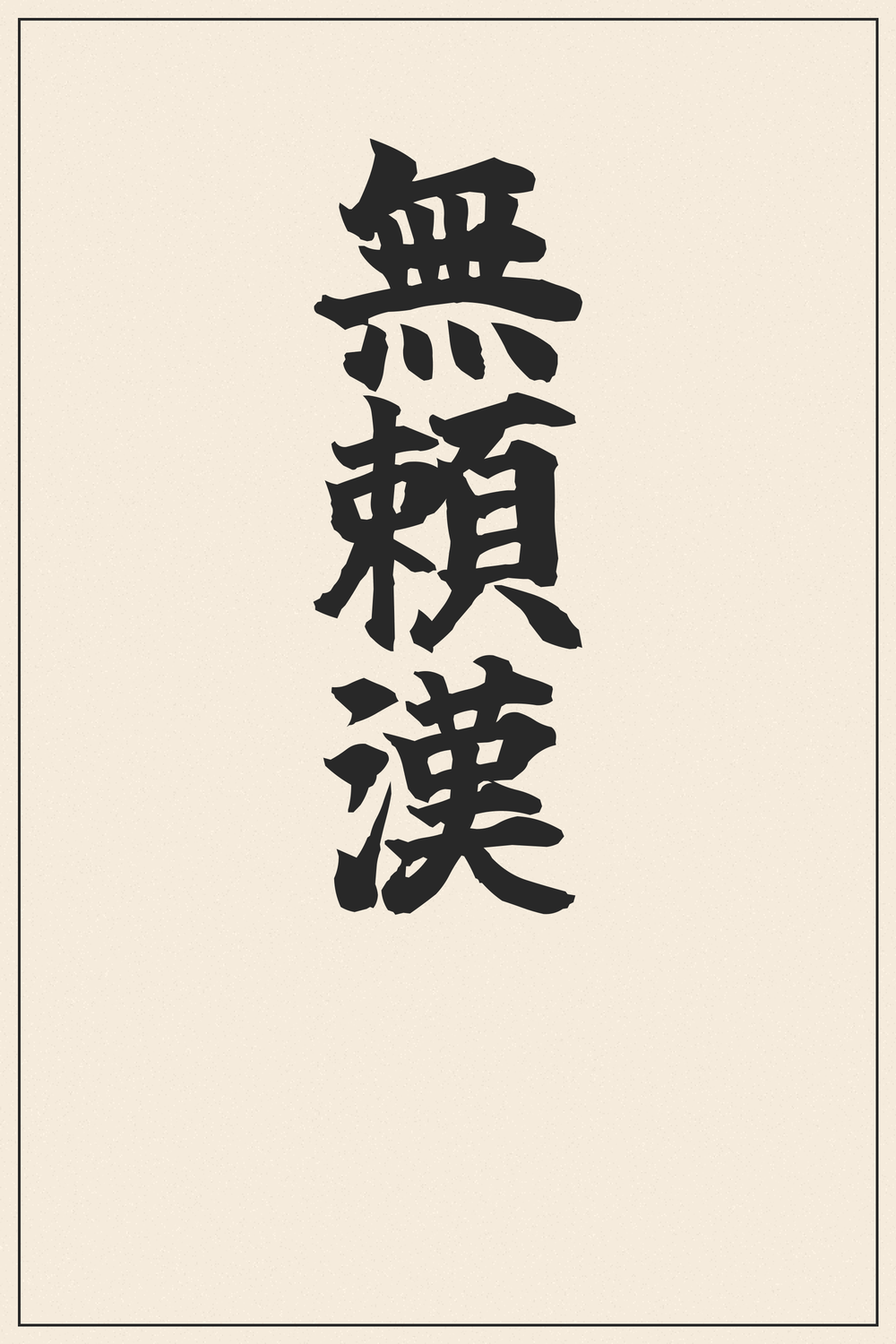
The Kanji compound 無頼漢 (Burai-kan) embodies the spirit of a defiant rogue, an individual who lives by their own rules. It’s a powerful statement for those who walk an unconventional path.
The atmosphere of a Kanji character changes dramatically depending on the font style. A character that looks elegant in a brush style might look bold and modern in a different font.
Recommendation:
Since a tattoo is permanent, we strongly recommend comparing various font styles beyond what is shown here. Use our designs as a trusted reference for the correct structure, but feel free to explore different artistic variations to find the perfect match for your vision.
The Deep Meaning Behind 無頼漢
The term 無頼漢 (Burai-kan) literally translates to ‘without reliance man,’ encapsulating the essence of an individual who trusts no one but themselves and lives outside societal norms. This powerful expression speaks to a spirit of fierce independence and a refusal to conform.
In Japanese culture, the ‘Burai-kan’ archetype often appears in literature and film, representing anti-heroes, wandering samurai (ronin), or figures in yakuza narratives. These characters, despite their lawless path, often possess a compelling sense of freedom, loyalty to their own code, and sometimes a tragic nobility, making them complex and intriguing figures.
Kanji Breakdown
The compound 無頼漢 is composed of three significant Kanji, each contributing to its profound meaning:
Meaning: Nothingness, without, not. This character sets the tone, indicating a lack of something, in this case, reliance or conventional constraints.
Meaning: To rely, depend, trust. In combination with 無, it signifies ‘without reliance,’ highlighting self-sufficiency and a defiant spirit.
Meaning: Man, male. This character solidifies the identity, referring to a strong, often rugged and resolute individual.
Conclusion
The Kanji compound 無頼漢 is far more than just ‘scoundrel’; it’s a profound emblem of a fiercely independent individual, an anti-hero who forges their own path. It represents defiance, self-reliance, and an untamed spirit that refuses to be bound by conventional expectations.
For a tattoo, 無頼漢 is an excellent choice for those who resonate with its rebellious and strong meaning. Its intricate composition demands a thoughtful approach to size to ensure clarity and longevity, making it a striking and meaningful design for personal expression.
Comments