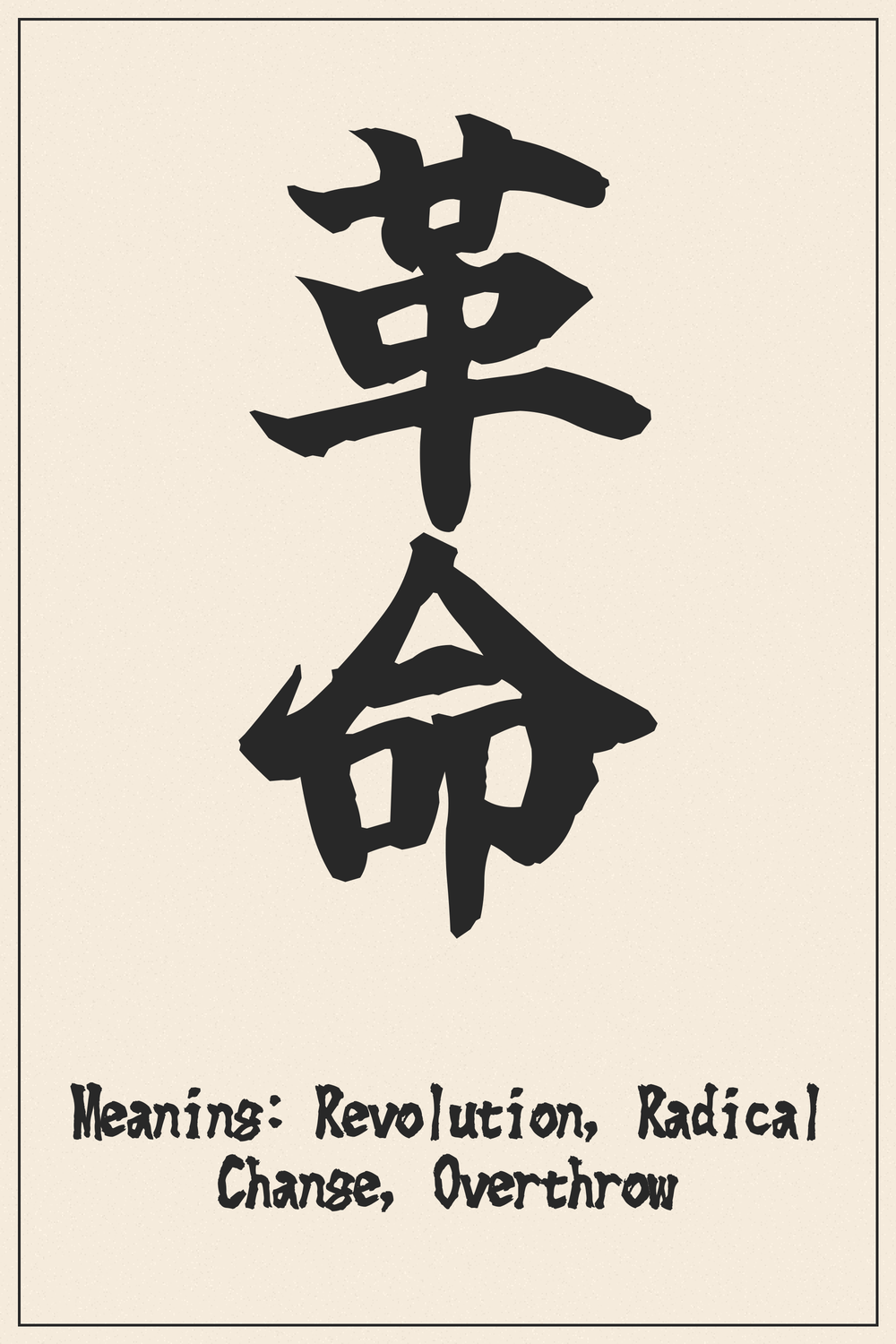
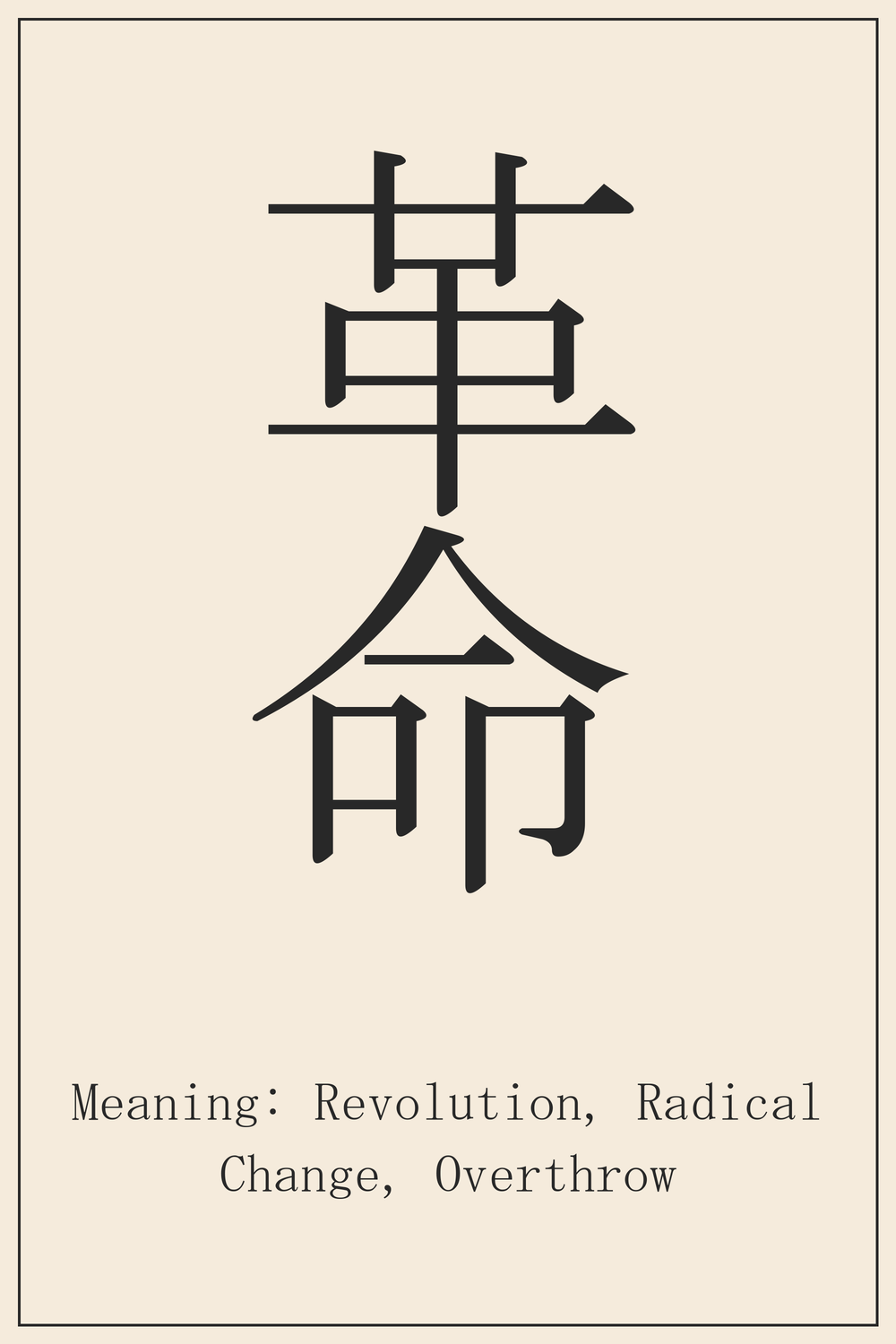
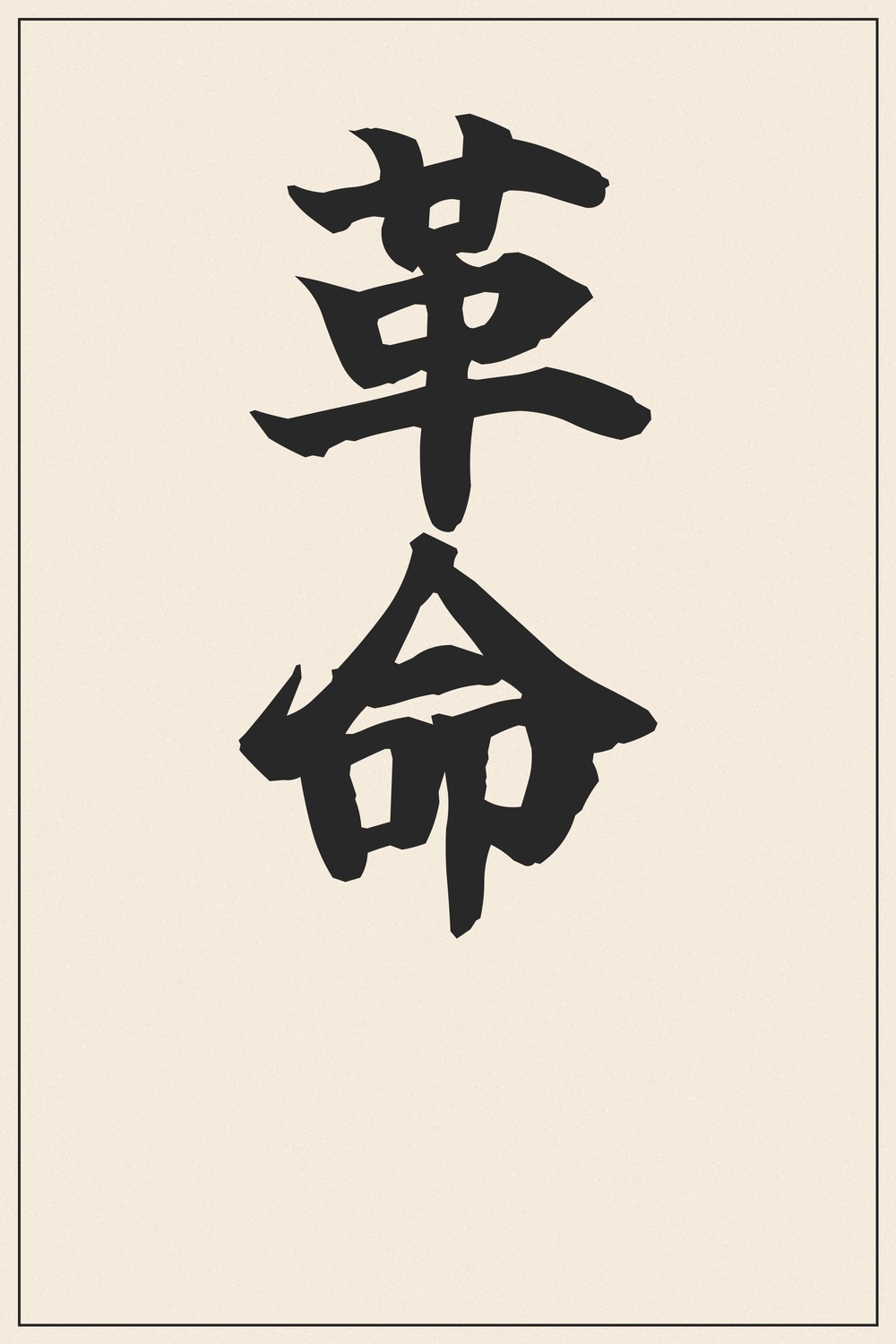
The Kanji 革命 (Kakumei) encapsulates the profound essence of revolution, signifying a complete and often dramatic shift in power, structure, or destiny. It speaks to the courage required to forge a new path and redefine existence.
The atmosphere of a Kanji character changes dramatically depending on the font style. A character that looks elegant in a brush style might look bold and modern in a different font.
Recommendation:
Since a tattoo is permanent, we strongly recommend comparing various font styles beyond what is shown here. Use our designs as a trusted reference for the correct structure, but feel free to explore different artistic variations to find the perfect match for your vision.
The Deep Meaning Behind 革命
The term 革命 (Kakumei) profoundly captures the essence of a revolution, a radical and often swift transformation of established orders. It signifies more than mere change; it implies a complete overturning and renewal, a fundamental shift in the course of history or personal destiny.
Historically, 革命 has been used in Japan to denote significant political and social upheavals, reflecting a deep-seated philosophical understanding that major change often requires a complete overhaul rather than incremental adjustments. It carries connotations of breaking free from stagnation and ushering in a new era.
Kanji Breakdown
The compound 革命 is formed by two powerful individual characters, each contributing significantly to its overall meaning of profound change and destiny.
Meaning: Reform, Leather, Change. The kanji 革 originally depicted an animal hide, stretched and treated. This imagery evolved to signify “to reform,” “to change,” or “to shed” (like an old skin), embodying a process of thorough transformation and renewal.
Meaning: Life, fate, command, order. Originally, this character depicted a person kneeling, receiving orders from a superior, highlighting the act of being commanded or given a directive.
Conclusion
Choosing 革命 for a tattoo signifies an embrace of radical change, a commitment to redefining one’s path, or a tribute to the revolutionary spirit. It speaks to resilience, vision, and the courage to break away from conventions to forge a new reality.
This powerful kanji serves as a constant reminder of the potential within oneself to initiate profound transformations and to command one’s own destiny, making it a truly inspiring and visually striking tattoo choice for those who champion change.
Comments