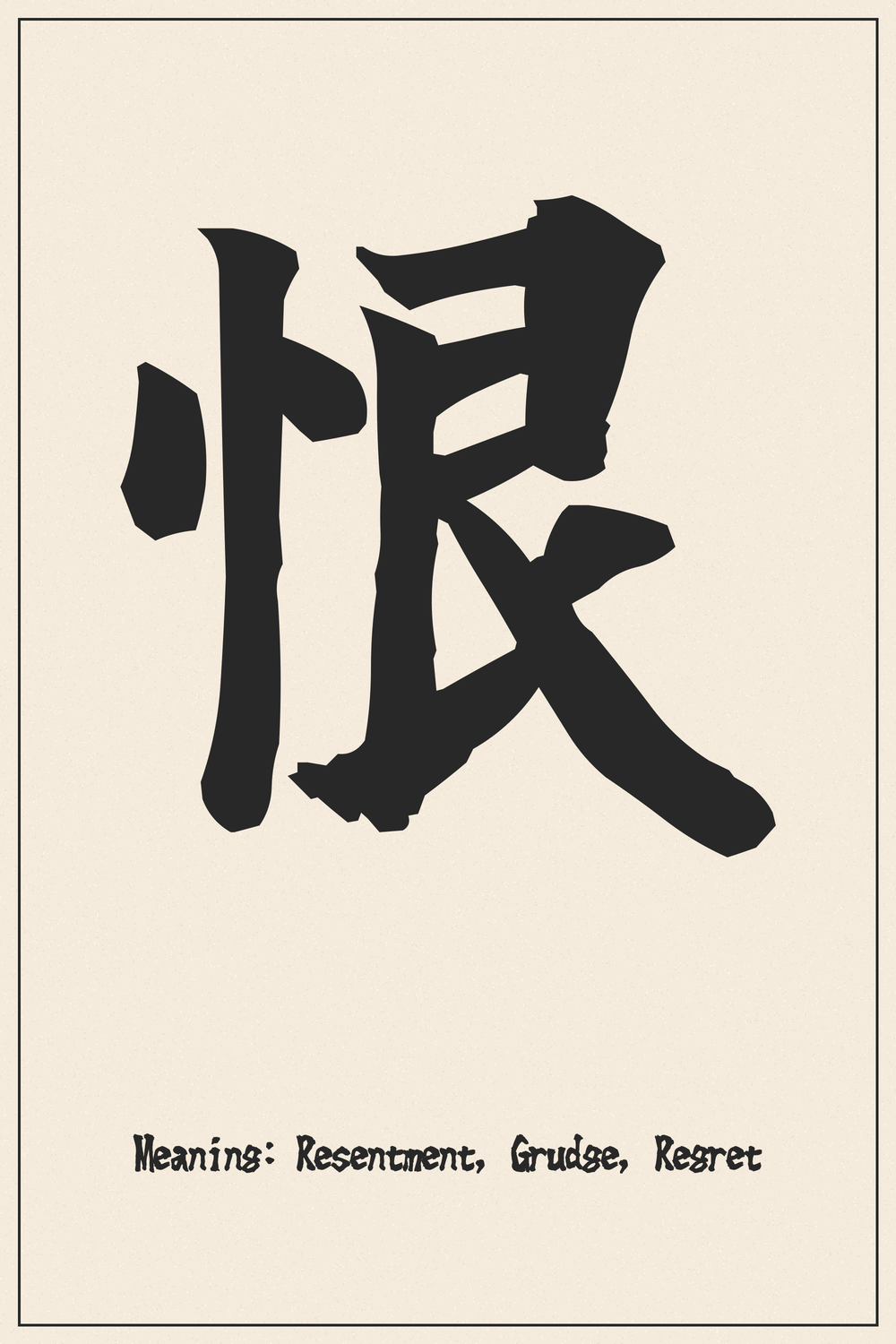
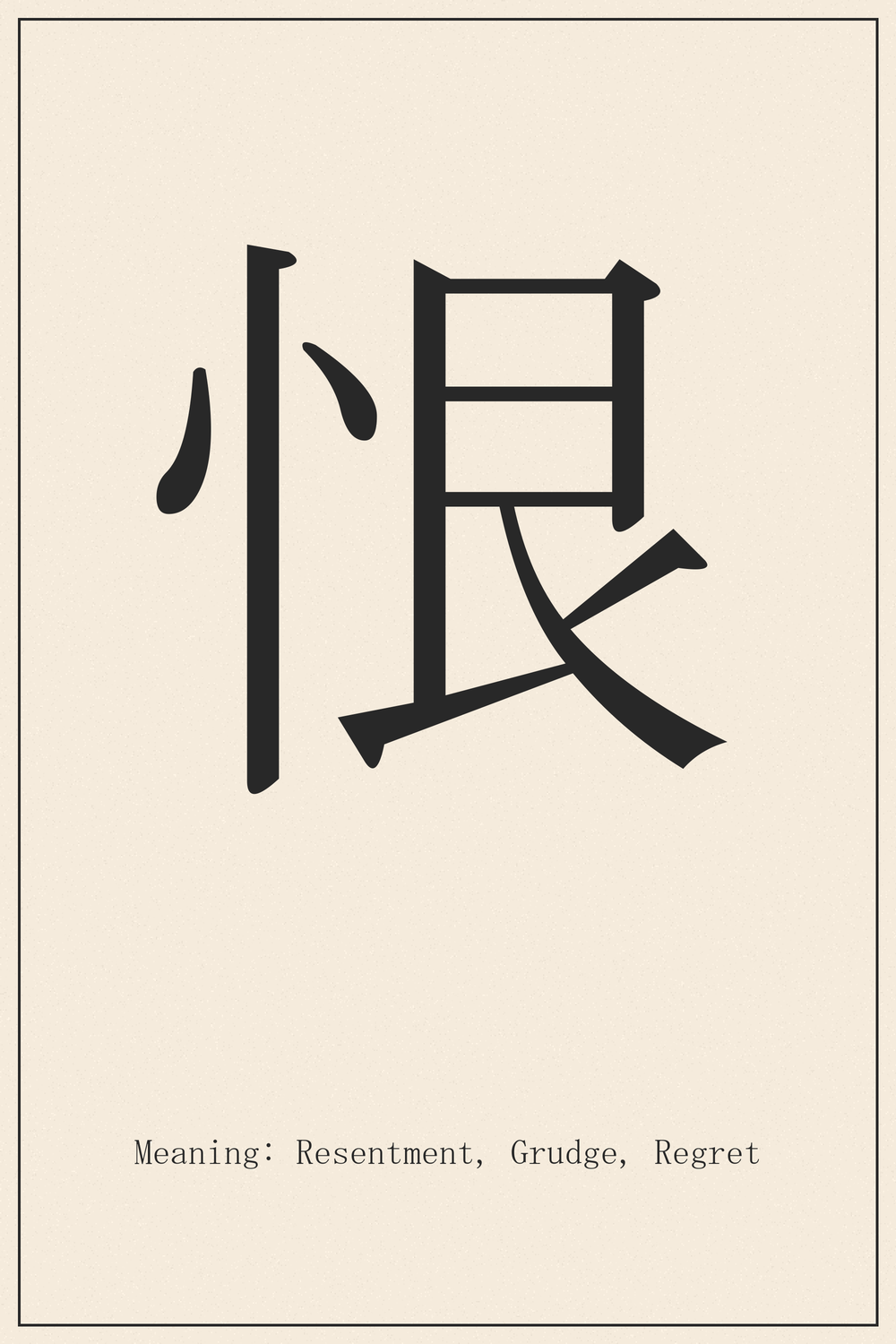
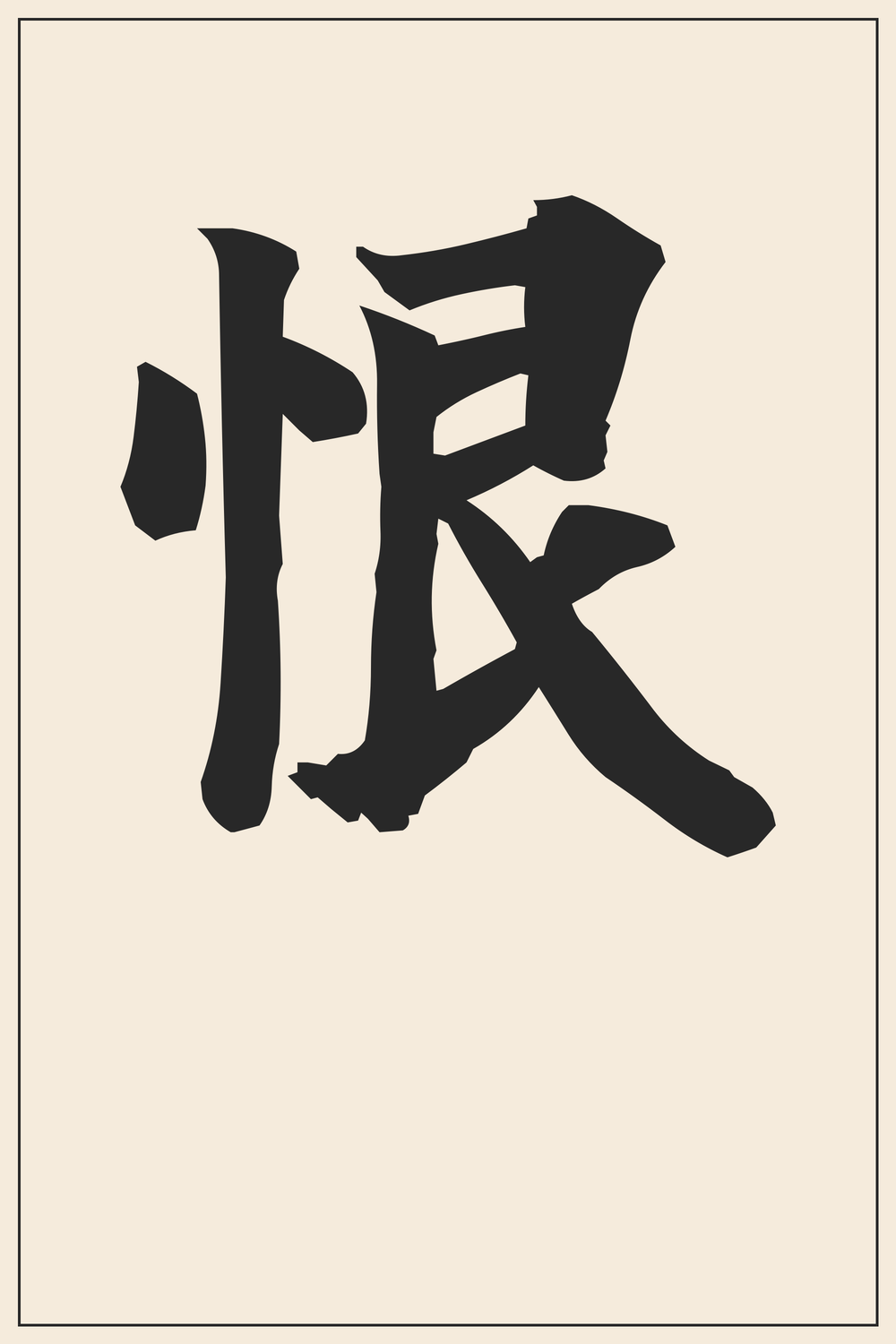
The Kanji 恨 encapsulates a profound and often enduring human emotion. It delves into the depths of the heart where powerful sentiments of grievance and bitterness reside.
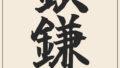
The atmosphere of a Kanji character changes dramatically depending on the font style. A character that looks elegant in a brush style might look bold and modern in a different font.
Recommendation:
Since a tattoo is permanent, we strongly recommend comparing various font styles beyond what is shown here. Use our designs as a trusted reference for the correct structure, but feel free to explore different artistic variations to find the perfect match for your vision.
The Deep Meaning Behind 恨
The Kanji 恨 is an evocative character that articulates deep-seated negative emotions. Its etymology combines components that suggest a profound and persistent state of mind, distinguishing it from fleeting anger or frustration.
In Japanese culture, 恨 (urami) signifies a grievance that is nurtured, a lingering bitterness that can sometimes be passed down through generations. It is a powerful emotion that speaks to a sense of injustice and can weigh heavily on the heart and mind.
Kanji Breakdown
The Kanji 恨 is composed of two primary elements that combine to convey its deep meaning.
Heart/Mind: This radical, kokoro, literally means ‘heart’ but extends its meaning to encompass the mind, spirit, and emotions. It grounds the Kanji’s meaning in human internal experience.
Stop/Resentment: This component, gon or kon, conveys a sense of stopping, difficulty, or being stuck. When combined with ‘heart’, it profoundly expresses the feeling of a ‘heart that is stuck’ in a state of bitterness or unresolved grievance.
Conclusion
The Kanji 恨 is a powerful symbol representing deep resentment, a persistent grudge, or profound regret. It speaks to the human capacity for holding onto powerful, negative emotions born from perceived injustices.
While a fascinating character for its etymological depth, its strong negative connotations make it generally inadvisable for a tattoo. Those seeking Kanji tattoos are typically advised to choose symbols that reflect positive aspirations, virtues, or personal strengths.
Comments