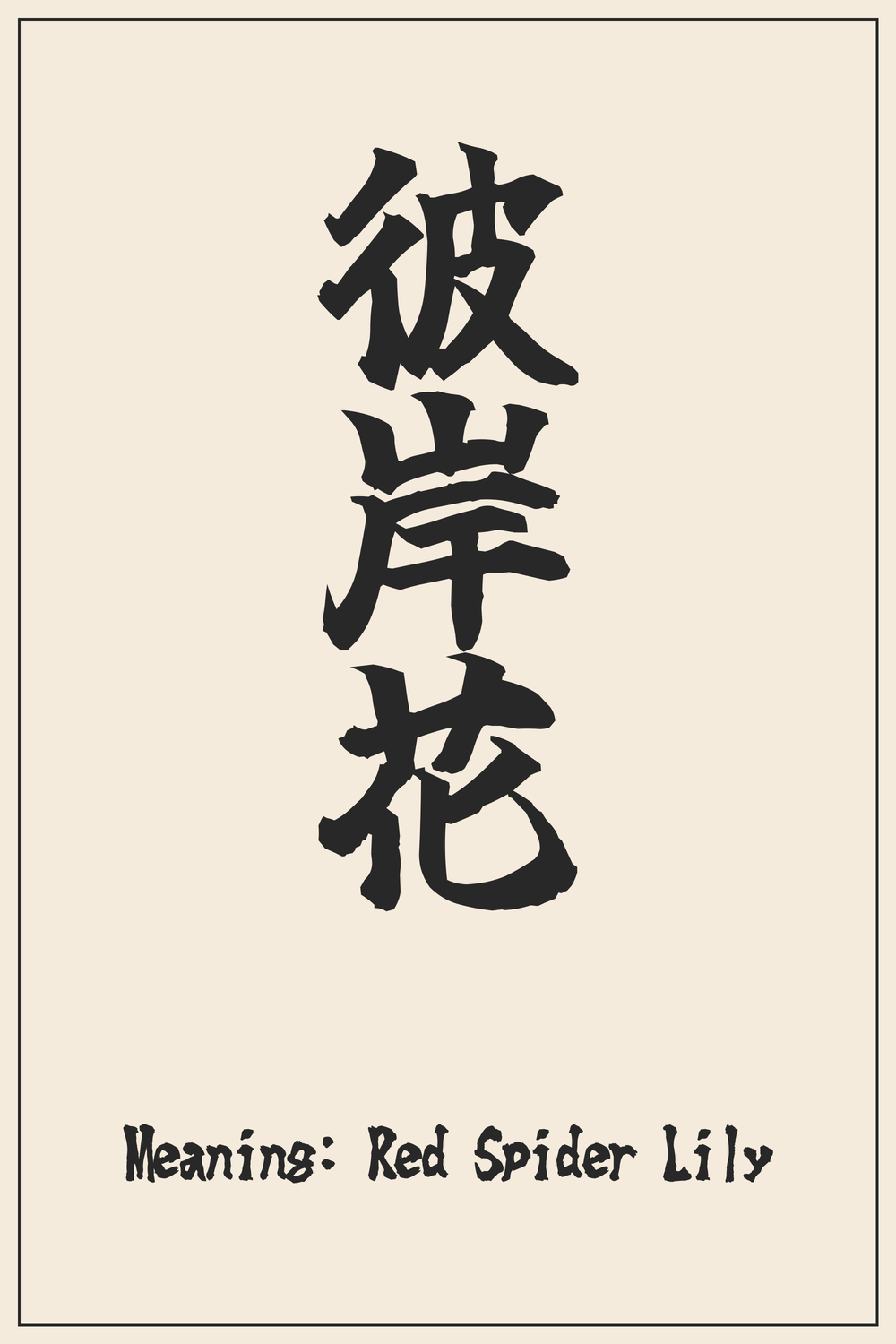
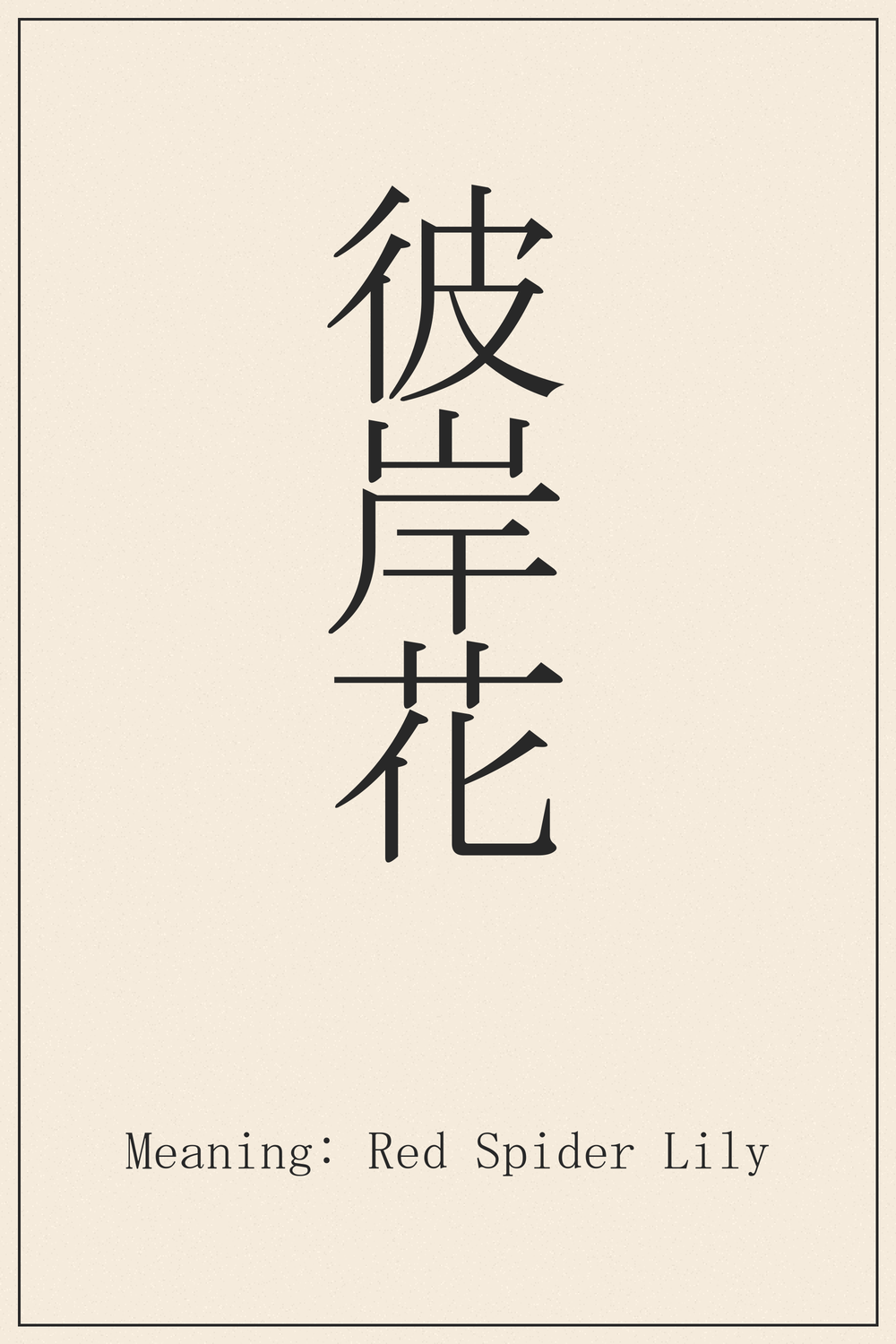
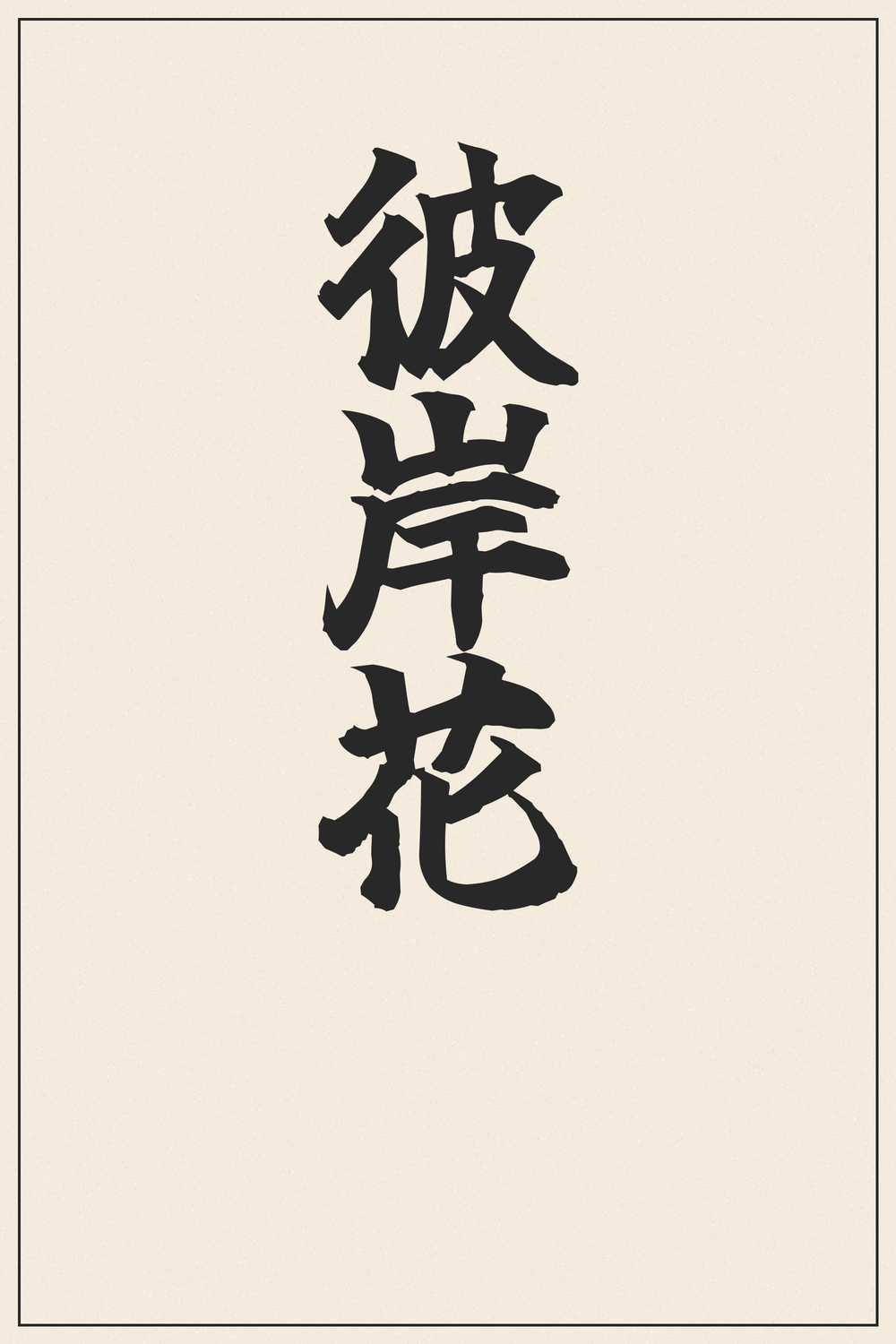
The Higanbana, or Red Spider Lily, is more than just a beautiful flower; it carries profound cultural and spiritual weight in Japan. Its striking appearance and transient bloom encapsulate themes of memory, passage, and the beauty found in life’s most poignant moments.
The atmosphere of a Kanji character changes dramatically depending on the font style. A character that looks elegant in a brush style might look bold and modern in a different font.
Recommendation:
Since a tattoo is permanent, we strongly recommend comparing various font styles beyond what is shown here. Use our designs as a trusted reference for the correct structure, but feel free to explore different artistic variations to find the perfect match for your vision.
The Deep Meaning Behind 彼岸花
The name 彼岸花 (Higanbana) directly translates to “flower of the Higan.” “Higan” (彼岸) is a Buddhist term referring to “the other shore,” symbolizing nirvana or the world of the dead. This period also coincides with the autumn equinox. The “花” (bana/hana) simply means “flower.”
Revered for its brilliant red blossoms that appear around the autumn equinox, the Higanbana is often associated with cemeteries and riverbanks. It symbolizes final goodbyes, lost memories, and is sometimes linked to the path taken by the deceased to the afterlife. Despite its melancholic associations, its sudden and vibrant bloom also represents the transient beauty of life and rebirth.
Kanji Breakdown
The profound meaning of Higanbana is beautifully encapsulated in its individual Kanji components.
Meaning: “That,” “he,” or “the other side.” The radical 彳 (gyōninben) signifies “walking” or “path,” hinting at distance or separation, aligning with the concept of “the other shore.”
Meaning: The character 岸 represents a “shore,” “bank,” or “coast.” Visually, it does not contain the symbol for water. Instead, it combines elements representing a high mountain (山) and a cliff (厂) with a component that signifies “dryness” or a “shield” (干). This paints a picture of a high, rocky cliff standing firm and dry against the water, acting as a shield for the land.
Meaning: “Flower.” The radical 艹 (kusa-kanmuri) indicates its plant origin, while the component 化 (ka) suggests “change” or “transformation,” perhaps alluding to the flower’s cyclical nature of bloom and decay.
Conclusion
The 彼岸花 is a profoundly symbolic Kanji, embodying themes of memory, transition, and the delicate balance between life and death. Its elegance is matched by its deep cultural roots, making it a poignant symbol of remembrance and the beauty of passing seasons.
Choosing 彼岸花 for a tattoo signifies an appreciation for both its striking beauty and its intricate symbolism. It serves as a personal emblem of connection to nature’s cycles and the enduring power of memory, a powerful statement etched in ink.
Comments