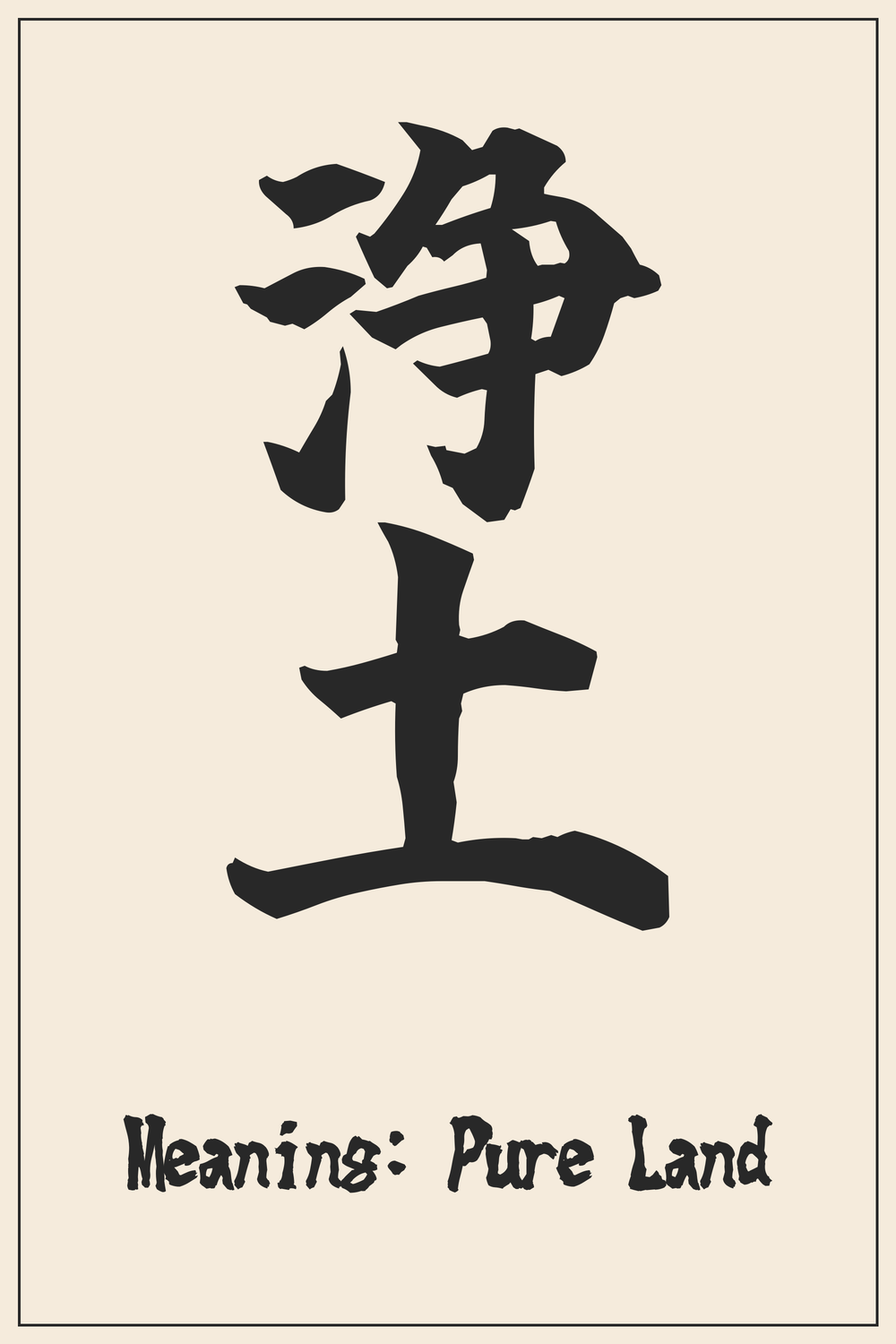
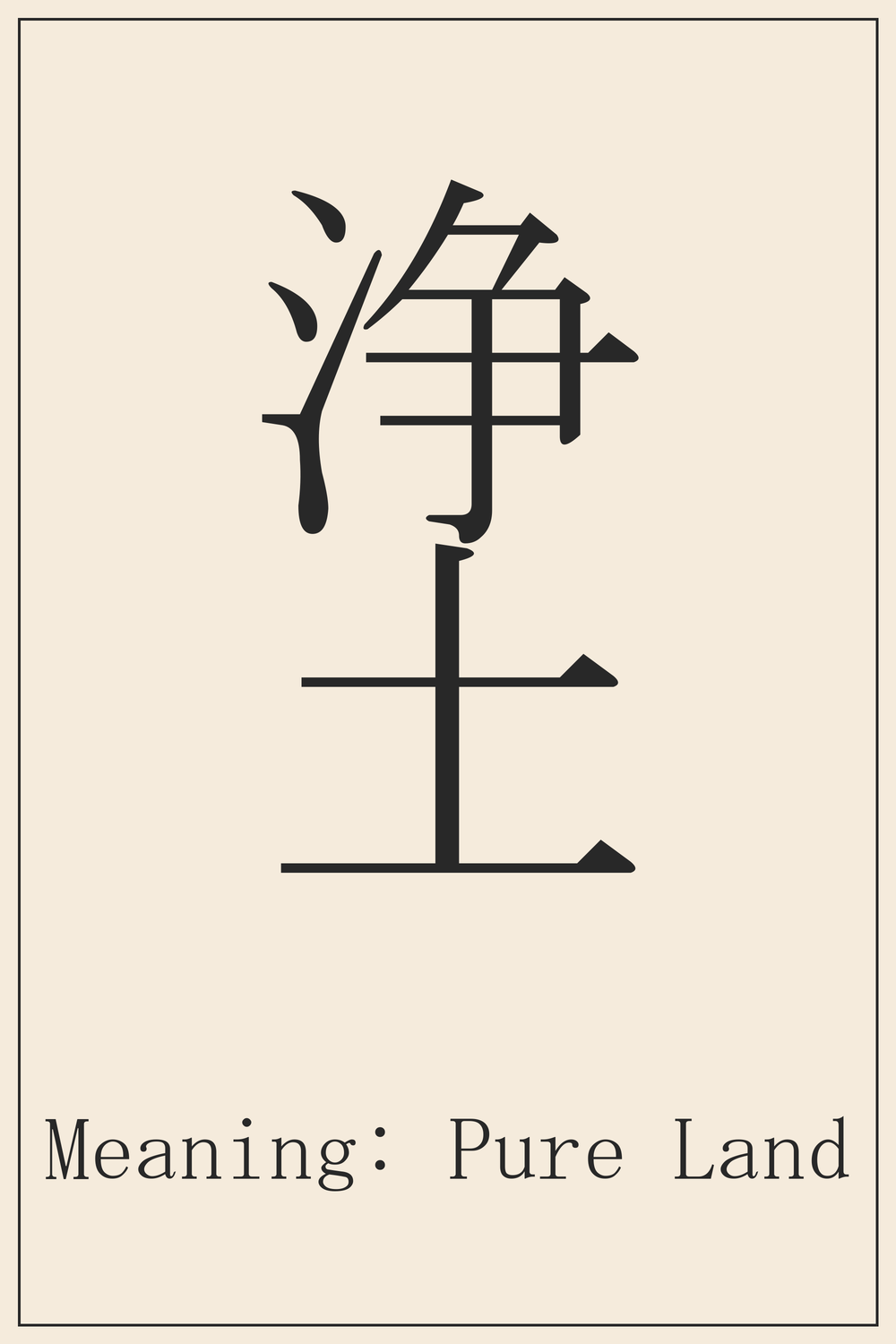
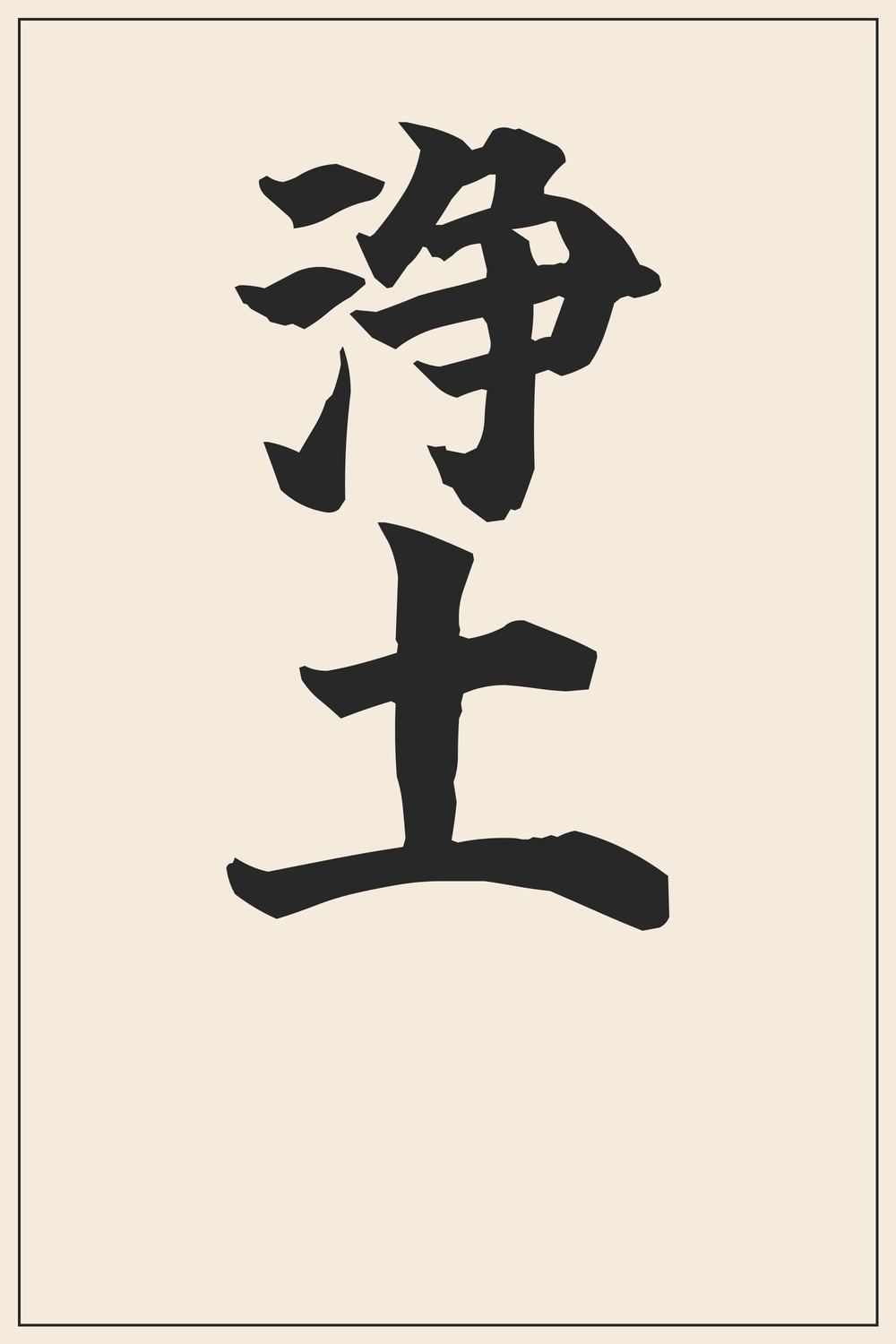
Jōdo, meaning ‘Pure Land,’ represents a profound spiritual ideal within Japanese Buddhism. This sacred concept embodies a realm of ultimate tranquility and enlightenment.
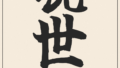
The atmosphere of a Kanji character changes dramatically depending on the font style. A character that looks elegant in a brush style might look bold and modern in a different font.
Recommendation:
Since a tattoo is permanent, we strongly recommend comparing various font styles beyond what is shown here. Use our designs as a trusted reference for the correct structure, but feel free to explore different artistic variations to find the perfect match for your vision.
The Deep Meaning Behind 浄土
The term “Jōdo” (浄土) originates from Sanskrit “Sukhāvatī,” meaning “Land of Bliss.” It is central to Pure Land Buddhism, a major school that emphasizes faith in Amitābha Buddha for rebirth in his Pure Land. The characters themselves convey purification and a specific locale.
In Japanese culture, Jōdo represents a spiritual haven, free from suffering and conducive to attaining enlightenment. It serves as a powerful symbol of hope, salvation, and the ultimate spiritual goal for countless practitioners, influencing art, literature, and religious practice for centuries.
Kanji Breakdown
Let’s delve into the individual components that form the spiritual essence of 浄土.
Meaning: Pure, clean, cleanse
Explanation: Composed of the water radical (氵) indicating washing or purification, and 争 (struggle/contend, also phonetic). Together, it signifies the act of making something pure or clean, both literally and metaphorically.
Meaning: Earth, land, soil
Explanation: A simple yet fundamental character, representing the ground beneath our feet. In “Jōdo,” it specifically refers to a celestial or spiritual land, a distinct realm.
Conclusion
“Jōdo” encapsulates the profound Buddhist concept of the Pure Land, a spiritual sanctuary where beings can attain enlightenment with greater ease. It signifies a purified realm, a destination of ultimate peace and spiritual awakening.
Choosing “Jōdo” as a tattoo is a testament to one’s spiritual aspirations and belief in a higher, purer existence. It’s a powerful and meaningful symbol that carries centuries of spiritual depth and cultural significance, offering a constant reminder of inner peace and the pursuit of enlightenment.
Comments