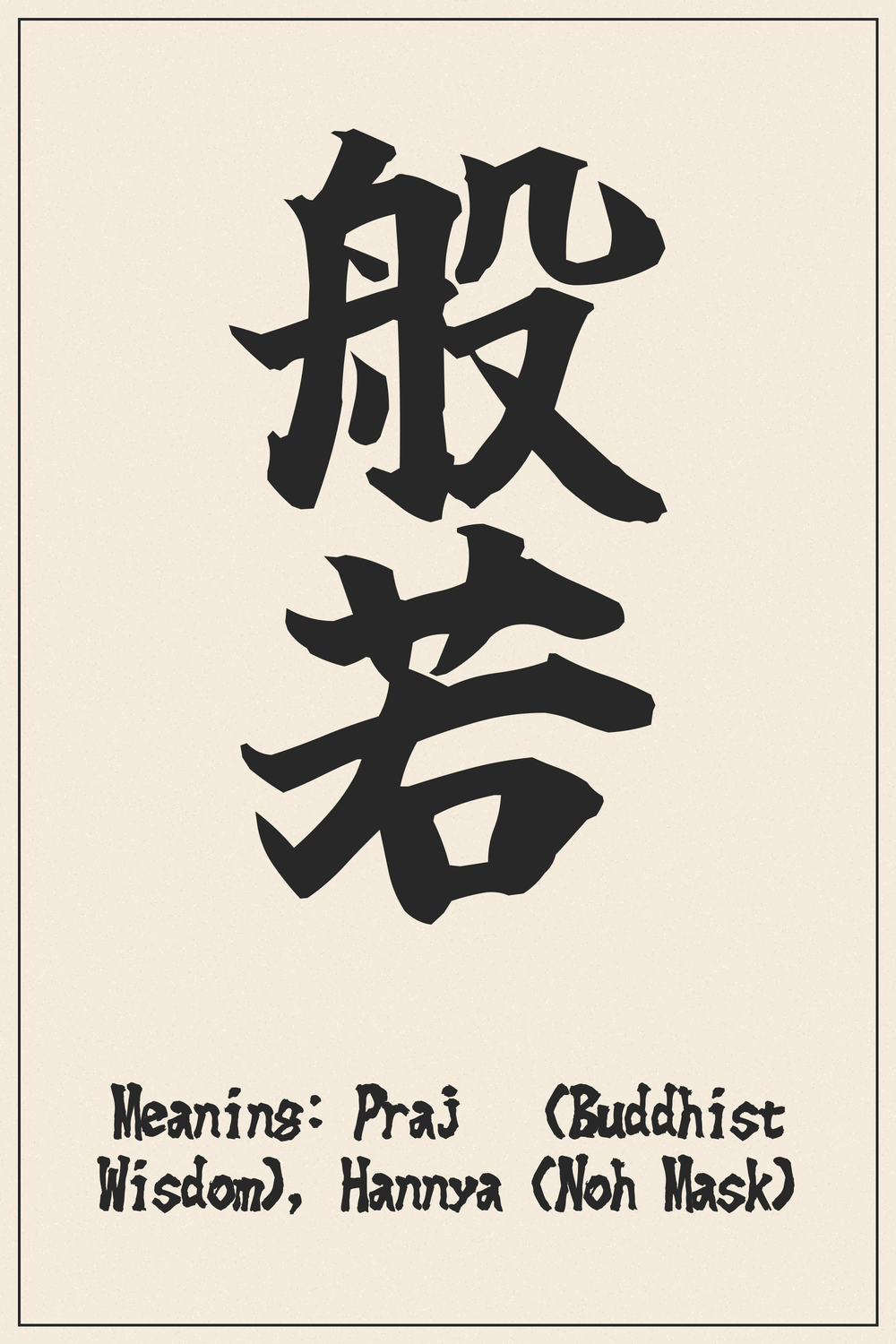
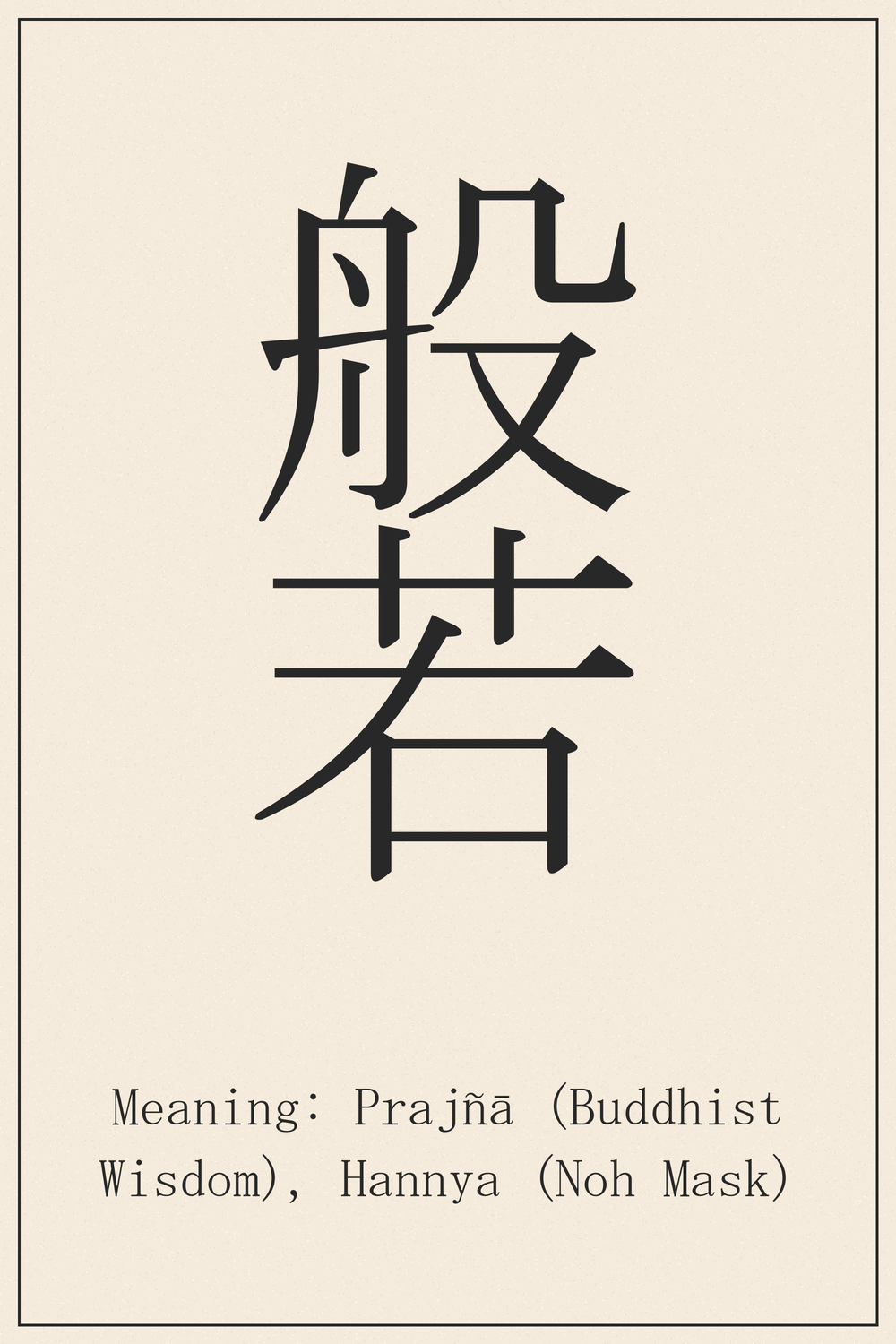
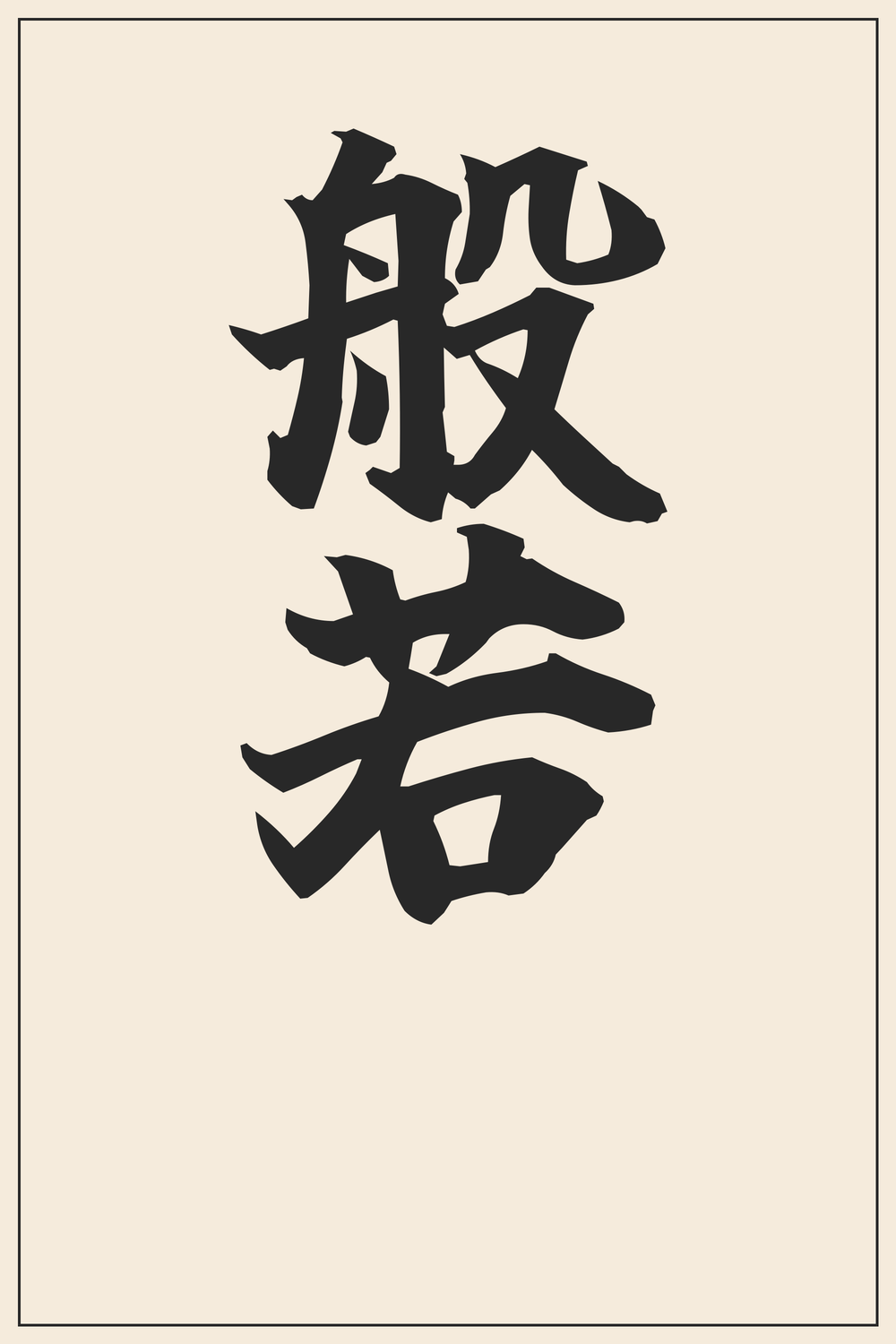
The Kanji 般若 (Hannya) carries a profound duality, representing both ultimate wisdom in Buddhism and an iconic, often terrifying, mask in traditional Japanese Noh theatre. This symbol embodies deep philosophical insights and powerful cultural imagery.
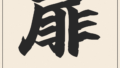
The atmosphere of a Kanji character changes dramatically depending on the font style. A character that looks elegant in a brush style might look bold and modern in a different font.
Recommendation:
Since a tattoo is permanent, we strongly recommend comparing various font styles beyond what is shown here. Use our designs as a trusted reference for the correct structure, but feel free to explore different artistic variations to find the perfect match for your vision.
The Deep Meaning Behind 般若
The term 般若 (Hannya) is a Japanese phonetic transcription (ateji) of the Sanskrit word “Prajñā,” meaning profound wisdom, insight, or understanding. In Buddhist philosophy, Prajñā refers to the transcendental wisdom that leads to enlightenment, a direct and intuitive understanding of reality.
Culturally, Hannya is perhaps most famously known for the Hannya mask used in traditional Japanese Noh theatre. This mask dramatically portrays a female demon or serpent, characterized by two sharp horns, metallic eyes, and a leering mouth. It symbolizes a woman consumed by jealousy, anger, and sorrow, showcasing the destructive power of human emotions.
Kanji Breakdown
The Kanji 般若 is an example of ateji, where characters are chosen for their sounds rather than their literal meanings to represent a foreign word. Therefore, their individual interpretations do not directly form the concept of “wisdom” but contribute to the phonetic rendering of Prajñā.
Meaning: General, sort, carry. Its components suggest a vessel (舟) moving, implying breadth or generality. In “Hannya,” it serves primarily as a phonetic component.
Meaning: Young, if, perhaps. The character originally depicted a woman with flowing hair, conveying youth or resemblance. Here, it functions phonetically within the ateji for Prajñā.
Conclusion
The Kanji 般若 (Hannya) offers a fascinating intersection of spiritual depth and theatrical drama. It embodies the ultimate Buddhist wisdom that transcends worldly understanding, alongside the raw, transformative power of human emotions depicted in the iconic Noh mask.
Choosing “Hannya” for a tattoo can symbolize a seeker’s quest for profound insight, an appreciation for the complexities of the human psyche, or an homage to the rich traditions of Japanese performing arts. It is a powerful emblem, visually striking and imbued with layers of meaning, making it a compelling choice for a permanent mark.
Comments