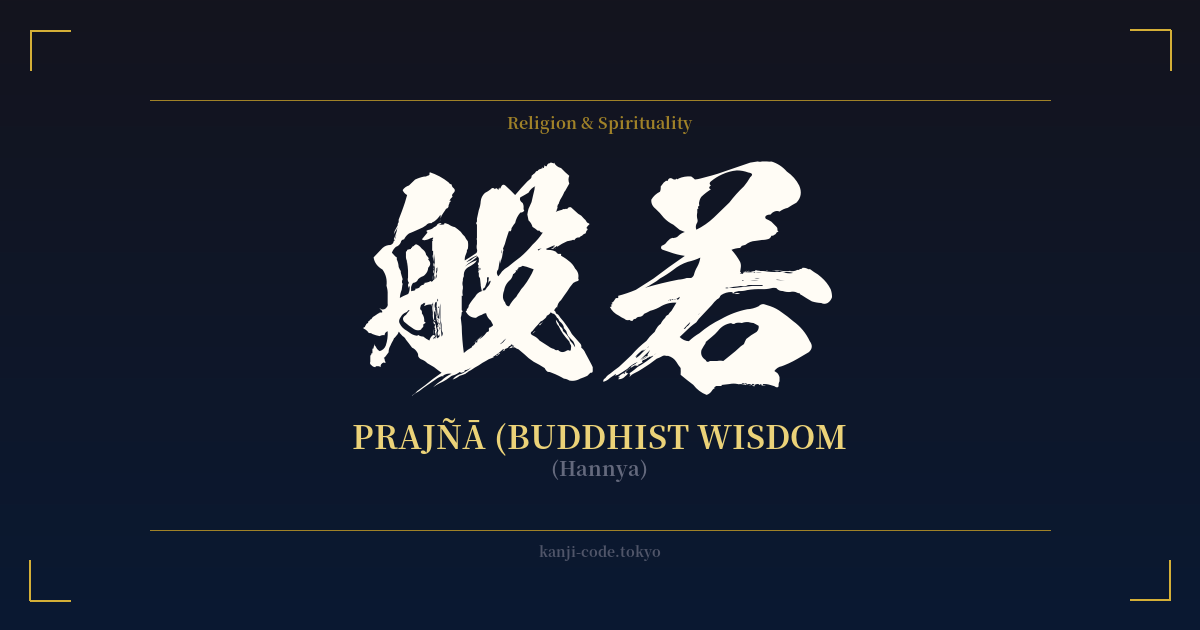
✍️ 般若 (Hannya) — Contexto cultural
La palabra 般若 (Hannya) encierra una de las dualidades más dramáticas del idioma japonés: una fascinante fusión entre la serena filosofía y el aterrador folclore. Su significado depende completamente del contexto, pasando de ser la máxima expresión de la sabiduría budista al nombre de una temible máscara demoníaca.
Originalmente, 般若 es la transliteración japonesa de la palabra sánscrita 'Prajñā'. En el budismo Mahayana, Prajñā no es solo conocimiento ordinario, sino sabiduría trascendente: la comprensión intuitiva y directa de la realidad y la naturaleza de la vacuidad (空, kū). Es la sabiduría que disipa la ilusión y conduce a la iluminación. Este concepto es fundamental en muchas escrituras, la más famosa de ellas el Sutra del Corazón, que en japonés se llama 'Hannya Shingyō' (般若心経).
En este contexto filosófico, Hannya representa un estado mental profundo, pacífico y muy anhelado. Es la meta última de la meditación profunda y la práctica espiritual, una claridad que libera al ser del sufrimiento. Este es el significado antiguo y académico del término.
Sin embargo, en la cultura popular japonesa, la palabra 'Hannya' evoca una imagen completamente diferente: la icónica máscara Hannya utilizada en el teatro Noh tradicional. Esta máscara, con sus cuernos afilados, ojos metálicos y boca abierta y lasciva, representa a una mujer transformada en un demonio feroz por la envidia, la obsesión o la ira. Es un poderoso símbolo de pasión destructiva y sufrimiento.
¿Por qué una máscara que representa tal estado recibe un nombre que significa 'sabiduría'? Su origen exacto es objeto de debate. Una teoría sugiere que debe su nombre al monje Hannya-bō, quien, según se dice, perfeccionó su diseño. Otra teoría, más poética, plantea que la creación de una máscara tan compleja y cargada de significado emocional requiere una gran sabiduría y habilidad por parte del artesano.
La máscara misma encarna esta dualidad. Cuando se inclina hacia abajo, la expresión puede parecer profundamente triste y atormentada, lamentando su destino. Cuando se inclina hacia arriba, se vuelve puramente aterradora y agresiva. Esto captura la naturaleza trágica del personaje: un corazón humano perdido en una forma demoníaca.
Este marcado contraste convierte la palabra 般若 en un campo minado cultural. Mientras que algunos la ven como un símbolo de iluminación, la gran mayoría la asociará instantáneamente con una máscara demoníaca. Esta tensión entre la sabiduría sublime y la furia aterradora es lo que hace que la palabra sea tan atractiva, pero a la vez tan difícil de usar sin una comprensión profunda de su contexto.
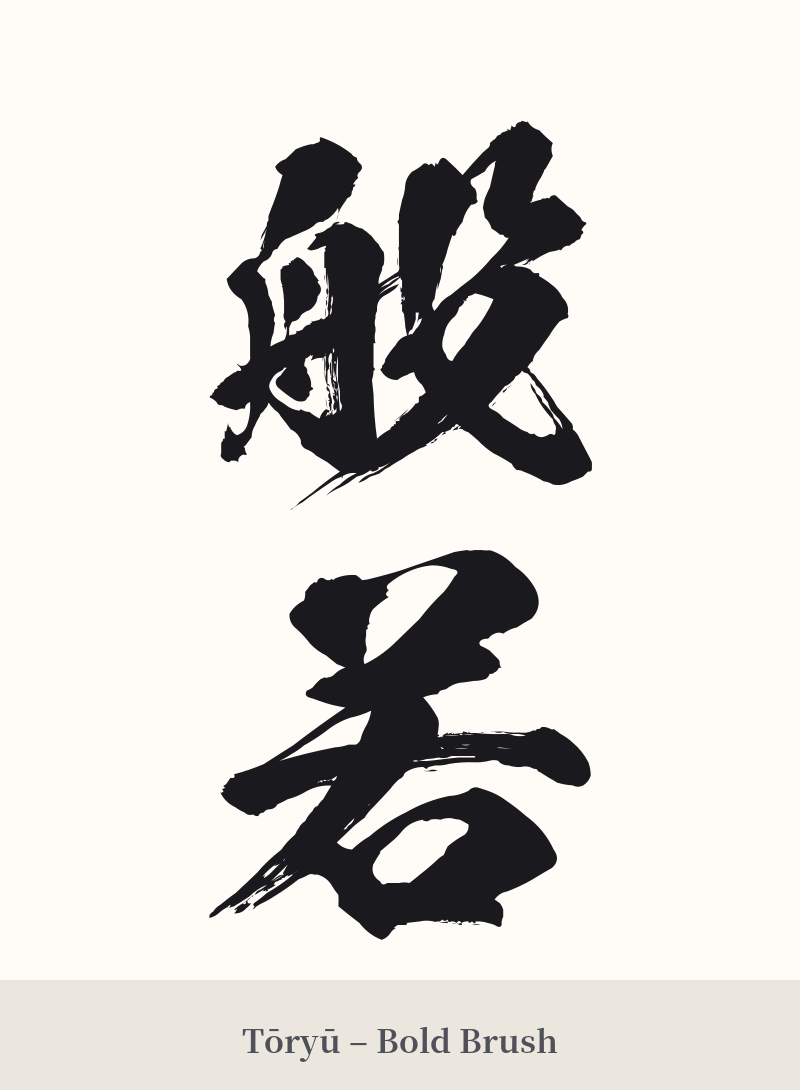
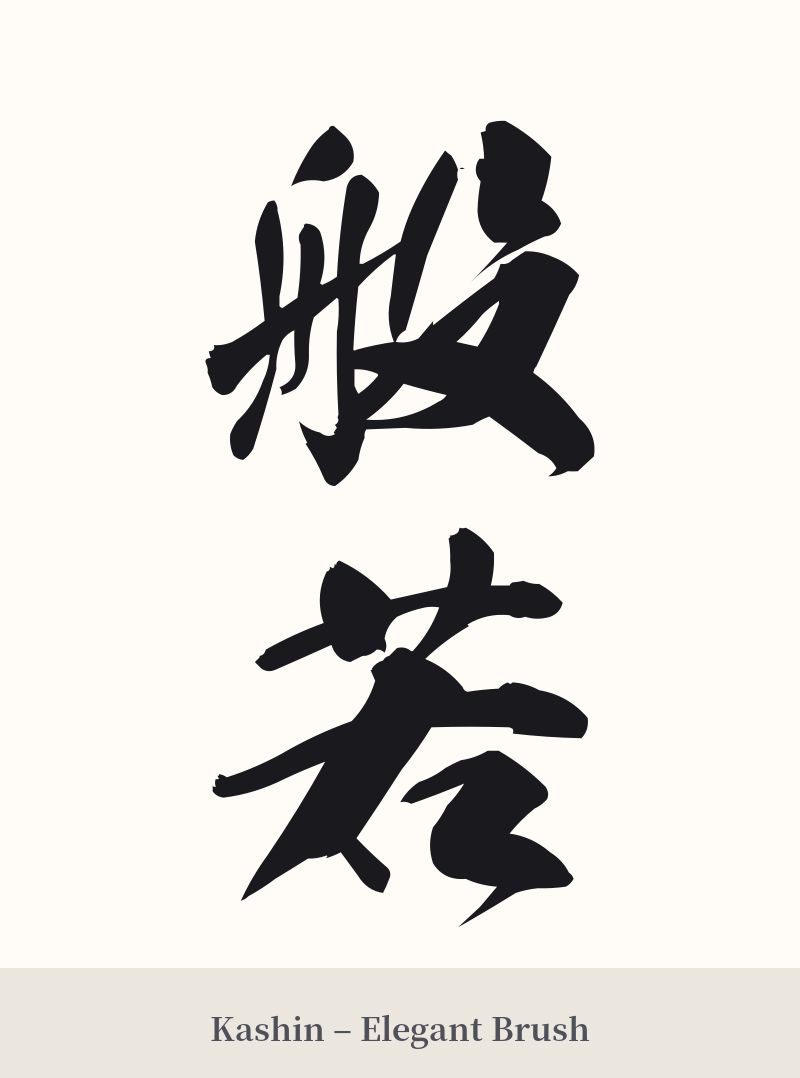
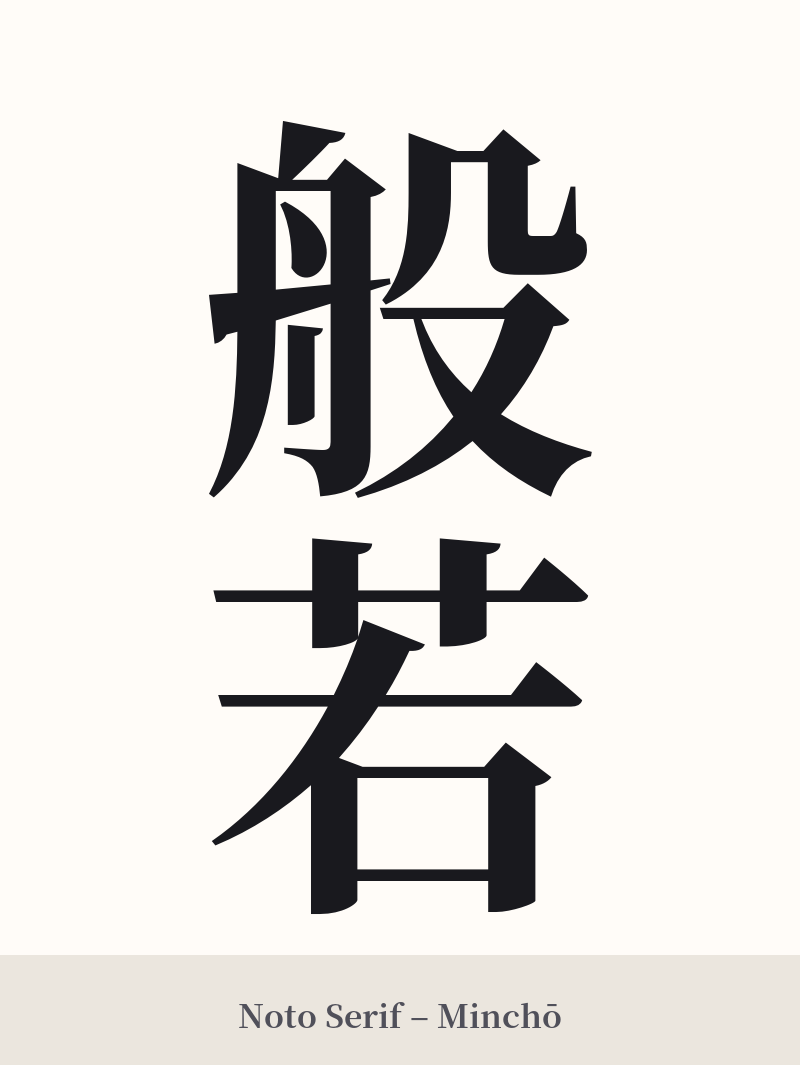
🖌️ Estilos de fuente para 般若
Los mismos caracteres kanji pueden verse muy diferentes según el estilo de caligrafía. Elige una fuente que se ajuste al ambiente que deseas para tu tatuaje o diseño.
🎨 Idoneidad para tatuajes
📐 Guía de diseño de tatuajes
Debido a su doble significado extremo, un tatuaje de 般若 requiere una cuidadosa selección de diseños para guiar la interpretación del espectador.
– Aclarar con imágenes: Para enfatizar el significado de 'sabiduría', combine el kanji con símbolos del budismo como una flor de loto, un círculo Enso o un Buda sentado. Para potenciar el significado teatral, combínelo directamente con una representación de la máscara Hannya. Obtener solo el kanji es arriesgado.
– El estilo de la fuente importa: una fuente limpia y elegante como Mincho o Kaisho puede sugerir sutilmente un significado filosófico y sereno. Por el contrario, un estilo de pincelada tosco, agresivo o 'rasposo' (sōsho) se alineará fuertemente con la energía demoníaca y apasionada de la máscara.
– Ubicación: Al ser una palabra vertical de dos caracteres, funciona bien en el antebrazo, la pantorrilla o a lo largo de la columna vertebral. Esto permite que los caracteres fluyan hacia abajo de forma tradicional. También es posible colocarla horizontalmente en el pecho o la espalda.
Comentarios