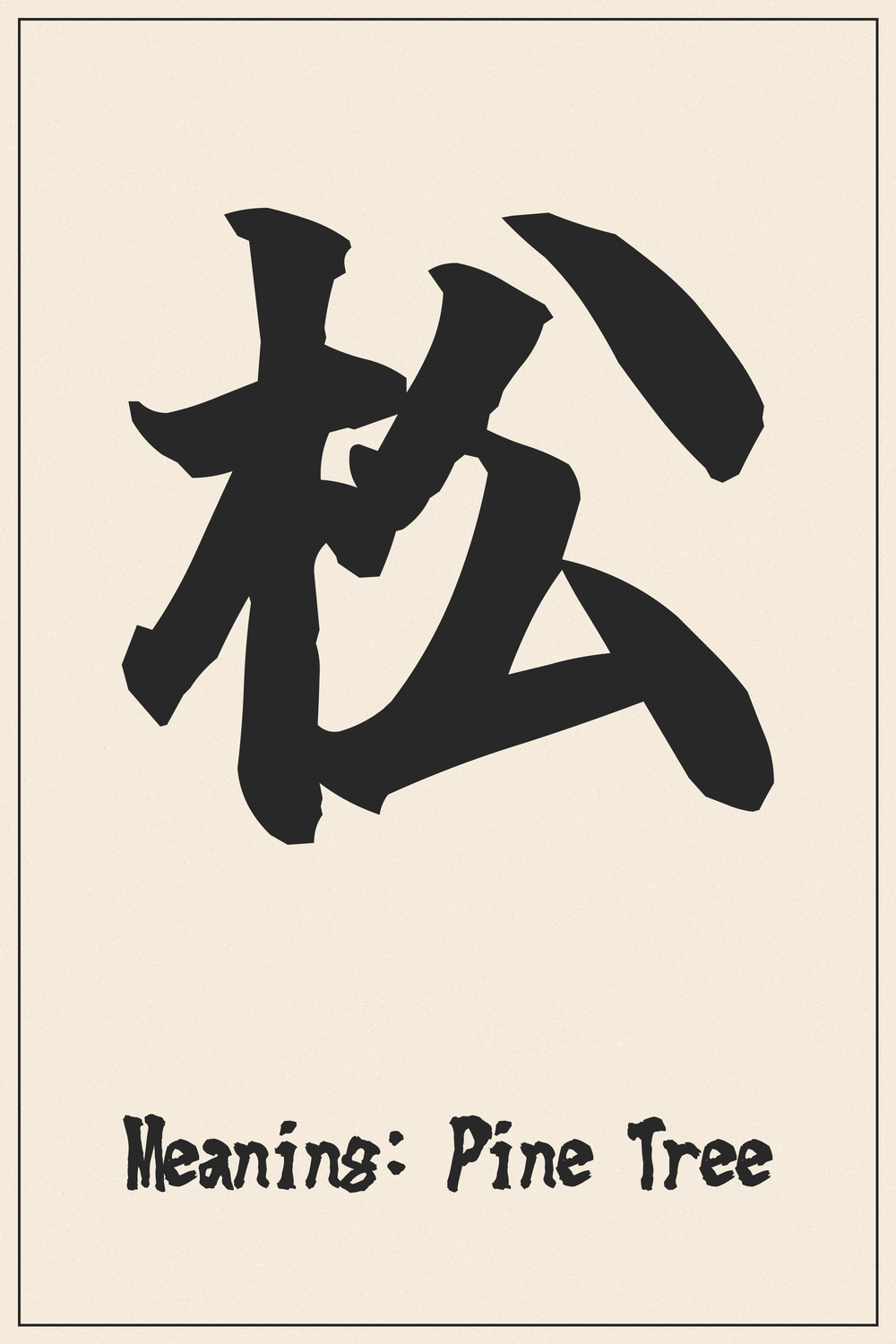
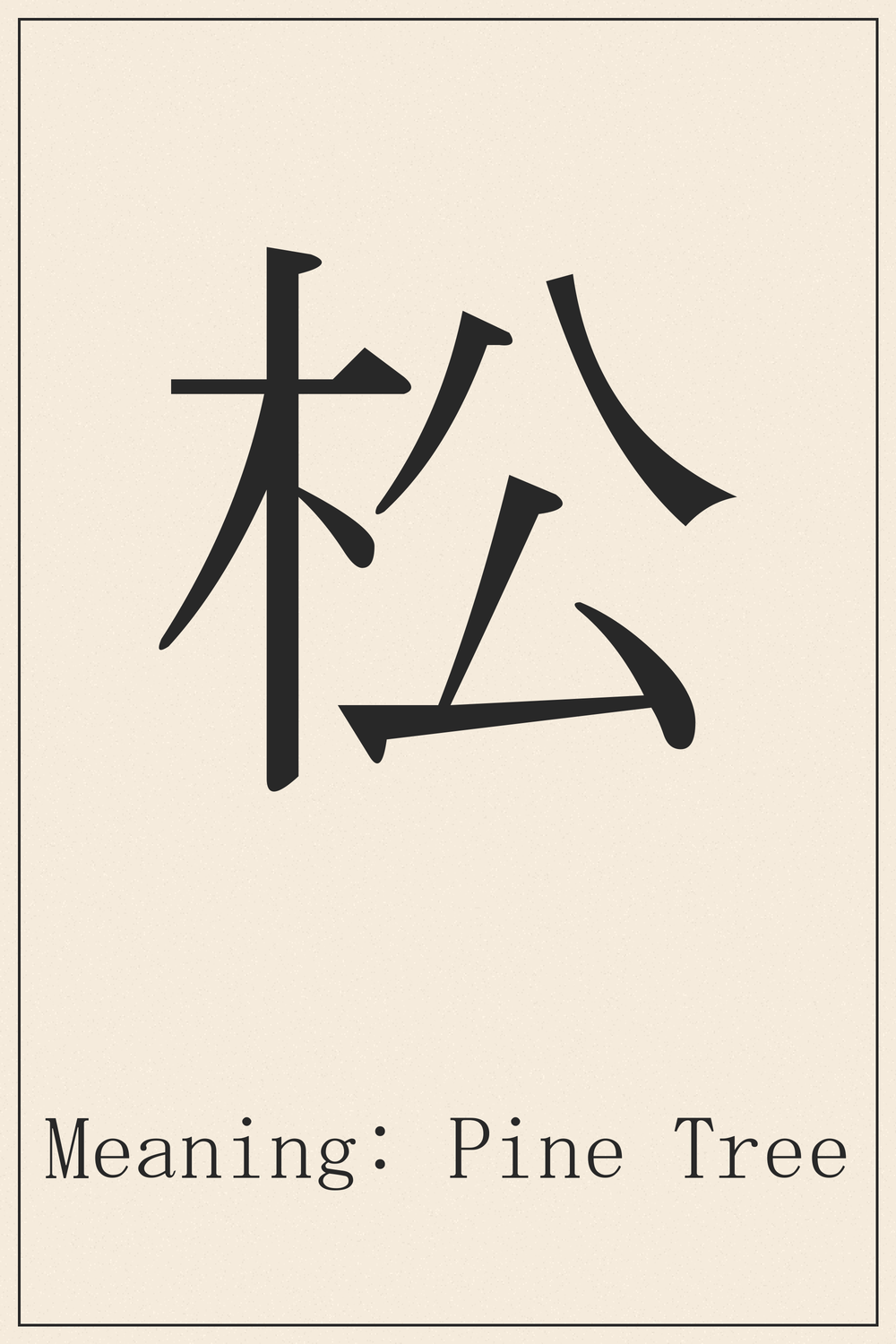
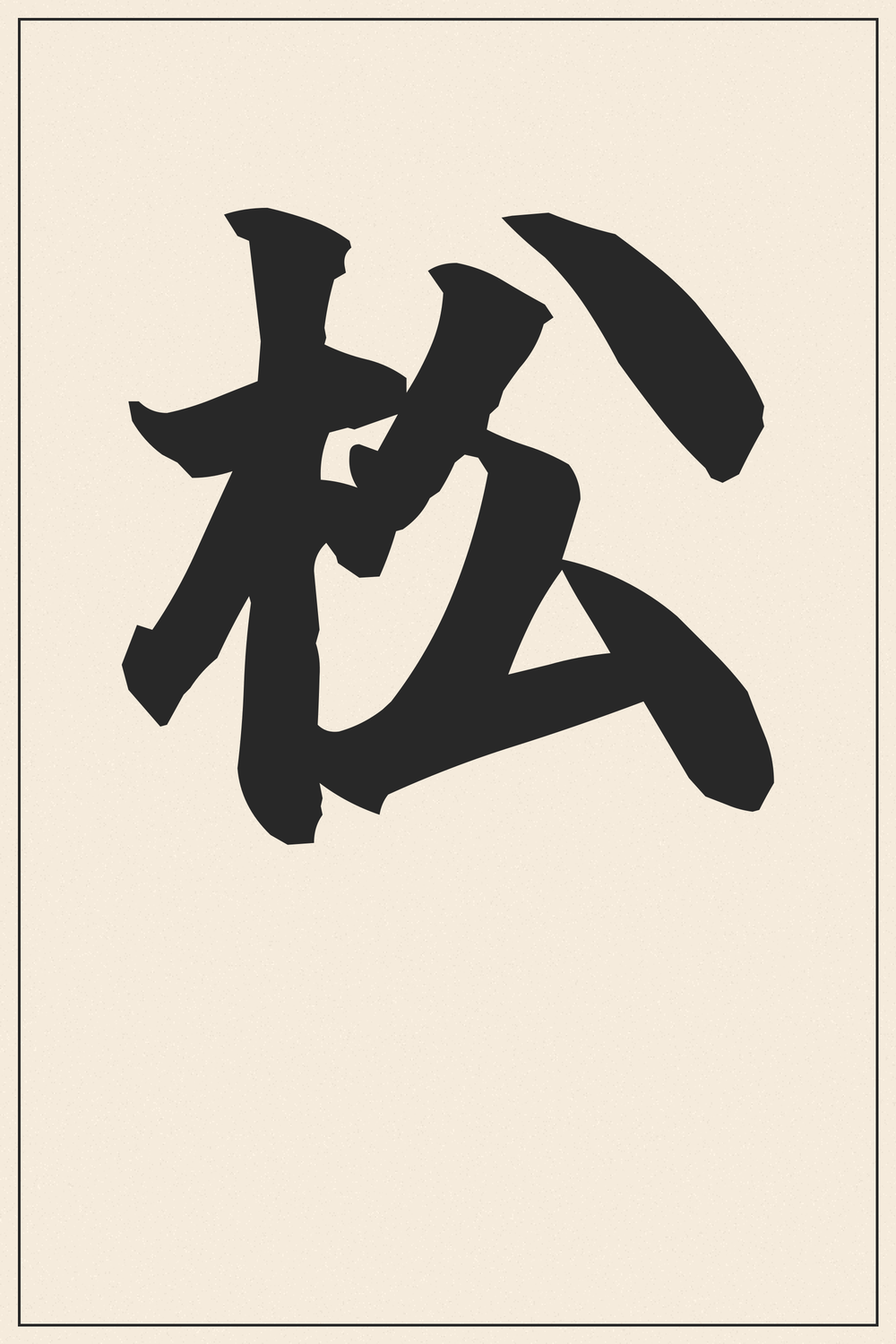
The Kanji 松 embodies the enduring spirit of nature, representing the majestic pine tree. Its strokes convey a deep sense of resilience and eternal life, making it a profound symbol.
The atmosphere of a Kanji character changes dramatically depending on the font style. A character that looks elegant in a brush style might look bold and modern in a different font.
Recommendation:
Since a tattoo is permanent, we strongly recommend comparing various font styles beyond what is shown here. Use our designs as a trusted reference for the correct structure, but feel free to explore different artistic variations to find the perfect match for your vision.
The Deep Meaning Behind 松
The character 松 is formed by the radical 木 (ki), meaning ‘tree,’ combined with the component 公 (kō), which primarily functions as a phonetic element indicating the ‘shō’ sound in its ancient Chinese pronunciation. Together, it specifically denotes the pine tree, a revered evergreen.
In Japan, the pine tree (matsu) is one of the “Three Friends of Winter” (松竹梅 – shōchikubai), alongside bamboo and plum blossoms. It symbolizes longevity, resilience, and good fortune, as it remains green even in the harshest winter conditions. This makes it a popular motif in art, literature, and traditional celebrations, particularly for New Year.
Kanji Breakdown
The Kanji 松 is composed primarily of the ‘tree’ radical, reflecting its arboreal nature.
Tree: This radical clearly establishes the character’s connection to trees and plants, forming the fundamental visual and semantic base for the pine tree.
Conclusion
The Kanji 松 beautifully encapsulates the essence of the pine tree: a symbol of unwavering strength, enduring life, and steadfastness against adversity. It carries rich cultural significance as a harbinger of good fortune and longevity.
Choosing 松 for a tattoo is to embrace a powerful emblem of resilience and eternal vitality. It serves as a constant reminder of inner strength and the beauty of enduring through life’s challenges, making it a truly inspiring choice.
Comments