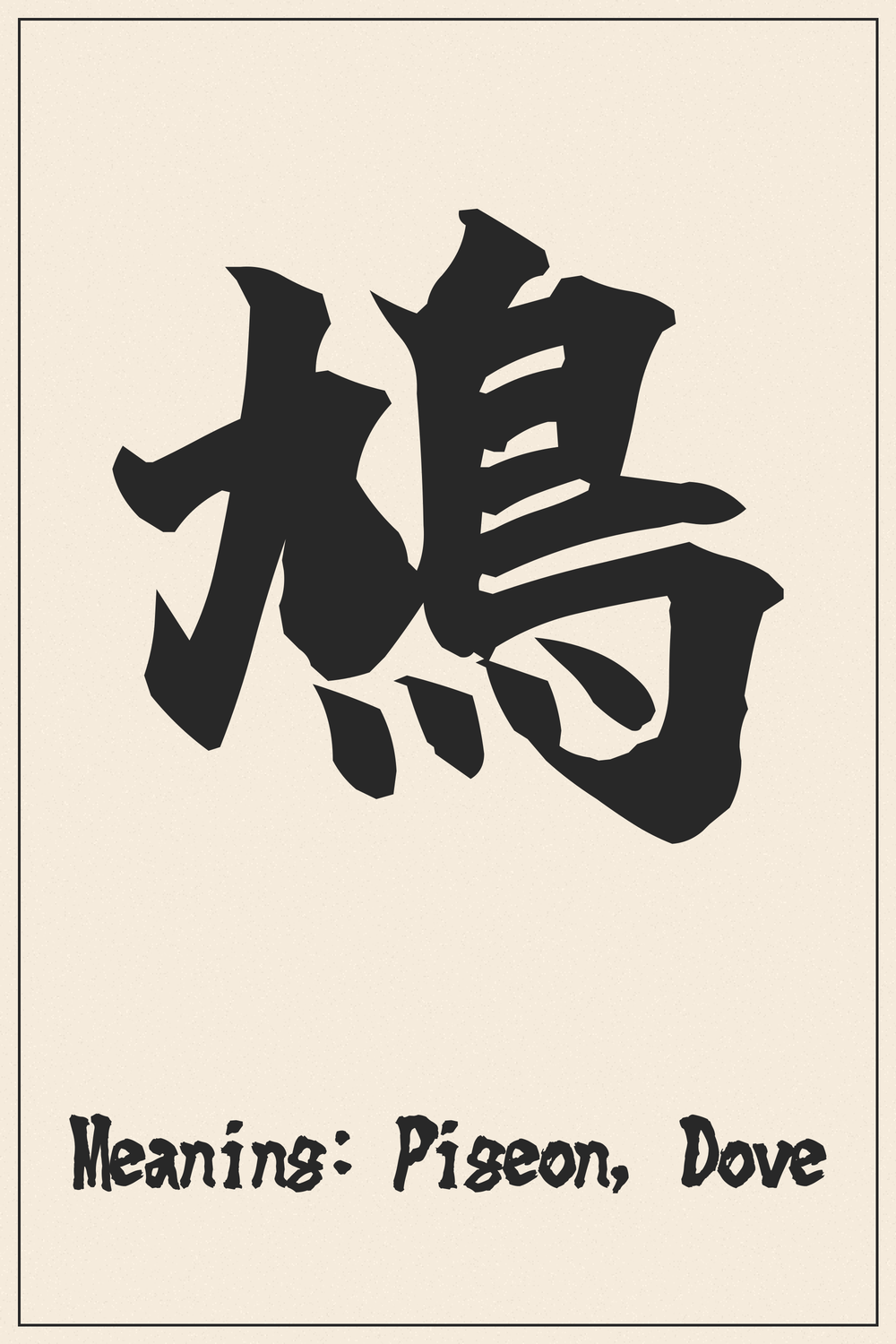
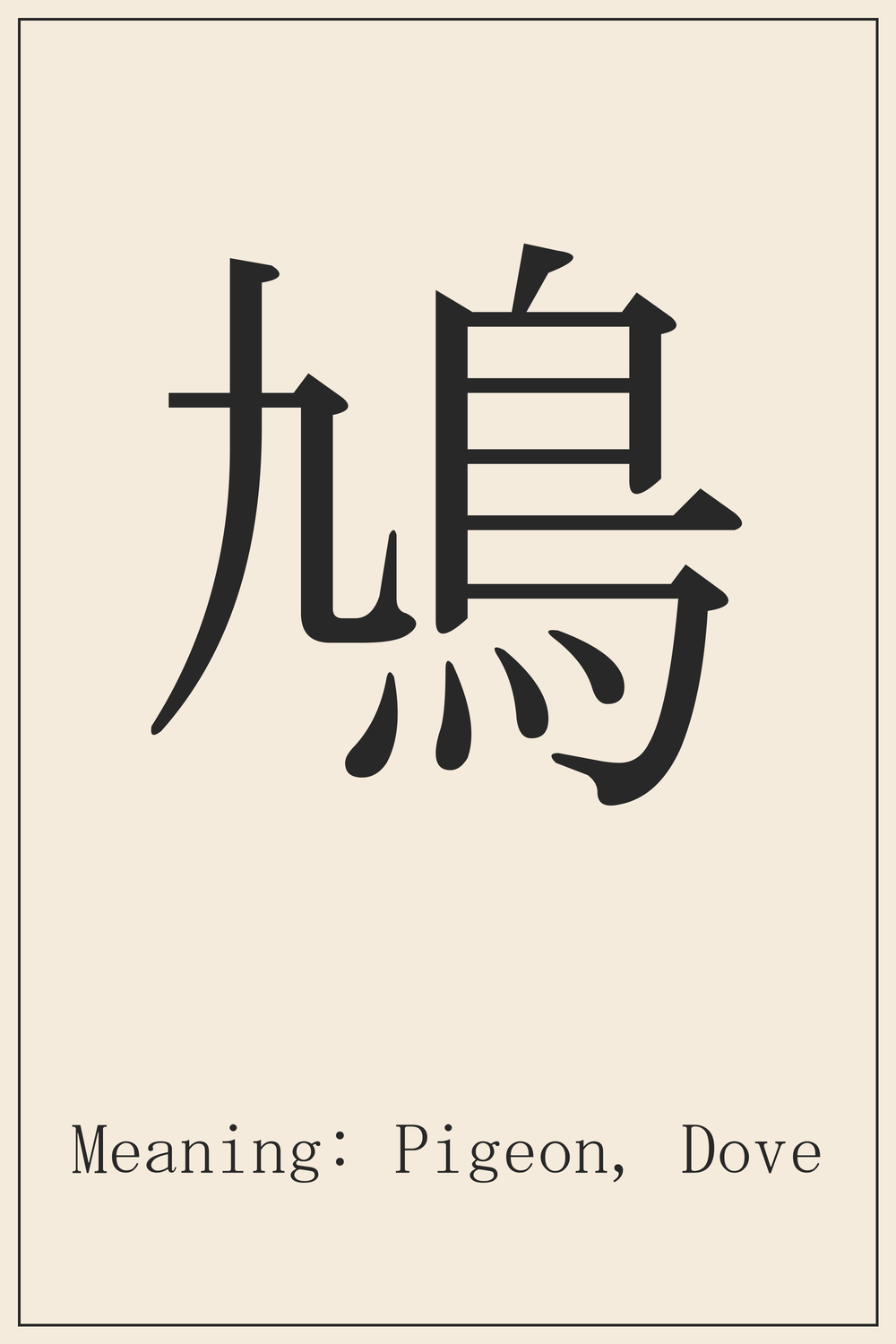
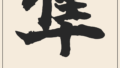
The Kanji 鳩 embodies more than just a common bird; it carries deep symbolic weight in Japanese culture. Representing peace, purity, and often a messenger, this character offers profound meaning for those seeking a tranquil and benevolent tattoo.
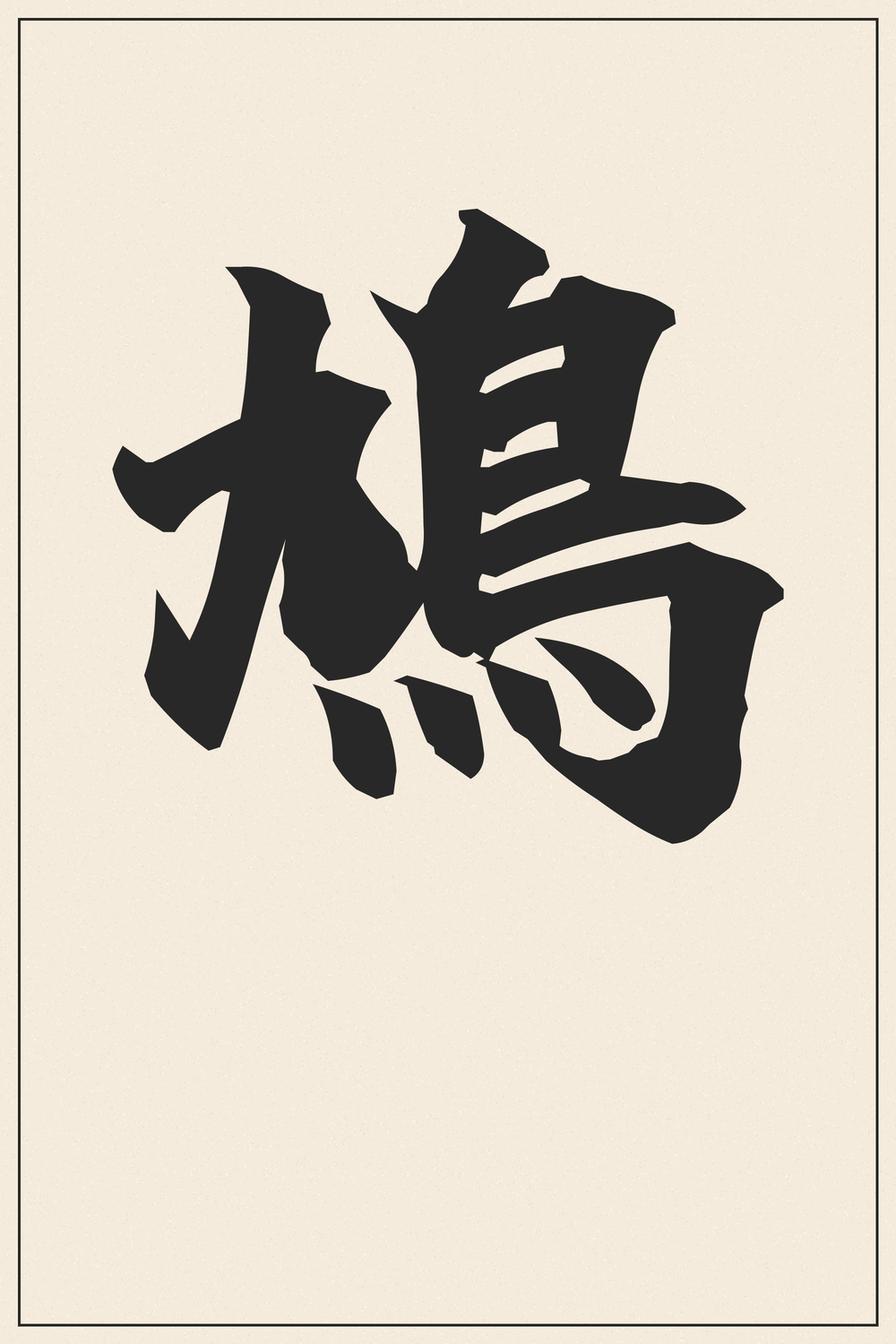
The atmosphere of a Kanji character changes dramatically depending on the font style. A character that looks elegant in a brush style might look bold and modern in a different font.
Recommendation:
Since a tattoo is permanent, we strongly recommend comparing various font styles beyond what is shown here. Use our designs as a trusted reference for the correct structure, but feel free to explore different artistic variations to find the perfect match for your vision.
The Deep Meaning Behind 鳩
The character 鳩 (hato) is a phonetic-semantic compound. It combines 九 (kyū), which serves as the phonetic component, indicating a sound reminiscent of a dove’s coo, with 鳥 (tori), the radical for ‘bird’. This combination directly denotes a specific type of bird, the pigeon or dove.
In Japanese culture, the dove (鳩) is a powerful symbol of peace, purity, and longevity. It is often seen as a messenger, particularly in historical contexts where doves carried messages. Its gentle nature and loyalty are highly regarded, making it a beloved motif in art, literature, and various cultural expressions.
Kanji Breakdown
The Kanji 鳩 is a phonetic-semantic compound, skillfully combining a sound element with a semantic radical to form its meaning.
Nine (Phonetic element): This component primarily lends its sound ‘kyū’ or ‘koo’ to the kanji, reflecting the bird’s call. While it literally means ‘nine’, its role here is phonetic, guiding the pronunciation of 鳩.
Bird (Semantic element): As the semantic radical, 鳥 directly indicates that the kanji refers to a type of bird. This provides the core meaning, defining 鳩 as a creature of flight, and specifying its classification within the animal kingdom.
Conclusion
The Kanji 鳩 beautifully encapsulates the essence of the pigeon or dove, symbolizing peace, gentle communication, and steadfastness. Its etymology, rooted in both sound and form, underscores its deep connection to nature.
Opting for 鳩 as a tattoo carries a message of tranquility and hope. Its graceful form and profound cultural associations make it a timeless choice for anyone wishing to embody the spirit of peace and gentle strength in their personal expression.
Comments