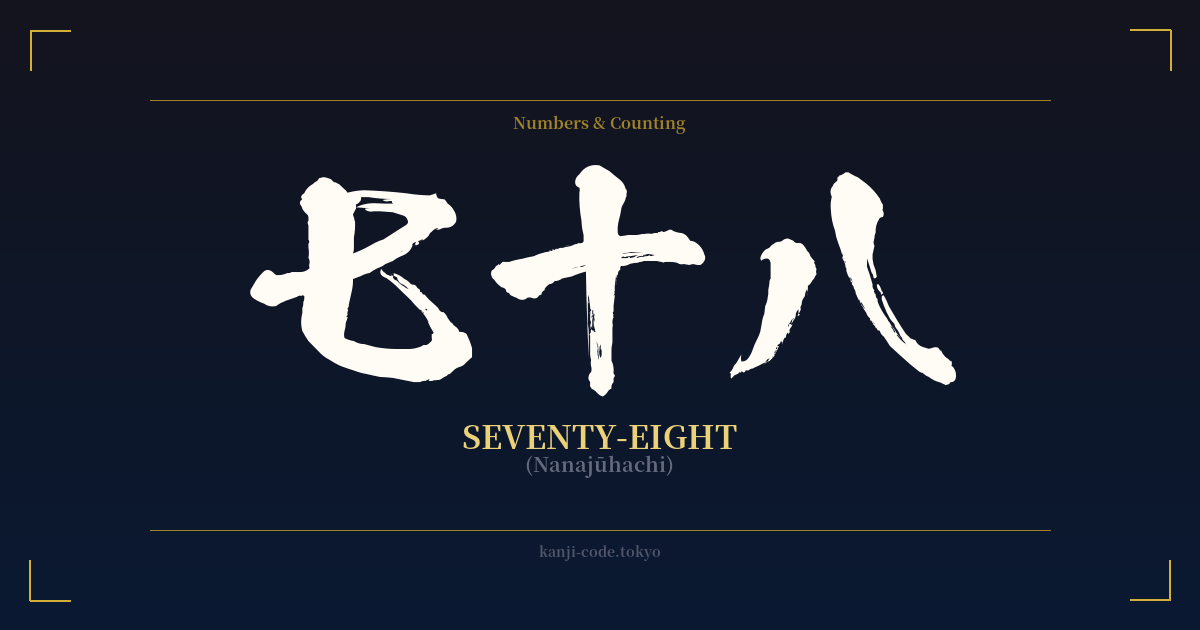
✍️ 七十八 (Nanajūhachi) — Cultural Context
The Japanese word for seventy-eight, 七十八 (nanajūhachi), is a straightforward and literal combination of kanji. It provides a perfect window into the logical structure of the Japanese counting system. The word is built by combining three fundamental characters: 七 (nana, seven), 十 (jū, ten), and 八 (hachi, eight). The construction follows a simple multiplicative and additive logic: (七 x 十) + 八, or (7 x 10) + 8 = 78.
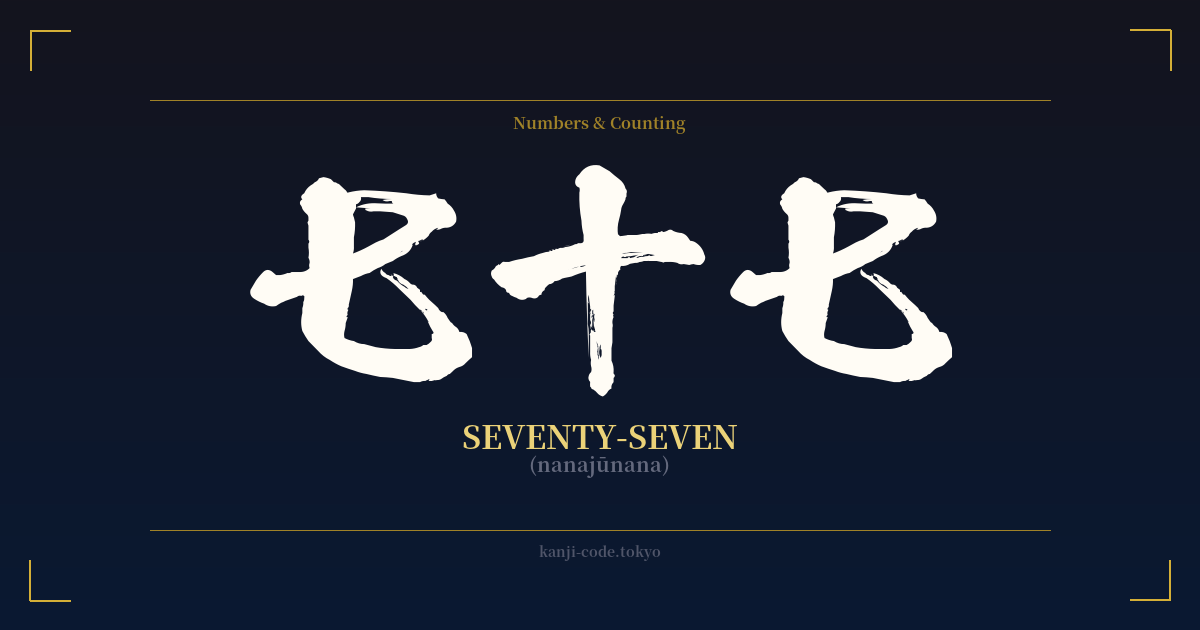
While the number 78 itself does not hold a specific, widely recognized cultural significance in Japan—unlike celebratory ages such as 77 (喜寿, kiju) or 88 (米寿, beiju)—the individual numbers composing it are rich with meaning. The number seven, 七, is considered very lucky, most famously associated with the 七福神 (Shichifukujin), the Seven Lucky Gods who are believed to grant good fortune.
The number eight, 八, is also seen as highly auspicious. This is largely due to the shape of the kanji character itself, which widens at the bottom. This shape is referred to as 末広がり (suehirogari), meaning 'widening towards the end,' and it symbolizes growing prosperity, success, and a bright future. This association makes the number eight a popular feature in names, prices, and important dates.
Therefore, while 七十八 as a compound number doesn't have its own folklore or designated celebration, it is composed of two of Japan's luckiest digits. It sits in a numerical landscape bracketed by good fortune. This could be interpreted as a quiet, stable number benefiting from the positive energy of its components. In modern usage, it's simply a number you'd encounter in everyday life—a price, an age, a page number, or an address. Its meaning is almost entirely contextual, deriving its power from what it represents to the individual rather than from a shared cultural story.
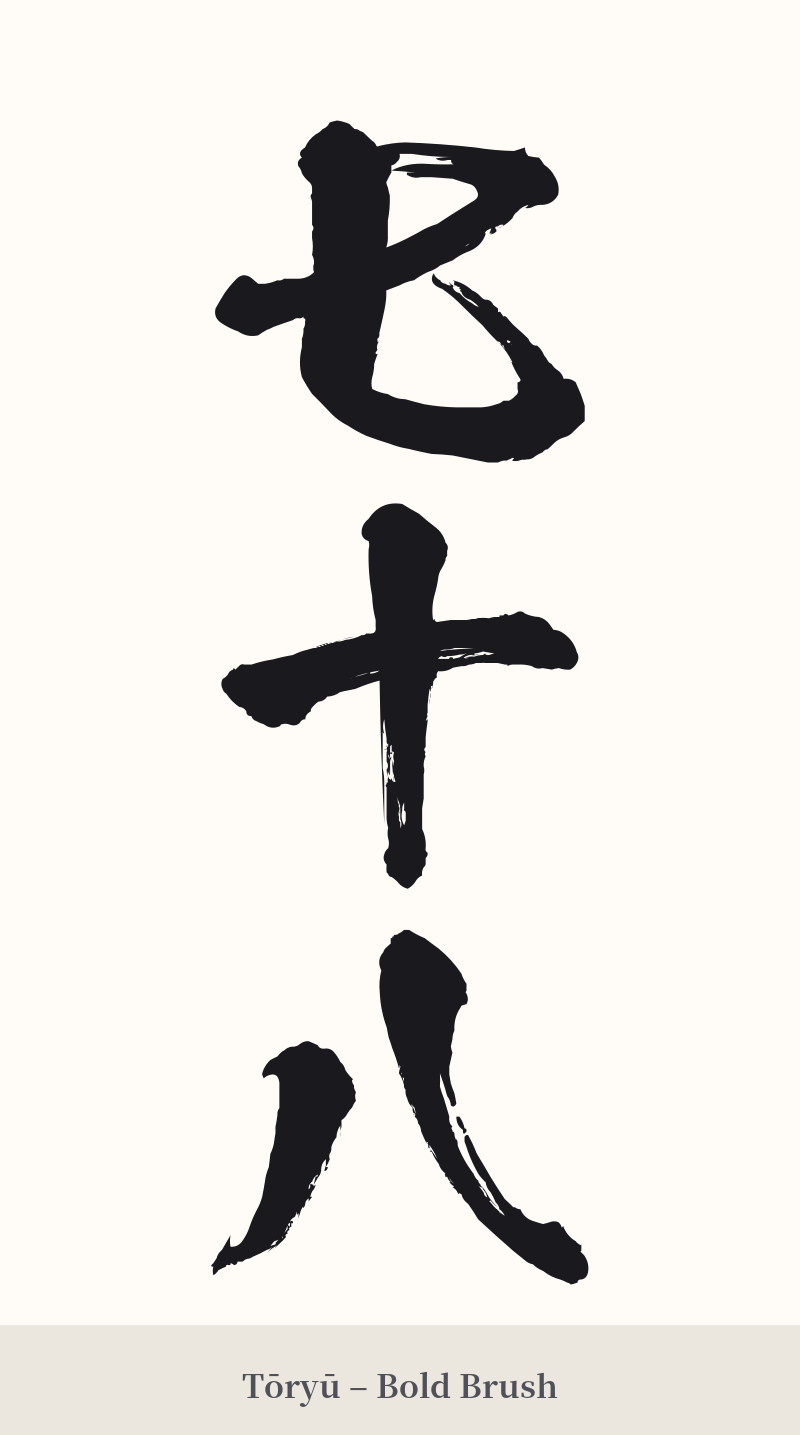
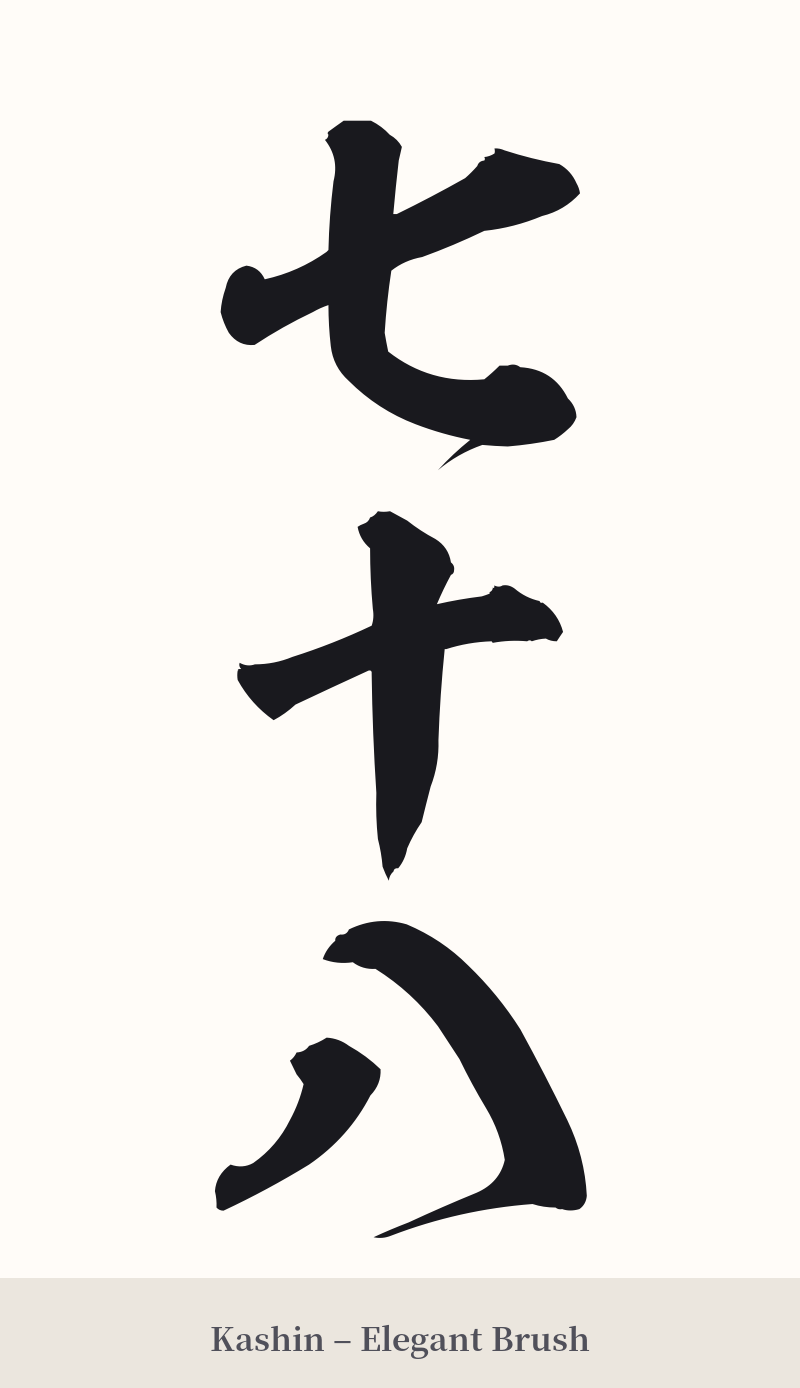
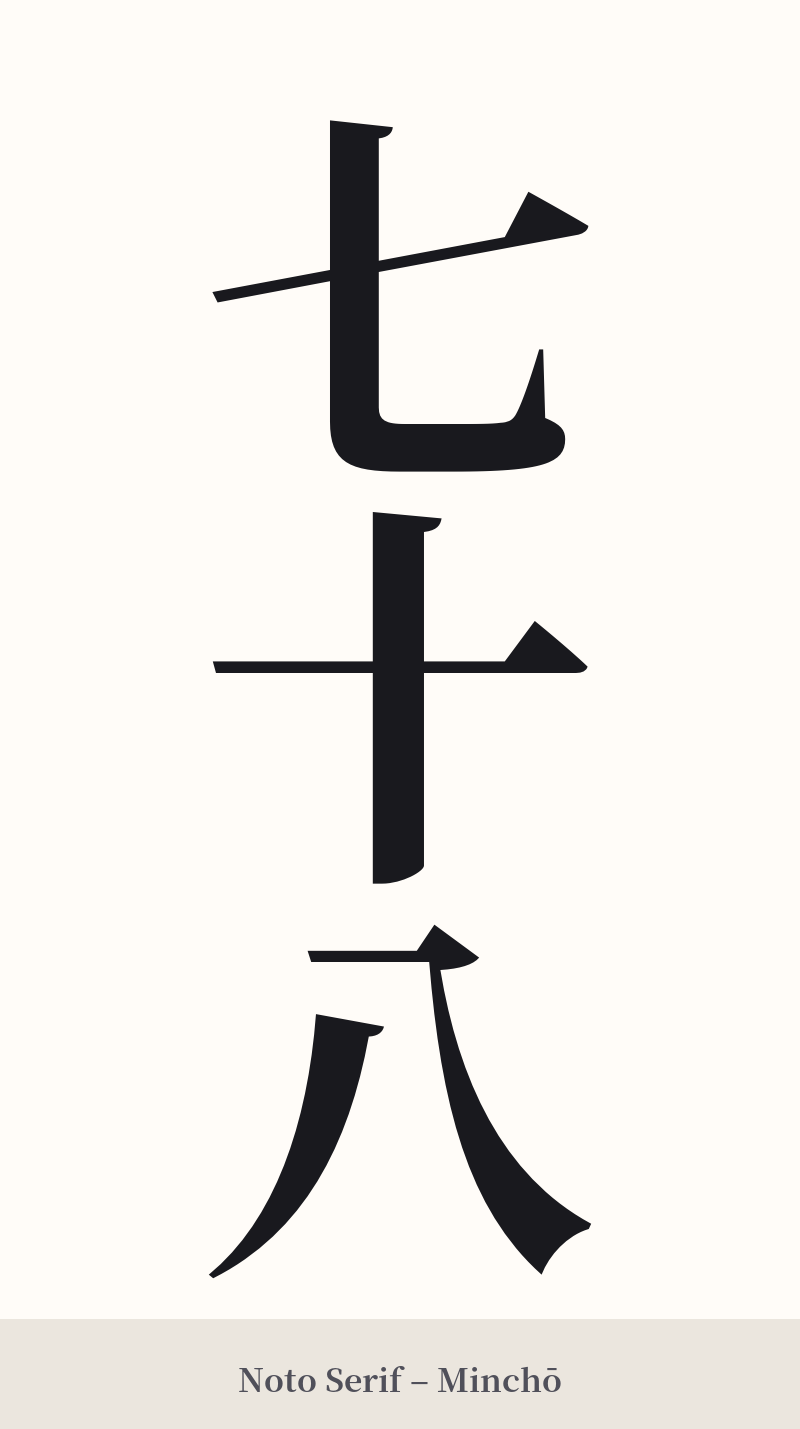
🖌️ Font Styles for 七十八
The same kanji can look dramatically different depending on the calligraphy style. Choose a font that matches the mood you want for your tattoo or design.
🎨 Tattoo Suitability
📐 Tattoo Design Guide
For a kanji tattoo like 七十八, which is composed of simple, fundamental characters, the design can lean into either minimalism or traditionalism.
– Placement: Due to its multi-character nature, it works well arranged vertically. A vertical placement along the spine, forearm, or calf can be very elegant. For a more subtle look, a smaller horizontal arrangement on the wrist, collarbone, or behind the ear is also a great option.
– Style: A crisp, clean, block-like Kaisho script would emphasize the geometric simplicity of the characters. Alternatively, a flowing, semi-cursive Gyosho or fully cursive Sosho style could connect the three characters, creating a more unified and artistic piece. Avoid overly ornate or complex fonts that might obscure the simple beauty of the kanji.
– Visual Tips: Consider the spacing between the characters. In a vertical design, ensure even spacing to maintain balance. You could also incorporate this kanji as a small part of a larger piece that illustrates why the number 78 is significant to you, such as a birth year integrated into a design of your birth flower.
Comments